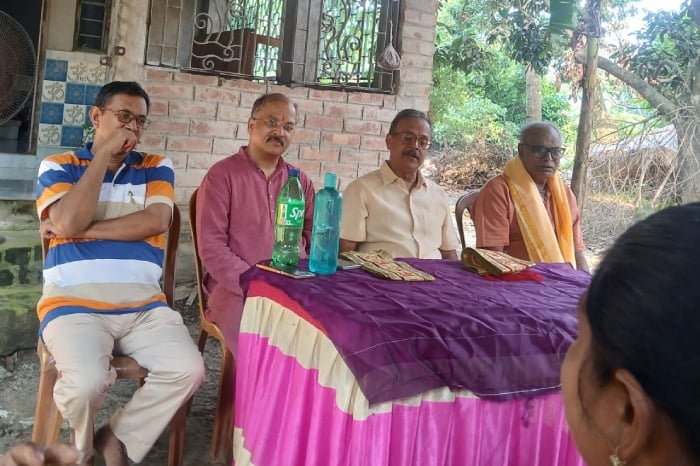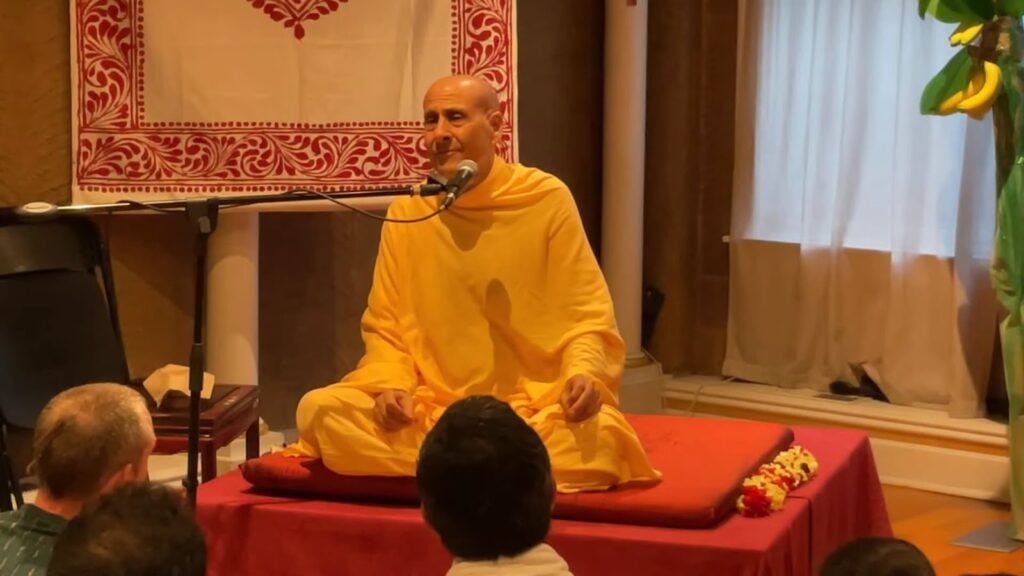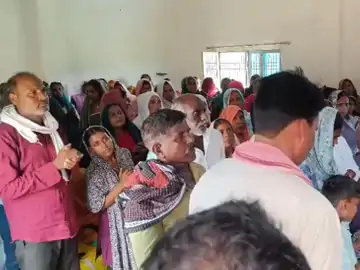
Over 16,000 Hindus assembled in Akola, Maharashtra, for the ‘Hindu Rashtra-Jagruti Sabha’ organized by the Hindu Rashtra Samanvay Samiti. The reported turnout underscores the event’s scale as a notable community gathering in Vidarbha and highlights sustained public interest in dharmic values, cultural heritage, and lawful civic participation.
In the Indic civic tradition, a sabha functions as a public forum for ethical reflection, dialogue, and collective orientation toward social welfare. Within this frame, the ‘Hindu Rashtra-Jagruti Sabha’ may be read as a contemporary iteration of community mobilization intended to articulate dharma-informed responsibilitiesahimsa (non-violence), seva (service), and satya (truth)and to strengthen social cohesion while operating within constitutional norms.
Available accounts place attendance at more than 16,000 participants. In crowd science, such figures are typically situated using area–density heuristics, which assess people per unit area alongside ingress and egress patterns. Without independent police or satellite corroboration, counts remain estimates; however, the reported magnitude is consistent with mid-to-high density assemblies occupying large open grounds with managed flow and moderated queuing.
The constitutional context is straightforward: freedom of conscience and the right to freely profess and practice religion (Article 25) coexist with the right to peaceful assembly (Article 19(1)(b)), both subject to reasonable restrictions in the interests of public order, morality, and health. In Maharashtra, public events of this scale customarily coordinate with district administration and police for venue permissions, route and crowd arrangements, and sound-amplification compliance, reflecting a balance between civil liberties and practical safeguards.
Although framed within a Hindu civic milieu, the sabha’s emphasis on dharma aligns with the broader dharmic constellation shared by Hinduism, Buddhism, Jainism, and Sikhism. The moral vocabularykaruṇā (compassion), ahimsa (non-harm), aparigraha (restraint), and seva (service)is a common inheritance. In Sikh praxis, the aspiration toward Sarbat da bhala (welfare of all) parallels the civilizational ideal of Vasudhaiva Kutumbakam (the world as one family). Positioning the Akola gathering within this shared dharmic horizon helps foreground unity rather than division.
Programmatically, sabhas of this kind often integrate cultural literacy, scriptural reflection, and civic orientation. Typical elements include expositions on ethical conduct, heritage preservation, and community service; facilitation of local volunteering; and guidance on peaceful civic engagement. While program specifics vary by locale, the throughline is a pedagogy of responsibilityconnecting personal conduct to collective well-being in a plural, democratic society.
Maharashtra has a long lineage of community assemblies and reformist public discoursefrom devotional bhakti traditions that democratized spiritual expression to modern social initiatives addressing education, health, and mutual aid. Locating the Akola sabha within this historical continuum clarifies its function: a civic platform that seeks to energize ethical participation, safeguard cultural heritage, and strengthen neighborhood-level trust networks.
Beyond headcounts, such gatherings are meaningful because they cultivate social capital. Participants frequently describe an atmosphere of belonging and intergenerational learning, where elders transmit memory and youth articulate aspiration. The affective dimensionquiet conversations, shared reflection, and an intuitive sense of common purposecan be as consequential as the formal program in sustaining long-term community resilience.
From an operational standpoint, evidence-based event management emphasizes clear signage, designated entry–exit corridors, trained volunteer marshals, and well-marked first-aid points. Accessibility is essential: inclusive seating, assistance for elders and persons with disabilities, sanitation blocks segmented by need, hydration stations to mitigate heat stress, and safe child-friendly spaces. Environmental stewardshipwaste segregation, reduced single-use plastics, and post-event cleanupaligns dharmic ethics with contemporary sustainability practice.
For outcomes, attendance is a starting metric but not a sufficient proxy for impact. Better indicators include post-event volunteer sign-ups, participation in seva drives, heritage documentation efforts, blood-donation or cleanliness campaigns, interfaith or inter-dharmic dialogues, and local mentorship circles. Tracking these downstream activities over 3–6 months yields a more reliable picture of whether the sabha catalyzed durable civic engagement.
Communications also matter. Responsible messaging keeps the focus on shared dharmic values, constitutional fraternity, and local problem-solving. In reporting and social media, specificity about goals, transparency about attendance methodology, and clarity about code-of-conduct norms help reduce sensationalism and anchor public understanding in verifiable facts.
Polarization risk can be mitigated by consistent use of inclusive language, reiteration of non-violence and lawful conduct, and visible gestures of solidarity with other dharmic communities. Constructive outreachsuch as inviting Buddhist, Jain, and Sikh scholars to speak on convergences in ethics and practicestrengthens social trust and embodies the unity-in-diversity ideal at the heart of the subcontinent’s civilizational experience.
Viewed through a policy lens, large civic assemblies are most beneficial when they translate inspiration into service pipelines: temple heritage documentation, language and script preservation, youth skill mentorship, women’s safety initiatives, and neighborhood health or literacy programs. Partnerships with local institutionsschools, community halls, and registered trustsextend the sabha’s reach from a single day’s assembly to year-round public benefit.
Methodologically, the present understanding of scale rests on organizer-reported figures. In the absence of triangulation by independent agencies, such numbers should be treated as indicative estimates rather than definitive counts. Encouraging standardized post-event briefs that share headcount methods, safety audits, and service outcomes can advance transparency and help future organizers replicate best practices.
In sum, the Akola ‘Hindu Rashtra-Jagruti Sabha’ illustrates the enduring relevance of community forums in Maharashtra and across India. When anchored in dharma, framed by constitutional values, and oriented to seva, such gatherings can strengthen cultural heritage, nurture civic responsibility, and consolidate unity across Hinduism, Buddhism, Jainism, and Sikhism. The guiding horizonVasudhaiva Kutumbakam and Sarbat da bhalainvites communities to translate inspiration into inclusive action for the welfare of all.
Inspired by this post on Hindu Jagruti Samiti.