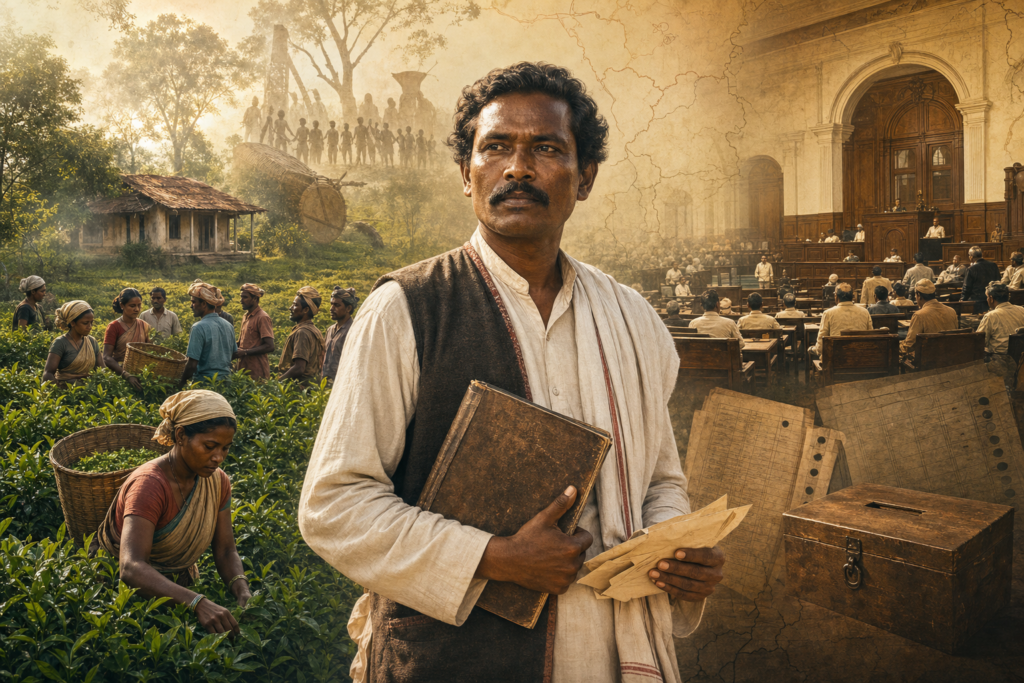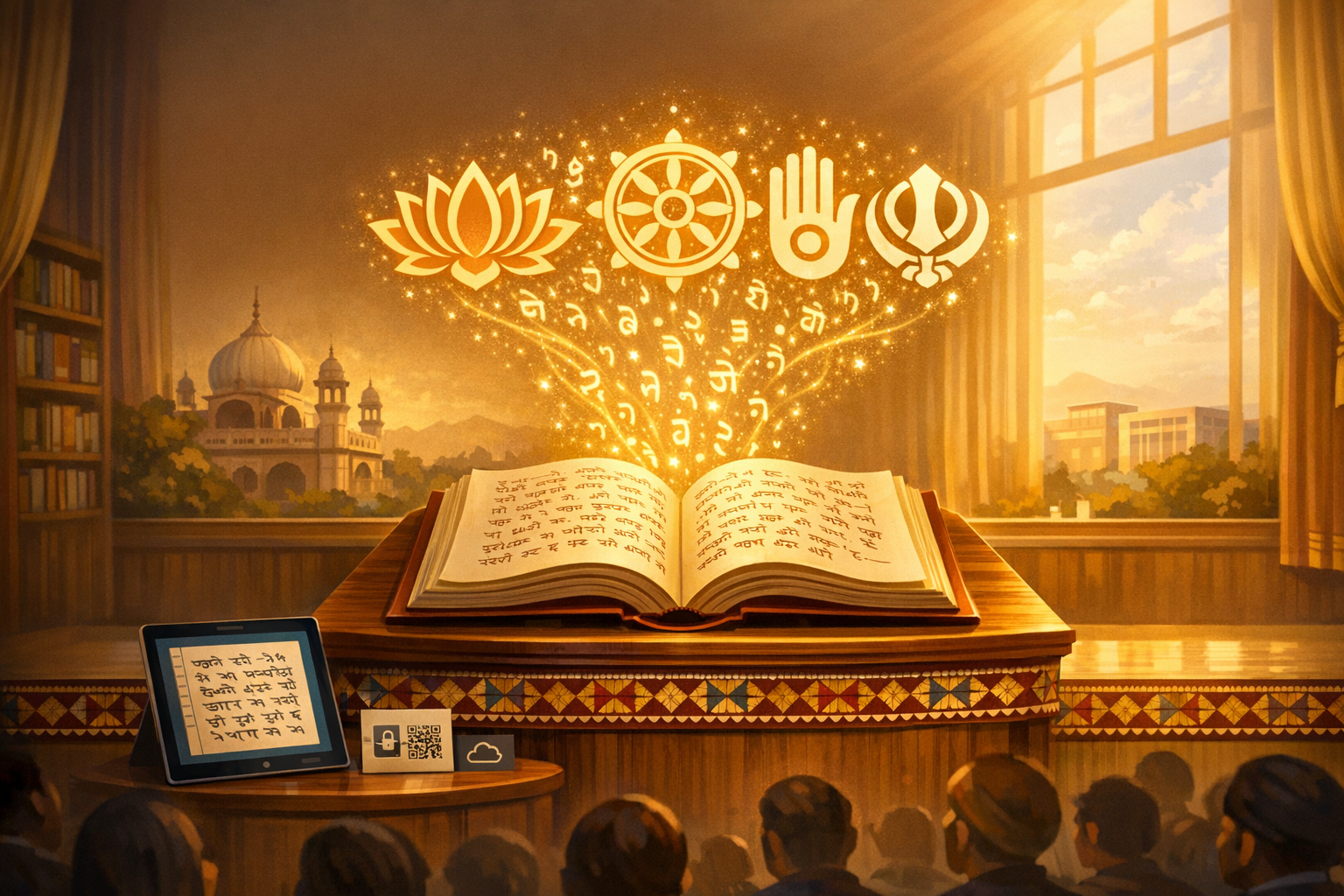
The World Punjabi Conference in Ludhiana (20–22 February 2026) positions a landmark book release as a focal point for scholarship, community engagement, and cultural stewardship. In bringing together researchers, educators, creators, and the global Punjabi diaspora, the occasion underscores how literary production can sustain language vitality, preserve cultural heritage, and cultivate unity among the dharmic traditions of Hinduism, Buddhism, Jainism, and Sikhism.
As a convening format, a conference-based book release does more than mark a publication milestone; it creates an evidence-based forum for rigorous peer dialogue, critical review, and structured dissemination. When embedded within a broad program of panels, readings, and workshops, such releases allow ideas to be stress-tested and translated into curricula, community praxis, and policy insights related to language preservation, script education, and heritage archives.
Ludhiana offers a resonant setting for this work. Situated within Punjab’s living cultural landscape, the city provides proximity to institutions, libraries, and community organizations that can translate a single literary moment into sustained educational and archival initiatives. The timing in late February supports academic calendars, allowing faculty, students, and independent scholars to attend and subsequently integrate learnings into spring syllabi and community study circles.
The intellectual stakes of a Punjabi book release at this scale are significant. Punjabi literature has long served as a bridge linking ethical and spiritual vocabularies across the dharmic spectrumseva and daya (service and compassion), ahimsa (non-harm), viveka (discrimination between right and wrong), and aparigraha (non-possessiveness) echo across Hindu, Buddhist, Jain, and Sikh thought. In this sense, a single publication can catalyze renewed attention to shared civilizational values and to pedagogies that nurture empathy and pluralism.
From a philological perspective, the book’s engagement with Punjabi in Gurmukhi can naturally converse with cognate traditions in Sanskrit, Pali, and Prakrit, as well as later vernaculars. Such attention to intertextual lineages clarifies how ideas traveled, how genres matured, and how ethical teachings were localized. Punjabi’s scholarly vitality grows when texts are situated in this broader Indic ecology rather than examined in isolation.
A well-designed release program typically includes an inaugural critical conversation that positions the book within current research, followed by curated readings, respondent panels, and audience Q&A. To enable uptake across sectors, organizers commonly produce an educator toolkit with discussion prompts, glossaries (terminology keyed to Gurmukhi and transliteration), and modular lesson plans aligned to learning outcomes in literature, cultural heritage, and religious studies.
Robust metadata and discoverability practices determine long-term impact. Best practice entails assigning persistent identifiers (ISBN for the volume; DOI for chapters or supplementary datasets where applicable), registering contributor identifiers (ORCID) for authors and editors, and supplying standards-compliant metadata: ONIX 3.0 for the book trade; MARC 21 and Dublin Core for libraries and repositories. Alignment with FAIR data principles (Findable, Accessible, Interoperable, Reusable) ensures that the work enters global scholarly workflows.
Digitization and archiving strengthen the cultural mission. A high-quality, text-searchable Gurmukhi PDF (with Unicode normalization) enables reliable indexing and quotation; a responsive EPUB optimizes reading across devices; and a versioned repository (with clear licenses) supports future corrigenda and teaching aids. Emerging Indic OCR tools for Gurmukhi can be tested against representative pages, improving accuracy baselines for future archiving of manuscripts and early print holdings.
Accessibility must be designed in at the outset. Meeting WCAG 2.2 AA guidelines, providing alt text for figures, ensuring adequate contrast, embedding structural headings in the digital edition, and offering captioned video of launch sessions improve inclusion. Multimodal optionsaudio chapters, transliteration notes, and bilingual summariessupport learners at different stages of Punjabi literacy without diluting the primacy of Gurmukhi.
For language pedagogy, the release can anchor practical workshops on Gurmukhi script acquisition, reading circles, and comparative sessions that situate Punjabi texts alongside selected passages from the Upanishads, Jaina Agamas, and Buddhist Nikayas where relevant. Such comparative lenses illuminate convergences and distinctions without flattening nuancean approach consistent with unity in diversity within dharmic traditions.
Community engagement amplifies scholarly outcomes. Diaspora organizations, youth associations, and library partners can host post-conference salons, integrating chapters into book clubs and intergenerational dialogues. When educators and community leaders co-develop facilitator guides, the text moves from the shelf to lived practice, strengthening cultural continuity within the Sikh Community and the wider Punjabi public sphere.
Expected outcomes can be measured along clearly defined indicators. Short-term metrics include session attendance, educator sign-ups, and repository downloads. Mid-term indicators track citations in peer-reviewed work, syllabi adoptions, and library holdings. Long-term measures assess community programming inspired by the book, growth in Gurmukhi literacy cohorts, and documentation of oral histories or local archives catalyzed by the publication.
Scholarly integrity and inclusivity are essential. Editorial notes should be transparent about sources, transliteration schemes, and interpretive frameworks. Curatorial choices in the launchsuch as inviting panelists from Hindu, Buddhist, Jain, and Sikh studiesmodel respectful discourse and reaffirm the guiding objective: strengthening bonds across dharmic traditions while honoring each tradition’s integrity, history, and textual canons.
Language technologies can serve both scholarship and outreach. Unicode-compliant Gurmukhi (U+0A00–U+0A7F) with widely available fonts (e.g., Noto Sans Gurmukhi) enhances cross-platform stability. Where transliteration is pedagogically useful, consistent schemes should be declared and applied systematically. For learners at early stages, side-by-side Gurmukhi and transliteration can lower entry barriers, with a pathway to full script literacy prioritized in advanced sections.
Ethical stewardship extends to environmental and economic considerations. Sustainable print practices, modest initial print runs with print-on-demand for long-tail demand, and durable bindings reduce waste. Open-access summaries or selected chapters can expand reach while preserving the viability of the full editionan approach that aligns cultural responsibility with fiscal prudence.
For institutions, the conference provides a timely platform to pilot strategic partnerships: co-classified library records, shared teaching repositories, and visiting-lecturer exchanges. These collaborations help integrate the book into structured learning ecosystems and ensure that readers encounter the work in conversation with broader syllabi on Punjabi literature, cultural heritage, and the Hindu way of life understood in an inclusive, dharmic sense.
Attendees often describe a profound affective resonance when literary readings intersect with lived cultural memoryparticularly in Punjabi, where cadence and imagery carry familial histories and regional textures. Capturing that affect with rigorthrough annotated readings, thematic indices, and contextual essaysenables educators and community leaders to translate inspiration into sustained learning and service.
Placed within the larger arc of Punjabi letters, the Ludhiana release stands to reaffirm how books can be instruments of social cohesion. By foregrounding shared ethical vocabularies, investing in accessible formats, and aligning with library and repository standards, the conference can convert a celebratory moment into durable cultural infrastructure. That is the enduring promise of a well-executed book launch at a forum devoted to Punjabi language, literature, and dharmic unity.
In summary, the World Punjabi Conference 2026 in Ludhiana offers a strategically designed, community-rooted, and academically robust environment for a book release that matterslocally, diasporically, and civilizationally. Through careful curation and inclusive pedagogy, it can help knit together diverse audiences, strengthen Punjabi literacy, and deepen mutual understanding across Hindu, Buddhist, Jain, and Sikh traditions.
Inspired by this post on SikhNet – News.