Chakravarthy Rajagopalachari (Rajaji) exemplified the rare scholar-statesman in Indian political history. A principal figure in the freedom struggle, the last Governor-General of India, a Chief Minister of Madras State, and a prolific public intellectual, he combined rigorous statecraft with a deep civilisational outlook.
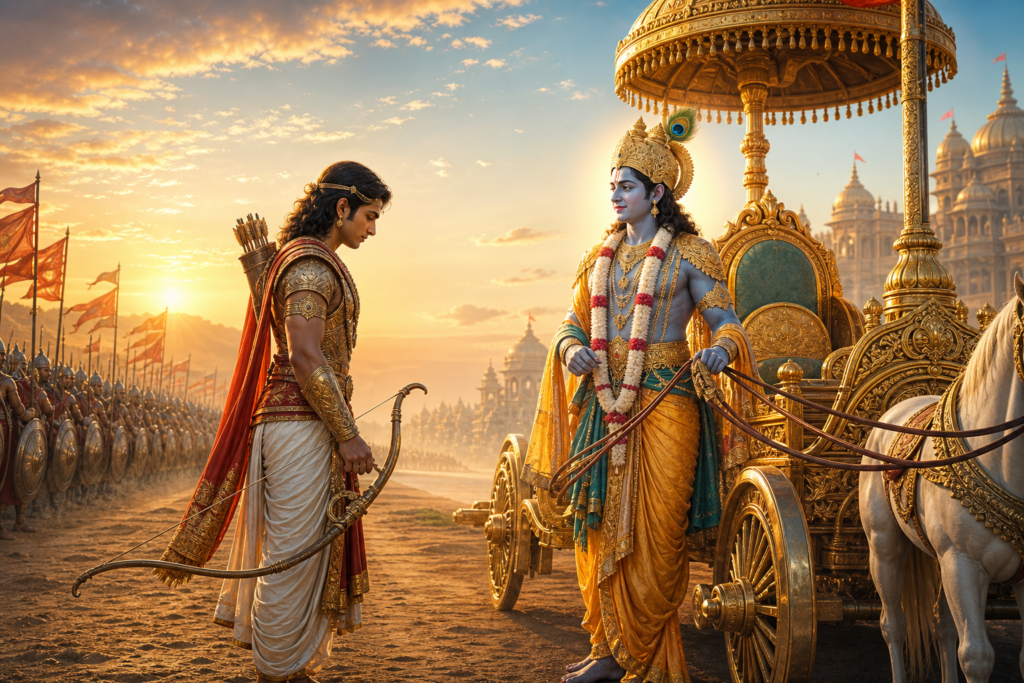
His intellectual range was extraordinary. He engaged seriously with constitutional questions, addressed Vedantic themes for Maharaja Jayachamarajendra Wodeyar, and, as a respite from public office, produced accessible English retellings of the Mahabharata within a remarkably short span. In parallel, he wrote regularly for the Bangalore-based journal Public Affairs on current politics, law, Hindu society, economics, free enterprise, and the growing menace of black money in politics.
After Sardar Patel’s death, an unmistakable centralisation of authority sharpened the divide between Jawaharlal Nehru and independent-minded colleagues. Multiple senior contemporariesAcharya Kriplani, B.R. Ambedkar, John Mathai, Ramnath Goenka, and Rajaji among themdrifted out of the Congress system amid disagreements over policy and power. Rajaji persistently challenged what later came to be called Nehruvian socialism, arguing that economic controls would corrode ethics and efficiency alike.
His critique was not merely rhetorical. In Tamil Nadu, he pledged to end Congress dominance and backed broad anti-Congress coalitions that helped catalyse the epochal political shift of 1967. That strategic realignment, which included the rise of the DMK, demonstrated that principled opposition and coalition-building could dislodge a hegemonic party without abandoning constitutionalism.
Recent public commemorations such as Rajaji Utsav have revived interest in Rajaji’s legacy beyond party lines. They have also reopened a wider, more uncomfortable conversation: how and why standards of decency, morality, ethics, and basic humanity frayed in the first years after independence. Contemporary debates often cite Rajaji’s 1951 correspondence with Lord Mountbatten and critiques of policy missteps under successive governments; yet the deeper issue is the institutional and moral environment that formed between 1947 and 1952.
This essay synthesises highlights from contemporaneous archivesevents, reportage, and editorials from roughly 1947–1952to examine that environment. The focus is analytical rather than polemical: to map drivers of decline and to connect them to constructive remedies consistent with India’s dharmic civilisational ethos across Hinduism, Buddhism, Jainism, and Sikhism.
India’s transition from movement politics to governance unfolded amid scarcity, rationing, foreign-exchange stringency, and sweeping import controls. A political economy of shortages and administrative discretion created incentives for patronage, rent-seeking, and black-market intermediation. As the incipient license–permit regime expanded, so did opportunities for influence and informal exchange, especially in the provinces.
D.V. Gundappa, a freedom fighter and public intellectual who had closely observed this transition, captured the change in human motivations with a moral clarity that remains striking: “During the freedom struggle, there was a high degree of optimism about the dawn of a new, vibrant and fair political system called democracy. And now that we have freedom, why has the same system become so abhorrent in practice? Back then, we didn’t have an estimate of how wretched human nature will become when confronted with the treasure-chest called power. Our patriotic zeal concealed the basic, natural human weaknesses from us. A class of famished people now find themselves faced with a supply of unlimited feasts. They will naturally devour it as if there is no tomorrow. (translated from Kannada)”
Contemporary reports documented the sudden opulence of a new political class that only recently lived frugally. American carsBuicks, Packards, and Cadillacsbecame status symbols even as British-made vehicles were shunned in public rhetoric. Stringent automobile import rules were reportedly navigated with unusual ease by well-connected figures. Political intermediaries bought at controlled prices, hoarded, and then resold at multiples in the secondary market, often in cash, with ₹ 100 notes a preferred denomination.
Allegations of graver impropriety surfaced too. In 1950, journalist D.F. Karaka reported a disturbing case in which “some of the office-bearers of the Congress party had formed a company to trade in arms and ammunition and had given the address of Congress House [Bombay] as being that of their company. Congress House had virtually become an ammunition dump.” Whether individual cases were prosecuted or not, the very plausibility of such schemes indicated a perilous loosening of ethical constraints in elite political circles.
Jadunath Sarkar, one of modern India’s most respected historians, had anticipated these distortions as early as the 1940s: “….the first generation of Indians into whose hands Free India has fallen [has] acquired a distorted mentality. A class of professional politicians has risen to power, and are only held back from doing incalculable mischief by the few giants at the top. A false sense of values has been taught to the electorate: to have been held by the English in political detention is proclaimed as a qualification for a ministership; a coat without a collar is the symbol of true patriotism… Patient constructive workers for the nation’s uplift are taunted with having made no sacrifice compared with the white-cap patriots. Patriotism of this type is sometimes cashed in to found bogus joint-stock banks.”
Even as upper layers corroded, voices of conscience persisted within the Congress. Two days before Gandhi’s assassination, Konda Venkatappaiah, an 80-year-old Gandhian from the Andhra Provincial Unit, wrote in despair: “Swaraj was the only absorbing passion which goaded men and women to follow your leadership. But now that the goal has been reached all moral restrictions have lost their power on most of the fighters in the great struggle. . . .the situation is growing more intolerable every day. The people have begun to say that the British government was much better. They are even cursing the Congress.”
Such laments puncture the later myth that early electoral dominance necessarily implied universal goodwill. Organisational reach and the moral authority of the freedom movement often masked a rapid deterioration in everyday governance and public ethics that ordinary citizens felt acutely.
K.G. Mashruwala, Gandhi’s close associate and editor of Harijan after 1948, condemned the growing practice of monetising “sacrifice” as a political credential. He warned against using state power to reward supporters of a single partyespecially through admission and scholarship schemesand he foresaw the corrosive cycle of partisan retribution: “… it seems to be a doubtful method of consolidating one’s party through the power which a governing party necessarily possesses in the State. It sets a bad example for other parties to follow when any of them come into power… the present Government has been taking…criminal action against followers of other political parties. It is not impossible that in course of time the very heat of coercion might enable some of these parties to grow strong enough to overthrow the Congress party. Such a new party in power will follow the example of Congress party by rewarding all those who might have suffered under the Congress regime, and in this way the country will always have the kind of government which thrives on nepotism…by rewarding those who suffered out of patriotic sentiment we are transferring them from the list of patriots to that of mercenaries or farsighted businessmen.”
Events across subsequent decades vindicated Mashruwala’s common-sense prognosis: whenever the state is used to preference party over principle, norms decay and cycles of reciprocal punishment follow.
Nor were the warnings confined to Gandhian insiders. Sarat Chandra Bose, who left the Congress in early 1947 over communal compromises, routed a Congress candidate as an independent in 1948. In a July 1948 speech in Bombay, he offered an unflinching diagnosis: “After ten months of existence, India has produced a maimed and crippled baby without much sign of life. She has been regulated and regimented to such a state that she is unable to throw up her arms and kick her legs… we have copied in every detail the example of the British. The repressive ordinances, acts and regulations of the British have all been made into law to-day… what is most shameful is that these repressive measures are far more stringent than the British ever dared to take… free speech, association and assemblies are things of the past. Our newspapermen are representatives only of a servile press; the same men who once had the guts to criticize the British regime in their newspapers are to-day looking to New Delhi for orders… corruption, nepotism and graft are on the increase in every province… Pandit Nehru had once said that all black-marketeers should be hanged from the nearest tree and that the public services should be manned by patriots and not by Indian civil servants, as these were misfits… all these utterances and promises made in the last twenty years remain merely utterances.”
Philip Spratt, an early critic of centralising policy and administrative laxity, connected the dots between ideology and institutional standards: “An item of his policy which I believe testifies to Nehru’s Marxist feeling… is his tolerance of corruption… [his] party leaders had no objections: why bother about bourgeoisie financial prejudices? Nehru has the same bohemian attitude towards audit objections: they belong to the fussy era of Gokhale and Gandhi.”
Read together, these primary testimonies chart the early formation of a “new political class,” enabled by discretionary controls and weak enforcement, and insufficiently checked by internal party accountability. As the rhetoric of revolution met the routines of administration, performance legitimacy thinned while patronage thickened.
Rajaji’s counter-proposal was rooted in both ethical and economic reasoning. He argued for limited government, rule-bound administration, decentralisation, and competitive marketsnot as dogma, but as instruments to prevent the moral hazards of concentrated discretion. He later founded the Swatantra Party to offer a principled liberal alternative to the dominant planning consensus, and in Tamil Nadu he helped engineer broad, constitutional opposition to one-party rule. The point was not to replace one camp with another, but to realign politics with ethics, efficiency, and individual dignity.
For citizens across India’s dharmic traditionsHinduism, Buddhism, Jainism, and Sikhismthe values Rajaji held dear map naturally onto shared civilisational virtues: satya (truth), ahimsa/avihiṁsā (non-violence), aparigraha (non-possessiveness), daya (compassion), and dana (responsible giving). These principles, common to the Indic moral imagination, provide a unifying framework to evaluate public life without sectarianism. When politics honours these virtues, it elevates society; when it neglects them, even the most stirring slogans ring hollow. Some critics at the time captured their alarm in stark language“Transforming a Civilisational Nation into a Fascist State.” The analytical concern beneath that rhetoric was clear: a fear that ethical erosion, once normalised, would outlast any single leader or party.
Reform must therefore operate on two planes at once. Institutionally, India benefits from strengthening independent audit and vigilance, transparent political finance, conflict-of-interest codes, and due process that applies neutrally across parties. Culturally, civic education that draws on dharmic ethics can foster inner restraintstruthfulness, restraint, and public-spiritednessthat no statute can fully compel. Both planes reinforce each other: where inner restraints prevail, outer enforcement is rarely needed; where enforcement is credible, temptations recede.
The early Republic offers a double lesson. First, transitions from colonial rule to self-rule are most perilous where scarcity meets discretion; controls without transparency invite capture. Second, ethical exemplars matter. Rajaji’s lifescholarship in service of the state, and statecraft tempered by dharmaillustrates how civilisational wisdom can still guide modern governance. Reclaiming political decency is not nostalgia; it is a practical programme grounded in institutional design and shared Indic values that can unify Hindus, Buddhists, Jains, and Sikhs around a common civic ethic.
Inspired by this post on Dharma Dispatch.