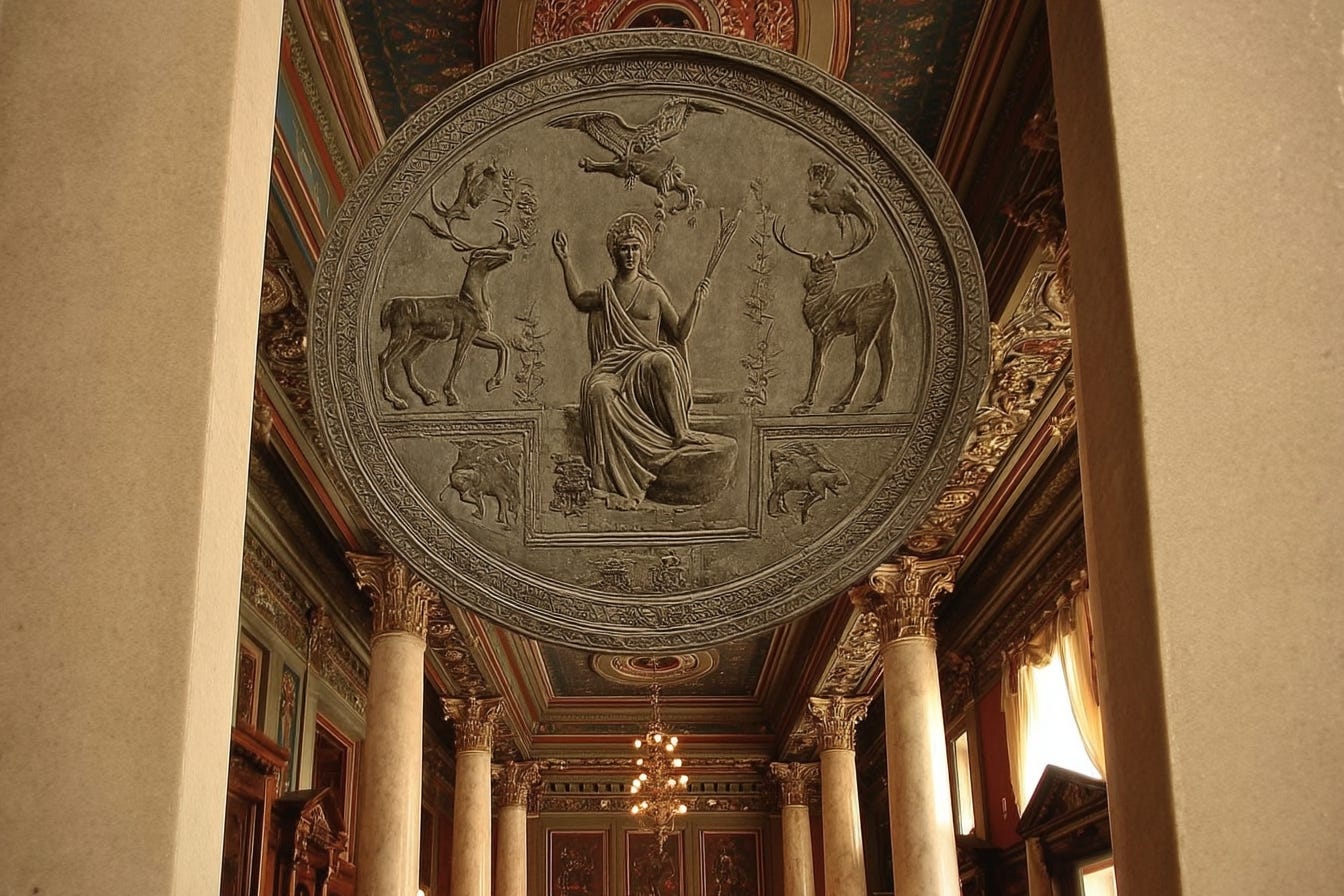
I recently stumbled upon a fascinating story that transported me back to the 2nd century. Imagine a time when a group of unsuspecting farmers, digging near the village of Lapseki, unearthed a treasure trove that would become a cornerstone for archaeologists. Known as the Lampsacus Hoard, this collection is now shared between the British Museum, the Louvre, and the Istanbul Archaeological Museum.
Lapseki, although now a quiet town in Turkey’s Çanakkale Province, was once a bustling Greek colony called Lampsacos. Founded in the sixth century BCE, it was a hub of intellectual and philosophical activity, producing great minds like Charon and Metrodorus.
One of the most remarkable finds from this treasure was a large silver dish, engraved with an image of Bharata Mata as envisioned by a Greek artist. This dish, now housed in the Istanbul Archaeological Museum, offers a unique glimpse into the cultural exchange between ancient Greece and India.
In 1943, the eminent scholar Sri Vasudeva Sharan Agarwala first identified this engraving as Bharata Mata in his paper, ‘India Represented on a Silver Dish from Lampsacos’. His insights opened up a new understanding of how ancient Greece perceived India, further supported by earlier works like E.H. Warmington’s ‘The Commerce Between the Roman Empire and India’.
The significance of this silver dish extends beyond its artistic value; it symbolizes the cultural and commercial influence that ancient India, or Bharatavarsha, wielded across the world. While modern cultural exchanges often involve Western influences dominating global culture, this dish reminds us of a time when India was at the forefront of cultural dissemination, sharing its philosophy, art, and wisdom with the world.
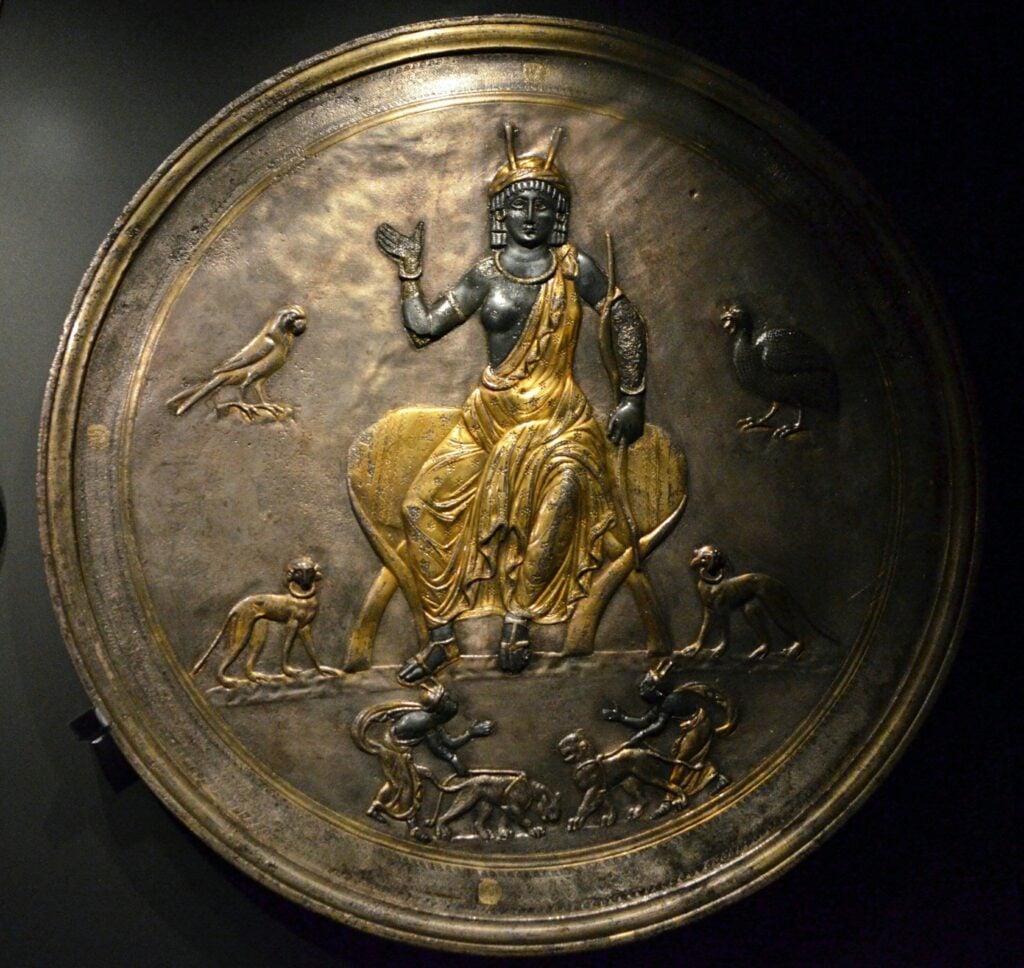
The imagery on the dish, as analyzed by Agarwala, depicts a woman seated on a chair supported by elephant tusks, surrounded by Indian flora and fauna. This portrayal of India as a woman, embodying both protection and strength, is a testament to the artist’s ingenuity and understanding of Indian symbolism.
Agarwala’s detailed analysis not only challenges previous Western interpretations but also highlights the deep-rooted connections between India and the ancient world. His work serves as a call to appreciate the historical ties that bind civilizations and the ways in which art can offer insights into these relationships.
Next time you’re in Istanbul, be sure to visit the Archaeological Museum and see this extraordinary piece for yourself. It’s a powerful reminder of India’s rich cultural legacy and its enduring impact on the world.