
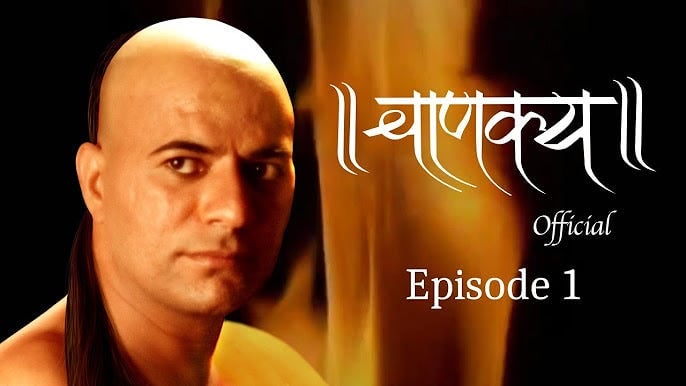
Mudrarakshasa, attributed to Vishakadatta and set in the age of Chanakya, Chandragupta Maurya, and the Nandas, stands as a Sanskrit political thriller that illuminates ancient India’s high-stakes statecraft. Situated in Kusumapura (Patna) after the fall of the last Nanda ruler, the drama turns on a singular strategic objective: persuading Rakshasa, the honest and formidable minister of the defeated camp, to serve the Maurya court. The narrative thereby offers a concentrated study in realpolitik and dharma, drawing readers into the ethical and political complexities of regime change.
The title Mudrarakshasa refers to the signet ring of Rakshasastolen by a spy in Chanakya’s networkand used to forge a letter that sets an intricate web of intrigue in motion. Through calculated misinformation and deft psychological insight, suspicion is sown between Rakshasa and Malayaketu, the vassal king who fled Chandragupta’s court after his father’s poisoning. The dramatic tension escalates as misattribution of blame, lost symbols of authority (the ring), and endangered kinship bonds converge to destabilize Rakshasa’s position.
Structurally, the play alternates between the houses of Chanakya and Rakshasa, presenting move and countermove with the rhythm of shatranjonly here, lives and legacies are at stake. Dialogue serves as the primary instrument of characterization, revealing ideals, loyalties, and the resolve to defend them. Chanakya, who openly admires Rakshasa’s brilliance and courage, nonetheless deploys every tool of the Arthasastra: forged letters, controlled imprisonments, exile, viscerally effective agents, and a sophisticated intelligence apparatus. He identifies Rakshasa’s deep loyalty to friends and leverages it as a pressure point.
Rakshasa, however, is no passive foil. He mounts multiple attempts to eliminate Chandraguptathrough targeted attack by archer and mahout on the day of royal entry, by poisoned stratagems, and by staging hidden assailants in Chandragupta’s chamber. Each plot is intricately conceived and met by Chanakya’s equally meticulous counterintelligence: assassins neutralized, poisoners outmaneuvered, and even a trail of ants revealing the secret cache of food that gives away concealed enemies.
The play foregrounds the centrality of espionage, with agents described as capable of “a thousand languages” and “a thousand disguises.” In a manner reflective of the subcontinent’s shared civilizational space, characters from varied traditions appear as operatives within a single political order: the Brahmin Indusharman moves disguised as a Buddhist monk to cultivate trust among Rakshasa’s ministers; Nipunaka circulates as an observer of public mood; Jivasiddhi, a Jain monk, functions as an intelligence conduit; Viradhagupta appears as a snake charmer. Read with a dharmic lens, these portrayals do not indict any tradition; rather, they illustrate how a plural social fabric intersects with statecraft, underscoring the shared ethical questions confronting governance across Hindu, Buddhist, and Jain communities.

By the denouement, both principal ministers achieve a paradoxical triumph. Rakshasa, despite defeat, is elevated for integrity and steadfastness, ultimately becoming Chandragupta’s ministerhis ethical core intact after a demanding test. Chanakya, whose deceptions aimed at consolidating a stable polity rather than personal aggrandizement, withdraws from public life, affirming a conception of rajadharma that valorizes institutional continuity over individual power.
Stylistically, Mudrarakshasa is distinctive among Sanskrit dramas: it avoids romance and sidelines conventional comic relief (vidushaka), focusing instead on concentrated political argument and judicially balanced discourse on duty, loyalty, and reason of state. The result is a tightly argued meditation on the interplay of dharma and arthahow legitimate ends and complex means coexist in governance.
In cross-traditional perspective, the narrative’s texture is enriched by sources beyond a single sectarian lineage; for instance, a later account of Chanakya’s death survives in a Jain tradition. Such intertextuality reinforces the shared civilizational archive of dharmic India, where Hindu, Buddhist, and Jain sources collectively preserve and scrutinize statecraft, ethics, and historical memory.
For contemporary readers, Mudrarakshasa offers enduring insights: the necessity of credible institutions, the delicate ethics of intelligence and information operations, the hazards of mistrust within coalitions, and the strategic art of converting adversaries into allies. Framed alongside the Arthasastra, this drama remains a proven guide to political prudenceinviting reflection on how to balance ruthless efficiency with moral accountability in the pursuit of stable, just rule.
Inspired by this post on Varnam.
