Bangladesh has long been regarded as a society anchored in pluralism and moderation, yet a discernible rise in violent extremist currents has altered its security landscape. This evolution carries direct implications for India’s eastern frontier, where shared rivers, culture, and commerce meet the realities of border management and counterterrorism. Examining these dynamics through an academic lens reveals both risks and opportunities: a need to strengthen border security and counterextremism, while simultaneously nurturing interfaith harmony and dharmic unity across Hindu, Buddhist, Jain, and Sikh traditions alongside peace-affirming Muslim communities.
Multiple drivers contribute to the extremist push-and-pull in Bangladesh. Political polarization, online radicalization, and the residual influence of transnational jihadist narratives intersect with local socio-economic vulnerabilities. While decisive crackdowns have disrupted many networks, adaptive clusters persist in digital spaces and informal circuits. These trends, set against periodic political volatility, create a fluid environment in which regional security planners must stay alert without compromising civil liberties or the social compact of pluralism.
Historically, Bangladesh has experienced targeted violence against secular activists, minorities, and civic voices, followed by robust state responses that have constrained organized terror cells. Even as hard capabilities improve, softer vectorsdigital propaganda, clandestine financing, and the exploitation of community grievancescontinue to test institutions. This complexity reinforces the need for calibrated counterterrorism efforts that integrate law enforcement, intelligence, judiciary, and community leaders to prevent relapse and to protect all citizens.
The India–Bangladesh borderspanning riverine stretches, wetlands, and densely populated districtsposes distinct challenges. Porous sections enable illicit flows that can overlap with extremist facilitation networks, including movement of forged documents, narcotics, arms, and counterfeit currency. Border Security Force (BSF) and Border Guard Bangladesh (BGB) cooperation has reduced some risks through coordinated patrols and information sharing, yet gaps remain in night surveillance, riverine monitoring, and last-mile community engagement.
In India’s NortheastAssam, Meghalaya, Tripura, Mizoram, and West Bengalsecurity planners have noted that cross-border tensions, if left unaddressed, can compound local vulnerabilities. The legacy of earlier insurgencies has largely receded due to improved bilateral cooperation, but vigilance is required to prevent any reactivation of dormant logistics and to stop opportunistic linkages with criminal syndicates. Here, sophisticated border management must be matched by social investments that build trust with residents who are the first observers and the most affected stakeholders.
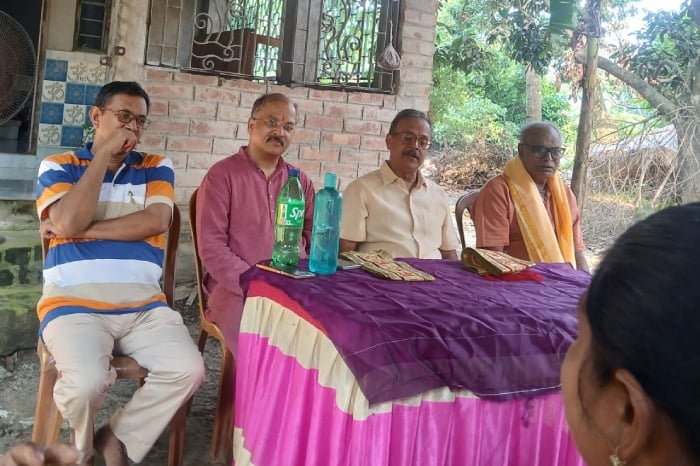
Community accounts from border hamlets often describe nights of thick river fog, when the line between lawful commerce and illicit movement blurs. These lived realities underscore an essential truth: effective security is inseparable from everyday dignity and livelihoods. Residents respond most positively where law enforcement is predictable, humane, and collaborative; where local grievance redressal is swift; and where faith institutions act as partners in calming rumors and affirming social solidarity.
Preserving the cultural fabric of the Ganga–Brahmaputra region requires a clear commitment to protect all communitiesHindu, Buddhist, Jain, Sikh, and Christianwhile affirming that the vast majority of Muslims in both countries reject violence. Such a stance not only aligns with dharmic values of compassion and justice but also strengthens counterextremism by denying radicals the polarizing narratives they seek. Religious harmony and interfaith dialogue thus become strategic assets as much as social virtues.
India and Bangladesh possess a foundation of cooperation that can be deepened: the Coordinated Border Management Plan, the 2015 Land Boundary Agreement, and expanding connectivity on rail, road, and inland waterways. Building on these, a next-generation security architecture can prioritize real-time intelligence fusion, joint riverine patrols, and technology-enabled monitoring across vulnerable stretches. Equally vital are strict anti–money laundering and counter–terror finance measures, fast-track mutual legal assistance, and secure extradition protocols that respect due process.
Ten practical measures can yield outsized impact. First, an integrated intelligence grid and shared watchlists between agencies can reduce response times. Second, smart fencing, drones, and low-light sensors should be prioritized in riverine corridors. Third, community policing cells with multilingual outreach can increase public trust. Fourth, cyber-monitoring within legal safeguards can disrupt online radicalization funnels. Fifth, coordinated action on hawala, narcotics, and counterfeit currency must tighten the financial choke points. Sixth, joint tabletop exercises and simulation drills can align standard operating procedures. Seventh, civic-education programs that highlight dharmic unity and interfaith respect can inoculate youth against extremist narratives. Eighth, livelihood schemes in border villages can deter recruitment by criminal networks. Ninth, rapid grievance resolution mechanisms can de-escalate flashpoints. Tenth, institutionalized parliamentary and academic dialogues can keep policy adaptive and evidence-based.
Counter-radicalization is most effective when credible faith leaders and civil society speak in one voice against hatred and vigilantism. Temples, viharas, gurdwaras, and community organizationsworking alongside peace-affirming mosques and madrasascan convene interfaith exchanges that emphasize shared values. When communities hear consistent messages of unity in diversity from spiritual authorities and local administrators, the space for extremist manipulation narrows decisively.
Ultimately, safeguarding India’s eastern frontier is not solely a matter of fences and force. It is a comprehensive endeavor that fuses security with social cohesion, law with legitimacy, and vigilance with empathy. By advancing Border Security, Counterterrorism Efforts, and Regional Security through people-centric policiesand by championing religious harmony across the dharmic traditions and beyondboth nations can transform a shared frontier into a corridor of peace, resilience, and prosperity.
Inspired by this post on Struggle for Hindu Existence.