New Brunswick, NJ, October 28: The Coalition of Hindus of North America (CoHNA) condemned the Rutgers University event titled “Hindutva in America: A Threat to Equality and Religious Pluralism,” noting widespread concern across campus and beyond. Community members, alumni, and student groups articulated that the program, framed as academic inquiry, risked deepening bias against Hindu students and undermining a climate of scholarly neutrality.
Observers reported that the panel featured no practicing Hindus, yet advanced categorical claims about Hinduism and Hindutva while curtailing questions from practicing Hindu attendees. This dynamic raised substantive issues for academic freedom: without viewpoint diversity, discussion risks conflating religion, politics, and identity in ways that can stigmatize already vulnerable student populations.
Participants highlighted several points of factual concern. Chief among them was the denial of Hinduphobia, despite documented vandalism at Hindu temples in the United States since December 2023 and state-level anti-hate data indicating a rise in anti-Hindu incidents, second only to antisemitism in some jurisdictions. Additionally, panelists reportedly equated the Nazi Hakenkreuz with the Hindu Swastika, notwithstanding evidence that Hitler’s symbol was the Hakenkreuz and that the Swastika holds ancient, sacred significance across dharmic traditions—Hinduism, Buddhism, Jainism, and, in distinct visual forms and contexts, Sikh heritage. Broad insinuations that Hindu organizations in the U.S. receive undisclosed payments from the Indian government further fueled concerns about unsubstantiated claims entering campus discourse as settled fact.
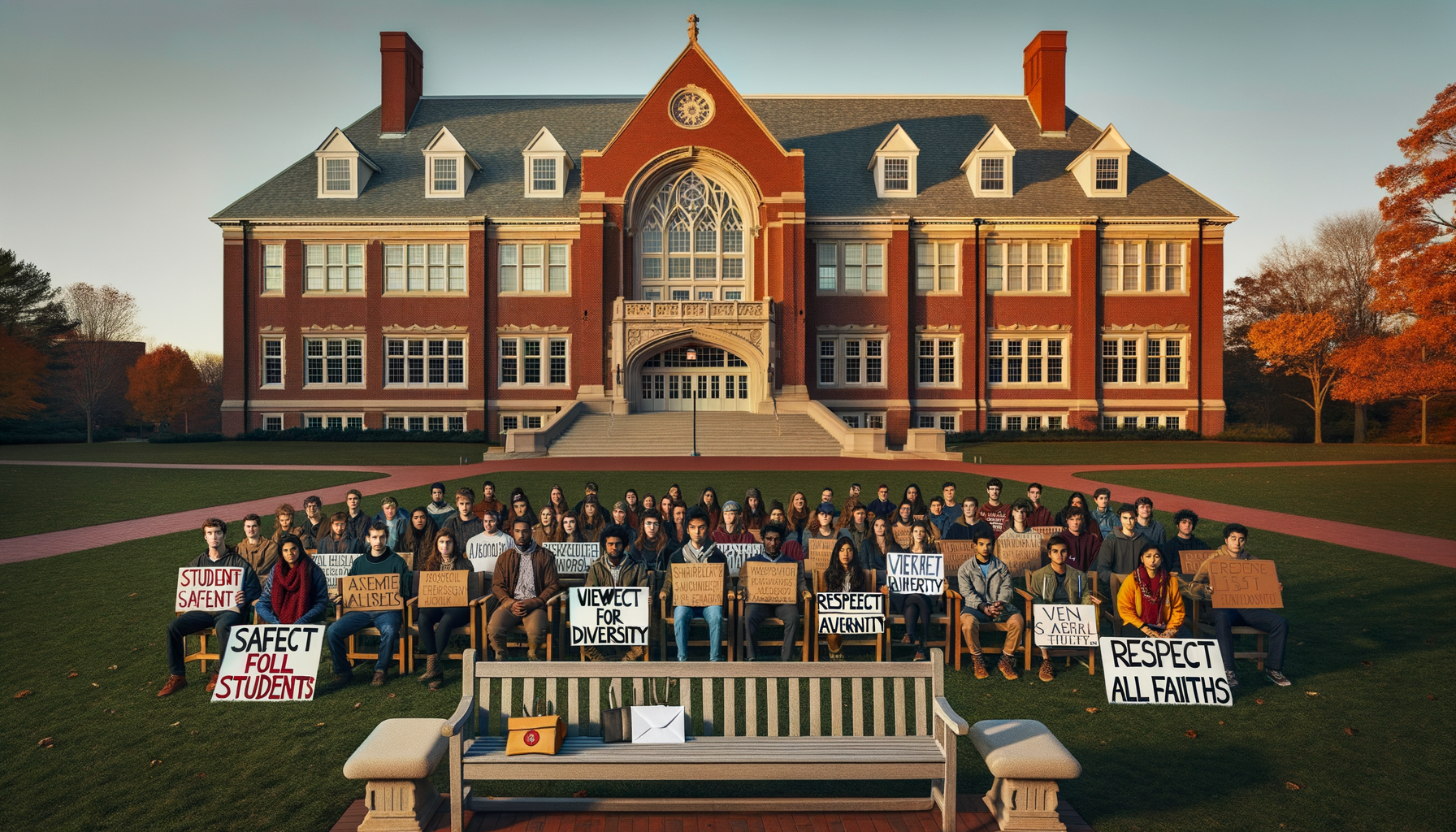
Amid apprehensions about backlash, a group of Hindu students organized a silent, officially permitted rally outside the venue. They described facing hostility, including an attempt to dox participants. One student, speaking anonymously, said the climate felt intimidating and that many peers stayed away out of fear. Accounts like these reflect the lived experience of immigrant-origin and minority students who must navigate campus hierarchies while advocating for safety and fair representation.
Students and chaplaincy leaders emphasized they were not seeking cancellation of the program, but clarity that institutional branding does not endorse rhetoric perceived as anti-Hindu. Rutgers Hindu chaplain Hitesh Trivedi underscored the need for a campus environment that protects both academic debate and student well-being, especially when discussions involve sensitive questions of faith, identity, and global politics.
In the weeks preceding the event, CoHNA facilitated a broad civic engagement effort: thousands of emails from students, parents, and community members urged Rutgers to disassociate its brand from the program; additional messages reached state and federal lawmakers; and policy fellows contacted New Jersey officials to register concerns. The goal, organizers noted, was to advocate for academic responsibility while protecting viewpoint diversity and student safety.
On October 24, four Members of the U.S. Congress—Rep. Sanford Bishop (D-GA), Rep. Suhas Subramanyam (D-VA), Rep. Rich McCormick (R-GA), and Rep. Shri Thanedar (D-MI)—sent a joint letter to Rutgers leadership. The letter cautioned that the framing and source material “misrepresent a diverse and peaceful religious community” and warned that such narratives could “fuel further prejudice, particularly impacting Hindu students on college campuses who may feel unfairly targeted or unsafe.”
CoHNA representatives attended the event to assess whether an open exchange of ideas would be welcomed. They reported that opportunities for substantive engagement were limited. Co-founder and board member Suresh Krishnamoorthy stated that when organizations and beliefs are maligned and Hindu voices are excluded from defining their own religious identity, community advocates feel compelled to respond—especially on behalf of Hindu youth navigating the campus climate.
Throughout, CoHNA reiterated support for free speech and academic freedom, while stressing the corollary responsibility to uphold scholarly rigor, factual accuracy, and the safety of all students. The organization called on universities nationwide to reaffirm principles of viewpoint diversity, to distinguish clearly between institutional endorsement and individual speech, and to ensure that academic inquiry does not inadvertently normalize prejudice.
A broader ethical concern emerged from the debate: rhetoric that collapses complex religious and cultural landscapes into political caricatures can stigmatize not only Hindus but also related dharmic communities—Buddhists, Jains, and Sikhs—who share intertwined histories and sacred symbols. In an era of heightened polarization, campuses can model an inclusive standard that honors pluralism within and across dharmic traditions while enabling rigorous critique anchored in evidence, nuance, and respect. Such an approach advances both academic integrity and the safety and dignity of all students.
Inspired by this post on CoHNA.