The confluence of pen and camera reveals how narrative and image together safeguard Cultural Heritage while nurturing unity across Hinduism, Buddhism, Jainism, and Sikhism. Evoking the creative sensibility associated with Sardar Jaiteg Singh Anant, this reflection considers how disciplined writing and attentive photography cultivate a coherent archive of lived devotion, ritual, and everyday ethicsan archive that educates, connects, and heals.
Across dharmic traditions, principles such as Anekantavada (plurality of perspectives), Ahimsa (non-violence), Seva (selfless service), and Karuna (compassion) invite multiple, complementary ways of seeing. The pen captures context, interpretation, and nuance; the camera preserves presence, atmosphere, and gesture. Together, they honor Unity in spiritual diversity by presenting many angles of a single truth without erasing difference.
Writing anchors images in place, time, and meaning: the names of temples and gurudwaras, the cadence of chants, the sequence of festivals, and the social bonds visible in community kitchens and processions. Photography meanwhile records textures of Bhakti Tradition and Hindu Art and Culturethe soot on a lamp, the grain of a wooden veena, the reflective quiet of a vihara, the luminous white of a derasar. The result is documentation that is both academically rigorous and emotionally resonant.
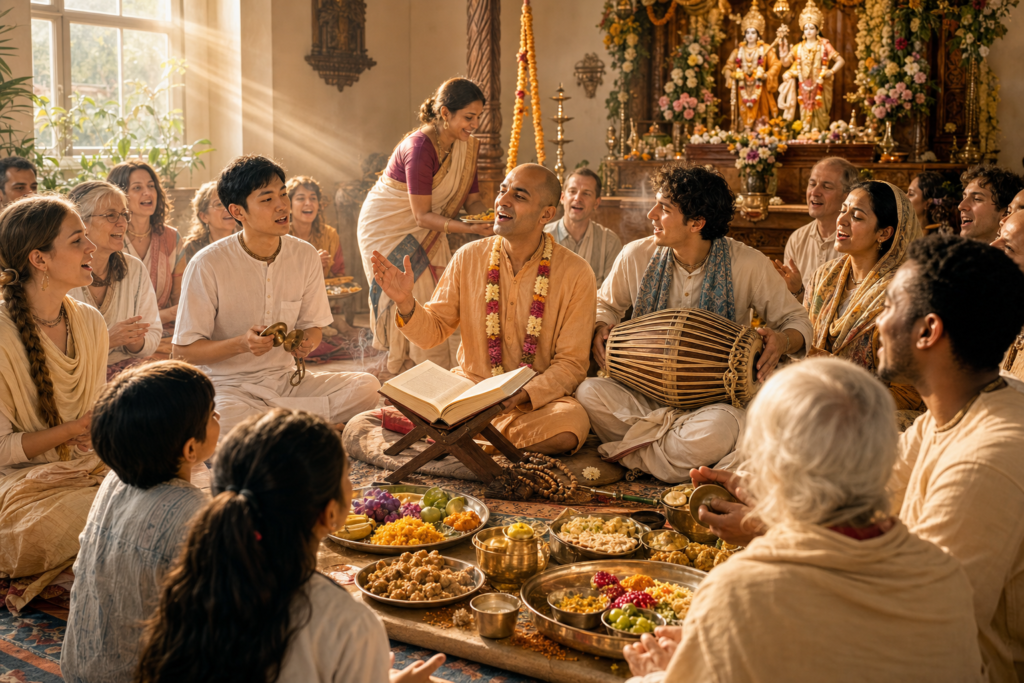
Practitioners who carry a notebook and a lens often report that fieldwork deepens empathy. In a gurudwara during langar, a temple on Karthika Purnima, a Buddhist vihara on Vesak, or a Jain derasar during Pavai Nombu, the confluence of observation and participation fosters Interfaith Dialogue grounded in respect. Words help articulate what images cannot say; images remind readers that ideas arise from human faces, shared meals, and sacred spaces.
Ethical practice remains paramount. Consent, accurate captions, and careful contextualization uphold dignity and trust. Avoiding sensationalism aligns with the dharmic commitment to truth (satya) and responsibility (dharma). When writing and photography foreground community voices, they embody seva; when they avoid caricature, they enact ahimsa; when they situate a scene within broader histories, they model anekantavada.
Methodologically, pairing concise field notes with metadata-rich photographs strengthens long-term preservation. Recording dates, locations, vernacular terms, and scriptural references enables future scholarship. Clear alt-text, descriptive filenames, and structured captions improve discoverability and SEO, while remaining faithful to academic standards. This disciplined approach transforms scattered impressions into a coherent knowledge repository for teachers, students, and community archives.
Stylistically, narrative arcs can weave a procession’s beginning, climax, and resolution into a single story, while images punctuate turning points. Verses from the Upanishads, the Dhamma, Jain Agamas, or Gurbani can ethically frame a scene when quoted accurately and contextualized. Such intertextuality situates the present within a timeless conversation, without subordinating one tradition to another.
Ultimately, the meeting of pen and camera strengthens civilizational memory and invites compassionate participation in a shared future. By honoring plurality without dilutionand precision without coldnessthis confluence becomes a quiet practice of peace. In this spirit, the creative horizon signaled by the name Sardar Jaiteg Singh Anant stands as a reminder that clarity and care, word and light, can move together toward harmony.
Inspired by this post on SikhNet – News.