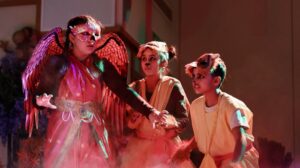
The Bhaktivedanta Players concluded their 40th anniversary year with a powerful and joyful staging of The Lion King – Simha Rāja, presented with a thoughtful Kṛṣṇa conscious interpretation. This culminating performance celebrated not only the close of a commemorative year, but also four decades of devotional drama that have strengthened cultural participation and community cohesion.
Framing a familiar narrative through the lens of dharma, the production emphasized ethical leadership, courage, and responsibility to the community. Within a Kṛṣṇa conscious ethos associated with ISKCON (International Society For Krishna Consciousness), the adaptation invited reflection on bhakti, seva, and gratitude, allowing audiences to encounter universal values without altering the story’s core arc.
Audience responses indicated a deep emotional connection; many described a renewed appreciation for Devotion and the Bhakti Tradition as living expressions of culture. Families and youth engaged with the performance as accessible cultural education, noting how the themes affirmed compassion, non-harm, and dutyvirtues honored across Hinduism, Buddhism, Jainism, and Sikhism.
In this way, Simha Rāja functioned as a bridge for Unity in Diversity, demonstrating how performing arts can nurture inter-tradition understanding while honoring Sanatana Dharma’s plural spirit. The production’s emphasis on shared ethical foundations fostered a sense of collective belonging and cultural continuity.
Marking forty years of sustained creative work, the Bhaktivedanta Players reaffirmed the role of Hindu Art and Culture in public life: to inspire, to educate, and to unite. The grand finale underscored how devotional drama remains a relevant medium for cultural dialogue, heritage preservation, and inclusive community celebration.
As the anniversary season concluded, the ensemble’s legacy pointed forwardto future collaborations that deepen unity in spiritual plurality and amplify the enduring wisdom of India’s performing traditions.
Inspired by this post on Dandavats.