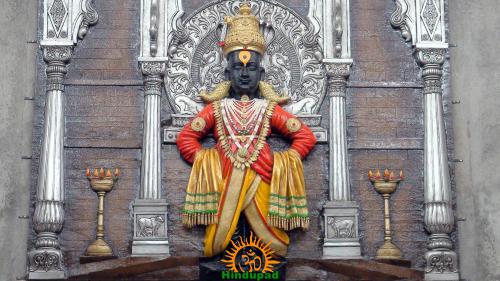
Lakshmana, the younger brother of Sri Rama in the Ramayana, occupies a distinctive place in Hindu sculptures and sacred imagery. Within Hindu iconography and temple practice, he is not only a heroic kshatriya but also the very embodiment of seva (selfless service), vinaya (discipline and humility), and unwavering fraternal loyalty. Across regions and periods, artists and priests have emphasized these theological qualities through carefully codified forms, proportions, attributes, and placement within the Rama parivara (family group). This survey synthesizes Shilpa Shastra principles, Agamic prescriptions, and regional stylistic conventions to explain how Lakshmana is recognized, measured, and venerated in Hindu tradition.
Vaishnava theology frequently identifies Lakshmana as an incarnation of Adishesha, the cosmic serpent who serves as Vishnu’s ever-faithful support. In sacred art, this translates into a consistent visual grammar: Lakshmana’s form is dignified yet slightly subordinate in scale to Sri Rama, signaling both filial devotion and metaphysical service. The icon thus becomes a statement of dharma enacted through nearness, vigilance, and readiness to protect.
In most Rama parivara groupings, Sri Rama stands at the center with bow (kodanda) and quiver; Sita is positioned to his right (viewer’s left), and Lakshmana stands to his left (viewer’s right). Hanuman commonly appears kneeling near Rama’s feet, often to the viewer’s left, looking upward in devotion. This spatial arrangement is not merely aesthetic; it encodes relationships of dharma, household order, and idealized kinship. The arrangement has been remarkably stable in South Indian bronzes of the Chola, Vijayanagara, and Nayaka periods, and it recurs in North and East Indian stone reliefs and painted traditions, with local variations.
Attributes and attire distinguish Lakshmana clearly from his elder brother while maintaining close visual kinship. He is typically dvibhuja (two-armed), bearing a bow and one or more arrows, with a quiver slung across the back. He wears a kiritamakuta (high conical crown) or a shorter princely headdress, a yajnopavita (sacred thread), keyura (armlets), hara (necklaces), udara-bandha (waistband), and nupura (anklets). Ornamentation is elegant but less opulent than Rama’s, further underscoring his role as sevaka rather than sovereign.
Standing posture is usually samabhanga or a gentle tribhanga, depending on regional schools. The stance is alert, shoulders set, and the chest openan embodied readiness that matches Lakshmana’s narrative vigilance in the Ramayana. Facial features are youthful and composed, and canonical texts and later commentators often describe him as gaura (fair) in complexion, in contrast to Rama’s shyama (dark) hue. While these color cues primarily inform painting and manuscript illumination, sculptural polychromy and metal patination sometimes suggest the contrast.
Shilpa Shastra literaturesuch as Manasara, Mayamata, Shilparatna, and relevant Vaishnava Agamas (notably Vaikhanasa and Pancharatra traditions)governs anga-pramana (body proportions) through tala measurements. In composite parivara icons, Rama is fashioned slightly taller and broader, while Lakshmana is intentionally reduced by a small margin. This calibrated difference visually encodes the younger brother’s status and service while preserving harmonious balance across the group. Exact tala prescriptions vary by regional school and workshop lineage, but the principle of graduated hierarchy remains consistent.
Hand gestures (hasta) are generally functional rather than symbolic: Lakshmana’s right hand may grasp an arrow or rest near the bowstring, while his left hand steadies the bow staff. In certain Pattabhisheka (coronation) ensembles, one hand may adopt a relaxed pose or, more rarely, a mild abhaya (assurance) variation, aligning his protective role with Rama’s royal stride. Unlike Vishnu or Rama, Lakshmana does not display the Srivatsa or hold conch and discus; his identity is anchored in the warrior’s regalia, nearness to Rama, and narrative context.
Regional workshops inflect these norms in distinctive ways. Chola bronzes (c. 10th–13th centuries) often present Lakshmana as slender, poised, and richly yet proportionately adorned, with refined metal modeling and rhythmic contours. Hoysala stone sculpture (c. 12th–13th centuries) favors minute carving, crisp jewelry, and intricate textiles rendered in chloritic schist. Vijayanagara and Nayaka ateliers emphasize regal bearing and kinetic drapery folds in both stone and bronze, while late-medieval North Indian and Himalayan paintings bring out Lakshmana’s fair skin and martial alertness through palette and line. Southeast Asian monumental reliefs depicting the Ramayana, such as those at Angkor, also feature Lakshmana within narrative sequences, identifiable by proximity to Rama and martial attributes.
Narrative cycles in temples and courtly art regularly situate Lakshmana at decisive moments: the forest exile (vanvas), the defense of Rama and Sita at Panchavati, the confrontation with Surpanakha, the march to Lanka, and the battles against Ravana’s commanders. While the popular motif of the “Lakshmana Rekha” is important in performative and literary traditions, it remains rare in durable sculptural programs and is not found in the Valmiki Ramayana; art historical readings therefore treat it cautiously as a later devotional amplification rather than a canonical epic episode.
Ritual life in Hindu temples keeps the theological core of Lakshmana’s persona vivid. In daily alankara (adornment), archakas present him as vigilant guardian by Rama’s side. During utsavas (processions), Rama-parivara bronzes travel together, with Lakshmana’s gaze and posture oriented toward Rama’s protection and Sita’s security. The visual grammar is didactic: it instructs devotees that companionship in dharma is inseparable from seva, and that strength is rightly used in service of righteousness and family harmony.
Examples across the subcontinent reinforce these shared codes. At Hampi’s Hazara Rama Temple, narrative friezes compact complex warfare and pilgrimage scenes where Lakshmana’s presence is constant, legible through arms and adjacency. South Indian templesfrom Kumbakonam’s Ramaswamy Temple to coastal shrineshouse Rama parivara bronzes precisely following Agamic measurements. In North and East India, painted Ramayana manuscripts and Pahari and Rajasthani schools excel at differentiating Rama and Lakshmana by hue, costume, and scale, all while preserving their fraternal intimacy.
A frequent point of confusion in art-historical conversations concerns the Lakshmana Temple at Khajuraho. Despite its name, this 10th-century monument is dedicated to Vaikuntha Vishnu and not to Lakshmana of the Ramayana. The nomenclature reflects the patronage of the Chandela ruler Lakshmana rather than the epic persona, a reminder that temple names and dedications require careful epigraphic and stylistic corroboration.
From a materials and conservation standpoint, Lakshmana icons present the same technical range as other Vaishnava works: high-tin bronze alloys for utsava murtis; granite, sandstone, or schist for garbhagriha (sanctum) icons and exterior reliefs; and, in later periods, brass or panchaloha compositions for portability and resilience. Modern analytical techniquesXRF for elemental analysis, metallography for casting diagnostics, and 3D photogrammetry for proportion studiesaid in dating, workshop attribution, and authenticity assessments while leaving devotional use undisturbed.
Shilpa Shastra frameworks emphasize relational proportion and serene affect over sensational detail. Even when Lakshmana is represented in battle, sculpture tends to favor balanced posture and composed countenance. This choice affirms a central value of the Ramayana: heroism controlled by dharma. Polishing lines, measured musculature, and regulated ornamentation collectively convey disciplined powerkshatra yoked to righteousness.
The spiritual symbolism is layered. As Adishesha’s manifestation, Lakshmana signifies the substratum that sustains the Divineadhara-shakti made visible as loyal brotherhood. His proximity to Rama represents the intimacy of wisdom and action, bhakti and duty. In the devotee’s experience, the Lakshmana icon often evokes a quiet resolve: the courage to persevere, to protect family and community, and to align one’s strength to the welfare of others.
These values resonate across dharmic traditions. The Sikh ideal of seva elevates selfless service as a sacred duty; Buddhist practice underlines viriya (energetic perseverance) and saddhā (faith) as supports for the path; Jain ethics prize aparigraha (non-possessiveness) and disciplined restraint. Read together, Lakshmana’s iconography becomes an inter-dharmic touchstone, affirming unity in the shared pursuit of compassion, discipline, and service to truth.
For curators, scholars, and temple committees, a few practical markers aid identification. In group compositions, note orientation (Lakshmana at Rama’s left, viewer’s right), stature slightly less than Rama’s, and the constant presence of bow, arrows, and quiver. Observe crown type, jewelry density, and yajnopavita placement for workshop attribution, and compare tala-based verticals (head-to-toe divisions) for internal consistency. Narrative reliefs demand contextual reading, correlating figure identity with adjacent episodes and weaponry.
For devotees and learners, engaging Lakshmana’s image can be transformative. The icon invites contemplation on vigilance without anxiety, courage without pride, and loyalty without possessiveness. Ritually, archana to the Rama parivara naturally includes honoring Lakshmana’s seva-bhava, reminding worshippers that the highest strength is expressed through steadfast support and moral clarity.
In contemporary temple architecture and conservation, preserving the proportional relationships of the Rama parivara remains crucial. Even when adapting to new materials or installing utsava bronzes for processions, adherence to Agamic proportion keeps theological meaning intact. Where restoration is required, conservators increasingly consult both textual prescriptions and living ritual lineages to ensure that Lakshmana’s form continues to communicate disciplined devotion.
In sum, the idol form of Lakshmana is a study in measured power and luminous service. Through iconography, proportion rules, and ritual life, Hindu sculptures translate epic narrative into a living pedagogy. Standing close to Sri Rama and Sita, Lakshmana’s vigilant pose teaches a timeless lesson shared across dharmic paths: strength finds its highest purpose in selfless, steadfast protection of dharma and the bonds that sustain it.
Inspired by this post on Hindu Blog.