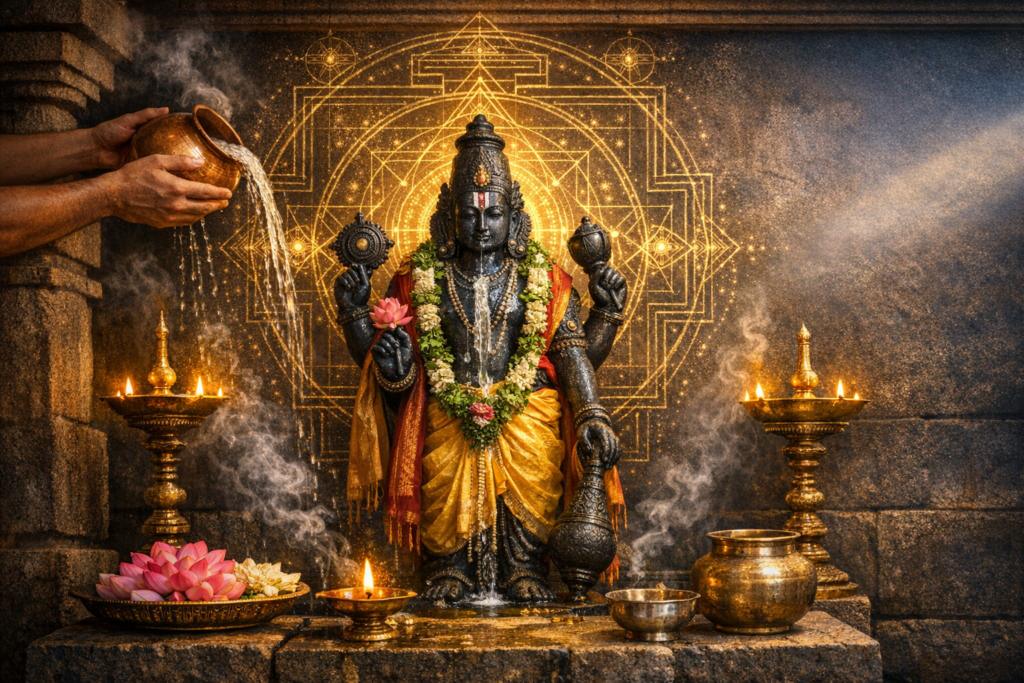
The association of Bhagvan Shiva and Mata Annpoorna stands as a profound teaching in Hindu traditions, expressing the inseparable relationship between ascetic wisdom and the compassionate act of feeding all beings. Within this relationship, Shiva embodies renunciation and transcendence, while Annapoorna (also known as Goddess Annapoorna), a revered manifestation of Parvati, embodies the sustaining grace of anna (nourishment). This bond is cherished across the Hindu way of life as a holistic vision of spirituality grounded in both inner realization and responsible care for the world.
As an aspect of Parvati (Pārvatī), Annapoorna represents the completeness of food and the sanctity of sharing. Her very name—“anna” (food) and “purna” (fullness)—signals abundance offered without hesitation. Shiva, the yogic exemplar of austerity, stands alongside her to demonstrate that spiritual insight and material sustenance are not adversaries; rather, they are complementary forces within Hindu Dharma. Together, they model a balanced path where meditation and service, tapas and dana, converge.
Puranic narratives relate that when Shiva emphasized the illusory nature of the world, Annapoorna withdrew nourishment, revealing how food undergirds all life and practice. In Varanasi (Kashi), she is said to have fed Shiva, symbolically affirming that even the highest wisdom depends on the ethical provision and grateful reception of food. This episode has inspired countless generations to see annadāna (the offering of food) not merely as charity, but as sacred duty intertwined with devotion (bhakti) and knowledge (jnana).
Ritually, the association is celebrated at the Annapurna Devi Temple near Kashi Vishwanath in Varanasi, where annadāna and prasad distribution create a living classroom of compassion. Observances such as Annapurna Jayanti—traditionally marked on Margashirsha Purnima—highlight food as a manifestation of divine care, reinforcing the understanding that feeding others is a form of worship. These temple practices, grounded in scriptures and living heritage, embody the ethics and aesthetics of Hindu spirituality.
Philosophically, Annapoorna and Shiva together articulate a comprehensive ethic: inner freedom thrives when bodies are nourished, and renunciation gains integrity when paired with responsibility toward society. This ethic encourages gratitude for food, mindful consumption, and a commitment to reduce waste. It elevates everyday acts—cooking, sharing, and eating—into rituals that strengthen families and communities, affirming that Dharma blossoms through service (seva) and stewardship.
The theme of sacred nourishment also resonates across Dharmic traditions, fostering unity in spiritual diversity. Sikh langar exemplifies dignified, egalitarian feeding; Buddhist dana emphasizes generosity and interdependence; Jain anna-kṣetra and ahimsa honor life through compassionate provision. These practices, aligned with the spirit of Annapoorna’s grace, illuminate shared values—hospitality, humility, and care—thereby nurturing harmony among Hinduism, Buddhism, Jainism, and Sikhism.
In daily life, the remembrance of Annapoorna’s grace inspires community kitchens, festival annadāna, and the sharing of prasad as expressions of love and learning. Devotees often engage with the Annapurna Stotram (traditionally attributed to Adi Shankaracharya) and seek darshan in Kashi, integrating scholarship and devotion. Such practices translate lofty teachings into lived experience, making spiritual insight accessible through the simple, powerful act of feeding one another.
Ultimately, the association of Shiva and Annapoorna offers a complete, proven framework for spiritual growth: cultivate inner stillness, honor the sacredness of food, and serve without distinction. In doing so, communities discover a pathway where wisdom and compassion reinforce each other, strengthening cultural heritage while advancing a shared, Dharmic vision of unity, dignity, and care for all beings.
Inspired by this post on Hindu Pad.