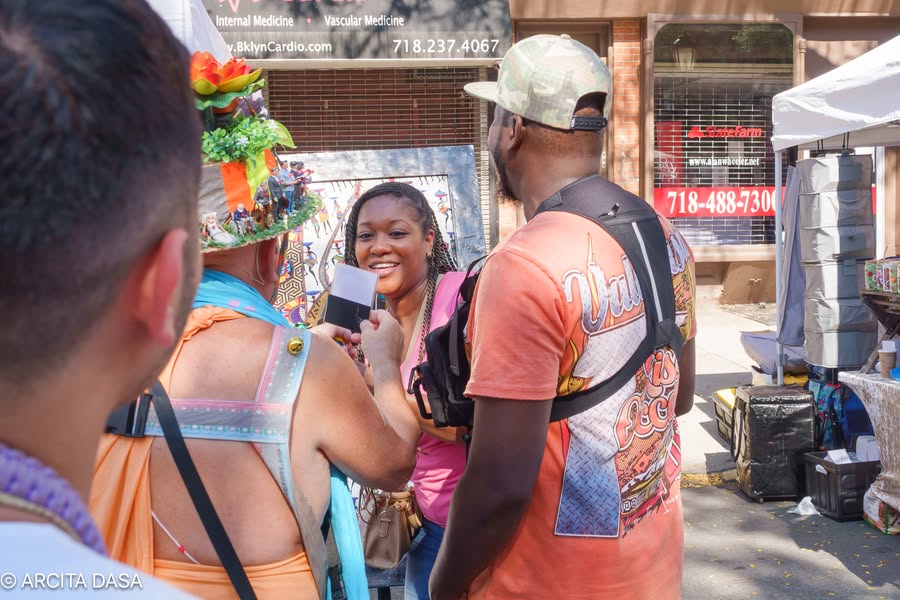
Arcita Dasa’s photo album, titled ATLANTIC Antic | 05 October 2025, documents a vibrant Harinama on Atlantic Avenue in Brooklyn, New York. The curated collection of 23+ photographs presents a visual ethnography of devotional kirtan in a public festival setting, capturing the intersection of spiritual practice, community engagement, and urban culture in New York City.
Set within Atlantic Anticone of Brooklyn’s most enduring street fairsthe Harinama offers a living expression of the Bhakti Tradition amid a diverse crowd. The images convey how chanting in open spaces can function as cultural heritage in motion, sustaining Hindu culture within the Indian diaspora while inviting inclusive participation from neighbors, visitors, and passersby.
Visual details emphasize rhythmic movement and interpersonal connection: mridanga and kartal accompaniment, call-and-response chanting, and spontaneous smiles as onlookers encounter the sacred names. Families pause, children mirror the rhythm, and elders observe with quiet reverence. The atmosphere, as depicted, balances devotional intensity with urban conviviality, showing how sacred sound adapts to the tempo of city life.
The album foregrounds shared values that resonate across dharmic traditionsseva, sangha/sangat, ahimsa, and mindful presenceoffering a unifying lens that connects Hinduism, Buddhism, Jainism, and Sikhism. Public chanting here is not portrayed as insular practice but as a bridge-building act, aligned with communal harmony and pluralistic respect in a multicultural environment.
As a cultural record, the photographs highlight continuity and adaptation: Gaudiya-inspired Harinama appears alongside the textures of a modern Brooklyn streetscape, preserving devotional aesthetics while engaging contemporary audiences. The result is a nuanced portrait of community cohesion, where spiritual diversity in Hinduism and related dharmic values coexist with the everyday rhythms of New York City.
Documented on 05 October 2025 at Atlantic Avenue, the album functions as a visual archive and a case study in community engagement through chanting. It illustrates how devotional music, embodied presence, and shared space can nurture trust, curiosity, and dialoguestrengthening the Hindu American Community and contributing meaningfully to the broader cultural heritage of the city.
Inspired by this post on Dandavats.