Vasanthotsavam 2026 at the Tirumala Tirupati Balaji Temple (Sri Venkateswara Swamy Vaari Temple) will be observed from March 30 to April 01, 2026, in Chaitra Masam. Known locally as Salakatla Vasanthotsavam, this is the three-day annual spring festival conducted by Tirumala Tirupati Devasthanam (TTD) to ritually welcome the season of renewal. In 2026, the celebration aligns with the auspicious sequence of Chaitra Shukla Trayodasi, Chaturdasi, and Pournami, reflecting the temple’s meticulous adherence to the lunar calendar and Agamic timings.
Anchored in the theology of ritu-samskarathe sanctification of seasonal transitionsVasanthotsavam symbolizes cooling, freshness, and abundance after the onset of spring. The festival is situated within the Vaikhanasa and Pancharatra ritual frameworks followed at Tirumala, where seasonal observances are designed both to honor cosmic rhythms and to provide symbolic relief to the Utsava Murthies through fragrance, water, flowers, and sandalwood.
The designation Salakatla indicates an annual cycle of observance that complements other marquee TTD festivals in the sacred calendar. Temple records and regional epigraphic evidence situate Vasanthotsavam within the Vijayanagara period tradition, testifying to a long, unbroken lineage of ritual practice on this hill of sanctity. The continuity of the festival underscores Tirumala’s role as a living center of dharmic timekeeping, where astronomical tithis translate into community worship and shared experience.
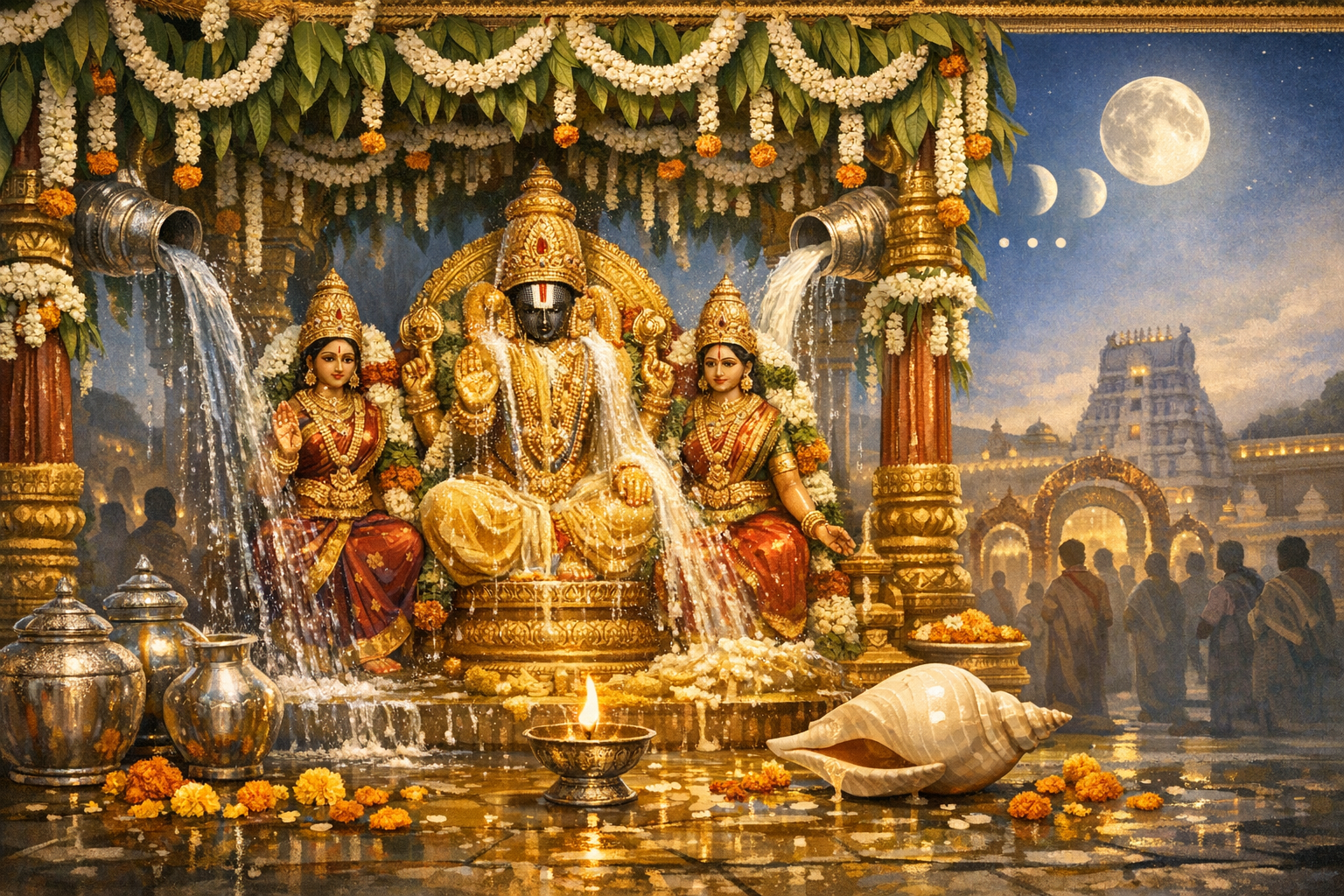
Central to Vasanthotsavam is Snapana Tirumanjanam, an elaborate abhishekam for the Utsava Murthies performed with panchamrita and fragrant dravyas. The ritual typically involves consecrated water, milk, curd, ghee, honey, and sugar, followed by turmeric, saffron, and chandanam applications, while priests chant select mantras including portions of Purusha Suktam, Sri Suktam, and Bhu Suktam. The cooling mediums used in Snapana Tirumanjanam are both symbolic and practical, evoking spring’s gentle abundance and the ideal of seva through care, cleanliness, and devotional aesthetics.
Across the three days, TTD customarily conducts Snapana Tirumanjanam for Sri Malayappa Swamy with Sridevi and Bhudevi, andon different days as per established practicealso for other Utsava Murthies such as Sri Rama and Sri Krishna along with Their consorts. The precise sequence for each day follows TTD’s official programme and is announced locally in keeping with Agama prescriptions and temple logistics. The festival typically includes evening processions around the four mada streets, offering devotees a rare, close darshan of the Utsava Murthies adorned in spring-themed alankarams.
In daily liturgical cadence, Vasanthotsavam is nested within the temple’s broader nitya-seva schedule that begins with Suprabhatam, followed by Thomala Seva, Koluvu, Archana, and darshan arrangements. The special Vasanthotsavam rituals are integrated into this rhythm so that the public flow of darshan continues while the festival retains its distinctive ritual gravity. For pilgrims, the visual language of the festivalmellow sandal paste, floral garlands, and shimmering vastramscreates an experiential bridge between scripture, season, and sacred presence.
The 2026 edition unfolds from Monday through Wednesday, a mid-week window that traditionally sees a measurable increase in footfall owing to Chaitra Purnima’s devotional appeal. The datesMarch 30 (Trayodasi), March 31 (Chaturdasi), and April 01 (Pournami)align the festival with the lunar crescendo of the fortnight. This timing invites collective participation in stotra recitation, darshan, and contemplation on Sri Venkateswara’s daya and anugraha during a season celebrated for auspicious beginnings.
The sensory and devotional character of Vasanthotsavam is particularly evident in the use of chandanam and fragrant flowers associated with spring. Pilgrims frequently describe the cool aroma of sandalwood and the sight of the Utsava Murthies under canopies of mango leaves and jasmine as profoundly calming. The rite’s emphasis on ushna-nivaranaritual coolingbecomes an accessible spiritual metaphor: faith refreshed, the mind pacified, and community life re-centered on seva and satya.
From a dharmic perspective, the festival’s spring ethos resonates broadly across sister traditions. Around this part of the year, communities observe Chaitra Navratri in Hindu practice, Mahavir Jayanti in Jain tradition, and Vaisakhi in Sikh tradition, each emphasizing renewal, ethical discipline, gratitude, and service. This shared seasonal sensibility reinforces a unifying vision in which diverse paths affirm common valuescompassion, self-restraint, collective well-being, and reverence for life.
Participation in Vasanthotsavam varies depending on TTD’s issuance of darshan slots and seva protocols for the festival period. While Salakatla Vasanthotsavam is a special annual observance, it coexists with other TTD arrangements such as Sarva Darshan and Special Entry Darshan, which are scheduled based on crowd management needs. Devotees are advised to refer to official TTD notifications for any limited-seating rituals, dress code guidelines that prioritize traditional attire, and procedural advisories designed to preserve sanctity and streamline movement.
Practical planning for 2026 should factor in moderate to warm daytime temperatures on the hill and the likelihood of peak crowds on Pournami. Carrying refillable water bottles, respecting the temple’s eco-sensitive norms, and allotting sufficient time for security checks are prudent measures. TTD’s prasadam and anna-dana facilities help sustain pilgrims through the day, and accessible amenities near the Vaikuntam Queue Complexes support orderly darshan during festival hours.
For many, Vasanthotsavam also offers an opportunity to appreciate the architectural-spatial genius of Tirumala’s sacred precincts. The four mada streets are not merely thoroughfares but processional corridors designed to extend the sanctum’s presence into the public realm. In this spatial theology, the deity’s movement into the community during utsavams is an invitation to transform everyday life into a canvas for dharma, gratitude, and mutual respect.
Theologically, Vasanthotsavam’s spring motif converges with scriptural reflections on rasaparticularly the cool, soothing rasas that cultivate inner composure. The festival’s textures and fragrances become didactic tools, teaching that spiritual life thrives when governed by balance: tapas aligned with compassion, devotion tempered by humility, and ritual beauty anchored in ethical living.
In essence, Vasanthotsavam 2026 at Tirumala blends precise calendrical observance, Agamic ritual excellence, and a participatory public ethos. The three days from Trayodasi to Pournami embody a cycle of preparation, culmination, and fullness that devotees experience through darshan, stotra, and seva. Those who journey to Tirumala during Chaitra Masam encounter not only the grandeur of a major TTD festival but also a lived cosmology in which season, scripture, and society harmonize to renew faith and community.
As always, schedules for Salakatla Vasanthotsavam are subject to TTD’s official announcements. Devotees planning travel and participation are encouraged to monitor updates close to the festival window to align their darshan with the latest temple advisories and to maintain the decorum that safeguards the sanctity of Sri Venkateswara’s abode.
Inspired by this post on Hindu Pad.