The annual Brahmotsavams of Sri Kodandarama Swamy Temple, Tirupati, are scheduled from March 17 to March 25, 2026 under the aegis of Tirumala Tirupati Devasthanam (TTD), with the customary solemnity and magnificence that characterize Vaishnava temple traditions. As the ritual prelude, Koil Alwar Tirumanjanam will take place on March 13, followed by Ankurarpanam on March 16, setting the sacred rhythm for nine days of processional worship and community participation. Daily Vahana Sevas are planned throughout the festival period in alignment with established TTD protocols.
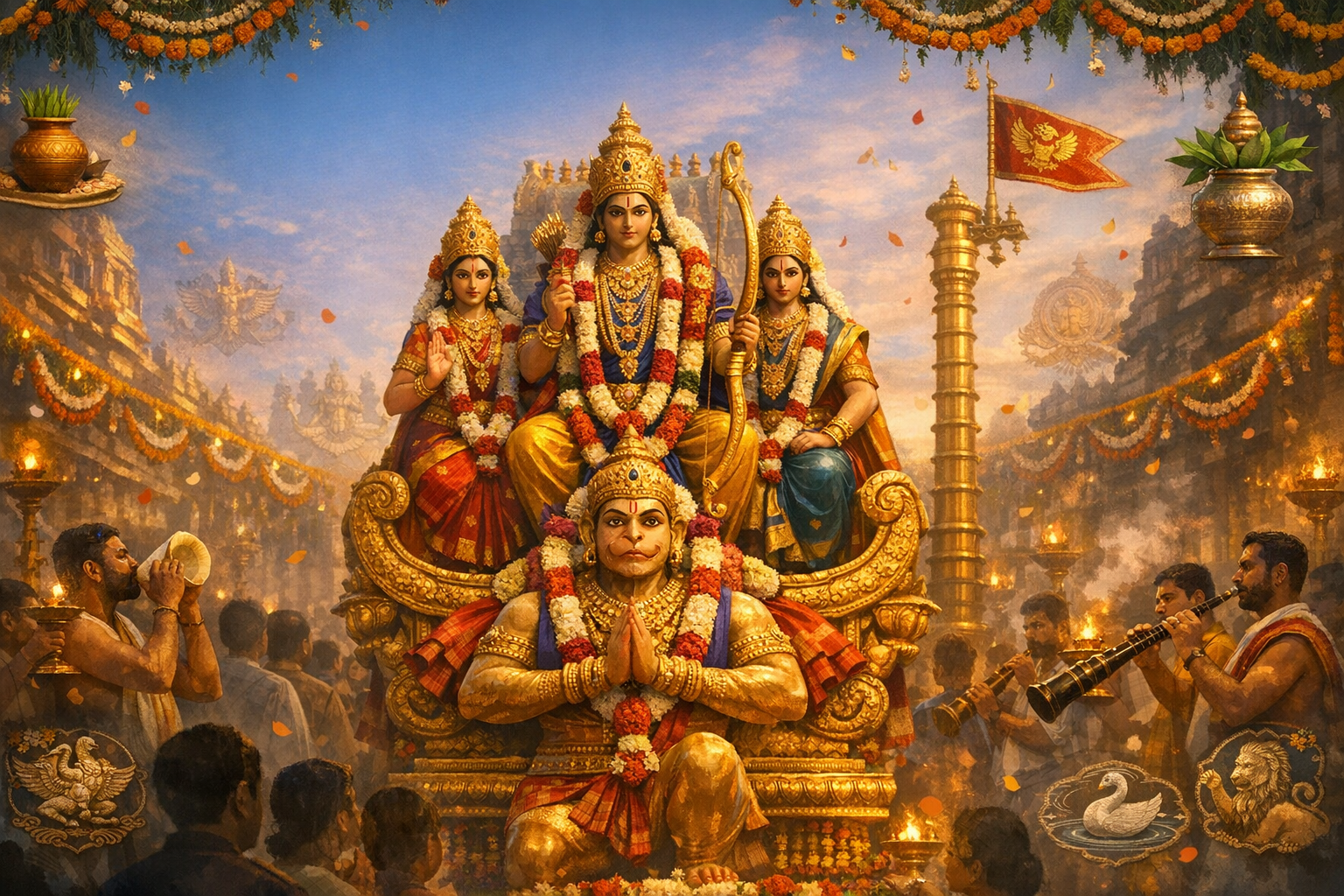
Situated in the heart of Tirupati, Sri Kodandarama Swamy Temple venerates Sri Rama along with Sita and Lakshmana, with Hanuman (Anjaneya) enshrined in a posture of unwavering service. Historically associated with the flourishing of Sri Rama bhakti in the region, this temple functions both as a liturgical center governed by the Vaikhanasa/Pancharatra Agamas and as a cultural anchor for devotees who revere Maryada Purushottama as the exemplar of dharma. Its Brahmotsavams provide a structured window into liturgical aesthetics, theology in practice, and the communal ethos of seva.
In the pan-Indic Vaishnava lexicon, Brahmotsavametymologically Brahma + Utsavamcommemorates the cosmic festival accredited in medieval narrative to Brahma’s worship of the Lord. In practice, it is a highly codified cycle of sankalpa (votive intent), dhwajarohanam (ceremonial flag-hoisting), vahana processions, and a culminating theerthavari (sacred bath), all directed toward kshetra-śuddhi (sanctification of the temple-space), loka-kalyana (welfare of the community), and intensified darshan for devotees.
Koil Alwar Tirumanjanam on March 13 marks the temple’s ritual deep-cleaning and consecrational refresh just prior to the festival. In this rite, the sanctum and allied spaces undergo systematic purification and anointing with aromatic and sanctified substances as prescribed in the Agamas. The procedure expresses a theology of hospitality, preparing the templeconceived as the divine homefor the heightened presence and movement (utsava) of the Lord among devotees.
Ankurarpanam, scheduled for March 16, inaugurates the fertility and auspiciousness dimension of the Brahmotsavams through the sowing of germinating seeds. This rite signals renewal, ethical intention (sankalpa), and the symbolic sprouting of merit (punya) that the festival seeks to cultivate. Per long-standing Vaishnava praxis, Ankurarpanam ritually “plants” the festival’s success and aligns the temple community with the rhythms of time and season.
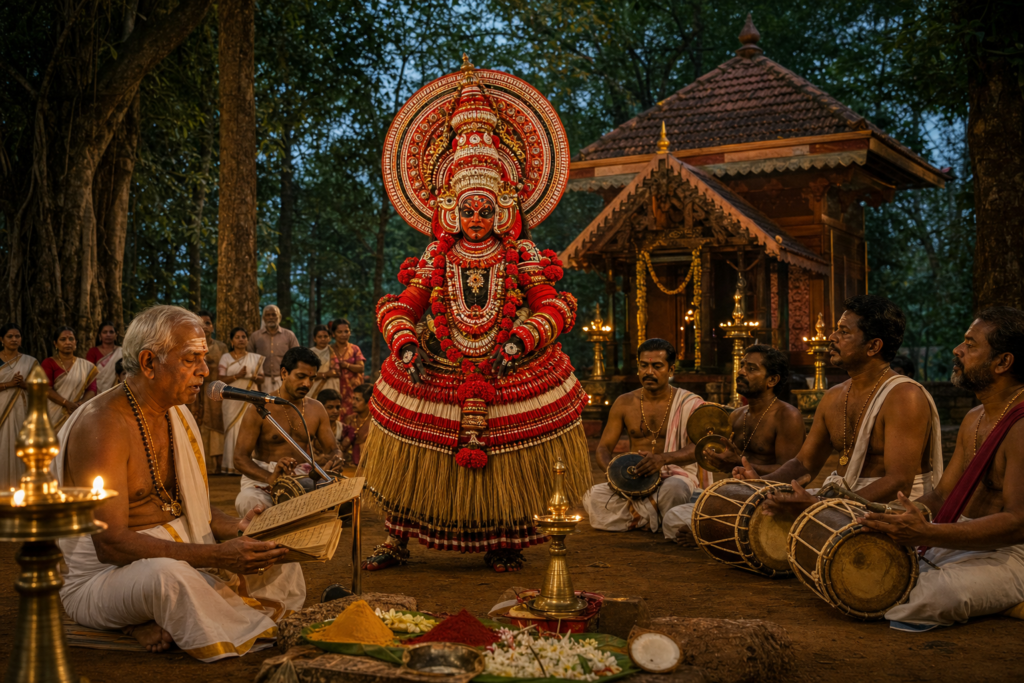
The formal commencement of the Brahmotsavams occurs with dhwajarohanam, customarily performed on the opening day, wherein the Garuda-dhvaja (flag bearing Garuda, the divine vehicle of Vishnu) is hoisted to announce the festival to all beingsseen and unseen. From this point, the daily schedule typically features morning and evening Vahana Sevas in which the utsava-murti (festival icon) of Sri Kodandarama is paraded through designated processional routes, accompanied by Vedic chant, nadaswaram-percussion ensembles, and congregational devotion.
Vahana Sevas are the interpretive heart of Brahmotsavam. Each vahana symbolizes a theological quality or sadhana (discipline) that complements the deity’s attributes. Rama-centric Brahmotsavams commonly include Hanumantha Vahana (embodying dasya-bhakti, steadfast service), Garuda Vahana (devotion, protection, and scriptural wisdom), Sesha Vahana (cosmic repose and yogic stability), Hamsa Vahana (viveka, or discriminative wisdom), Simha Vahana (courage and sovereignty), and prabha vahanas such as Surya Prabha and Chandra Prabha (cosmic order and time cycles). The precise day-wise roster is released by TTD in its official schedule; devotees are advised to refer to TTD updates for final timings and routes.
The symbolism of these processions speaks to an ethical and contemplative pedagogy accessible to all. Hanumantha Vahana foregrounds humility and tireless seva, Garuda underscores protection of dharma and the flight of transcendence, Sesha centers stillness as power, and Hamsa codifies discernment between the real and the ephemeral. In the Rama traditionwhere dharma, compassion, and righteous leadership convergethese vahanas function as mobile classrooms, translating scriptural ideals into a shared civic experience.
For onlookers and participants, the streetside experience is an immersive tapestry. The utsava-murti glides through Tirupati’s thoroughfares, with lamps, conches, and flower-offerings punctuating the procession. The community’s devotional chorusalong with Vedic recitationforms a sonic bridge between liturgy and life, allowing darshan to move beyond the sanctum and into public space. This outward movement of the deity signals grace in motion: the Lord proceeds to meet devotees where they are, affirming inclusivity as a living principle of worship.
The culmination of Brahmotsavams traditionally features the theerthavari (often styled as Chakrasnanam when the Sudarshana Chakra is ceremonially bathed), which enacts the sacred confluence of deity, shrine-tank waters, and devotees who seek spiritual refreshment. Dwajavarohanam (lowering of the festival flag) ritually closes the cycle, restoring the temple to its post-festival cadence while imparting the assurance that festival time and everyday time are not separate but mutually illuminating.
From a pilgrimage-planning perspective, the period from March 17 to 25, 2026 will witness enhanced footfall around Sri Kodandarama Swamy Temple. Early arrival for processions, adherence to the temple’s decorum and dress code, and compliance with security measures support both safety and quality of darshan. As with all TTD-managed festivals, final timings, queue systems, and movement plans are subject to official notification; travelers are encouraged to track TTD updates for any operational adjustments.
Access to the temple is straightforward: Tirupati is served by rail connections and the Tirupati International Airport (Renigunta). Local transport options connect transit nodes to the temple precincts, and lodging is available across budget categories within the city. Given the festival density, advance accommodation planning is prudent.
The Brahmotsavams of Sri Kodandarama Swamy Temple also gesture toward a broader civilizational unity across the dharmic traditions. Processional worship and community-centered devotion resonate with practices familiar in Jain, Buddhist, and Sikh contextswhether in the ethical focus of Jain utsavas, the dignified pageantry of Buddhist peraheras, or the kirtan-led Nagar Kirtans in Sikh tradition. Shared valuesdharma, ahimsa, seva, and satyaare refracted through distinct liturgical vocabularies yet converge in their social and spiritual intent, reaffirming a deep kinship across these traditions.
Festival stewardship benefits from an ethos of ecological responsibility and civic mindfulness. Carrying refillable water containers where permissible, minimizing single-use plastics, and cooperating with crowd-management instructions reflect the same dharmic sensibilities that animate the rituals: respect for place (kshetra), for fellow devotees, and for the larger ecology that sustains sacred life.
In sum, March 2026 offers an exemplary opportunity to engage with the doctrinal, aesthetic, and communal dimensions of Rama-bhakti at Sri Kodandarama Swamy Temple. With Koil Alwar Tirumanjanam on March 13, Ankurarpanam on March 16, and daily Vahana Sevas from March 17 to 25, the Brahmotsavams will present a complete arcfrom sanctum consecration to public grace and back againinviting devotees and cultural enthusiasts alike to witness how a classical Hindu festival continues to cultivate inner renewal and social harmony in the contemporary cityscape of Tirupati.
Inspired by this post on Hindu Pad.