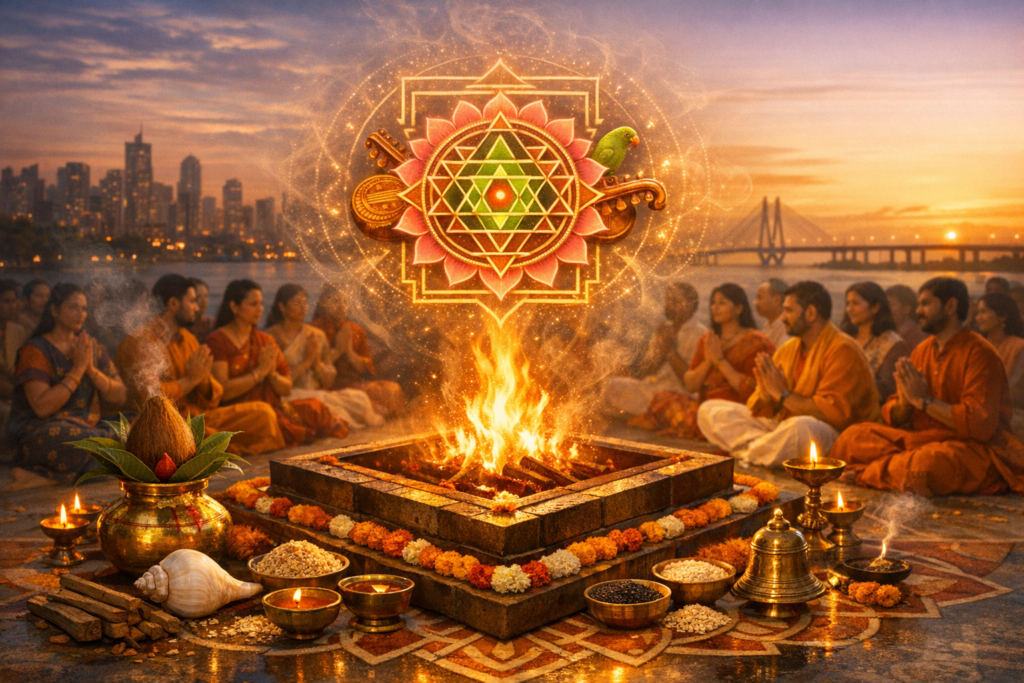
Parashurama Dwadashi is an auspicious vrata dedicated to Lord Parashurama, the sixth incarnation of Lord Vishnu revered for harmonizing knowledge, discipline, and righteous courage. In 2026, Parashurama Dwadashi falls on April 28. The observance corresponds to Vaishakh Month, Shukla Paksha Dwadashi—the day immediately following Mohini Ekadashi as per the Hindu lunar calendar.
Calendrically, the festival is anchored to the Dwadashi tithi in the bright fortnight (Shukla Paksha) of Vaishakh. While regional almanacs vary between the Amanta and Purnimanta month reckonings, the tithi basis remains consistent: the vrata is observed on the Dwadashi that follows Mohini Ekadashi. Devotees are advised to verify local sunrise-based tithi boundaries using a reliable panchang for their location.
Parashurama Dwadashi is distinct from Parashurama Jayanti. Parashurama Jayanti is traditionally associated with Vaishakh Shukla Tritiya (widely recognized as Akshaya Tritiya), celebrating the avatar’s birth, whereas Parashurama Dwadashi focuses on vrata, worship, and reflection on the avatar’s dharmic message on the day after Mohini Ekadashi.
In theological terms, Lord Parashurama embodies a rare synthesis: a Brahmana by birth and a Kshatriya in discipline, channeling kshatra (martial vigor) into the protection of dharma. The vrata invites contemplation on how strength, scholarship, and restraint converge to uphold justice without malice—an ethical ideal with enduring relevance.
Scriptural narratives in the Vishnu Purana, the Bhagavata Purana, and the Mahabharata present Parashurama as both a stern restorer of moral order and a revered preceptor who instructed great warriors such as Bhishma and Karna. The day’s worship thus acknowledges both his ascetic rigour and his role as a guardian of societal balance.
Across many households, Parashurama Dwadashi is remembered as a day of interior clarity. Devotees often describe a quiet, collected atmosphere during recitations of the Vishnu Sahasranama, with the vrata encouraging the redirection of personal will-power from anger or frustration toward purposeful service and ethical action.
Preparation for the vrata typically begins with cleanliness of the home and shrine, bathing during the early hours, and sankalpa—an explicit, mindful resolve to observe Parashurama Dwadashi on Vaishakh Shukla Dwadashi in 2026 for spiritual purification, steadfastness in dharma, and the welfare of all beings.
Home Puja Vidhi generally follows shodashopachara (sixteen offerings) or a simplified panchopachara sequence, as per capacity. After invoking Lord Vishnu and Lord Parashurama, devotees offer gandha (sandal paste), pushpa (flowers), dhoopa (incense), deepa (lamp), and naivedya (satvik offerings), concluding with karpoora arati. Tulsi leaves are considered especially sacred in Vishnu worship and are respectfully offered where customary.
Mantra japa and stotra recitation are central to the observance. Many follow the chanting of Om Namo Bhagavate Vāsudevāya, the Vishnu Sahasranama, and selections of stotras dedicated to Lord Parashurama or passages that extol the avatara principle in the Puranas. Likhita japa (writing of the divine name) is also practiced by some for deepening concentration.
Fasting is observed according to individual health and tradition. While many conclude Mohini Ekadashi fasting during the appropriate Dwadashi parana window, they maintain a satvik regimen throughout Parashurama Dwadashi—abstaining from tamasic foods, alcohol, and harm to any living being. Others keep a dedicated fast on Dwadashi itself with fruits, milk, or water-only austerities, guided by family or sampradaya practice.
Parana (formal breaking of the Ekadashi fast) is to be done on Dwadashi after sunrise during the prescribed parana window when Dwadashi tithi prevails, as directed in dharma texts and traditional Vaishnava practice. Where the focus is squarely on Parashurama Dwadashi worship, devotees complete parana properly and continue the day in vrata-minded simplicity and seva.
Because tithi transitions can occur at different clock times across geographies, muhurta-sensitive devotees consult a local panchang to ensure Dwadashi prevails at sunrise. When Dwadashi ends before sunrise or extends into the next civil day, authoritative panchang guidance helps determine parana and puja timing with precision.
Seva and dāna are recommended on Parashurama Dwadashi. Traditional charity includes annadāna (food donation), vastra dāna (clothing), and, where appropriate, gifting of useful implements to artisans and workers—symbolically transforming the “axe” of Parashurama into constructive livelihood and community upliftment. Acts of environmental care and temple or community service also reflect the avatar’s protective spirit.
Regional traditions often highlight Parashurama’s association with the western coast of Bharat, including the Konkan and Malabar regions, where lore remembers the creation of land reclaimed from the sea. Temples dedicated to Lord Parashurama inspire collective worship, special alankarams, and community feasts, reinforcing cultural memory and social harmony.
Devotional symbolism enriches the vrata. The parashu (axe) represents cutting through the six inner enemies—kāma, krodha, lobha, moha, mada, and matsarya. Many elders teach children this inner reading of the mythic weapon, emphasizing that the avatar’s force aims first and foremost at ignorance and injustice within oneself.
The day holds unifying value across dharmic traditions. The Sikh ideal of the sant-sipahi (saint-soldier), the Jain and Buddhist emphasis on disciplined ahiṃsā with unwavering commitment to truth, and the Hindu synthesis of jñāna, bhakti, and karma—together illuminate a shared ethic: strength yoked to compassion, discipline guided by wisdom, and diversity of practice upheld with mutual respect.
Families frequently observe Parashurama Dwadashi together, with elders narrating episodes from the Puranas and the Mahabharata. Devotees often report that children engage meaningfully when the ethical lessons are tied to everyday choices—speaking truth, helping peers, respecting teachers, and using one’s abilities for the common good.
From a practical standpoint, those with medical conditions or advanced age adapt fasting rules with care, prioritizing health while maintaining devotional intent. Dharma texts permit flexibility to ensure the vrata remains a means of well-being rather than strain; guidance from family tradition or a knowledgeable priest can help tailor observance responsibly.
Frequently asked questions arise when Dwadashi does not prevail at sunrise or overlaps with Trayodashi. In such cases, regional panchangs and established sampradaya guidelines offer clear direction. The general principle remains to align parana and puja with the correct tithi, upholding both śāstric correctness and devotional steadiness.
In 2026, with Parashurama Dwadashi on April 28, many communities will align temple events, satsangs, and service initiatives to the day’s sanctity. The combination of home worship, scripture recitation, and community seva translates the avatar’s message from liturgy into lived ethics.
In essence, Parashurama Dwadashi 2026 offers a contemplative and action-guiding framework: revere Vishnu’s avatara who weds knowledge to courage; refine conduct through fasting, prayer, and charity; and reaffirm unity across Hindu, Buddhist, Jain, and Sikh paths by honouring the shared aspiration to uphold dharma with compassion, clarity, and inner strength.
Inspired by this post on Hindu Pad.