

Jyeshtha Purnima 2026 (Pournami), the radiant Full Moon concluding the lunar month of Jyeshtha, falls on Monday, 29 June 2026. Across India, this auspicious tithi is also revered as Dev Snan Purnima in Odisha and Vat Purnima in several western states, marking a day dense with ritual, symbolism, and community observance.
Alternate transliterations such as Jyeshta Purnima, Jyeṣṭha Purnima, and Pournami are in common use; all refer to the same Full Moon in the Jyeshtha month of the Hindu calendar.
Within the Hindu lunisolar calendar, months are named for the nakshatra in proximity to the Full Moon; Jyeshtha derives from the bright star Antares (Jyeṣṭhā) in Scorpio. Astronomically, Purnima occurs when the Moon stands in near-opposition to the Sun (approximately 180° difference in ecliptic longitude), yielding the highest lunar illumination of the cycle. Culturally, this Full Moon anchors rituals of purification, vows, and public processions that prepare communities for the monsoon turn and the spiritual cadence of the forthcoming Āṣāḍha.
Calendar practice varies by region. Both Amānta (month ending on Amavasya) and Purnimānta (month ending on Purnima) traditions identify the same astronomical Full Moon as Jyeshtha Purnima; however, local panchangam rules—especially whether the Full Moon tithi prevails at sunrise (udaya-vyāpini)—govern the exact civil date for specific vratas. Observers are advised to verify the tithi’s prevalence and local sunrise, moonrise, and daylight-saving adjustments through a trusted regional almanac.
Two major observances headline the day. In Odisha and Jagannath traditions nationwide, Dev Snan Purnima features the ceremonial bathing (Snana Yatra) of the deities at Puri Srimandir. In Maharashtra, Goa, parts of Gujarat, and among allied communities, Vat Purnima Vrat focuses on the sacred banyan (vaṭa/vata) as a living symbol of auspicious longevity, resilience, and shelter.
At Puri Jagannath Temple, Jagannath, Balabhadra, and Subhadra, along with Sudarshana, are brought in a grand procession to the Snana Bedi (bathing platform). Priests draw sanctified water—traditionally in 108 pitchers—from the Suna Kuā within the temple precincts. The deities are bathed with perfumed, herbal waters and sandal paste in an elaborate abhiṣeka that signifies collective purification and divine compassion extending to all beings.
Following the ceremonial bath, the deities are adorned in the iconic Hati Besha (Elephant attire), a form cherished by devotees for its gentle reminder of Ganesha’s grace—wisdom, auspicious beginnings, and removal of obstacles. With Snana Purnima, the Anavasara period begins: the deities retire from public darśana for recuperation, and sevā continues internally as artisans and servitors prepare for the renewal of vision (Netrotsava) and the grandeur of the coming Ratha Yatra.
Devotees commonly recount the Snana Yatra as a moving synthesis of sound, scent, and color—the resonance of conches and mahuri, the cool spray of sanctified waters, and the shared anticipation of the chariot festival. Those visiting Puri typically plan well in advance, follow temple security advisories, and rely on designated viewing zones. For many elsewhere, community sammelanas and temple livestreams offer an equally participatory darśana, preserving the ethos of inclusivity central to Jagannath dharma.
Vat Purnima centers on the Savitri–Satyavan narrative from the Mahabharata tradition, where Savitri’s devotion, courage, and discernment prevail in a dialogue with Yama, restoring Satyavan’s life. The vrata affirms steadfast companionship, mutual care, and the victory of principled speech (satya) over fate, speaking to families today in terms of reciprocal well-being, respect, and shared resilience.
The vāṭa (Ficus benghalensis) is venerated as a cosmic archetype of endurance. With pillar-like aerial roots and generous canopy, it evokes sustained life, interdependence, and shade—values essential to dharmic ethics. Sacred sites such as the Akṣaya Vaṭa at Prayagraj or village vāṭas across India embed environmental stewardship into spiritual life; contemporary observance often integrates tree care, water conservation, and community service as core offerings.
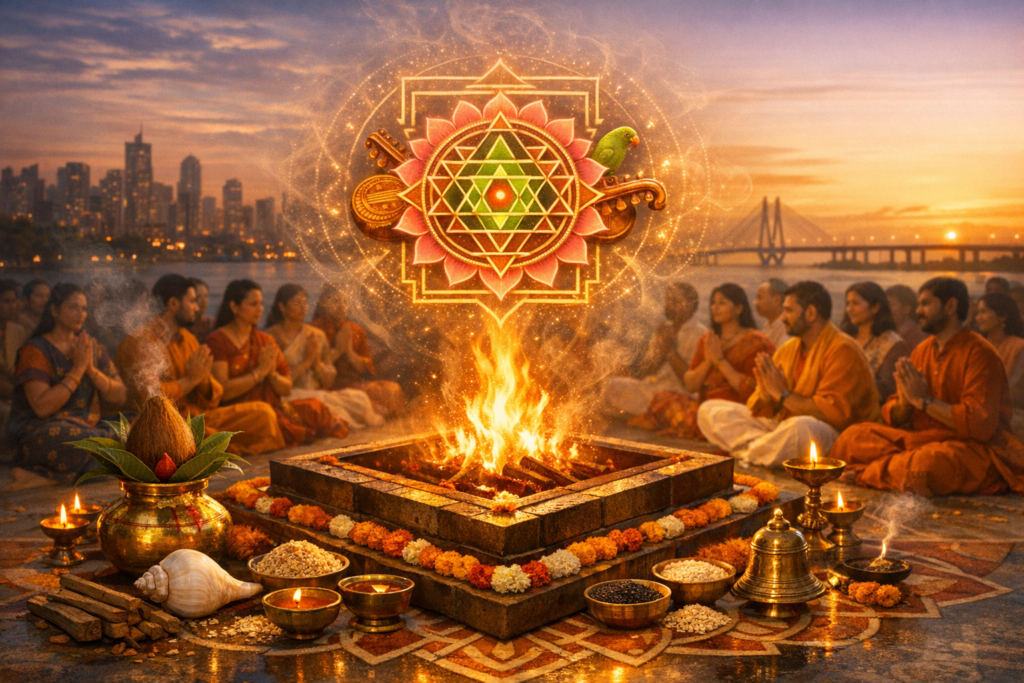
Regional procedures vary, but a common sequence includes bathing and sankalpa; worship of the banyan with water, turmeric, kumkum, akṣata, flowers, and lamps; circumambulations while offering sacred threads; recitation of the Savitri-katha; distribution of fruits and grains; and dāna to honor the ideal of household harmony. In some regions, the vow emphasizes Purnima prevailing at sunrise; in others, the evening moonrise and community timing guide the puja. Local custom, family paramparā, and the guidance of priests or elders remain the norm.
Purnima is also a favored day for Sri Satyanarayana Vrata in many households. Devotees prepare a clean altar for Vishnu as Satyanarayana, perform pañcopacāra or ṣoḍaśopacāra upacaras, read or listen to the Satyanarayana-kathā, and share prasāda (traditionally including sheera/sūjī halwa or offered fruits). The puja is commonly scheduled in the evening when the Full Moon is visible, while ensuring the Purnima tithi is operative per the local panchangam.
Jyeshtha Purnima fasting practices range from nirjala upavasa to a sāttvika phala-ahāra. Many break the fast after chandra-darshan, offering arghya to the Moon and praying for mental clarity (mano-śuddhi), familial well-being, and social concord. Those with health considerations, pregnant persons, and the elderly typically follow moderated dietary observances with medical counsel.
Full Moon observances consistently foster unity across Dharmic paths. In Buddhism, the Uposatha day nurtures meditation, ethical reflection, and communal harmony; in Jain practice, many observe pakkhi poshad or special pratikraman on lunar milestones; in Sikh communities, the spirit of sevā and saṅgat often frames collective remembrance and service regardless of the lunar calendar’s doctrinal status. Jyeshtha Purnima thus becomes a shared opportunity for contemplation, generosity, and inter-tradition goodwill.
Because tithis are astronomical intervals rather than fixed civil dates, locations outside India may observe Jyeshtha Purnima on 28 or 29 June 2026 depending on time zone. Community centers typically announce schedules several days in advance to align puja, katha, and fasting with the correct tithi. When a vrata prescribes udaya-vyāpini Purnima, the day on which the Full Moon prevails at local sunrise is preferred; for evening pujas, the day with Purnima prevalent during pradoṣa/evening may be selected.
Jyeshtha marks the peak of the hot season in much of the subcontinent, which is why water, shade, sandal paste, and perfumed abhiṣekas feature prominently in rituals. Dev Snan Purnima symbolically cools and renews the communal spirit before the onset of Āṣāḍha and the monsoon rhythms; Vat Purnima, rooted under the generous canopy of the banyan, mirrors the land’s longing for shelter, sustenance, and rain.
For many families, Jyeshtha Purnima is remembered through tactile details: the soft grit of rangoli beneath bare feet, the rustle of peepal and banyan leaves in afternoon winds, the sweetness of prasāda shared with neighbors, the patient arc of the Moon as children watch for chandra-darshan. Such memories become living pedagogy, transmitting ethics of fidelity, honesty, compassion, and service from one generation to the next.
Dev Snan Purnima and Jyeshtha Purnima refer to the same Full Moon; the former highlights the Jagannath tradition’s bathing festival, while the latter is the calendrical name. Vat Purnima is a regional vrata aligned to this Full Moon in western India; in many northern regions, the allied Vat Savitri Vrat is kept on Jyeshtha Amavasya. All forms share a common thread—devotion grounded in dharma, family integrity, and societal care.
Preparation can be both practical and reflective: arranging puja materials sustainably, learning or retelling the Savitri–Satyavan narrative in a way that emphasizes mutual respect, coordinating with local temples or sanghas, and dedicating time for meditation or scriptural reading. Simple acts—planting a sapling, supporting water conservation, sharing meals—embody the vow-like quality of the day in ways that unify home, community, and environment.
On Monday, 29 June 2026, Jyeshtha Purnima brings together Dev Snan Purnima at Puri, Vat Purnima vows under the banyan, and widespread Purnima observances such as Satyanarayana Puja. Grounded in accurate tithi observance and enriched by regional customs, the Full Moon offers a capacious space for devotion, learning, and service—honoring plural Dharmic lineages while nurturing one human family.
Inspired by this post on Hindu Pad.










Leave a Reply
You must be logged in to post a comment.