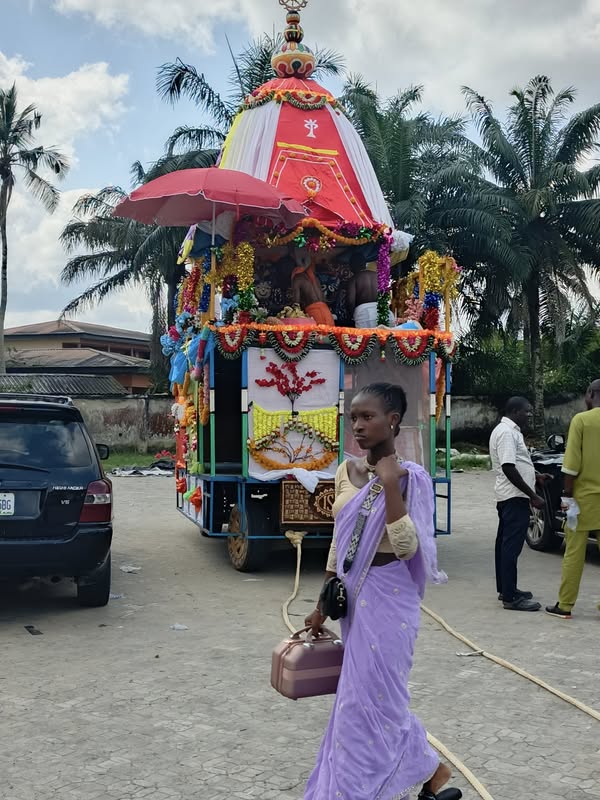
Sri Jagannath (Sri Jaganath) Rathayatra was held in Warri, Delta State, Nigeria, offering a vibrant public expression of devotion and community harmony. The celebration echoed heartfelt sentiments such as “All glories to the devotees in Nigeria!” and “Jai Jaganath,” underscoring the festival’s spirit of gratitude and inclusion.
As with Jagannath Rathayatra observances worldwide, the procession traditionally honors Lord Jagannath, Balabhadra, and Subhadra, with devotees drawing a chariot through the streets while engaging in devotional music and congregational chanting. In Warri, the festival served as a cultural bridge, welcoming local families, well-wishers, and well-informed observers who value the preservation of living heritage and the vitality of community-led celebrations.
The social significance of the chariot festival in Nigeria rests in its ability to foster unity in diversity. By foregrounding values such as compassion, service, and mutual respectideals cherished across dharmic traditions of Hinduism, Buddhism, Jainism, and Sikhismthe event advanced cultural understanding and reinforced the shared ethical foundations that sustain community cohesion.
Participants and onlookers noted a joyful, dignified atmosphere that combined devotional enthusiasm with disciplined organization. The public presence of the Rathayatra in Warri highlighted Nigeria’s evolving multicultural landscape, where cross-cultural appreciation and spiritual inclusivity can thrive alongside local customs and civic life.
Expressions like “Jai Jaganath” resonated throughout the celebration, and acknowledgments circulating around the event included the name Ananta Acharya. Together, these elements emphasized reverence for sacred tradition while cultivating goodwill across communities.
In sum, the Sri Jagannath (Sri Jaganath) Rathayatra in Warri stands as a meaningful milestone for cultural heritage in West Africaaffirming that festivals rooted in devotion can also be platforms for dialogue, unity, and the strengthening of social bonds.
Inspired by this post on Dandavats.