Gaura Purnima—observed on the full moon (Purnima) of the Phalguna month—commemorates the historical appearance (1486 CE) of Sri Chaitanya Mahaprabhu in Navadvip, Bengal. Rooted in the Bhakti Tradition of Gaudiya Vaishnavism and celebrated worldwide as a major Hindu Festival, the day centers on bhagavat-dharma—devotion to Krishna through hearing, chanting, and service—and marks the beginning of the Gaurābda lunar calendar for many communities, including ISKCON (International Society For Krishna Consciousness).
Contemporary Gaudiya sources describe late medieval Bengal as a milieu where outward religiosity often eclipsed inner spiritual transformation. Social prestige, elaborate ceremonies, and displays of piety could, at times, overshadow scripturally grounded practice. Hagiographic narratives even record hyperbolic examples of unsanctioned customs adopted for spectacle—cautionary illustrations used to critique performative faith rather than to denigrate any community. Across the broader dharmic family—Hinduism, Buddhism, Jainism, and Sikhism—the shared teaching is clear: authenticity in sadhana matters more than ostentation.
Within this context, leading Vaishnavas perceived a neglect of bhagavat-dharma and a corresponding loss of life’s spiritual opportunity. Sitanath Advaita Gosai (Sri Advaita Acharya), revered as a compassionate teacher and devotee, felt profound concern for the “fallen” in Kali Yuga and resolved to act. Undertaking vrata (sacred vows), fasting, and yajna (devotional worship), he intensified his prayers that divine grace manifest tangibly for the benefit of all.
Chaitanya-bhagavata and Chaitanya-charitamrita—the principal Gaudiya biographies—describe how Advaita Acharya worshipped the shaligrama with Ganga water and Tulasi leaves, fasting and calling upon Krishna to appear. Gaudiya theology identifies him as an avatara of Maha Visnu; his epithet “Advaita” underscores non-difference, expressing that his fervent plea could not be ignored. In this reading, Sri Chaitanya Mahaprabhu’s advent answers Advaita Acharya’s compassionate invocation, inaugurating a renaissance of bhakti in Bengal and beyond.
Theologically, Gaudiya Vaishnavism frames this event through achintya-bhedabheda—“inconceivable simultaneous oneness and difference.” Sri Chaitanya is venerated as Krishna imbued with Radha’s devotional mood, revealing love of Godhead as both the highest reality and the simplest practice. His message elevates nama-sankirtana—collective chanting of the divine names—as the yuga-dharma for Kali Yuga, making spiritual realization widely accessible.
Classical sources further elaborate the nava-vidha-bhakti (ninefold practice)—sravanam (hearing), kirtanam (chanting), smaranam (remembrance), pada-sevanam (service), arcanam (worship), vandanam (prayer), dasyam (servitude), sakhyam (friendship), and atma-nivedanam (self-surrender). Under Sri Chaitanya’s influence, these practices became not merely personal disciplines but communal pathways that welcomed seekers across social backgrounds, encouraging humility, compassion, and shared spiritual purpose.
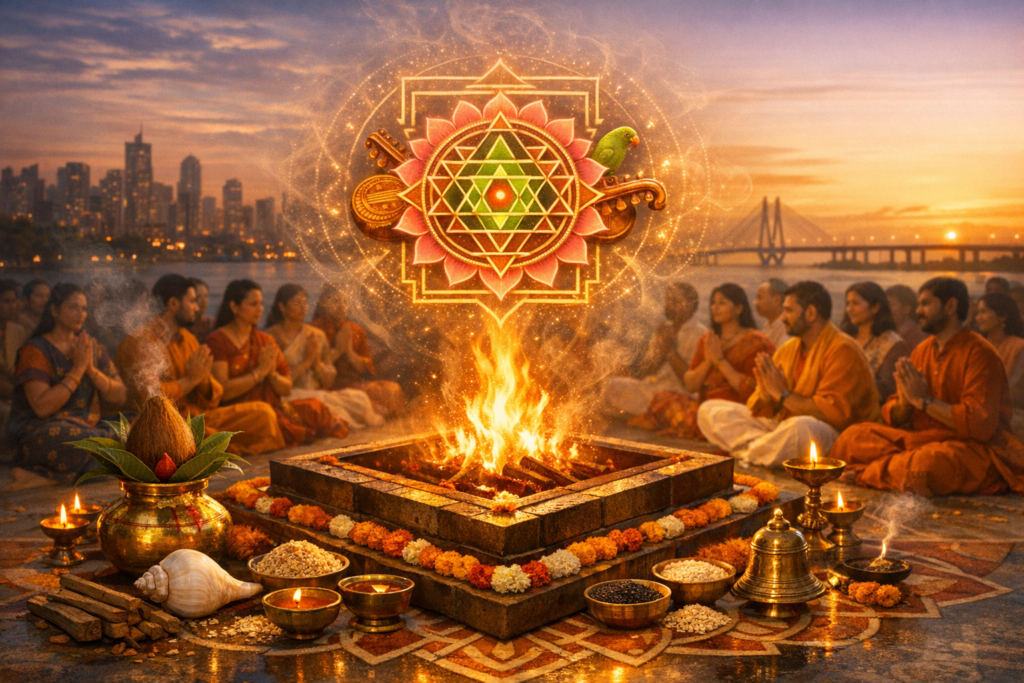
Gaura Purnima observances today reflect this inclusive spirit. Many communities fast until moonrise, gather for kirtan, perform abhisheka for Gaura-Nitai deities, read from Chaitanya-bhagavata and Chaitanya-charitamrita, and conclude with prasada. ISKCON (International Society For Krishna Consciousness) and other Vaishnava institutions coordinate temple programs, education initiatives, and outreach, while households worldwide create simple home altars, offer Tulasi leaves, and engage in evening nama-sankirtana.
In Navadvip, the festival crowns a multi-day parikrama of the nine sacred islands—each associated with one limb of nava-vidha-bhakti—linking sacred geography to practice. Diaspora communities echo this pilgrimage in symbolic ways: neighborhood kirtan gatherings, study circles on bhagavat-dharma, and seva projects that translate devotion into tangible care for others.
The festival’s core values resonate across dharmic traditions. Buddhism emphasizes inner transformation over ritual formalism; Jainism extols ahimsa and disciplined sincerity; Sikhism upholds Naam-simran and kirtan as living remembrance of the Divine. Gaura Purnima thus becomes an occasion not only to honor Sri Chaitanya Mahaprabhu but also to celebrate unity in spiritual diversity, fostering mutual respect among Hindu, Buddhist, Jain, and Sikh practitioners.
From a historical perspective, many details of Gaura-lila are preserved in devotional hagiographies that employ poetic license to underscore ethical and theological points. The cautionary depictions of unscriptural spectacle function as rhetorical devices urging a return to shastra-aligned practice and inner integrity. Read alongside broader South Asian religious history, these narratives illuminate how bhakti movements periodically revitalize spirituality by re-centering compassion, humility, and community.
For contemporary observance, a balanced approach integrates study, practice, and service: engage the Bhagavad-Gita and Srimad-Bhagavatam alongside Chaitanya-bhagavata and Chaitanya-charitamrita; participate in nama-sankirtana and Tulasi worship; reflect on personal habits that may have become performative; and translate devotion into seva—feeding guests, supporting community well-being, and protecting the vulnerable. Such steps align ritual with realization, ensuring that celebration becomes transformation.
In sum, Gaura Purnima honors a pivotal moment when a compassionate plea—articulated by Sitanath Advaita Gosai—invited a living current of bhakti to flow through society. By recommitting to bhagavat-dharma, cultivating inclusive community, and recognizing convergences across dharmic traditions, practitioners keep that current alive. The full moon of Phalguna thus shines as a reminder that sincere calling, grounded in scriptural wisdom and expressed through kirtan and service, can reawaken hearts and uplift the world.
Inspired by this post on Dandavats.