March 2026 at Tirumala Tirupati Devasthanam (TTD) presents a concentrated cycle of sacred observances as the lunisolar calendar transitions from Phalguna to Chaitra. While every day at Tirumala is experienced as a festival, this month stands out for its blend of time-honored utsavams, temple-wide purificatory rites, and spring celebrations that draw devotees to Tirumala, Tirupati, Tiruchanur, and Srinivasa Mangapuram. The outline below consolidates key dates, ritual significance, and practical guidance to help pilgrims plan with clarity while honoring the devotional ethos that unites dharmic traditions.
Festival scheduling at TTD follows the Telugu Chandramana (Amavasyanta) Panchang. Observances are aligned to tithi and nakshatraespecially Phalguna Pournami (for Srivari Salakatla Teppotsavam), Chaitra Śukla Pratipadā (Ugadi), and Uttara Phalguni in the Tamil month of Panguni (Panguni Uttiram). Civil dates are given in IST, but actual observance adheres to the tithi prevailing at sunrise or as prescribed by TTD. Minor date shifts can occur based on official notifications; pilgrims are advised to reconfirm with the latest TTD press releases and temple noticeboards.
Key highlights for March 2026 include: the conclusion of Srivari Salakatla Teppotsavam on 2 March 2026 (Phalguna Pournami); Koil Alwar Tirumanjanam in the week of Ugadi (anticipated 17 March 2026, Tuesday); Ugadi Asthanam with Panchanga Sravanam on 19 March 2026; Panguni Uttiram Kalyanotsavams in the last fortnight of March at Tiruchanur and Srinivasa Mangapuram (date aligned to Uttara Phalguni); Sri Kodandarama Swamy Temple Brahmotsavams in Tirupati culminating around Sri Rama Navami (indicatively 27 March 2026); and Dola Yatra (Dolotsavam) at Sri Govindaraja Swamy Temple around Phalguna Pournami.
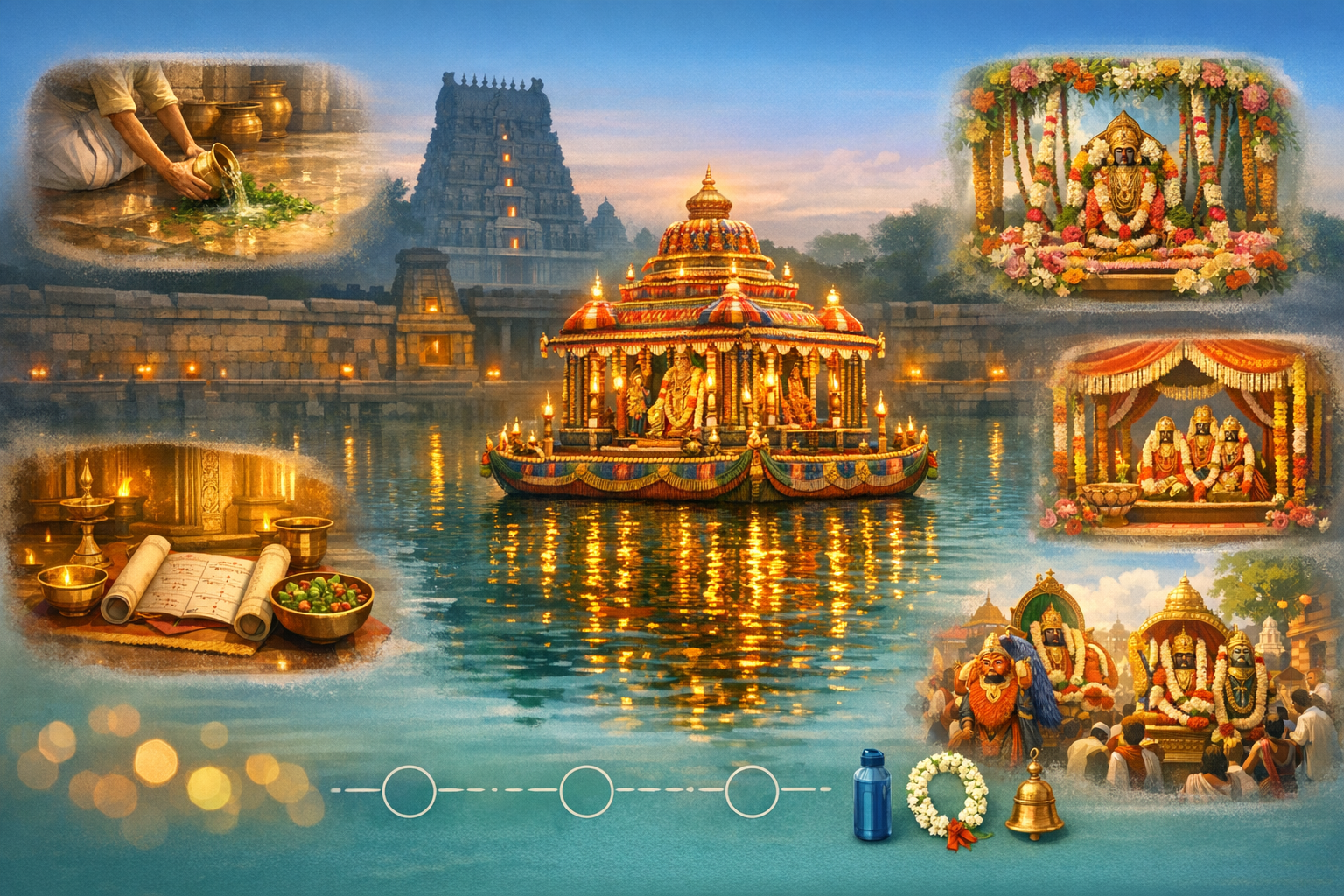
Srivari Salakatla Teppotsavam, the annual Float Festival in Swami Pushkarini at Tirumala, is traditionally observed over five evenings leading to Pournami. In 2026, it culminates on 2 March. Utsava murtis are taken in illuminated floats across the sacred tank as Vedic recitations and mangala haratis elevate the devotional atmosphere. The concluding night typically draws the largest congregations, with multiple circumambulations on the waters symbolizing collective surrender to Sri Venkateswara’s grace. Devotees often recall the mirror-like glow of lamps on the Pushkarini as an enduring memory of this utsavam.
Koil Alwar Tirumanjanamthe comprehensive cleansing and sanctification of the temple interior before Ugadiis expected on 17 March 2026 (Tuesday, subject to confirmation). The rite employs a perfumed herbal mixture (parimalam) across surfaces and pillars, followed by extensive rinsing and redecoration. During key hours of this procedure, general darshan pauses to protect the ritual sanctity and resumes thereafter. This practice underscores the Srivaishnava emphasis on ritual purity and collective readiness to welcome the New Year.
Ugadi Asthanam on 19 March 2026 (indicative) marks Chaitra Śukla Pratipadā and the ceremonial commencement of the new samvatsara. At Tirumala, Panchanga Sravanam is rendered in a formal assembly at Bangaru Vakili, and special naivedyamincluding the symbolic Ugadi Pachadihighlights the philosophical teaching that life integrates sweetness, tang, heat, bitterness, and astringency. Many families align their first darshan of the year with Ugadi, regarding it as an auspicious reset of sankalpa (intent) and seva (service).
Panguni Uttiram, observed when Uttara Phalguni coincides with the Tamil month of Panguni (mid-March to mid-April), places devotional focus on divine marriages (Kalyanotsavams). At Sri Padmavathi Ammavari Temple (Tiruchanur) and Sri Kalyana Venkateswara Swamy Temple (Srinivasa Mangapuram), the day affirms grihastha-dharma as a path to spiritual refinement through love, duty, and mutual uplift. The exact March 2026 date will be published by TTD once nakshatra timings are finalized.
Sri Kodandarama Swamy Temple, Tirupati, typically conducts its annual Brahmotsavams in the Chaitra period, culminating near Sri Rama Navami (indicatively 27 March 2026). Over multiple days, the utsava murthis grace the streets on vahanams such as Sesha Vahanam, Hanumad Vahanam, and Garuda Vahanam, bringing the Rama-katha into lived urban space. Sri Sitarama Kalyanam on Navami day and Sri Rama Pattabhishekam the following day embody the ethical center of the Ramayanadharma anchored in compassion, courage, and just kingship.
Aligned with Phalguna Pournami, Dola Yatra (Dolotsavam) at Sri Govindaraja Swamy Temple, Tirupati, places the utsava murti on a gently swaying swing (dola) amid kirtana, color, and community joy often associated with Holi’s spirit of renewal. The aesthetic of the dola, music, and floral décor evokes the rasa of spring, harmonizing devotion with nature’s cyclical rebirth.
Monthly vratas and sevas also shape the devotional cadence of March. Amalaki Ekadashi (mid-March, indicative) and Papmochani Ekadashi (late March, indicative) are observed by many with fasting and parayana. At Sri Kapileswara Swamy Temple (Kapila Theertham), Pradosham and Masa Shivaratri maintain a Shaiva rhythm within the broader TTD ecosystem, while at Tirumala daily Thomala Seva, Archana, and Sahasra Deepalankarana continue per schedule. These layered practices allow pilgrims to align personal sadhana with the temple’s collective liturgy.
Pilgrim planning for March 2026 benefits from anticipating higher footfall on the following clusters: 1–2 March (Teppotsavam Pournami), 17–19 March (Koil Alwar Tirumanjanam and Ugadi), and the last fortnight of March (Panguni Uttiram and Sri Rama Navami-linked events). Advance reservations for darshan and accommodation through official TTD channels are strongly advised. March weather is temperate in the hills; nevertheless, hydration, adherence to the traditional dress code, and eco-sensitivity (plastic-free practices) enhance both personal comfort and collective harmony. Families with elders and children may prefer earlier arrivals on high-demand days to benefit from smoother queue progression.
Beyond temple-specific rites, these utsavams cultivate shared dharmic valuesseva (service), dana (giving), satya (truthfulness), and ahimsa (non-violence)resonant across Hindu, Buddhist, Jain, and Sikh traditions. TTD’s annaprasadam, disciplined queue culture, and inclusive devotional spaces offer a lived pedagogy of unity-in-diversity. The result is a social sacredness in which community wellbeing and spiritual aspiration reinforce each other.
For accuracy, pilgrims should verify final timings and traffic advisories via TTD’s official communications close to each event. The summary above aligns with customary observance logic (tithi and nakshatra) and the established rhythm of TTD festivals in March, ensuring that devotees can approach the sanctum with informed preparation, inner composure, and a spirit of harmony.
Inspired by this post on Hindu Pad.