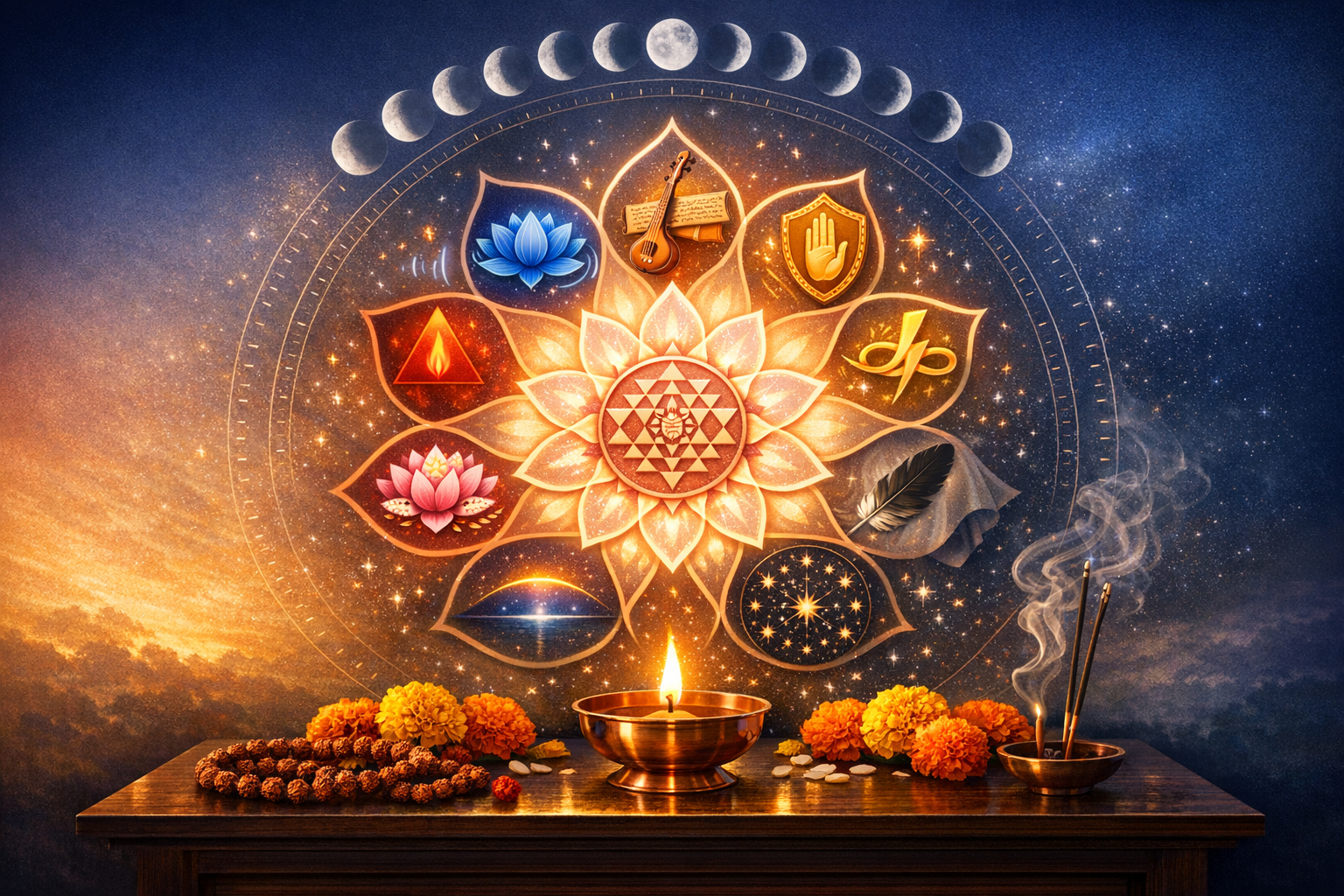
Dashamahavidya Jayanti refers to the annual Jayanti observances of the ten wisdom goddesses venerated in the Shakta-Tantra tradition. The cycle honours Mahatara, Matangi, Bagalamukhi, Chinnamastika, Dhumavati, Mahakali, Bhuvaneshwari, Kamala, Tripurabhairavi & Lalita and is observed on specific lunar tithis across the Hindu calendar year. In 2026–2027, these sacred days offer a structured pathway to deepen sadhana, reflect on the transformative facets of Shakti, and align practice with time-tested calendrical principles.
The Dashamahavidya corpus emerged as a unifying lens for understanding the manifold expressions of the Divine Feminine, integrating Vedic, Puranic, and Tantric insights. While each Mahavidya has a distinct iconography and spiritual emphasis, together they map a continuum from fierce protection and inner courage to refined discernment, prosperity, and ultimate liberation. For practitioners, the Jayanti days function as intensifiersmoments when mantra, puja, and meditation acquire heightened efficacy due to tithi-linked resonance.
Tara or Neela Saraswati is particularly cherished for vāk-siddhi (empowered speech and articulation), the subduing of obstacles or adversarial forces, and the bestowal of liberation. Many lineages hold that Tara’s Jayanti is auspicious for studies, public speaking, sacred arts, and the initiation of mantrajapa disciplines centred on clarity, courage, and compassionate expression. The tradition underscores that these attainments are grounded not in aggression but in inner alignment and ethical restraint.
Determining Jayanti dates relies on the Hindu panchang, which tracks tithi (lunar day), nakshatra, sunrise/sunset, and regional month systems (amanta in much of the South and purnimanta in much of the North). Names of months therefore span slightly different civil dates by region, and timezone differences further shift observance windows for the diaspora. For precision in 2026–2027, consulting a reliable local panchang and following the sunrise-based tithi prevailing at the place of worship is recommended.
The following overview summarises widely observed tithi traditions for each Mahavidya and indicates their likely Gregorian windows in 2026–2027. Regional and lineage variations exist, and certain paramparas purposefully align specific Mahavidyas to the nine nights of Ashwin Navaratri or to alternative tithis. Where multiple practices are current, the principal options are noted so that households and temples can synchronise with their sampradaya.
Mahatara (Tara/Neela Saraswati): Many Shakta sources observe Tara Jayanti on Vaishakh Shukla Navami. In 2026 this falls in mid-May, and in 2027 it generally arrives in early to mid-May. The day is aligned with eloquence, decisive insight, mantrajapa purity, and the protection of righteous endeavour.
Matangi: A prevalent tradition places Matangi Jayanti on Chaitra Shukla Tritiya, often coinciding with spring initiation energies and the refinement of speech and arts. Expect this in early April 2026 and late March or early April 2027, depending on amanta or purnimanta reckoning and locality.
Bagalamukhi: Commonly revered on Vaishakh Shukla Ashtami, Bagalamukhi Jayanti typically occurs in mid-May. The observance is sought for stilling turbulence, securing clarity in conflicts (internal and external), and cultivating equipoise before action, with strict emphasis on dharmic intent.
Chinnamastika: Frequently observed on Vaishakh Shukla Dashami, Chinnamastika Jayanti often arrives in mid to late May. This observance symbolises radical insight, severance of compulsions, and fearless self-awareness, emphasising tapas with ethical guardrails.
Dhumavati: Many lineages keep Dhumavati Jayanti on Jyeshtha Amavasya, which usually falls in late June in 2026 and mid to late June in 2027. The day is contemplative, honouring solitude, renunciation of non-essential pursuits, and wisdom distilled from life’s liminal moments.
Mahakali: Two observance streams prevail. Some hold Mahakali Jayanti on Jyeshtha Amavasya, while most householders identify Kali Puja on Kartik Amavasya (coinciding with Deepavali) as the principal worship of Mahakali/Kali. In 2026, Kartik Amavasya (Diwali/Kali Puja) falls around early November, and in 2027 it shifts to late October or early November; regional calendars may vary by a day.
Bhuvaneshwari: A widely practised custom venerates Bhuvaneshwari on Ashwin Shukla Dwitiya (the second day of Sharad Navaratri), placing her Jayanti within the October Navaratri window in both 2026 and 2027. The day frames the cosmos as sacred space, inviting expansive awareness and compassionate stewardship.
Kamala: Many practitioners venerate Kamala on Sharad Purnima (Ashwin Purnima), associated with Kojagiri Lakshmi Puja, often falling in late October in 2026 and mid-October in 2027. The focus is sattvic prosperity, gratitude, and the alignment of material wellbeing with ethical responsibility and generosity.
Tripurabhairavi: Observance varies by lineage. One stream keeps Bhairavi on Ashwin Krishna Navami (the waning phase before Navaratri), while another venerates her during Navaratrioften on Shashthi or Saptami. Both 2026 and 2027 place these windows in October; households should follow their kula-parampara’s guidance.
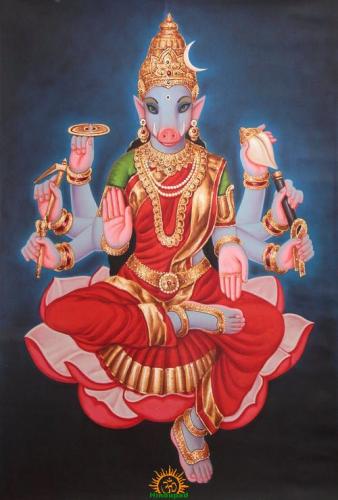
Lalita (Tripura Sundari/Shodashi): In many traditions, Lalita Jayanti is kept on Magha Purnima, occurring in February 2026 and January/February 2027, depending on lunar alignment. Several lineages also honour Tripura Sundari during Navaratri on Panchami or the “Shodashi” alignment; the unifying emphasis is graceful mastery (sundara-krama) over the senses and mind.
The calendrical spread above reflects how Jayantis distribute through spring, summer, and autumn, culminating in the Navaratri and Deepavali arcs that many families already observe. The 2026–2027 cycle thus creates a natural rhythm: articulation and study in spring (Matangi, Tara), strategic stillness in late spring (Bagalamukhi), radical insight and renunciation in early summer (Chinnamastika, Dhumavati), and expansive compassion and abundance in autumn (Bhuvaneshwari, Kamala), with Mahakali centring courage and protection.
For home observance, a clear sankalpa tied to each Mahavidya’s core quality is foundational. A simple, traditional sequence includes cleansing bath, a clean altar facing east, lighting deepa, offering gandha and pushpa, reciting dhyana verses of the specific deity, japa with the lineage-affirmed mantra, a brief meditation on the icon’s key symbolism, naivedya, and kshama-prarthana. Even a modest, consistent practice aligned to the Jayanti tithi can have a measurable impact on attention, speech, and emotional steadiness over time.
Advanced Tantric rituals for the Mahavidyas are traditionally undertaken only with proper initiation and guidance. Householders commonly adopt sattvic upasanadevotional readings from Puranas, quiet japa, and reflective journalingavoiding any rite that their tradition restricts. The ethos is disciplined, compassionate, and non-harmful; intention is as critical as technique.
In many families, Tara or Neela Saraswati is invoked for empowered speech, conflict de-escalation, and liberation-centred discernment. When aligned with Vaishakh Shukla Navami in 2026–2027, this practice is reinforced by fasting appropriate to one’s constitution, mindful silence for a portion of the day, and a commitment to truthful, kind communication for the lunar fortnight that follows.
Because Jayanti observances are tithi-based, timing follows the tithi prevailing at local sunrise unless the tradition specifies a special muhurta (such as Nishita for Mahakali/Kali on Kartik Amavasya). Diaspora communities should adjust to their local timezone and consult a panchang that supports location-based calculations. When in doubt, most householders either use the tithi present at sunrise or follow their temple’s announced schedule to preserve communal coherence.
Textual touchpoints for Mahavidya worship span sources such as Kalika Purana, Sarada Tilaka, Mantra Mahodadhi, Shakta Pramoda, and regional Tantric paddhatis. While exegetical details differ, the shared teaching is consistent: each Mahavidya is a disciplined doorway to integral wisdomcourage without cruelty, abundance without excess, speech without deceit, and insight without vanity.
These observances also resonate with the wider dharmic ethos shared by Hinduism, Buddhism, Jainism, and Sikhism: non-violence, truthful speech, self-discipline, meditation, and seva. Without collapsing distinct theological identities, communities often recognise in these Jayantis a common aspirationawakening wisdom and compassion in daily life. Many practitioners report that the seasonal return of these dates helps anchor a year-round ethic of care, learning, and restraint.
Practical planning for 2026–2027 can be as simple as setting a calendar reminder a week before each Jayanti, checking the local panchang for tithi start/end, preparing flowers and sattvic offerings, and pre-selecting one stotra or a short passage from the Devi Bhagavata Purana for reflection. Those who keep vrat may choose light, sattvic meals, donate to food or education causes, and dedicate merit to community harmony across all dharmic paths.
Frequently asked concernswhether householders may observe if they miss the precise muhurta, or whether an alternative evening puja on the same civil date is validare addressed by most teachers with pragmatic guidance: keep to the tithi as best as possible, avoid harm, and maintain regularity. When a conflict arises, aligning with the temple’s schedule or the family guru’s instruction sustains both correctness and community cohesion.
In summary, Dashamahavidya Jayanti in 2026–2027 offers a coherent, time-sensitive framework to engage the ten goddesses with care and precision. Observed with humility and study, these days nurture clarity of speech, steadiness under pressure, ethical prosperity, and the courage to meet life directly. Through shared practice and mutual respect, they also deepen bonds among dharmic traditions by foregrounding values that all can recognisewisdom, compassion, and responsible action.
Inspired by this post on Hindu Pad.