Tuesday, April 7, 2026, in the Hindu calendar (Panchang), observes Krishna Paksha Panchamithe fifth lunar day of the waning halfuntil 2:05 PM, after which Krishna Paksha Sashti takes effect in most regions. As always, local Panchang computations may show slight variation by location and horizon; times are generally aligned to Indian Standard Time (IST) unless a regional almanac specifies otherwise.
This mid-day tithi transition is practically significant for timing vows (vrata), puja, and samskaras. Activities specifically enjoined for Panchami are best undertaken before 2:05 PM, while those reserved for Sashti may commence thereafter. Many traditions follow the udaya tithi rule (the tithi prevailing at sunrise) to determine observance, though several vratas and temple festivals employ additional rules (e.g., parana, nishita, or pradosha considerations). Consulting a local Panchang is prudent when observance timing has prescriptive guidelines.
Technically, a tithi is defined by the Moon–Sun angular separation measured in 12° increments. Krishna Paksha Panchami spans the interval in which the elongation crosses 48° and lasts until it reaches 60°, at which point Krishna Paksha Sashti (60°–72°) begins. The recorded end of Panchami around 14:05 indicates the moment the lunar elongation attains the Sashti threshold for the locale used by most regional Panchangams.
Krishna Paksha, the waning half, is traditionally associated with introspection, conservation of energy, and inward-facing sadhana. Panchami, situated early in this half, is often approached as an opportune time to consolidate learning and refine daily discipline. Households frequently report that quiet recitation, reflective reading, or brief meditation in the morning of Panchami cultivates clarity and steadiness.
With the onset of Krishna Paksha Sashti after 2:05 PM, the day’s tenor gently shifts toward resolve and disciplined effort. In many Hindu traditions, Sashti has an association with Subrahmanya/Skanda (especially on Shukla Sashti), symbolizing courage and right action. In Jain practice, lunar-day awareness supports the rhythm of anuvratas, upavasa, or ayambil; in Buddhist and Sikh households that note the lunar calendar, the waning phase is often favored for self-audit, mindful conduct, and service. Across dharmic paths, the shared intent is ethical alignment and compassionate living.
For planning a “good time” (Shubh Muhurat), several classical frameworks are used in conjunction, not in isolation. Abhijit Muhurtacentered on local solar noon (approximately 24 minutes before and after true noon)is considered generally potent for decisive actions, though many avoid it for marriage. The suitability of this window depends on desha–kāla–pātra (place, time, and context), and is ideally confirmed with local sunrise and solar noon data.
Rahu Kalam, Yamaganda, and Gulika Kalam are cautionary spans traditionally avoided for initiating important undertakings. These are computed by dividing the daylight (sunrise to sunset) into eight equal parts and mapping day-specific segments. On Tuesdays, practitioners note that Rahu Kalam falls in the 7th daylight segment, Yamaganda in the 3rd, and Gulika Kalam in the 5th; exact clock times must be proportionally derived from local sunrise and sunset rather than assumed from fixed-hour templates.
Choghadiya provides another practical, regionally popular lens. The day and night are each partitioned into eight ghadi-based segments labeled Amrit, Shubh, Labh, Char (Chal), Kal, Rog, Udveg, and so forth. Amrit, Shubh, and Labh are generally auspicious; Char is often acceptable for travel or movement; Udveg, Kal, and Rog are usually avoided. Because the starting segment rotates by weekday and location, users should compute Choghadiya from local sunrise/sunset to ensure accuracy.
Nakshatra and the Moon’s Rashi for any moment on April 7, 2026, are determined by the Moon’s sidereal longitude. Nakshatra divisions are 13°20′ each across the 27 lunar mansions, while Rashi spans are 30° each across the 12 signs. If a task is nakshatra-sensitive (e.g., property registration, naming, or certain samskaras), determining the precise Moon longitude for the locality and time is essential, as nakshatra and rashi boundaries can shift within the day.
Classical Panchang also catalogs the day’s Yoga and Karana. Yoga derives from the sum of the Sun’s and Moon’s longitudes, binned into 27 segments; Karana is a half‑tithi subdivision used for fine-grained activity selection. When a decision is sensitive to Yoga/Karana, the best practice is to compute them for the exact intended start time, not merely for sunrise.
The weekday influence (Mangalavara, ruled by Mars) overlays an emphasis on constructive assertion, fitness, applied courage, and problem-solving. Many families find that channeling Tuesday’s assertive quality into structured tasksexercise, craft, focused study, or servicebrings balance, provided it is tempered by ahiṁsā (non‑injury) and dharma‑guided intent common to Hindu, Buddhist, Jain, and Sikh ethics.
Regional calendrical customs vary: some regions follow an Amanta month reckoning while others follow Purnimanta; festival observance rules can differ by sampradaya (Smarta, Vaishnava, Shaiva, Shakta) or local temple tradition. In such cases, the shared dharmic spirit recommends prioritizing community harmony and aligning with the authoritative local Panchang or temple advisory.
Practical planning on this particular Tuesday can flow as follows. Use the morning hours of Krishna Paksha Panchami for contemplation, study, or modest initiations that benefit from a calm foundation. After 2:05 PM, when Krishna Paksha Sashti begins, schedule disciplined execution, skill practice, and tasks demanding resolve. Throughout the day, avoid initiating key undertakings during Rahu Kalam and Yamaganda; if a task must proceed, consider spiritual anchoring through brief japa, a moment of silence, or a charitable intention to harmonize effort with dharma.
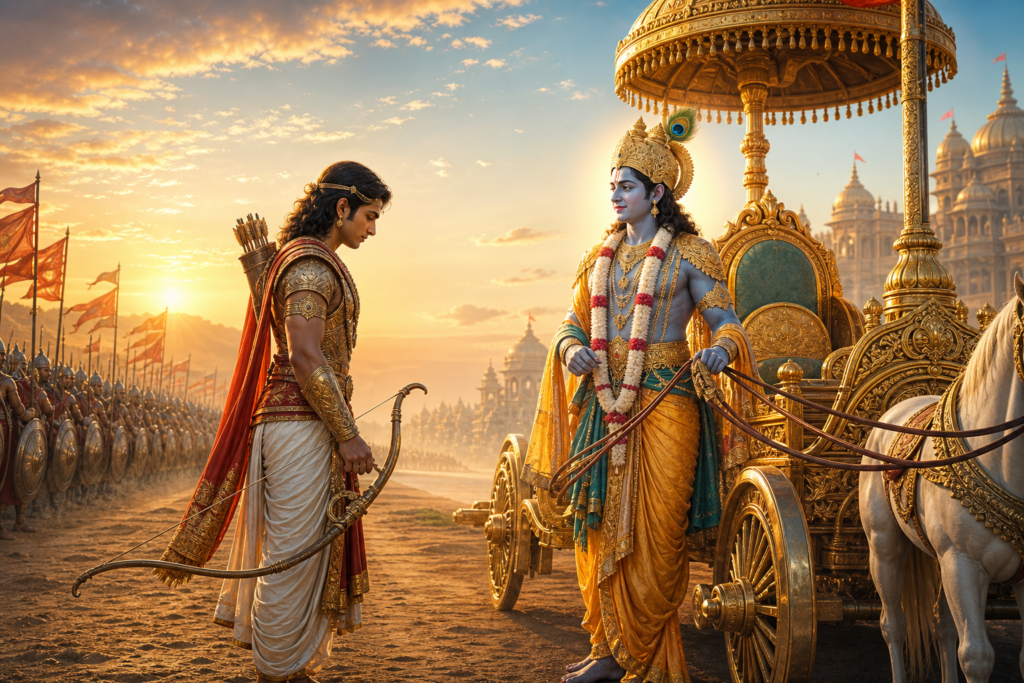
For inclusive households honoring unity across dharmic paths, a simple shared practice works well: a short meditation (dhyana), a few verses from the Bhagavad Gita, Dhammapada, Jain aphorisms on ahiṁsā and satya, or Sikh nitnem passages, followed by an act of service. Many report that such a rhythm on Krishna Paksha days fosters steadiness, clarity, and mutual respect.
To verify or refine local timings, compute sunrise and sunset for the exact location and divide the daylight into eight equal parts to locate Tuesday’s Rahu Kalam (7th segment), Yamaganda (3rd), and Gulika (5th). Identify the local solar noon to estimate Abhijit Muhurta, and consult a reliable ephemeris for the Moon’s longitude to determine nakshatra and rashi at the intended time. When in doubt, defer to the locally respected Panchang or temple guidelines.
In summary, April 7, 2026, moves from the receptive clarity of Krishna Paksha Panchami to the disciplined momentum of Krishna Paksha Sashti at 2:05 PM. Using foundational Panchang toolsTithi, Nakshatra, Rashi, and Muhurtaenables decisions that are both timely and value‑aligned, supporting a day lived with purpose, harmony, and inter‑tradition unity.
Inspired by this post on Hindu Blog.