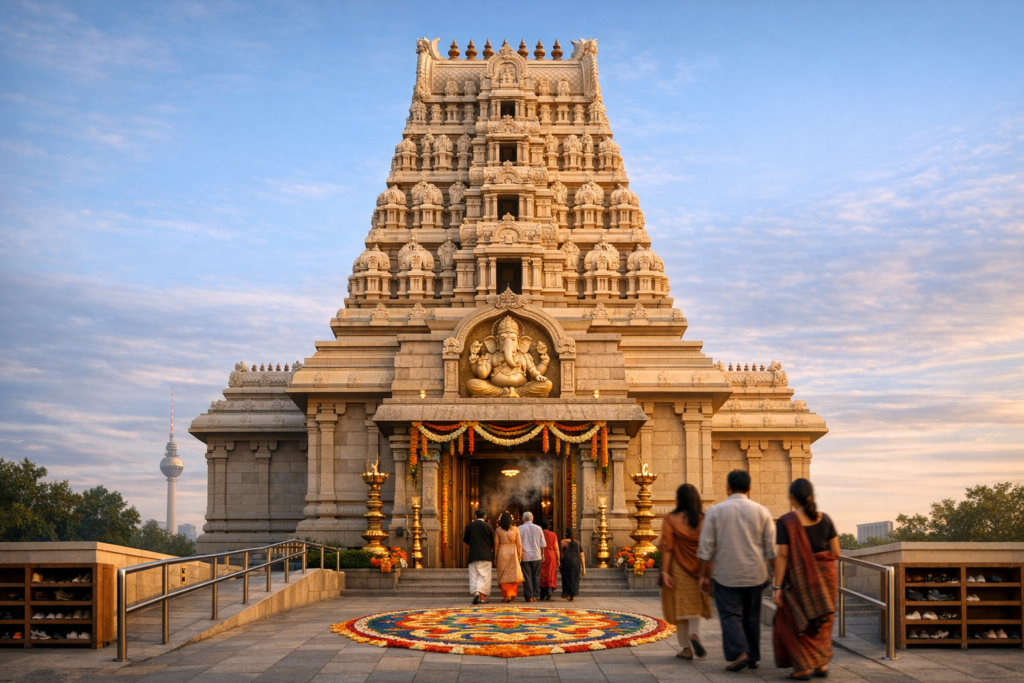
In the classical inheritance of Sanatana Dharma, Akshaya Tritiya (also known as Akshay Tritiya and Akha Teej) is revered as a day when righteous giving, service, and study generate inexhaustible merit (akshaya). Across the broader Dharmic family—Hinduism, Buddhism, Jainism, and Sikhism—the festival functions as a shared invitation to practice compassion in action, anchoring prosperity to ethical conduct, community welfare, and inner discipline.
Astronomically and ritually, Akshaya Tritiya falls on Vaishakha Shukla Tritiya, the third lunar day of the bright fortnight of the month of Vaishakh. In many regional almanacs, the Sun is observed in Mesha (Aries) and the Moon in Vrishabha (Taurus) during this period, a configuration traditionally celebrated as exalted and auspicious. For this reason the day is counted among the Sade-Teen Muhurat, a set of self-validating windows considered suitable for commencing worthy undertakings without elaborate muhurta selection. Panchang variations exist, so households prudently consult local temple priests or regional calendars.
Purana and itihasa lineages weave multiple associations into this tithi. Several traditions remember the commencement of the Mahabharata’s transcription, with Sri Ganesha writing to the dictation of Bhagavan Veda Vyasa. Many communities observe Parashurama Jayanti on this day. Folklore in parts of Bharat also recalls the descent of the Ganga. Such plural memories enrich the festival’s pan-Indian character without demanding uniformity of practice.
Ritual grammar is simple and dignified: snana and shuddhi at dawn; a clear sankalpa oriented to loka-sangraha (the welfare of all); temple darshana; and focused worship of Sri Vishnu-Lakshmi, Sri Ganesha, and, regionally, Sri Kubera. Offerings commonly include grains, jaggery, sugarcane, and seasonal produce, followed by japa, homa, or vrata as per family parampara. In many regions, children begin vidyarambha or aksharabhyasa, linking the day’s name with literacy, study, and lifelong learning.
The festival’s core is dāna and seva. Classical Hindu sources extol anna-dana (food), vastra-dana (clothing), jala-dana (water), aushadha-dana (medicine), and vidya-dana (education). Practical expressions today include supporting midday meals, endowing scholarships, provisioning community water stations in the summer, sponsoring medical camps, and strengthening local temple kitchens that feed pilgrims and neighbors alike. The guiding principle is sattvika dāna—timely, thoughtful, and anonymous where possible, offered to the deserving without expectation of return.
Dharmic unity around generosity is both ancient and living. In Buddhism, dana is the first perfection (dana paramita), cultivating non-clinging and compassion; many sanghas mark the season with food distribution and community service. In Jainism, Akshaya Tritiya commemorates Bhagavan Rishabhadeva (Adinatha) breaking a long fast with sugarcane juice (ikshu-rasa), offered by Shreyansha—explaining the festival’s sugarcane symbolism in several regions. In Sikh tradition, the spirit of the day resonates with nishkam seva and Guru-ka-Langar, where anyone may eat as equals; organizing or volunteering at langar, blood-donation camps, and water stalls in peak heat exemplifies this shared ethic. Convergence rather than conformity is the hallmark: plural paths, one compassion-centered intent.
Community narratives illustrate how small acts compound into civilizational strength. Many households describe the quiet contentment that follows anna-dana on a sweltering afternoon, the unspoken gratitude when a school kit reaches a child at the start of term, or the dignity that a discreet medical voucher restores to an elder. Such stories demonstrate that prosperity in Sanatana Dharma is measured not only in assets but in relationships of care—prosperity with responsibility.

While some customs highlight purchases such as gold, tradition places inner intention and public good above consumption. Smrti and regional achar emphasize shuddha-labha (ethical earnings), maryada (right method), and samyak-bhavana (right intention). A pragmatic sequence helps: provide food and water where scarcity is acute; invest in education and skills that outlast a single day; and use the occasion to formalize a family seva plan for the year, converting festival fervor into sustained impact.
Environmentally mindful observance strengthens the ethical arc of the festival. Households and temples increasingly adopt biodegradable puja materials, avoid single-use plastics, and channel flowers and naivedya remnants into composting. Water-stations (pyaus) are designed with filtration and hygiene in mind; tree-planting and urban greening projects align the idea of akshaya with ecological regeneration.
Regional practice varies and deserves respectful attention. In several Jain and Hindu communities, sugarcane and jaggery offerings mark the day; in parts of Odisha and Bengal, anna-dana and chhatua distribution are common; in the Deccan and Maharashtra, Akshaya Tritiya is counted among the Sade-Teen Muhurat for commencing ethical ventures; in the South, vidyarambha, go-seva, and temple utsavams emphasize learning and service. Diaspora communities adapt these patterns to local contexts while retaining the festival’s dana-first ethos.
An actionable observance checklist may include: early-morning snana and sankalpa; temple darshana; anna-dana or langar volunteering; support for jnana-dana through books, scholarships, or digital learning tools; jala-dana via community water points; a simple home puja to Sri Lakshmi-Narayana; and a written family seva calendar that schedules monthly acts of giving. For Akshaya Tritiya 2026 and beyond, consulting a trusted panchang ensures alignment with local sunrise and tithi timings.
Ultimately, Akshaya Tritiya affirms a profound civilizational equation: when generosity, study, and disciplined conduct are inexhaustible, prosperity becomes resilient, relational, and shared. By foregrounding charity, philanthropy, and seva in temples and neighborhoods—across Hinduism, Buddhism, Jainism, and Sikhism—the day advances unity in spiritual diversity and renews confidence that dharma, lived quietly and consistently, is the most durable wealth.
|| ॐ तत् सत् ||
Inspired by this post on Dharma Dispatch.