-
Yoga Dakshinamurti Unveiled: Two Sacred Postures, Agamic Iconography, and Inner Silence

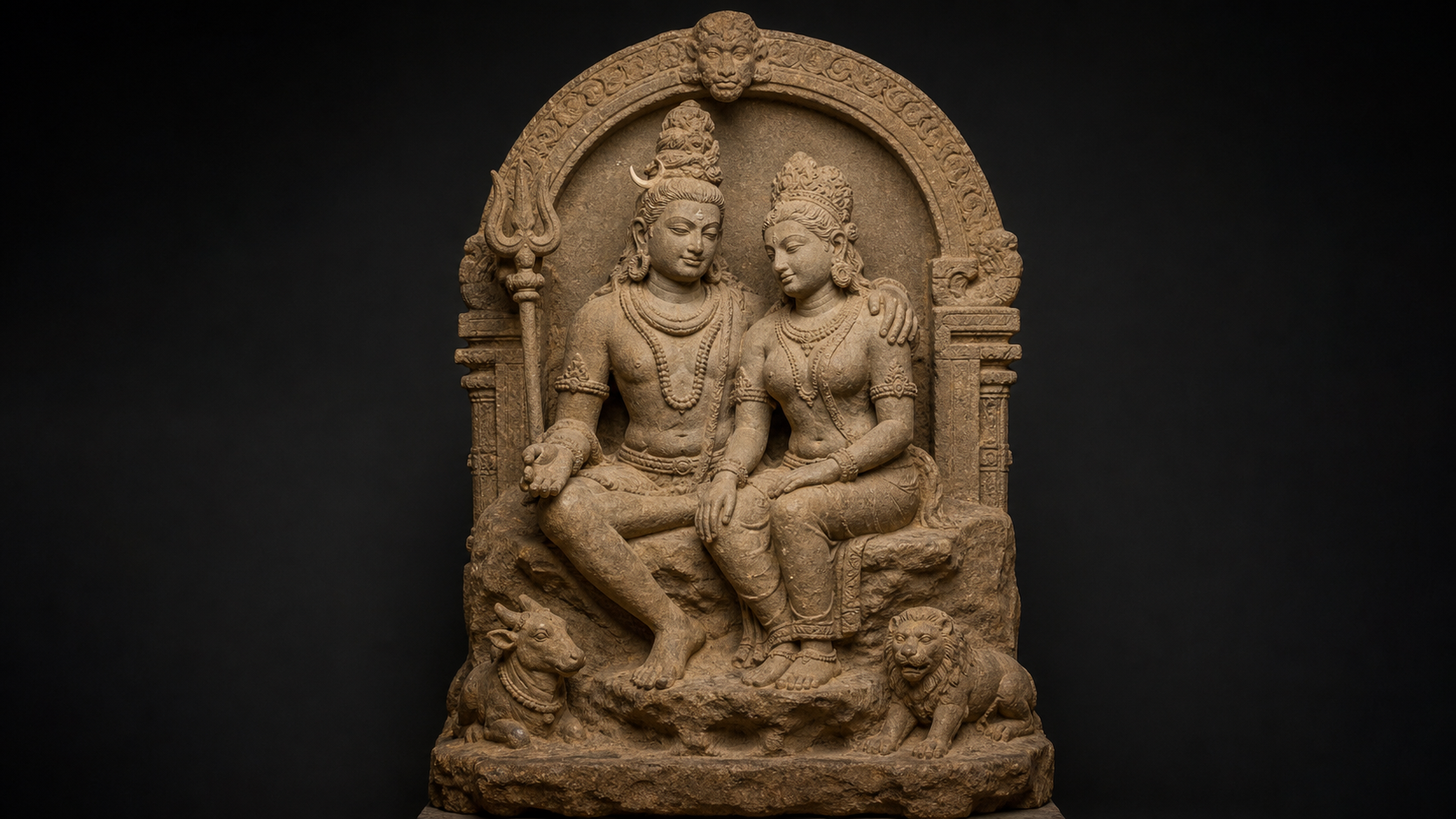
Dakshinamurti, Shiva’s south-facing form, embodies the Adi Guru whose silence instructs more deeply than speech. This long-form guide decodes two canonical idol forms of the Yoga Dakshinamurti—Dhyana-Padmasana and Virasana/Maharajalilasana—using Agamic and Shilpa Shastra principles. Readers learn practical cues to identify each form in temples, from asana and yogapatta to mudras, attributes, and the optional presence…
-
Anantavaram Temple Brahmotsavams 2026: Sacred Spectacle, Dates, Rituals & Pilgrim Guide

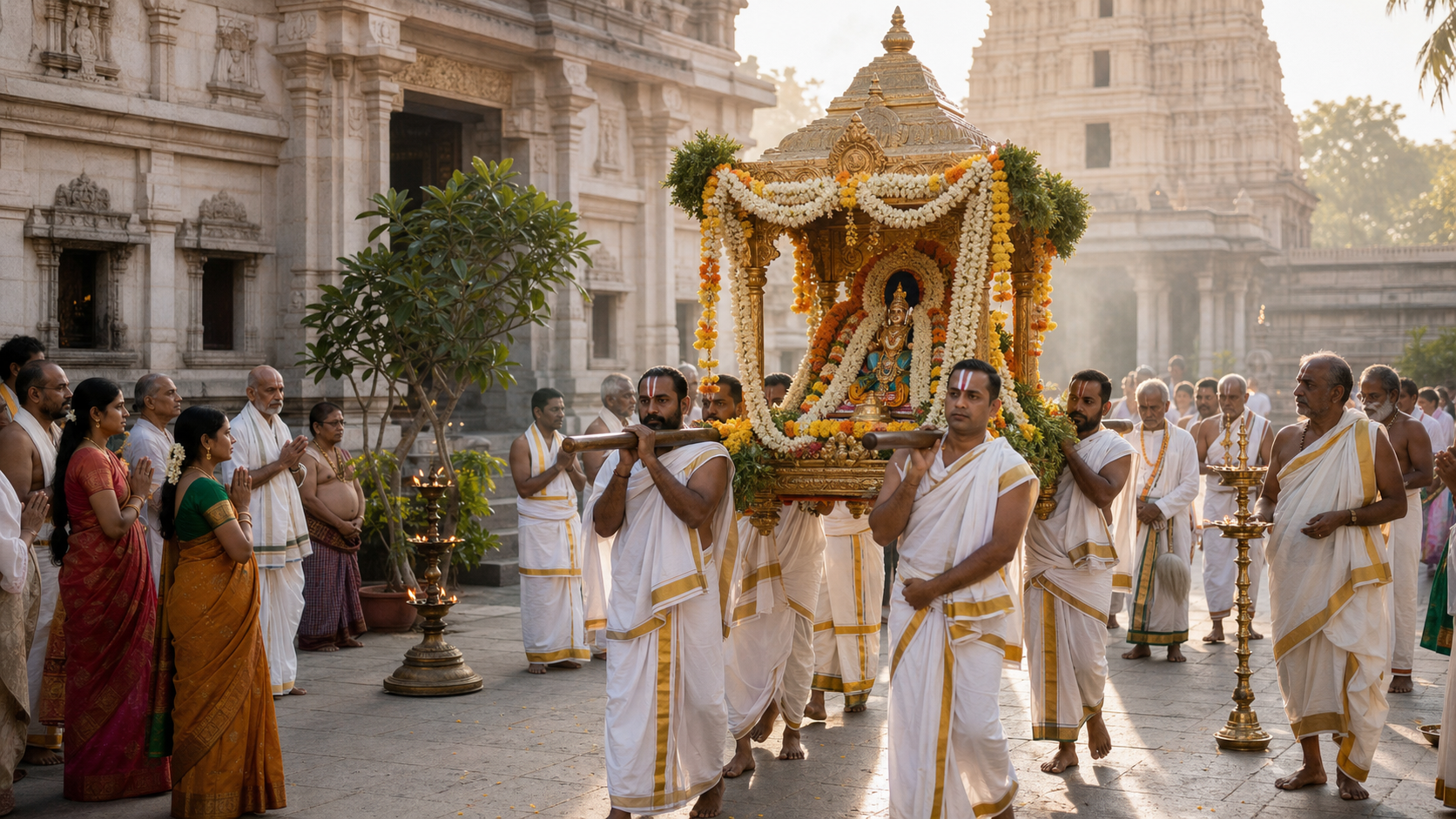
Anantavaram Temple Brahmotsavams 2026 will be celebrated from February 28 to March 4 at the Sri Venkateswara Swamy Temple in Ananthavaram, Thullur Mandal, Guntur district. The festival honors Sri Venkateswara Swamy with Sridevi and Bhudevi and follows the Vaikhanasa Agama under the logistical stewardship of Tirumala Tirupati Devasthanam (TTD). Devotees can anticipate Koil Alwar Thirumanjanam…
-
Sri Govindarajaswamy Temple March 2026 Festivals: Sacred Dates, Rituals, Pilgrim Guide

Sri Govindarajaswamy Temple’s March 2026 calendar centers on Phalguna Purnima (3 March), Papamochani Ekadashi, monthly Amavasya, and Sri Rama Navami, each anchored to the Venkatachala Panchangam (IST). Devotees can expect Pournami mahapuja, Dola Yatra/Dolotsavam-style Unjal Seva within Vaishnava tradition, disciplined Ekadashi vrata practices, and Sri Rama parayana with possible Seetharama Kalyanam or vishesha archana. The…
-
Tirupati Kodandarama Swamy Brahmotsavams 2026: Dates, Rituals, Vahana Sevas & Complete Devotee Guide

The annual Brahmotsavams of Sri Kodandarama Swamy Temple in Tirupati will be celebrated from 17–25 March 2026, with Koil Alwar Tirumanjanam on 13 March and Ankurarpanam on 16 March. Presented under TTD, the festival integrates precise temple ritual with community devotion centered on Sri Rama, Sita, and Lakshmana. This guide explains the significance of Brahmotsavam,…
-
Auspicious March 2026 at Tiruchanur: Definitive Guide to Padmavathi Ammavari Ugadi, Ramanavami Sevas

March 2026 at Sri Padmavathi Ammavari Temple, Tiruchanur, brings a concentrated sequence of Lakshmi-centric observances anchored by Ugadi (Chaitra Shukla Pratipada) and Sri Ramanavami (Chaitra Shukla Navami). The guide explains how TTD’s tithi-based scheduling shapes festival flow, what vishesha alankarams and archanas to expect, and how Panchanga Sravanam frames the new year’s ethical intent. It…
-
Chandra Grahan Alert: TTD suspends Annaprasadam on 3 March 2026—what devotees must know

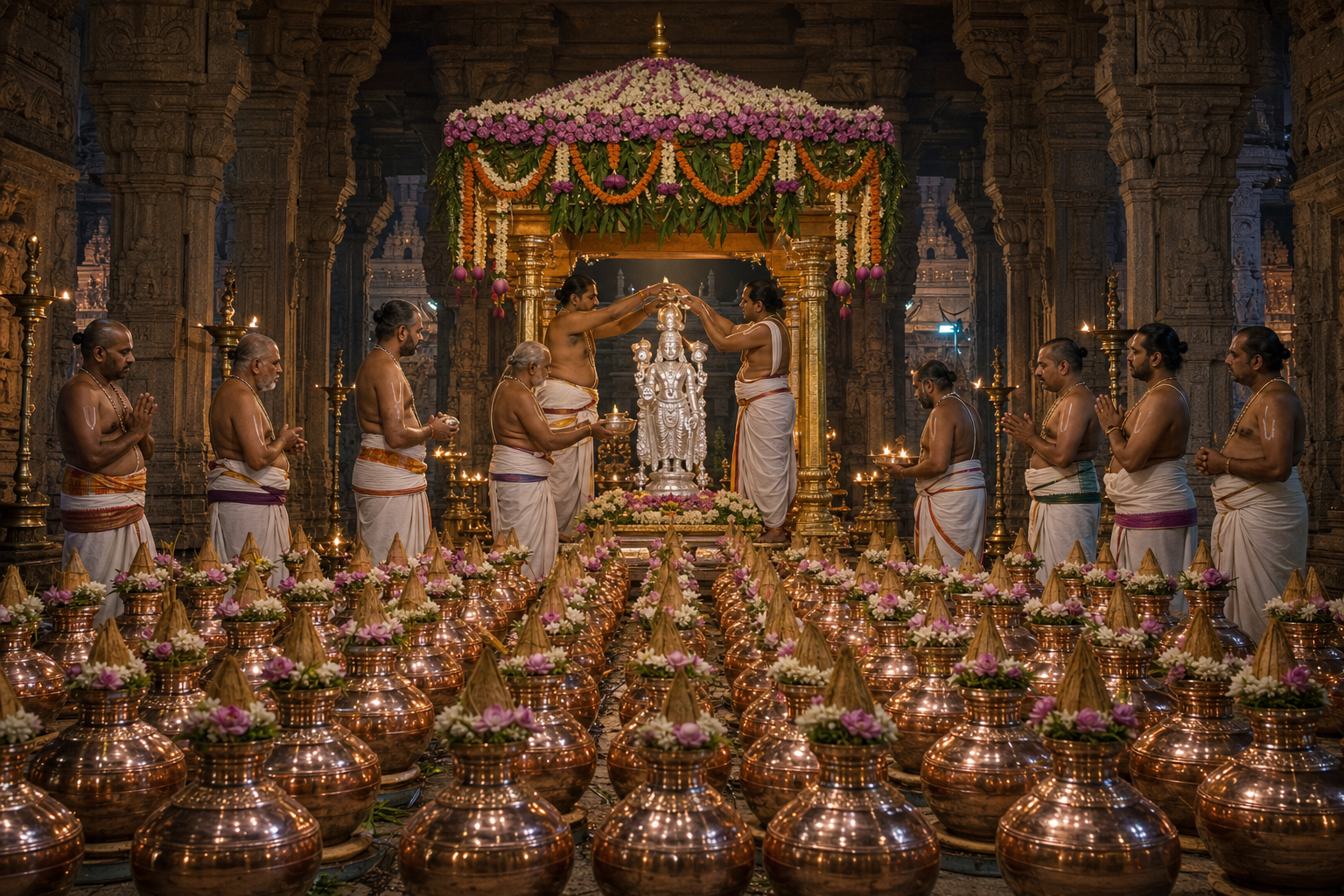
On 3 March 2026, TTD will suspend Annaprasadam distribution at select facilities in Tirupati and Tiruchanoor in observance of the Chandra Grahan (lunar eclipse). The measure, grounded in Āgama and Dharmaśāstra guidance, pauses cooking and food distribution during Sutak and the eclipse, with services resuming after prescribed purification. Affected locations include the SV Nitya Annaprasadam…
-
March 2026 Sacred Pujas at Kanchi Kamakoti Peetham: Tithi Highlights, Rituals, Devotee Guide

March 2026 at Kanchi Kamakoti Peetham in Kanchipuram spans Falgun Maas – Chaitra Maas (North), Phalguna Masam – Chaitra Masam (Telugu, Kannada, Marathi, Gujarati), Falgun Mash – Chaitra Mash (Bengali), and Tamil Masi – Panguni. The month’s rhythm is set by tithi—Ekadashi, Pradosham, Purnima, Amavasya, and Sankashti—rather than fixed solar dates, so devotees should consult…
-
Definitive TTD March 2026 Festivals Guide: Sacred Utsavams, Key Dates, Pilgrim Essentials

March 2026 at Tirumala Tirupati Devasthanam (TTD) features a high-energy sequence of utsavams anchored by Phalguna Pournami and the onset of Chaitra. This definitive guide highlights the conclusion of Srivari Salakatla Teppotsavam on 2 March 2026, the pre-Ugadi Koil Alwar Tirumanjanam, Ugadi Asthanam with Panchanga Sravanam, Panguni Uttiram Kalyanotsavams, and the Sri Kodandarama Swamy Temple…
-
Nagabharana of Venkateswara Swamy: Adisesha’s Golden Embrace on Tirumala’s Divine Shoulders

The Nagabharana of Venkateswara Swamy—twin golden serpents resting on the Lord’s shoulders—embodies Adisesha’s protective presence in Tirumala’s Vaishnava tradition. This in-depth exploration explains its theological meaning, Agamic grounding, and South Indian craftsmanship, while showing how ornament becomes lived theology in darshan. It connects naga symbolism to Puranic narratives and to broader Dharmic motifs found in…
-
Guardians at the Village Edge: Ayyanar’s Terracotta Horses—History, Ritual, Symbolism

Across rural Tamil Nadu, monumental terracotta horses stand guard as votive offerings to Ayyanar, the village boundary-keeper whose protection encircles fields, groves, and water. This long-form, research-driven overview explains the history, iconography, and ritual ecology of Ayyanar worship, showing how art, craft, and community cohere into a living heritage system. Readers will learn how Velar/Kuyavar…
-
Masi Magam 2026 at Kumbakonam’s Chakrapani Temple: Rituals, Theerthavari, and Sacred Significance

Masi Magam 2026 at Kumbakonam’s Chakrapani Temple will be held on 2 March 2026, aligning the full Moon with Magha Nakshatra for a day of ritual immersion and renewal. The festival centers on the theerthavari of the utsava-murti, framed by Vedic chant, abhishekam, and deepa-aradhana within Kumbakonam’s storied temple-tank network. Devotees value this observance for…
-
Mylapore Kapaleeswarar Brahmotsavam 2026: Dates, Rituals, and Panguni Uthiram Complete Guide

Mylapore Kapaleeswarar Temple Brahmotsavam 2026 spans March 23 to April 1, aligning with Panguni Uthiram and offering a complete arc of ritual intensity and community celebration in Chennai. The festival opens with Dhwajarohanam at 7.30 am on March 23, features Kapaleeswarar Ratholsavam on March 29, and culminates on April 1. Signature processions, including the revered…
-
Nava Narasimha Kshetra of Ahobilam: The Ultimate Guide to Nine Sacred Temples and Yatra

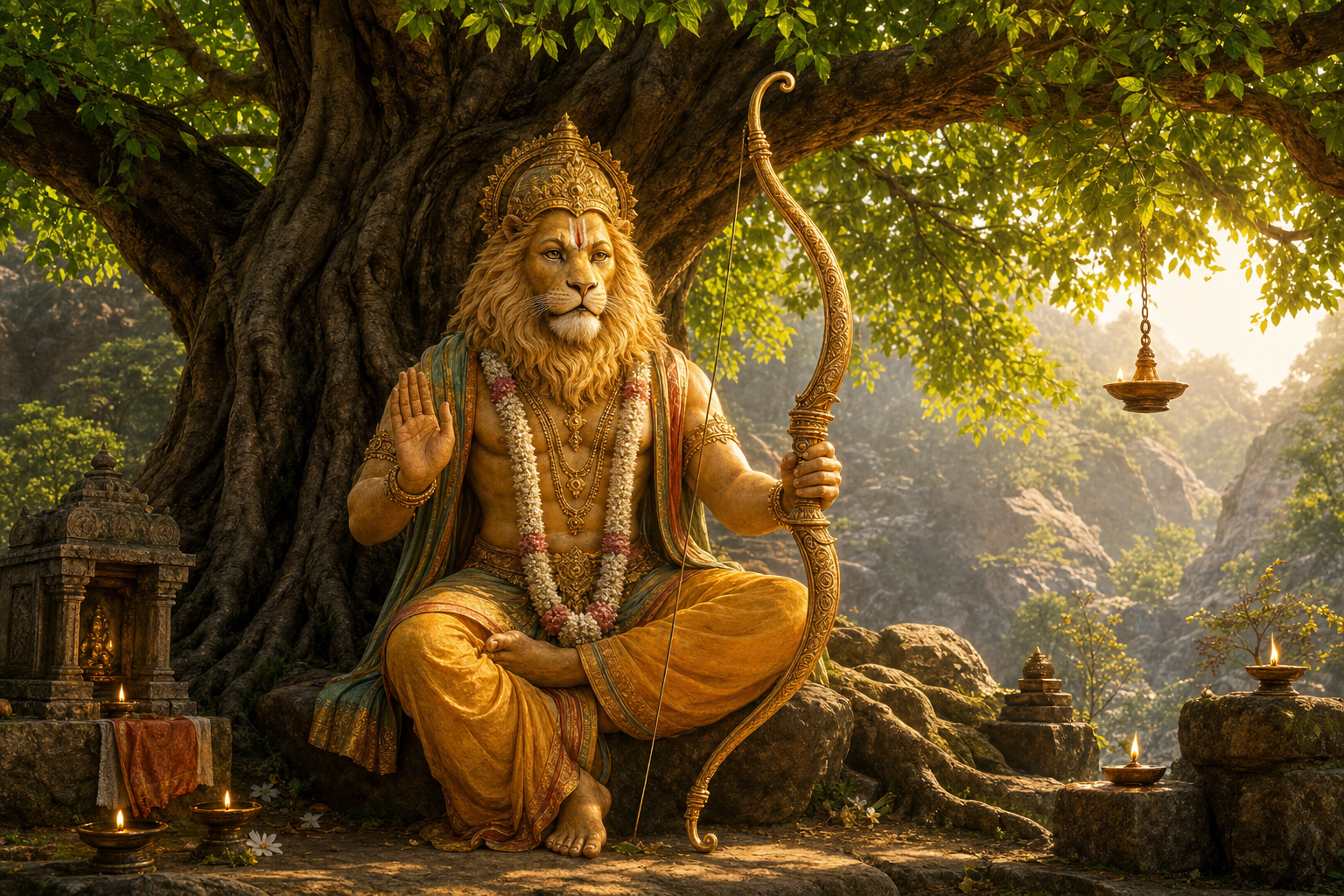
This guide presents a clear, research-grounded overview of the Nava Narasimha Kshetra at Ahobilam, where nine distinct shrines of Narasimha are venerated in a forested, cave-studded landscape. It explains how Narasimha’s awe-inspiring form ultimately signifies compassionate protection, supported by scriptural narratives from the Bhagavata Purana and Vishnu Purana. Each of the nine temples is described…
-
Vishkanya in Hindu Temples: Unmasking the Haunting Symbolism, Statecraft, and Ethics

The Vishkanya (Vishakanyaka), or “poison maiden,” is one of the most intriguing and misunderstood figures in Hindu temple iconography. This long-form analysis situates the motif within Arthaśāstra-inspired statecraft, narrative literature like Mudrārākṣasa, and the premodern study of toxicology (agada-tantra). It explains how specific sculptural cues—such as a scorpion on the thigh or serpent ornaments—transform a…
-
Prabhavali or Prabhamandala: The Sacred Arch of Light, Protection, and Cosmic Order in Temples

The prabhavali, or prabhamandala, is the luminous arch that frames deities in Hindu temple sanctums, uniting aesthetics, ritual function, and metaphysical meaning. Emerging prominently in classical and medieval India and perfected in traditions such as the Chola bronzes, it encodes protection, radiance, and cosmic order through motifs like kirtimukha, makara, and jvala flames. Stone, metal,…
-
Sri Rama Navami 2026 at Bhadrachalam: Timeless Brahmotsavam & Soul‑Stirring Sita Rama Kalyanam

Sri Rama Navami 2026 at Bhadrachalam will be observed during the Vasanta Paksha Thirukalyana Brahmotsavalu from March 19 to April 2, with Sri Sita Rama Kalyanam expected in the Madhyahna window around March 27. The temple’s liturgy follows Vaishnava Agamas with Ankurarpana, Dwajarohanam, vahana sevas, the Kalyanam, and Pattabhishekam on Dasami. Devotees can expect a…
-
Veenadhara Dakshinamurthy: Shiva’s Musician-Guru in Pallava and Chola Temple Art

Veenadhara Dakshinamurthy portrays Shiva as the musician-guru, where wisdom becomes audible as sacred sound. Distinguishing aasana (seated) and sthanaka (standing) variants—linked respectively with Chola refinement and early Pallava dynamism—clarifies how form encodes function in South Indian temple architecture. The veena symbolizes disciplined harmony of senses and breath, turning listening into a pathway of learning. Practical…
-
Atma Shraddha at Gaya Janardan Temple: Definitive Guide to Self Pind Daan for Ancestral Peace

Gaya Janardan Temple in Gaya, Bihar is widely cited as the only temple where Atma Shraddha—self Shradh and Pinda Daan performed while living—can be undertaken with full ritual authority. This guide explains what Atma Shraddha is, why Gaya holds unparalleled standing for ancestral rites, and how the temple’s location on Bhasma Koot Mountain near Mangala…
-
Madanikas in Hindu Temples: Sacred Feminine in Stone—Symbolism, History, and Devotional Aesthetics
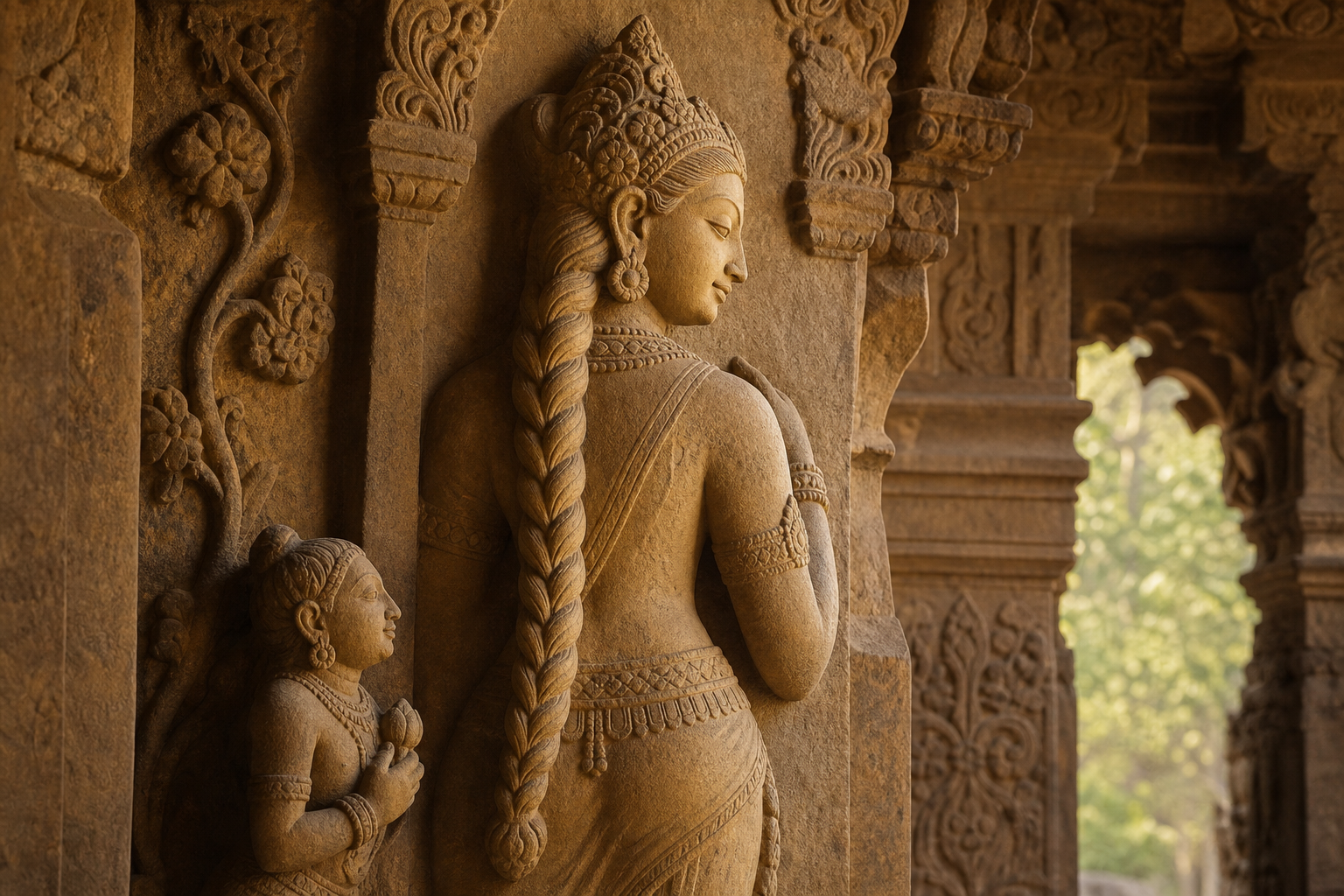
Madanikas—also known as śālabhañjikās—are among the most evocative symbols in Hindu temple architecture, uniting beauty, devotion, and metaphysics. This comprehensive overview traces their origins in early yakṣī imagery at Bharhut and Sanchi, follows their classical flowering in Hoysala temples at Belur, Halebidu, and Somanathapura, and situates related figures at Khajuraho, Konark, and Warangal. It explains…