
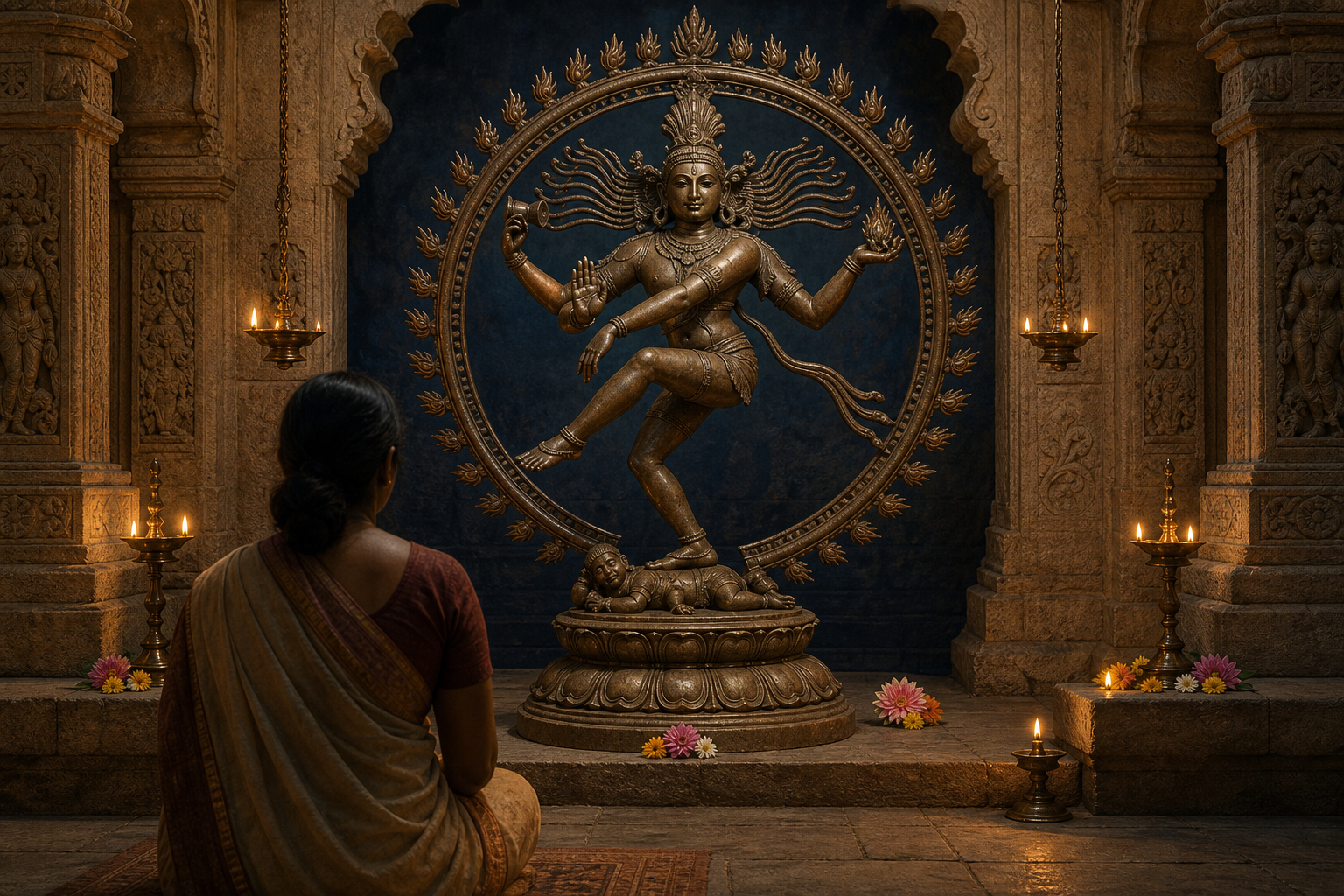
You are standing before a murti whose details clearly matter: an animal face, several hands, an unfamiliar weapon, a small attendant at the feet, or a vehicle that seems too prominent to be decorative. A label may supply a name, but it rarely tells you how the image communicates.
You can read such an image without reducing it to a codebook or guessing at hidden meanings. The reliable approach is to move from observation to context, from context to identification, and only then from identification to contemplation. That sequence lets you notice what the image is actually doing.
Begin with the whole composition, not its strangest feature
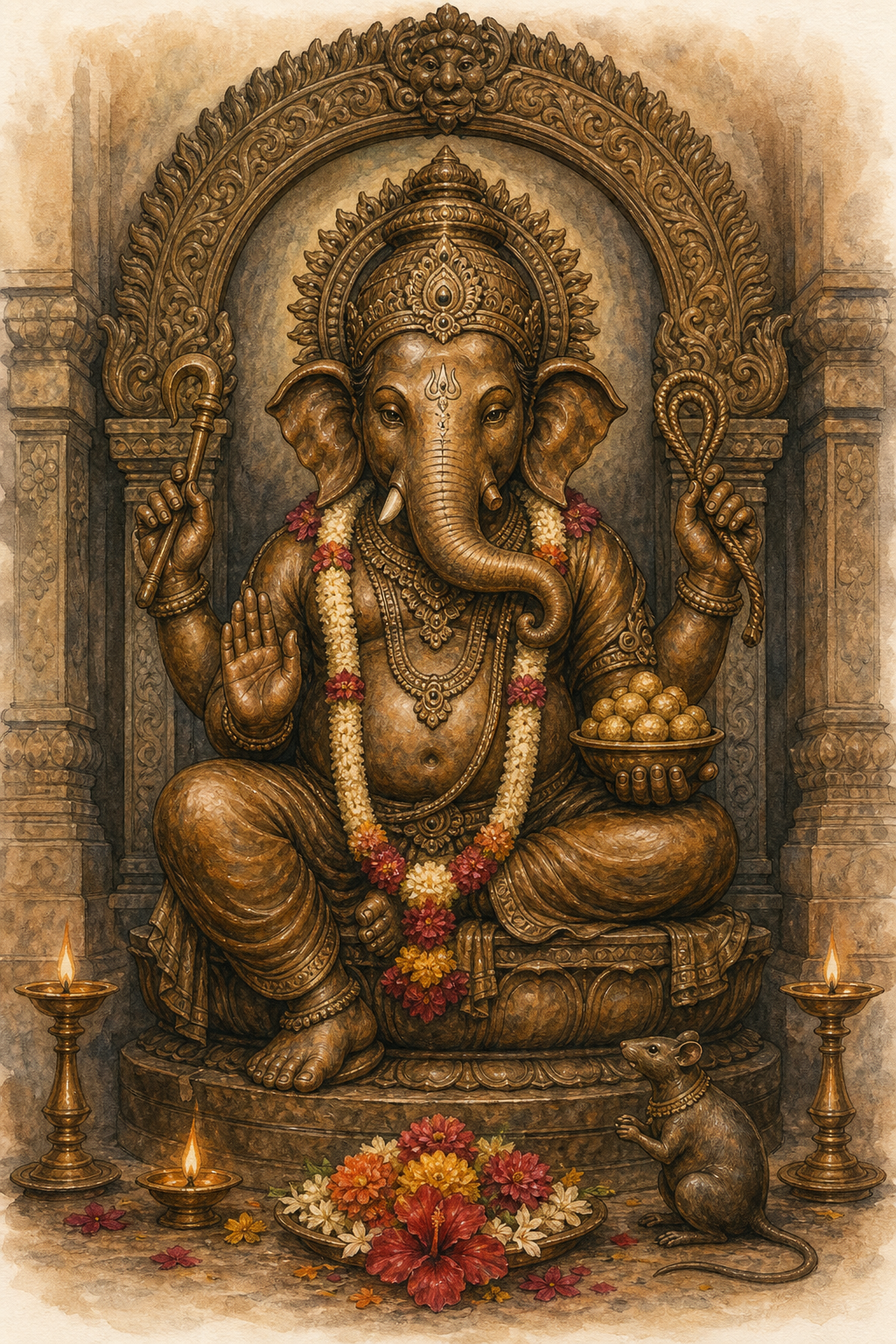
A common mistake is to spot one memorable detail and make it carry the entire interpretation. A horse becomes courage, a sword becomes violence, a goat head becomes animal worship, or multiple arms become a literal claim about divine anatomy. Hindu sacred art is more structured than that. A feature receives its precise meaning from the figure, the surrounding figures, the location, the associated narrative, and the ritual tradition in which it appears.
Start by separating three questions. First, who or what is being identified? A crown, vahana, hand gesture, face, implement, or companion may answer this. Second, what role is being expressed? The same deity may appear as teacher, guardian, sovereign, ascetic, householder, or cosmic power. Third, what response is invited from you? An image may call forth trust, restraint, courage, disciplined action, surrender, or contemplation.
These layers often cooperate. A weapon can identify a protective form, define its duty against adharma, and prompt the devotee to cultivate moral courage. That does not make every weapon interchangeable. A khanda in an equestrian image of Khandoba belongs to a different visual and theological program from a sacrificial ladle carried by a personification of the Yajur Veda.
Context therefore outweighs resemblance. A goat-headed figure is not securely identified until you inspect the other figures, its hands, its posture, and the scene around it. Likewise, a mounted warrior is not fully understood merely by translating horse as speed. The question is always: speed in the service of what?
Use a five-pass method when you examine a sacred image
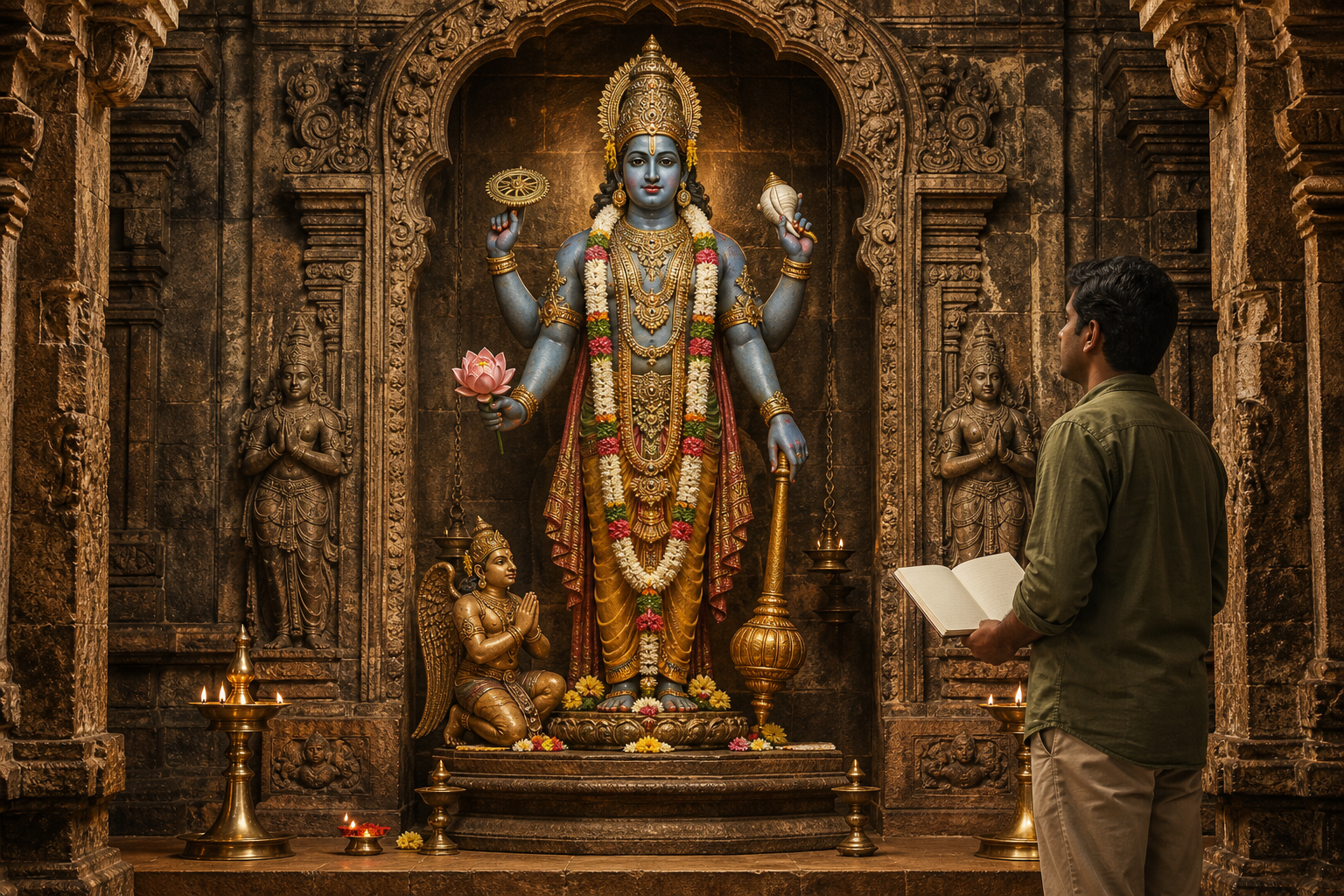
The following method works in a temple, museum, photograph, or digital archive. Keep observation and interpretation in separate notes. This small discipline prevents an early guess from quietly turning into a supposed fact.
1. Record the setting before naming the figure
Note where the image appears: in the sanctum, beside a doorway, on a base moulding, at a corner, inside a narrative frieze, or among a repeated group. Placement can establish the category of the image before any individual attribute does. Four comparable figures arranged as a set, for example, make a Veda-personification reading more plausible than it would be for an isolated figure.
Write a literal location statement such as: lower exterior band, third figure in a group of four, facing forward. That is more useful than beginning with seems like a deity. If the temple name, shrine name, direction, inscription, or local oral identification is available, record it without forcing it to fit your first impression.
2. Describe the body and posture without interpreting them
Count visible heads, faces, arms, and legs. Note whether the figure stands, sits, rides, dances, teaches, fights, blesses, or attends another figure. Record the direction of the gaze and whether the body appears calm, dynamic, regal, ascetic, fierce, or service-oriented.
Damage matters. A missing hand may once have held the identifying object. A chipped projection may be a horn, weapon tip, flame, halo, or part of the background. Mark such details as uncertain instead of completing them from imagination.
3. Inventory every hand, tool, gesture, and item of dress
Name an object only when its shape supports the name. Distinguish a straight sword from a spear or trishula; distinguish a ritual ladle from a weapon. Look for the sacred thread, crown or turban, animal skin, bundled grass, banner, rosary, manuscript, vessel, and hand gestures such as abhaya.
An attribute usually works as part of a cluster. Sacrificial ladles, darbha grass, a yajna-kunda, and placement beside three corresponding figures reinforce one another. A single damaged object does not offer the same confidence. For a practical working rule, wait for at least three cues to align: one from placement, one from attributes, and one from relationships or narrative context.
4. Read the figures and materials around the central form
Identify the vahana, consorts, attendants, opponents, devotees, standards, plants, architectural frame, and objects near the feet. Decide whether an animal is being ridden, carried as an emblem, presented as an offering, or participating in a story. Those are different iconographic functions.
Ritual materials can be part of the image’s living meaning. Turmeric at Jejuri is not incidental colour placed over an otherwise complete Khandoba image. Its golden presence evokes auspiciousness, vitality, purity, and the solar aspect associated with Martanda. Lamps, flowers, ash, sandal paste, dress, and festival processions can similarly show which dimensions of a murti a community brings forward in worship.
5. Test competing identifications before interpreting inwardly
Form at least one alternative hypothesis. Then ask what you should see if each identification were correct. A goat-faced Yajur Veda personification should fit a sacrificial and Vedic setting. Daksha Prajapati should fit the narrative world of the Daksha Yajna. Ajaikapada should show the austere verticality, one-footed form, or Rudra-related markers associated with that figure.
Use confidence labels in your notes: certain when an inscription or complete conventional ensemble settles the matter; probable when several independent cues align; possible when one or more decisive elements are lost. Honest uncertainty is better iconography than an ingenious explanation built on a broken hand.
Two worked readings show how the method changes the result
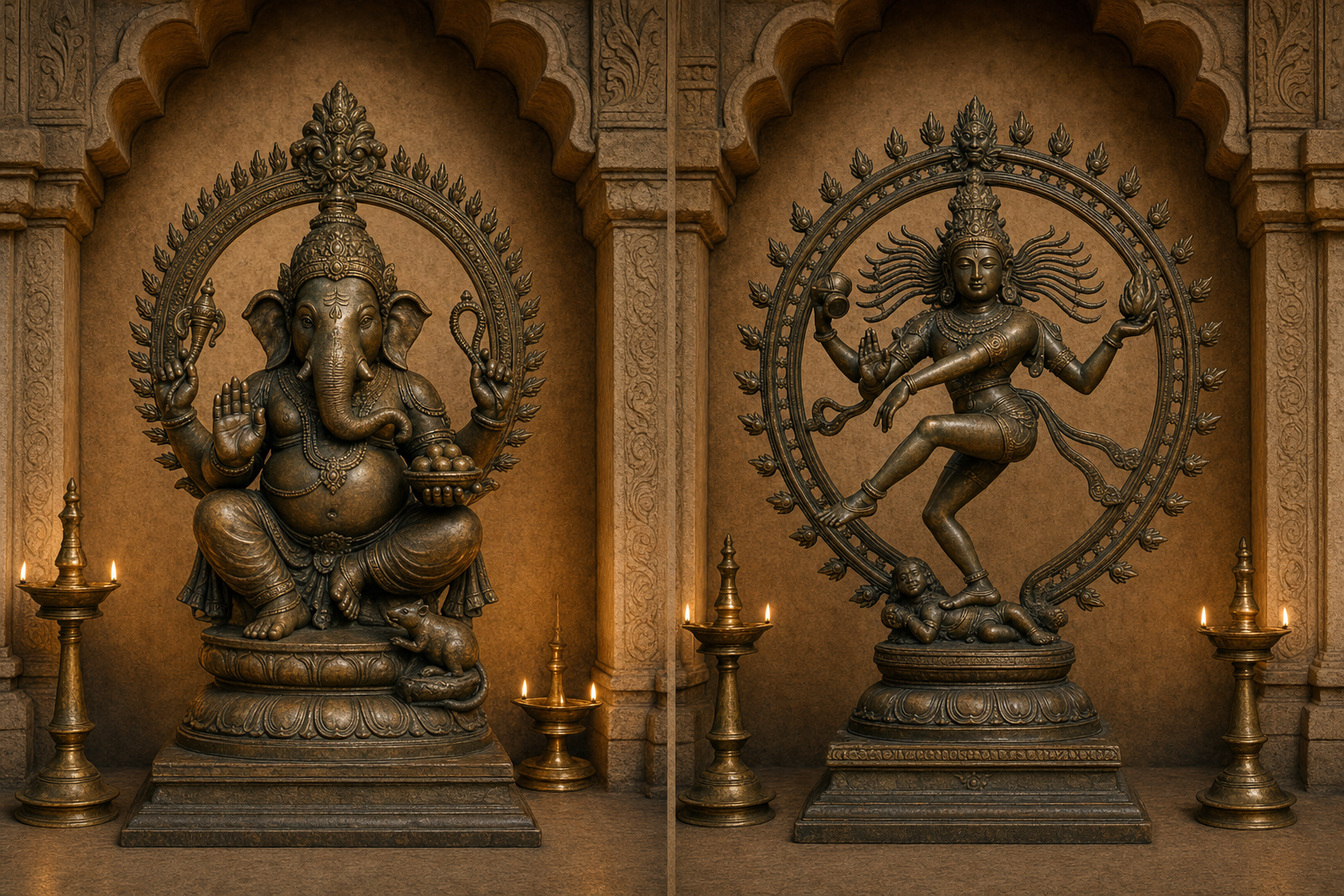
Khandoba: a mounted warrior whose power is accountable
Begin with the visible program. The anthropomorphic form presents a regal, often mustachioed warrior mounted on a horse. A crown or ceremonial turban marks sovereignty. The weapons may include a khanda, spear, and sometimes a trishula. The overall posture communicates readiness rather than repose.
The identifying context then narrows the meaning. Khandoba is revered in Maharashtra and the Deccan as Martanda Bhairava, Malhari, and Mallari. His story includes the defeat of Malla and Mani, while his Shaiva identity explains the Bhairava character and the possible trishula. His horse conveys speed and vigilance, but within this setting it more specifically expresses swift guardianship over people, settlements, routes, and territory.
Now the weapons can be read more precisely. The khanda represents decisive action in defence of dharma. The spear suggests the removal of threatening obstacles and, at a contemplative level, penetration of ignorance. The trishula reconnects the regional warrior form to Shiva and to a cosmic order larger than personal anger. The force displayed here is not self-justifying. It is subordinated to protection, restraint, and righteous order.
Other elements prevent the reading from becoming merely martial. Golden turmeric, or bhandara, expresses auspicious vitality and solar radiance. Mhalsa and Banai connect the deity with distinct mercantile-urban and pastoral spheres, allowing sacred kinship to represent social integration. Mani’s place in later worship after his defeat adds transformation and magnanimity to the image of justice.
The aniconic linga tradition, prominent at Jejuri, is equally important. It warns you not to assume that the equestrian body is the only or most complete way of encountering Khandoba. One regional deity can inhabit both a pan-Indic Shaiva ritual form and a locally vivid image of mounted guardianship.
A responsible one-sentence reading would therefore be: this form presents Khandoba as a Shaiva guardian and accountable sovereign whose disciplined strength protects dharmic order. That sentence identifies the figure, explains the role, and states the ethical direction of its symbolism.
The goat-faced Yajur Veda: ritual knowledge made visible
A goat face may dominate your first impression, but it should not dominate the method. Check whether the figure belongs to a group of four Veda-purushas. Look for implements of yajna and the Adhvaryu’s work: wooden ladles such as sruk and sruva, darbha grass, a sacred thread, animal skin, or a sacrificial hearth. In a compact sculptural space, the face may function as visual shorthand for this larger ritual system.
The Sanskrit word aja can carry the sense of goat as well as the unborn. This makes a layered contemplation possible: the visible sign recalls the outward world of offering, while the second sense points toward an unborn principle underlying ritual. Yet philological richness should supplement, not replace, contextual identification.
The decisive clue is the combination. A goat face plus Adhvaryu-coded implements and a chatur-veda setting supports identification as the Yajur Veda personified. A goat-headed figure in a scene of repentance associated with Veerabhadra and Sati points instead toward Daksha. A markedly one-footed, vertical, Rudra-related form shifts attention toward Ajaikapada.
Only after that distinction is secure should you develop the contemplative reading. Yajna can then be understood not only as an outward rite involving Agni, formula, substance, and precise action, but also as a discipline of consecrating vitality, work, speech, and intention. The image turns a body of sacred utterance into a presence that can be seen and remembered.
If you are photographing such a figure, do not crop tightly around the unusual face. Capture one wide image of the entire sculptural group, one view showing the hands and feet, and close views of implements and surviving inscriptions. A faint ladle, goat attendant, or corner of a yajna-kunda may be the evidence that prevents a false identification.
Avoid four habits that distort Hindu iconography
Do not turn symbols into a universal dictionary
Horse equals speed and sword equals courage may be useful beginnings, but they are not complete readings. Ask who possesses the attribute, what narrative surrounds it, and what ritual life activates it. The horse of a regional guardian, an animal beside a Veda-personification, and a creature within a narrative frieze cannot be decoded by the same one-line formula.
Do not mistake fierce imagery for uncontrolled aggression
First identify the duty represented by the fierce form. In Khandoba’s iconography, martial readiness is governed by kshatra dharma, protection, and just sovereignty. This does not mean every weapon in Hindu art has the same moral meaning. It means you must locate force inside the image’s own ethical structure before judging it.
Do not leap to an esoteric meaning before establishing identity
A symbol can support inward contemplation without being invented for whatever lesson you prefer. Establish the conventional identity, narrative, and ritual function first. Then ask how those public meanings can operate inwardly. The goat emblem can become a meditation on offering because it already belongs to the sacrificial grammar of the Yajur Veda, not merely because sacrifice sounds psychologically suggestive.
Do not treat regional variation as corruption
Iconographic prescriptions and workshop lineages vary. A Yajur Veda figure may have a fully goat-faced form, remain human-faced beside a goat, or be identified chiefly by ritual tools. Khandoba may be encountered as a linga or as an equestrian warrior. Variation can preserve a stable theological identity while selecting different features for a particular region, temple, medium, or devotional community.
When two forms differ, ask what remains constant across them. Repeated role, narrative, ritual association, and relationship to the wider pantheon often tell you more than bodily similarity alone.
Key takeaways for your next temple visit
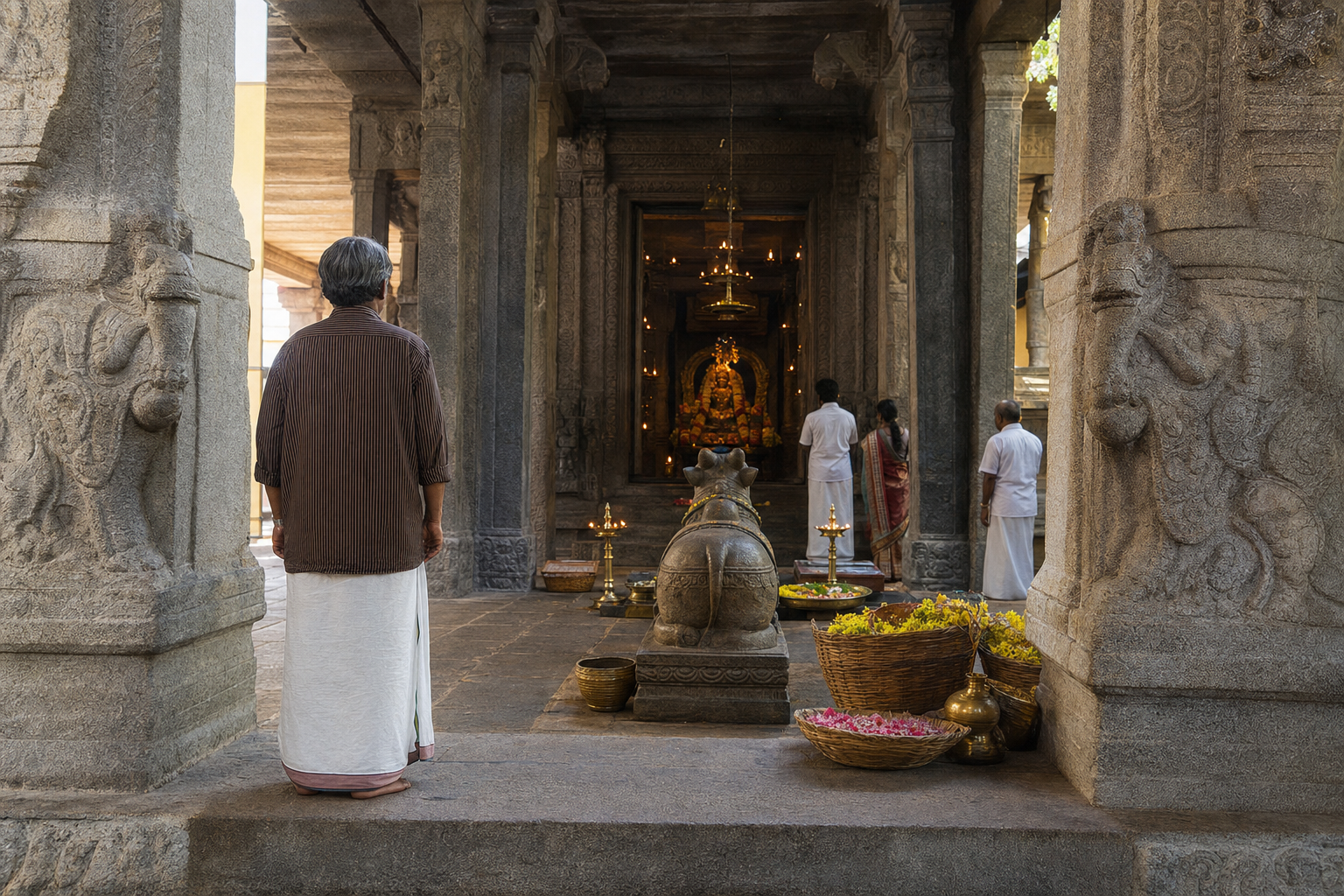
- Record the image’s location and neighbouring figures before trying to name it.
- Separate visible facts from interpretation, especially when the sculpture is damaged.
- Require several aligned clues: placement, attributes, posture, companions, narrative, or ritual use.
- Read weapons, animals, colours, and gestures inside the specific deity’s ethical and theological role.
- Test at least one competing identification and state your confidence honestly.
- Move to an inward or philosophical meaning only after the conventional identity is reasonably secure.
On your next visit, choose one murti and spend five quiet minutes making an observation record before consulting a label or search result. Note the setting, posture, hands, objects, companions, and ritual materials. Then write a single sentence naming the figure, the role being expressed, and the response invited from the devotee. That practice will teach you to see sacred iconography as an ordered visual theology rather than a collection of exotic objects.
References
- DharmaRenaissance Blog – Khandoba’s Idol Decoded: Valor, Protection, and Sacred Kingship in Maharashtra’s Jejuri
- DharmaRenaissance Blog – Unveiling Yajur Veda’s Goat-Faced Icon: Sacred Symbolism in Hindu Temple Art