
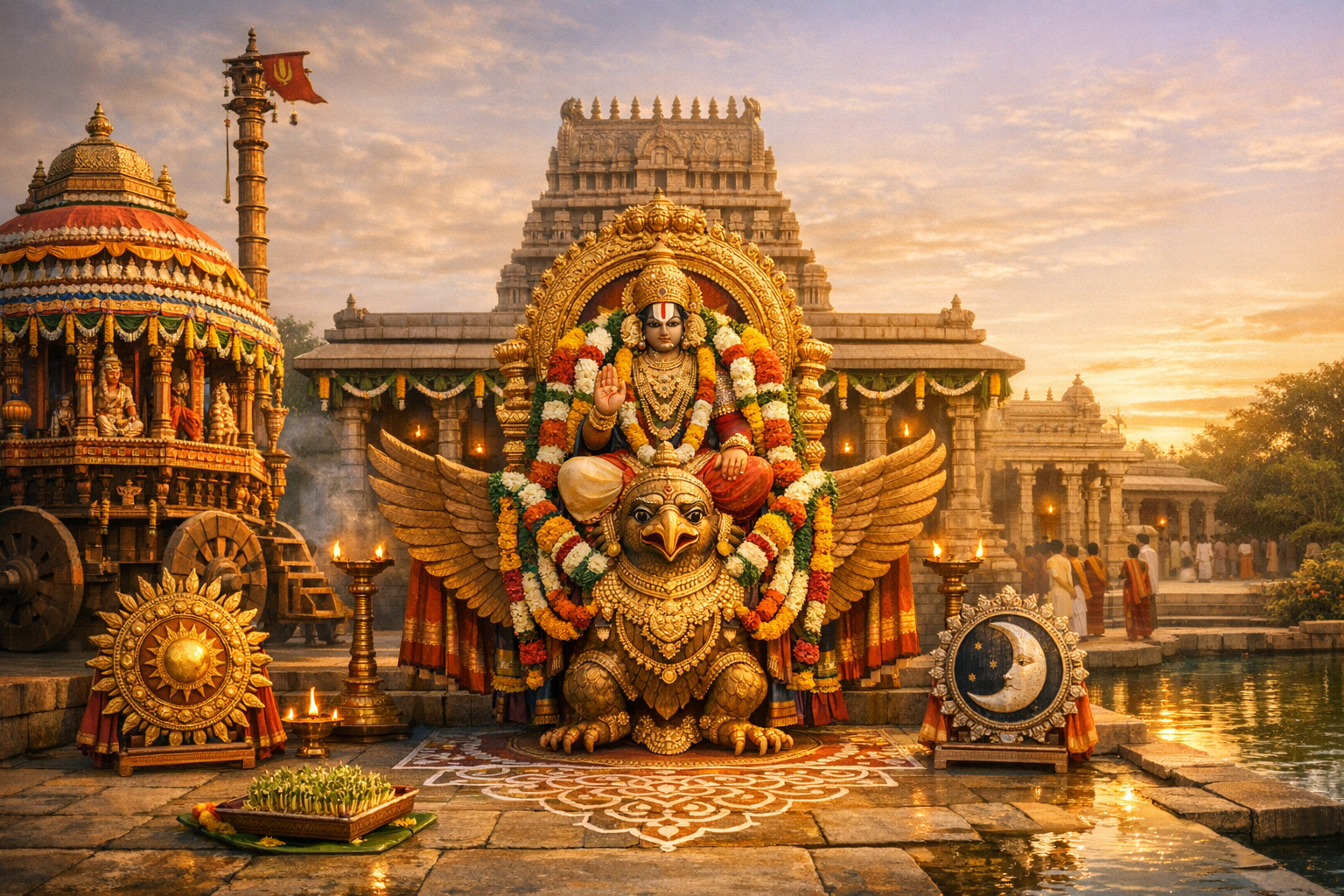
Keelapatla (also spelled Kilapatla) in Gangavaram Mandal of Chittoor district, Andhra Pradesh, will host the Keelapatla Konetiraya Swamy Temple Brahmotsavam 2026 from April 24 to May 3. In alignment with Vaishnava temple practice, Koil Alwar Tirumanjanamthe ceremonial cleansing and sanctification of the shrinewill precede the festivities on April 21, preparing the temple precincts for a ten-day cycle of processions, vows, and community devotion.
Sri Konetiraya Swamy is revered locally as a manifestation of Sri Venkateswara (Balaji). The epithet “Konetiraya” or “Konetirayalu” in Telugu tradition associates the Lord with waterside sanctity (koneti, a reservoir or pond) and royal guardianship (rayalu, king). The temple thereby occupies an important place within the sacred geography of South Indian Vaishnavism and the living heritage of Rayalaseema’s village-temple networks.
In classical temple liturgy, Brahmotsavam is a maha-utsava“the great festival”traditionally understood as instituted by Brahma to re-consecrate cosmic order and renew communal wellbeing. Across Andhra Pradesh, Brahmotsavams integrate Agamic worship, processional iconography, and public participation, thus joining theology and aesthetics with the rhythms of agrarian and urban life. The Keelapatla observance continues this lineage by invoking prosperity, health, and harmony for devotees and the wider region.
Ritually, the festival arc is anchored in Vaishnava Agamic procedure common to Rayalaseema temples, where the sequence typically includes ankurarpanam (sowing of ritual seeds), dwajarohanam (flag-hoisting under Garuda’s emblem), daily vahana sevas (processions of the utsava murti on emblematic mounts), rathotsavam (car festival), chakrasnanam (sacred bath of the Sudarshana Chakra), and concluding dwajavarohanam (flag-lowering). While the precise day-by-day program is announced locally, the Keelapatla festival is known for its devotional continuity and community-centered organization.
Koil Alwar Tirumanjanam on April 21 holds both practical and symbolic significance. Temple interiorsincluding floors, pillars, sanctum entryways, and ritual furnitureare cleansed with aromatic and herbal preparations, then sanctified through mantras and alankara (adornment). This practice renews ritual purity, enhances the aesthetic presence of the deity for darshan, and situates the community in a shared vow of attentiveness and care before the first day of Brahmotsavam.
The eve of the festival (April 23) is conventionally reserved for preparatory rites and ankurarpanam, wherein consecrated seeds symbolize auspicious beginnings. Such rites establish a liturgical “seed-time,” inviting both ecological reverence and ethical intention, so that the festival proceeds in alignment with dharma and the well-being of all participants.
With the formal commencement on April 24, the festival traditionally opens with dwajarohanam, raising the Garuda flag to mark divine sovereignty and invoke protective grace for the days ahead. The act is understood to transform the village-temple space into a consecrated kshetraa time-bound sacred fieldwhere devotees, volunteers, and visitors participate in a covenant of worship and mutual respect.
Morning and evening vahana sevas typically punctuate each day, allowing devotees to receive darshan of the utsava murti in varied theological moods (bhavas). In many Vaishnava temples, emblematic mounts such as Sesha, Hamsa, Simha, Hanumantha, and Gaja are featured, along with Surya Prabha and Chandra Prabha processions that signify the Lord’s guardianship across day and night. These vahanamswhile locally curatedembody layers of symbolism: knowledge and purity (Hamsa), courage and justice (Simha), devotion and service (Hanuman), and royal strength (Gaja).
Garuda Seva is commonly regarded as a festival highlight in Vaishnava Brahmotsavams, drawing peak footfall due to its association with Garuda, the devoted vahana of Vishnu. Devotees understand the procession as a powerful bestowal of anugraha (grace), fostering both personal renewal and collective auspiciousness. In Keelapatla, this moment typically animates the village with lamps, recitation, and music, reinforcing the emotional and spiritual bonds that unite devotees across generations.
Rathotsavam (the temple car festival) provides a public axis for participation, as the community gathers to draw the ratha through designated streets. Theologically, this is lokasangrahasacral outreach into civic spaceaffirming that divine presence accompanies daily life. Socially, rathotsavam functions as living heritage, strengthening inter-household ties, welcoming visitors, and sustaining artisan crafts associated with chariot maintenance and festival adornment.
On the concluding day, temples frequently observe chakrasnanamritual bathing of the Sudarshana Chakrafollowed by dwajavarohanam, which lowers the Garuda flag and returns the temple to its regular ritmo of worship. The conclusion is not an ending but a re-integration: prayers seek to retain the clarity, gratitude, and devotion kindled during the festival, carrying them into work, relationships, and community service.
Architecturally, Sri Konetiraya Swamy Temple belongs to a broader South Indian temple idiom shaped over centuries by Chola, Pandya, and Vijayanagara influences. The sanctum (garbhagriha), antarala, and mandapa ensemble reflects the Vaishnava emphasis on darshan, while relief carvings, iconographic program, and ritual pathways guide devotees through an experiential theologymoving from outer courtyards to the interior stillness of the sanctum. Inscriptions and stylistic features noted across Chittoor’s temple belt attest to a shared artistic ecosystem connecting village shrines with major temple centers.
Practically, the festival’s organization draws on collaboration between the temple administration, local authorities, and a large volunteer base. Queue systems, lighting, temporary amenities, first-aid, drinking water points, and annadanam are commonly coordinated to manage footfall responsibly. Such arrangements ensure that elderly devotees, children, and visitors from other regions receive darshan and prasadam with dignity and safety.
Keelapatla’s Brahmotsavam also exemplifies values cherished across dharmic traditionsbhakti (devotion), ahimsa (non-harm), dana and seva (generosity and service), and satya (truthfulness). These principles resonate not only within Hindu practice but also across Buddhism, Jainism, and Sikhism, reinforcing a shared civilizational ethic of compassion, discipline, and community solidarity. The festival thereby serves as a cultural bridge that honors plural spiritual paths while celebrating the distinctive Vaishnava liturgy of the temple.
Visitors can plan attendance by noting that larger crowds tend to gather on weekends, Garuda Seva, and rathotsavam days. Early arrival, adherence to dress codes (modest, traditional attire), and respectful participation in queue protocols support a smooth darshan experience. Photography norms vary by zone; most South Indian temples prohibit photography in or near the sanctum, and visitors are advised to follow local instructions displayed on notice boards.
Keelapatla is accessible by road from major towns in Chittoor district, with Palamaner, Madanapalle, and Chittoor serving as common transit hubs. The nearest widely used railheads for the region include Madanapalle Road (MPL), Chittoor (CTO), and Kuppam (KPN). The closest airports with good connectivity are Tirupati (TIR) and Kempegowda International Airport, Bengaluru (BLR). Travel times vary with road conditions; visitors are encouraged to check local advisories during peak festival days.
Accommodation in and around Keelapatla is limited; many pilgrims choose to stay in Palamaner, Madanapalle, or Chittoor and undertake day visits. During Brahmotsavam, simple dining and annadanam options are often available near the temple under community arrangements. Eco-conscious practicescarpooling, minimizing single-use plastics, and responsible waste disposalare encouraged to preserve the village’s cultural and natural environment.
From a ritual studies perspective, the Keelapatla Konetiraya Swamy Temple Brahmotsavam 2026 illustrates how Agamic liturgy, processional theology, and local stewardship interlock to sustain sacred tradition. From Koil Alwar Tirumanjanam through the festival’s concluding rites, the event renews the bonds between deity, temple, and community, while articulating a dharmic ethic that welcomes all with reverence and humility.
Across Chittoor district, such festivals function as living classrooms of heritagetransferring music, dance, crafts, and culinary traditions to younger generations and visitors. By situating devotion within everyday hospitality and shared service, the Brahmotsavam embodies a unifying spirit that honors diversity within the broader dharmic family.
Those planning to attend in 2026 may track local notices for the detailed day-wise schedule that the temple customarily releases closer to the dates. Whatever the chosen day, the essence remains consistent: a well-ordered, community-led celebration where devotion, heritage, and public-mindedness align to create an uplifting and memorable experience.
Inspired by this post on Hindu Pad.
