-
Kalantaka Shiva Unveiled: Tantric Iconography and the Fearless Conquest of Death and Time

Kalantaka Shiva embodies Lord Shiva’s sovereignty over death and time, uniting narrative, ritual, and art into a coherent path of fearlessness. Drawing on Puranic sources—especially the Markandeya episode—this study unpacks the icon’s ugra yet compassionate character and explains how the trishula, damaru, and noose operate as precise Tantric symbols. Readers gain a field guide to…
-
Panguni Masam 2026 Guide: Auspicious Dates, Panguni Uthiram, Nalla Neram, Temple Rites

Panguni Masam 2026, the final month of the Tamil Calendar, runs from March 15 to April 13 and centers on Panguni Uthiram, the full-moon festival aligned with Uthiram (Uttara Phalguni) nakshatra. This guide explains how Tamil Panchangam months are computed sidereally from Meena Sankranti, why dates can vary by region, and how to choose Nalla…
-
Maharashtra Temples Adopt Dress Code Boards to Uphold Sanctity and Respectful Darshan

Temple trustees from Savarde and Sarand in Maharashtra’s Ratnagiri district have resolved to install dress code boards, a move intended to preserve sanctity while improving clarity and comfort for devotees. The initiative aligns with long-standing dharmic norms of modesty and decorum, and parallels practices witnessed across Hindu, Buddhist, Jain, and Sikh spaces. Clear, inclusive, and…
-
High Court Halts Peterborough Temple Sale: What It Means for Fairness and Community Cohesion

A High Court injunction has temporarily halted Peterborough City Council’s planned sale of the New England Complex, home to the Bharat Hindu Samaj Mandir since 1986. The order by Mr Justice Fordham preserves the status quo while the court examines whether the council lawfully selected the Khadija Mosque as preferred purchaser after a tender weighted…
-
Mayapur as a Living Dham: A Sadhu’s Lens on Navadvipa, Bhakti, and Sacred Geography

This long-form exploration presents Mayapur as a living dham, observed through the disciplined perspective of a sadhu. It situates Mayapur within the fluvial geography of the Bhagirathi-Ganga and Jalangi rivers and recounts its historic role in Gaudiya Vaishnavism and the saṅkīrtana movement of Śrī Caitanya Mahāprabhu. The sacred mapping of Navadvipa’s nine islands is explained…
-
Phullara Devi at Attahasa Shakti Peetha: Bengal’s Blooming Goddess of Renewal and Vāk

Phullara Devi at Attahasa Shakti Peetha in Birbhum, Bengal, is venerated as the Blooming Goddess of renewal and sacred speech. Rooted in the Shakti Peetha tradition that links the land to Sati’s dispersed body, Attahasa is associated with the fallen lip—symbolizing vāk and ethical communication. The shrine’s aniconic murti, paired with Bhairava as Vishvesh, preserves…
-
Mayiladuthurai’s Vadaranyeswarar: Nandi’s Redemption under Dakshinamurti’s Timeless Grace

Set on the Kaveri’s banks in Mayiladuthurai, the Vadaranyeswarar Temple preserves a luminous legend in which Nandi’s unintended pride dissolves under Dakshinamurti’s silent, southward teaching. The narrative is embodied in space—clear sight-lines, pedagogic iconography, and the banyan’s contemplative presence—turning architecture into spiritual practice. Readers discover how Dravidian temple grammar, Shaiva-Agamic iconography, and Thevaram recitation integrate…
-
Kokamukha Unveiled: The Jackal-Faced Mahakali in Texts, Temple Inscriptions, and Tantra

Kokamukha, remembered as the jackal-faced manifestation of Mahakali, emerges in the Shakta landscape at the intersection of Hindu scriptures, temple traditions, and Tantric iconography. The article clarifies the name’s philological roots and situates the form within cremation-ground theology, where fierce imagery communicates protection, fearlessness, and ethical clarity. It connects Kokamukha with Yogini traditions and early-medieval…
-
Gilaharaj Ji Maharaj at Achal Taal: Hanuman’s Rare Squirrel Form and Timeless Ramayana Legacy

Gilaharaj Ji Maharaj Temple at Achal Taal in Aligarh, Uttar Pradesh, preserves a rare devotional focus: Hanuman is venerated in the form of a gilahari (squirrel), recalling the Ramayana story of Rama Setu and the power of humble seva. Set beside a historic waterbody, the shrine binds narrative memory to sacred geography in a living,…
-
Unveiling Venkateswara’s Nagabharana: Sacred Serpent Ornaments and Timeless Symbolism at Tirumala

The Nagabharana—paired golden serpent emblems on the shoulders of Lord Venkateswara at Tirumala—embody a sophisticated synthesis of theology, iconography, and craft. Rooted in the Skanda Purana’s Venkatachala Mahatmya, they recall Adisesha’s guardianship and the Seshachalam hills while aligning with Vaikhanasa Agama norms for sacred ornamentation. Their symmetrical design and goldwork techniques ensure both visual clarity…
-
Anantavaram Sri Venkateswara Brahmotsavams 2026: Dates, Rituals, TTD Arrangements & Pilgrim Guide

Anantavaram Sri Venkateswara Brahmotsavams 2026 will be observed from 28 February to 4 March at the Sri Venkateswara Swamy Temple in Thullur Mandal, Guntur. This comprehensive guide explains the festival’s ritual arc—from Koil Alwar Tirumanjanam and Dwajarohanam to vahana sevas, Snapana Tirumanjanam, and Chakrasnanam—along with the theological significance of Sri Venkateswara with Sridevi and Bhudevi.…
-
Sri Govindaraja Swamy Temple March 2026 Festivals: Sacred Calendar, Rituals, Darshan Guide

Sri Govindaraja Swamy Temple in Tirupati observes March 2026 through tithi-governed Vaishnava rites that blend precision and devotion. This guide explains how Phalguna–Chaitra tithis shape Ekadashi vratas, full- and new-moon observances, and select processions. It outlines the agamic logic behind abhishekam, kalyanotsavam, and daily aradhana while highlighting practical planning for darshan and arjitha sevas. Readers…
-
Tirupati Kodandarama Swamy Brahmotsavam 2026: Sacred dates, rituals, vahana sevas guide

Sri Kodandarama Swamy Temple, Tirupati, will observe its Brahmotsavams from March 17–25, 2026, with Koil Alwar Tirumanjanam on March 13 and Ankurarpanam on March 16. The festival follows TTD’s classical Vaishnava liturgy, featuring daily Vahana Sevas that present the deity’s grace in public space. This guide explains the meaning of Brahmotsavam, the significance of key…
-
Essential March 2026 Festival Guide: Tiruchanur Padmavathi Ammavari Temple Rituals & Sevas

Sri Padmavathi Ammavari Temple in Tiruchanur will host a spiritually rich programme in March 2026, in addition to Ugadi and Sri Rama Navami. This academically grounded guide explains how the tithi-based Hindu calendar shapes the month’s observances and what devotees can expect—Abhishekam, Kalyanotsavam, Unjal Seva, Sahasranamarchana, and special alankarams. It clarifies the theological meaning of…
-
TTD’s Important Advisory: Annaprasadam halted on Chandra Grahan, 3 March 2026

TTD has announced that all TTD-run Annaprasadam centres in Tirupati and Tiruchanoor will remain closed on Tuesday, 3 March 2026 due to the lunar eclipse (Chandra Grahan). The pause follows Agama and Dharma-shastra guidelines on Sutak, during which cooking, naivedyam, and public distribution of sanctified food are withheld. Facilities named by TTD include the SV…
-
March 2026 Pujas at Kanchi Kamakoti Peetham: Comprehensive Lunar Calendar and Guide

This in-depth guide aligns March 2026 pujas at Sri Kanchi Kamakoti Peetham with the Hindu lunar calendar, mapping them across Falgun–Chaitra (North), Phalguna–Chaitra (Telugu, Kannada, Marathi, Gujarati), Falgun–Chaitra (Bengali Panjika), and Masi–Panguni (Tamil). It explains how tithis drive temple observances, why local Panchang rules matter, and how to plan darshan around Purnima, Amavasya, Pradosham, Ekadashi,…
-
TTD March 2026 Festivals Guide: Unmissable Utsavams, Float Festival Finale, Darshan Tips

TTD’s March 2026 calendar centers on the sacred conclusion of Srivari Salakatla Teppotsavam (Float Festival) on March 02, 2026, offering pilgrims an unmissable opportunity for serene, water-borne darshan at Swami Pushkarini. This guide explains the theological and agamic logic behind jalotsava, clarifies how utsava murtis extend grace beyond the sanctum, and describes the sensory flow…
-
Kashi’s Tilbhandeshwar Mahadev: The Shivling Said to Grow a Sesame Each Year and Its Meaning

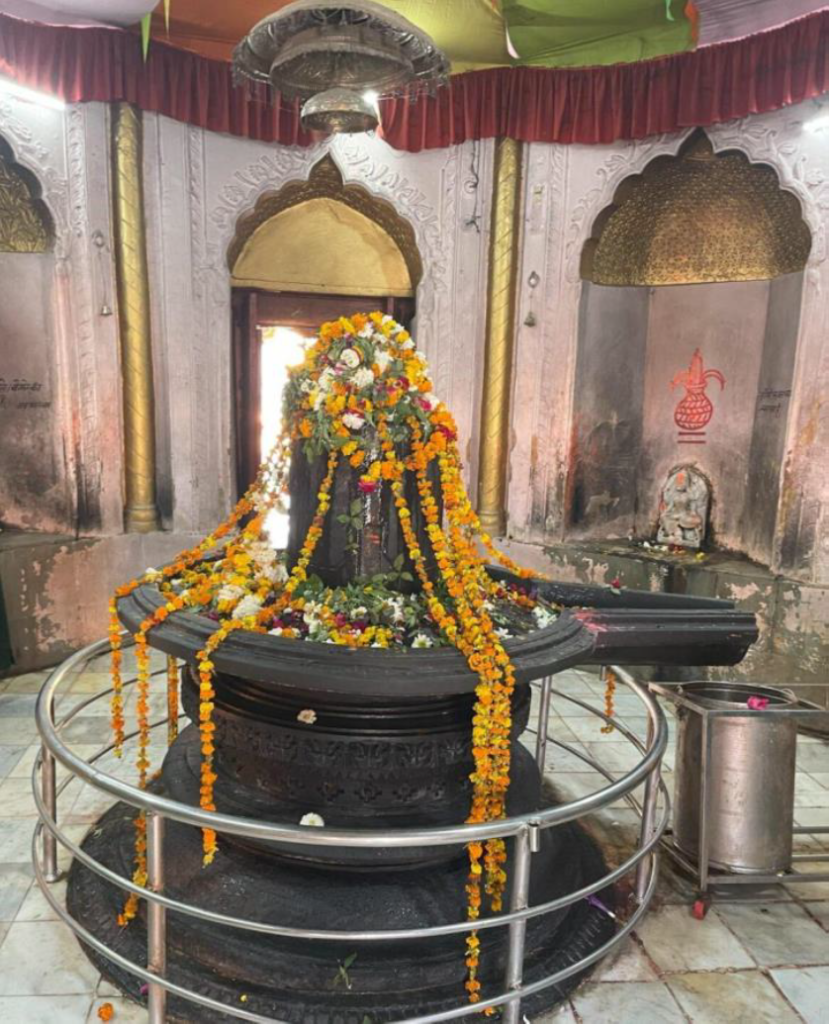
In Varanasi’s Tilbhandeshwar Mahadev Temple, devotion, memory, and material processes meet around a unique tradition: the Shivalinga is said to grow by a sesame seed each year. The temple’s name, lore, and ritual life together illustrate how communities preserve sacred knowledge through practice. Technical factors—mineral accretion from abhishekam and subtle structural shifts—offer plausible mechanisms for…
-
Mahasadashiva Unveiled: Rare 25-Headed, 50-Armed Cosmic Shiva in South Indian Temples

Mahasadashiva—depicted with twenty-five heads and fifty arms—is among the rarest and most conceptually rich forms of Shiva in South Indian temple art. Drawn from the Shaiva Agamas and śilpa treatises, the icon expands the fivefold logic of the pañca-brahma into a full cosmic diagram in stone. The fifty arms are widely read as the Sanskrit…
-
Decoding Nagapadma Kalam: Sacred Serpent Geometry and Rituals in Kerala Snake Temples

Nagapadma Kalam is Kerala’s sacred serpent-ritual painting where art, geometry, music, and ecology converge. Rooted in Kalamezhuthu, it frames the Naga upon a lotus padma and is enacted with natural pigments, mantra, and Pulluvan Pattu. The rite unfolds in snake temples and Sarpa Kavu, aligning spiritual protection, fertility, and environmental stewardship. Its padma-based geometry, multi-hooded…