
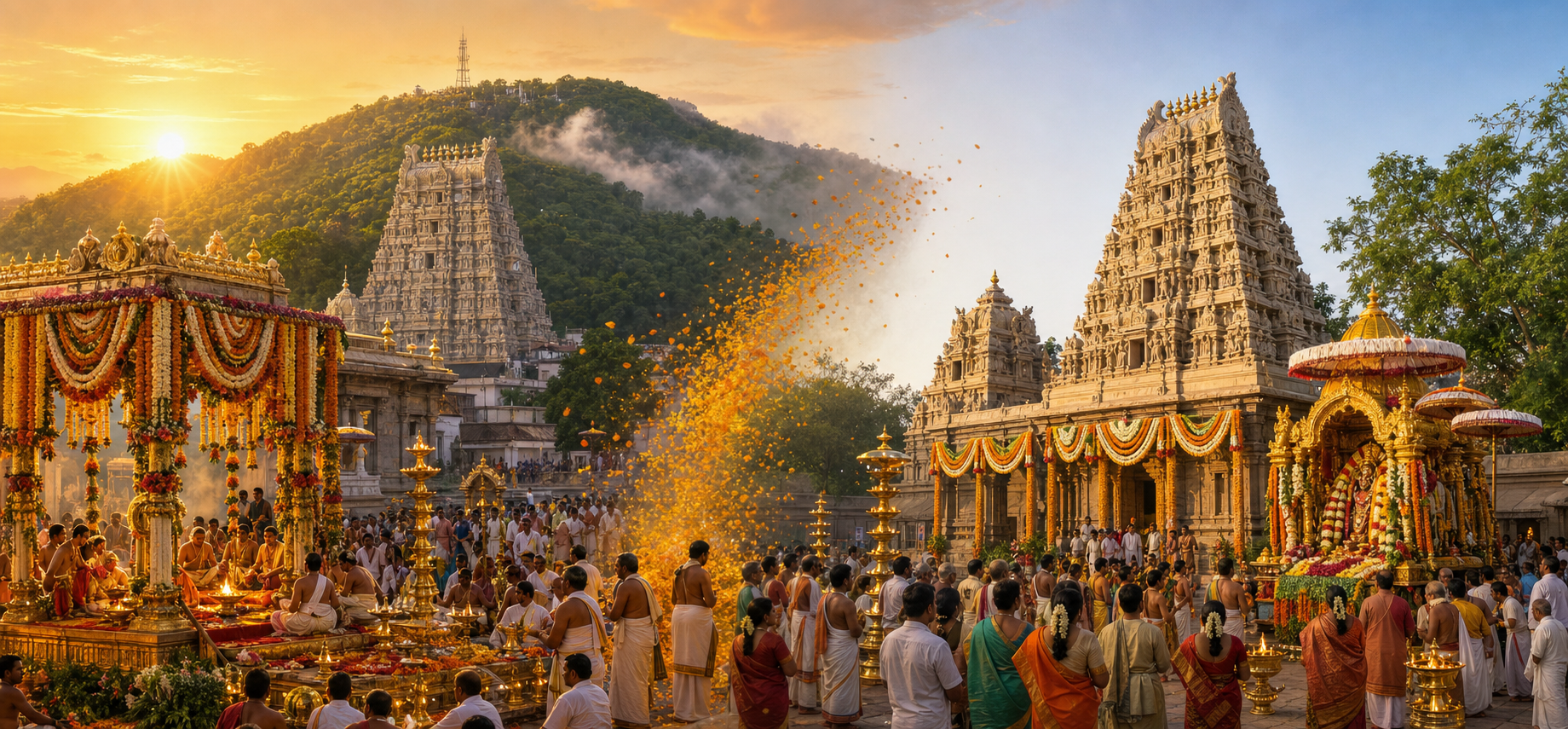
If you are deciding when to attend a TTD festival in late April or early May 2026, first separate two observances that sit close together on the calendar but take place in different cities. Tirumala hosts the Padmavathi Srinivasa Parinayotsavam from 25 to 27 April, while the TTD temple in New Delhi begins its preparatory rites on 28 April before Brahmotsavams run from 1 to 9 May.
Your best dates depend on what you want to witness: the intimate symbolism of a divine wedding at Tirumala, the opening or concluding rites of Brahmotsavam in Delhi, or a particular vahana procession whose exact date may be announced later. Use the confirmed dates as your planning anchors, but do not make a non-refundable booking around an assumed daily procession schedule.
April-May 2026 TTD calendar at a glance
| Date | Place | Observance | What you should know |
|---|---|---|---|
| 25-27 April 2026 | Parinayotsava Mandapam, Narayangiri Gardens, Tirumala | Sri Padmavati Srinivasa Parinayotsavam | Three days of celestial-wedding ceremonies featuring Sri Malayappa Swamy with Sridevi and Bhudevi. |
| 28 April 2026 | TTD Sri Venkateswara Swamy Temple, New Delhi | Koil Alwar Thirumanjanam | Preparatory cleansing and sanctification of the temple before Brahmotsavam. |
| 30 April 2026 | TTD Sri Venkateswara Swamy Temple, New Delhi | Ankurarpanam | The seed-sowing consecration establishes the festival sankalpa; it is not the first day of the nine-day Brahmotsavam. |
| 1-9 May 2026 | TTD Sri Venkateswara Swamy Temple, New Delhi | Annual Brahmotsavams | The main festival begins with Dwajarohanam and ends with the customary concluding observances. |
The most important planning distinction is geographical. The event ending in Tirumala on 27 April and the preparation beginning in New Delhi on 28 April are not successive programs at one temple complex. If you want to attend both, arrange them as two pilgrimages with an intercity transfer between them.
The calendar also leaves individual vahana dates unassigned. TTD is expected to issue the detailed New Delhi sequence closer to the festival. Garuda Seva, a possible chariot-related observance, and other popular processions should therefore remain provisional in your itinerary until their dates and entry arrangements are officially published.
Choose Tirumala for the three-day divine wedding
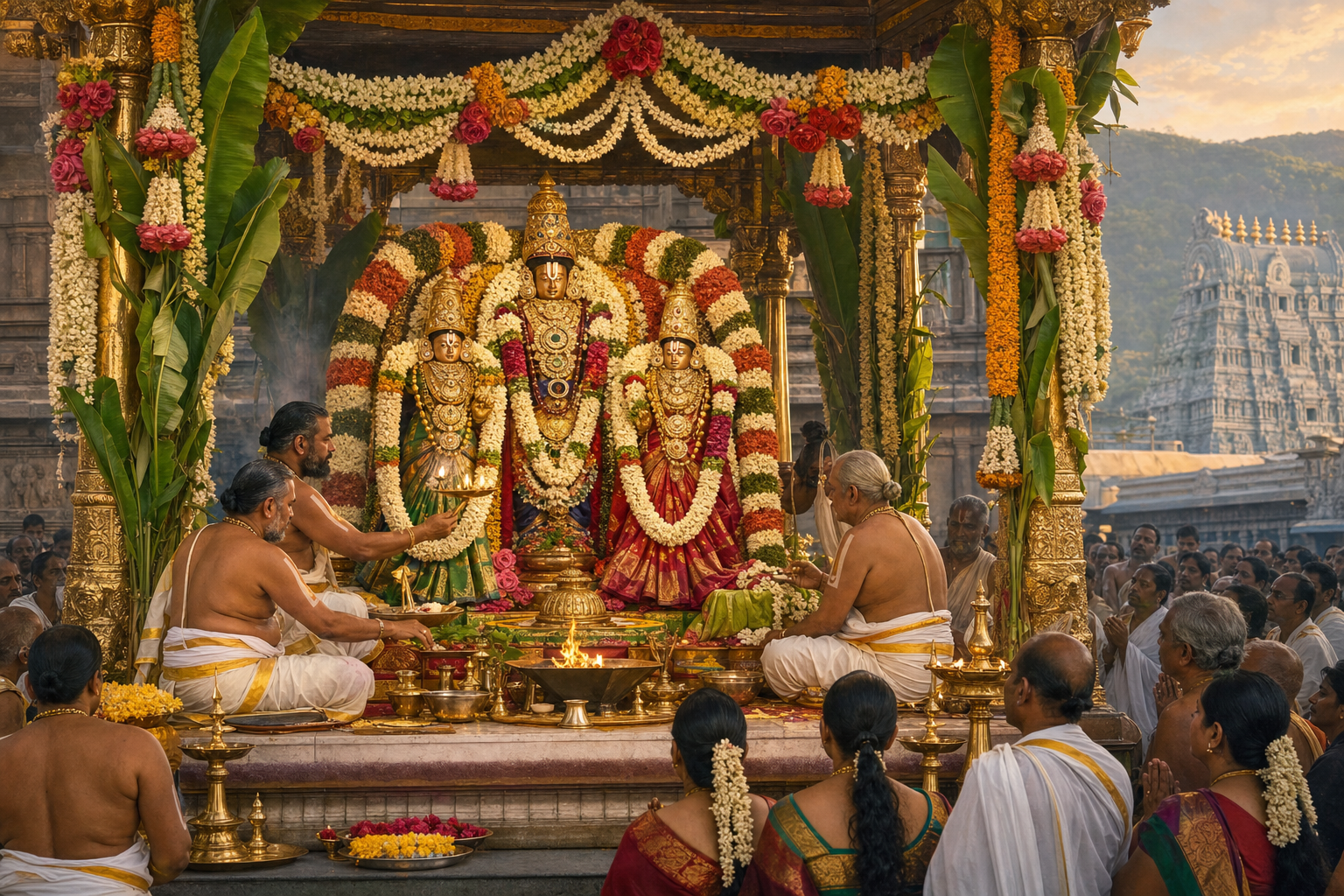
The Tirumala observance from 25 to 27 April is the right choice if your devotional focus is kalyanotsava: divine union, household harmony, auspiciousness and the sustaining grace of Sri Srinivasa. The ceremonies take place at the Parinayotsava Mandapam in Narayangiri Gardens rather than being merely another item in the ordinary sanctum-darshan routine.
The popular name, Padmavathi Srinivasa Kalyanam, recalls the marriage of Srinivasa and Princess Padmavati, daughter of Akasa Raja. The liturgical enactment itself centers on Sri Malayappa Swamy, the utsava murti of Venkateswara, accompanied by Sridevi and Bhudevi. This distinction prevents a common misunderstanding: the festival carries the sacred memory of Padmavati while the processional deities visible in the rites are Sridevi Bhudevi sameta Sri Srinivasa.
Under Vaikhanasa Agama practice, the wedding sequence can include ritual purification, Vishwaksena worship, protective-thread ceremonies, snapanam or abhishekam, the formal welcome, exchange of garlands, symbolic kanyadana, mangalya-dharana, saptapadi, homam, purnahuti and mangala harati. Vedic recitation, nadaswaram, thavil and Annamacharya sankeertanas shape the experience around those central rites. Do not assume, however, that every element will occur at the same public time on all three days; use the final TTD program to choose the session that matters most to you.
If you can attend only one of the three dates, wait for the official daily notice before choosing. The confirmed festival window establishes 25-27 April, but it does not establish a single universally preferable day. A devotee seeking a particular wedding rite needs a different plan from someone who simply wants to participate in the devotional atmosphere and receive darshan of the utsava murtis.
Keep festival viewing, seva admission and temple darshan as separate items on your checklist. TTD may release a limited number of seva or darshan options, while broader areas at Narayangiri Gardens may be arranged for general viewing. Access to one should not be treated as confirmation of another. Check the official TTD platform, retain the relevant confirmation and carry valid identification if required.
Accommodation around Tirumala can become competitive during the festival. Confirm your cottage, choultry or private lodging before treating the pilgrimage as fixed, and read the check-in conditions rather than relying only on a payment receipt. Tirupati can be reached through Renigunta airport, rail connections and bus services; the onward journey to Tirumala uses the ghat roads or the Alipiri Mettu and Srivari Mettu pedestrian routes. Verify current access, security and walking-route advisories with TTD before departure.
Read the Delhi dates as preparation, inauguration and completion
28 and 30 April are meaningful preliminary rites
Koil Alwar Thirumanjanam on 28 April prepares the New Delhi temple for Brahmotsavam through ceremonial cleansing and sanctification. A fragrant purifying preparation is applied as the sanctum and associated spaces are readied for the festival. Attend this date only if the preparatory rite itself is your interest; it should not be mistaken for a vahana-procession day.
Ankurarpanam follows on 30 April. Priests sow auspicious seeds, often associated with navadhanyam, as a sign of fertility, well-being and the intended fruition of the festival sankalpa. It formally initiates the yajna-like ritual continuum, but the nine-day Brahmotsavam begins on 1 May. If your priority is the flag hoisting or the public processional cycle, 30 April is one day too early.
There is a separate panchang significance on 30 April. A broadly used Indian calculation places Shukla Paksha Chaturdashi until 8:17 PM, followed by Purnima for the rest of the night in most regions. The exact tithi boundary varies with location and local panchang inputs, so 8:17 PM should not be treated as a universal New Delhi temple time. The temple’s announced Ankurarpanam schedule governs attendance; your city-specific panchang governs any personal vrata, japa or Purnima observance.
1-9 May contain the main Brahmotsavam cycle
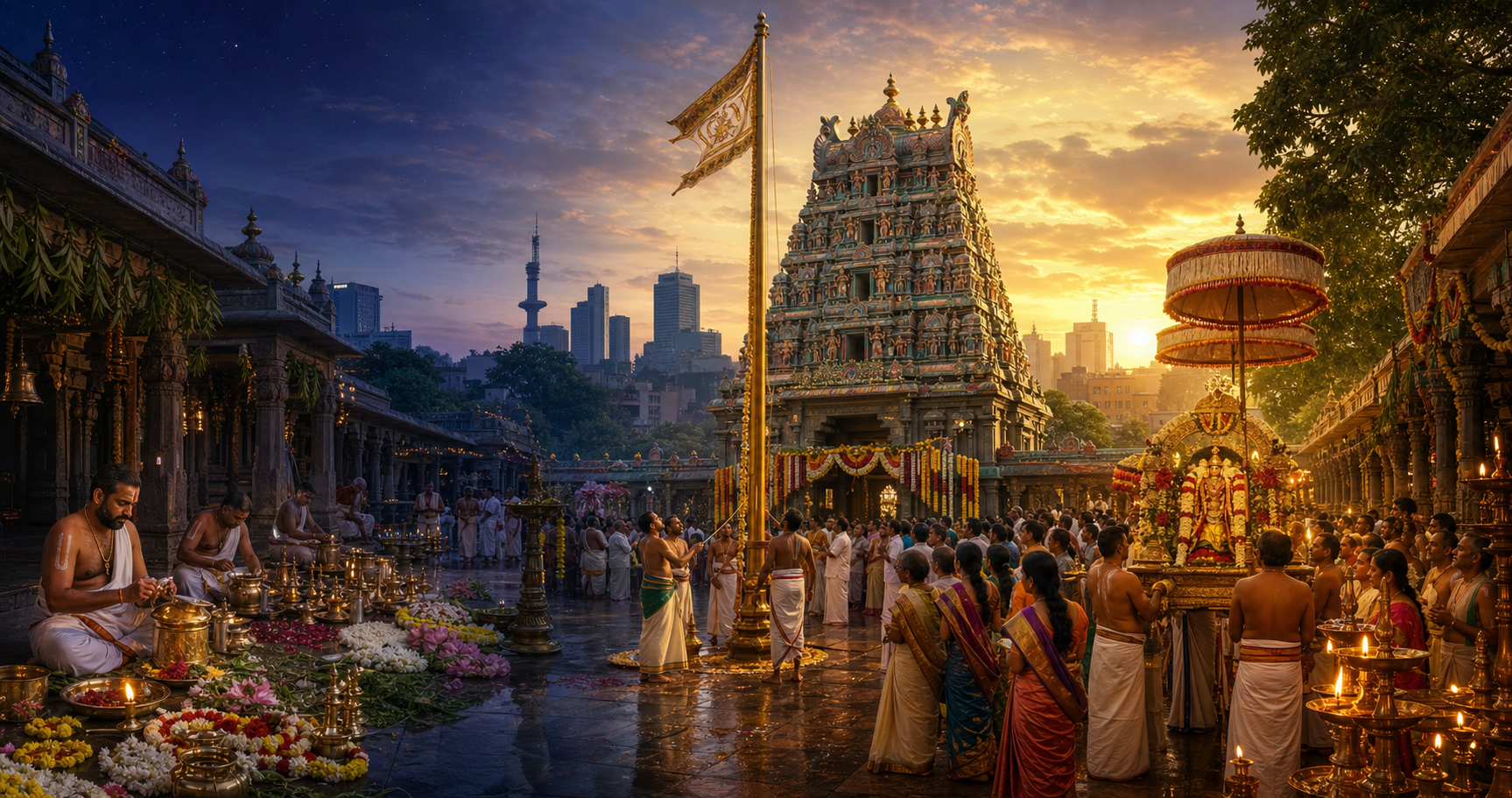
Dwajarohanam opens the main festival on 1 May by raising the Garuda flag on the dhwajasthambha. Within the Agamic understanding, the act announces Brahmotsavam, invokes sacred protection and invites the divine assembly to witness the celebrations. This is the firm date to choose if witnessing the formal inauguration matters more to you than attending a particular mount procession.
The succeeding days ordinarily combine daily worship, Vedic recitation, alankara and processions of the utsava murti. The vahanas commonly associated with TTD Brahmotsavam traditions include Sesha, Hamsa, Simha, Hanumantha and Gaja, each presenting a different aspect of Vishnu’s protection, wisdom, strength, service or majesty. These are traditional expectations, not a confirmed date-by-date program for New Delhi in 2026.
Garuda Seva traditionally occurs around the middle of a Brahmotsavam and usually attracts especially heavy attendance. Rathotsavam or an adapted chariot procession may appear toward the later part of the sequence where space and logistics permit. Because the specific 2026 line-up is still subject to TTD’s detailed notice, do not select a guessed mid-festival date and label it Garuda Seva in your travel booking.
The final day, 9 May, is the reliable choice if you want to be present for the festival’s completion. Concluding traditions generally include Chakra Snanam and Dhwajavarohanam, with the latter lowering the festival flag and returning the temple to its ordinary liturgical rhythm. Confirm which rites will be publicly accessible and at what time before arranging your arrival.
The New Delhi celebration follows Pancharatra Agama practice, while the Tirumala wedding rites are described within the Vaikhanasa Agama tradition. If you attend both, differences in ritual sequence or presentation should not be read as scheduling mistakes. They arise within two established forms of Vaishnava temple worship.
Build an itinerary that survives schedule changes
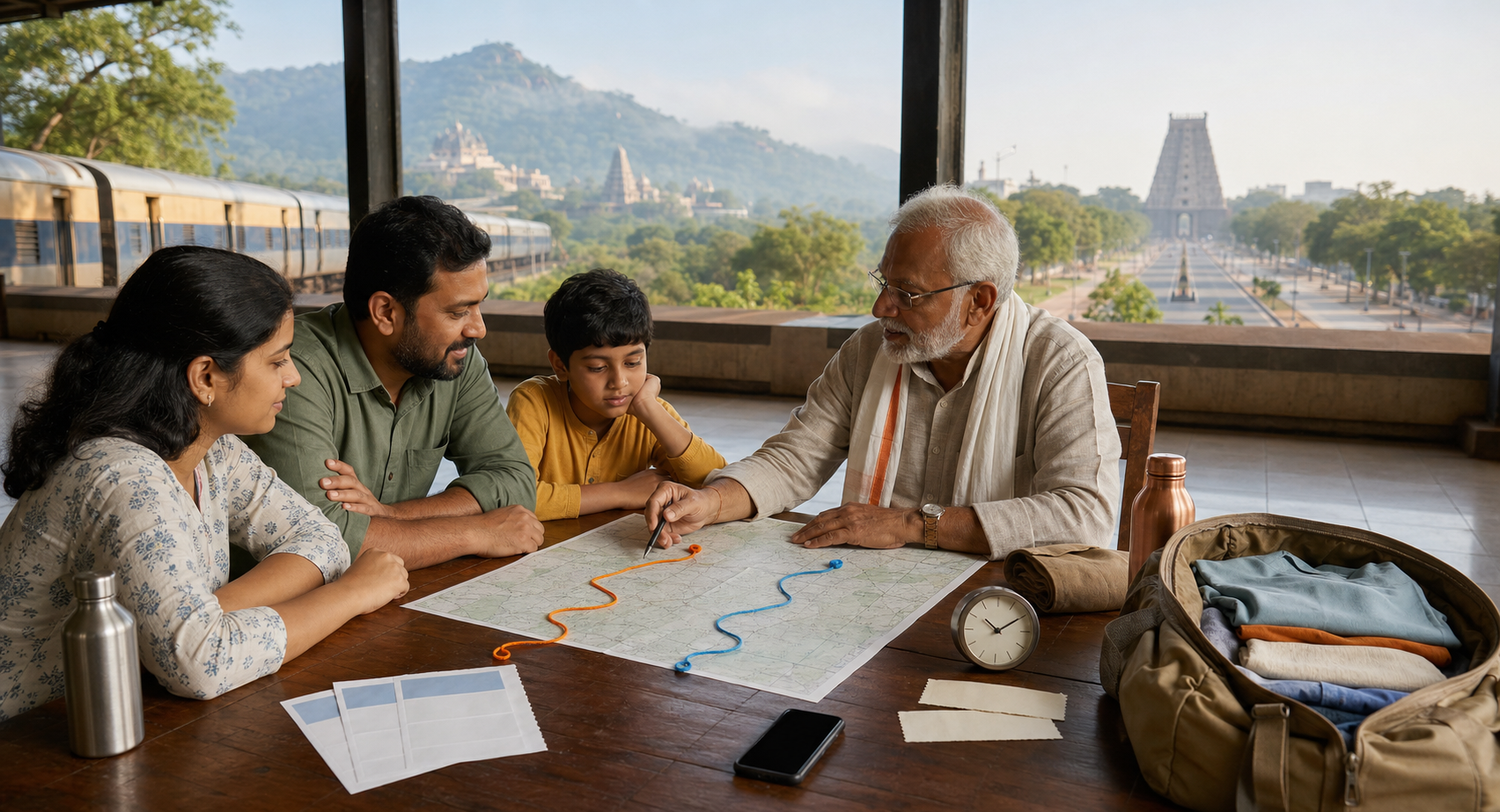
- Name your devotional priority. Choose among the Tirumala celestial wedding, the Delhi preparatory rites, the Delhi opening on 1 May, a later vahana procession, or the completion on 9 May. Without this choice, you may book the correct festival but the wrong day.
- Anchor only the confirmed dates. Treat 25-27 April, 28 April, 30 April and 1-9 May as fixed planning windows. Leave any unannounced procession time editable until TTD publishes the daily program.
- Verify three separate permissions. Check whether you need a seva ticket, a darshan booking or only access to a general viewing area. Confirmation of one does not automatically secure the others.
- Use official TTD channels for the final check. Reconfirm the date, reporting time, identification requirement, permitted entry point and baggage rule shortly before travel. Do not rely on a forwarded image or an old Brahmotsavam sequence for a 2026 vahana date.
- Match accommodation to the venue. A Tirupati or Tirumala reservation serves the 25-27 April festival; it does not serve the New Delhi observances. If attending both cities, make two lodging and transport plans.
- Prepare for the busiest sessions. Once the schedule identifies Garuda Seva or a chariot-related event, expect greater congregation than on a routine festival day. If your aim is unhurried darshan rather than a specific procession, choose a less prominent date after comparing the official daily line-up.
- Reduce friction at the gate. Wear modest, temple-appropriate clothing, carry required identification, and leave unnecessary cameras, phones or luggage behind where restrictions apply. Follow the designated queue rather than leaving your group to search for a different entrance.
- Plan for the people travelling with you. Keep children and elders together, carry appropriate drinking water where permitted, and identify the information, medical-aid or accessibility point on arrival. Allow volunteers to direct movement when processions change the normal queue pattern.
Festival conduct is part of the pilgrimage rather than an inconvenience surrounding it. Keep silence during central mantras, avoid blocking another devotee’s view, use designated disposal points and minimize single-use plastic. At Narayangiri Gardens in particular, respecting the landscaped venue is a direct way to combine devotion with stewardship.
If the final daily schedule changes your preferred procession, return to the devotional priority you named in step one. You may decide that attending the confirmed opening or closing rite is better than reorganizing an entire journey around an uncertain highlight. That decision is not a lesser pilgrimage; it is a clearer one.
Key takeaways
- The Tirumala and New Delhi observances belong to one TTD calendar but take place at separate venues and require separate travel plans.
- Padmavathi Srinivasa Parinayotsavam runs at Narayangiri Gardens, Tirumala, from 25 to 27 April 2026.
- New Delhi’s Koil Alwar Thirumanjanam is on 28 April, Ankurarpanam is on 30 April, and the main Brahmotsavams run from 1 to 9 May.
- Do not assign a 2026 date to Garuda Seva, Rathotsavam or another vahana procession until TTD releases the detailed daily schedule.
- The 8:17 PM Chaturdashi-to-Purnima transition on 30 April is a general panchang reference, not a substitute for a local calculation or the temple’s announced ritual time.
- Before paying for travel, confirm accommodation, admission type, identification rules, reporting time and permitted belongings through official TTD notices.
Choose your festival and venue now, but keep the procession-specific part of your itinerary flexible. Once TTD publishes the final daily notices, you will need to confirm only the timing and admission details instead of rebuilding the entire pilgrimage.
References
- DharmaRenaissance Blog – April 30, 2026 Panchang Guide: Shukla Chaturdashi to Purnima, Essential Auspicious Timings & Rashi
- DharmaRenaissance Blog – Padmavathi Srinivasa Kalyanam 2026: Sacred Tirumala Dates, Rituals, Darshan and Travel Guide
- DharmaRenaissance Blog – New Delhi TTD Brahmotsavams 2026: Celebration Dates, Sacred Rituals, and a Comprehensive Guide