
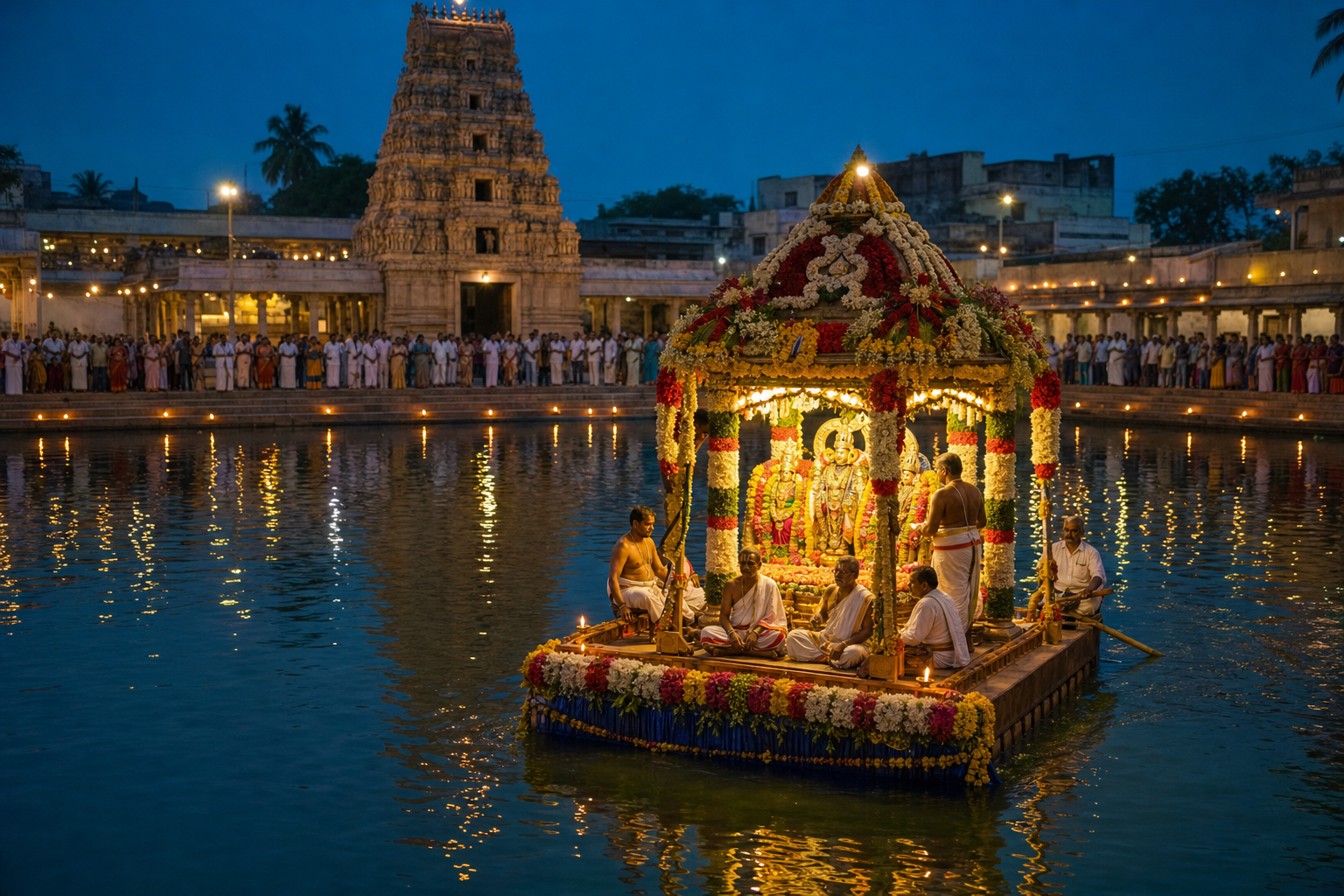
If you are planning darshan at Devuni Kadapa Teppotsavam in 2026, the most important distinction is between the festival time and your arrival time. The float procession is scheduled for 6:00 PM, but reaching the temple at 6:00 PM could leave you looking for a safe viewing place just as the ceremony is beginning.
Set 5:00 PM as your practical arrival target. That gives you time to check the day’s instructions, drink water, choose a suitable place near the pushkarini, and become still before Sri Lakshmi Venkateswara Swamy and Thayar are brought to the water.
Key takeaways
- The Teppotsavam will be held on 29 April, 30 April, and 1 May 2026.
- The float procession is scheduled for 6:00 PM on each of the three evenings.
- Aim to reach the temple precinct by 5:00 PM, especially if you are accompanying children or elders.
- The broad ritual sequence is predictable, but the precise order, access arrangements, and additional observances may be announced locally.
- Carry drinking water, dress modestly, follow the viewing barriers, and keep the pushkarini precinct free of litter and single-use plastic.
Read the published schedule correctly
The 2026 observance runs from 29 April through 1 May, with the float scheduled daily at 6:00 PM. In practical terms, you have three opportunities:
- Wednesday, 29 April 2026, at 6:00 PM
- Thursday, 30 April 2026, at 6:00 PM
- Friday, 1 May 2026, at 6:00 PM
What has been announced is the date range and the daily float time. Do not turn that into assumptions about the exact start of every preliminary rite, the number of circuits, or unrestricted access to a particular side of the tank. Alankaram and archana in the temple, the procession to the pushkarini, ceremonial circuits on the water, and the concluding arati form the customary outline. The detailed sequence and any additional observances may be communicated closer to the event.
Check the notices displayed at the temple when you arrive. If a volunteer’s direction differs from the place or sequence you expected, follow the local instruction. Barricades, viewing corridors, restricted areas, and route diversions are part of managing movement around a body of water; they are not interruptions to darshan.
Use 5:00 PM as your arrival target
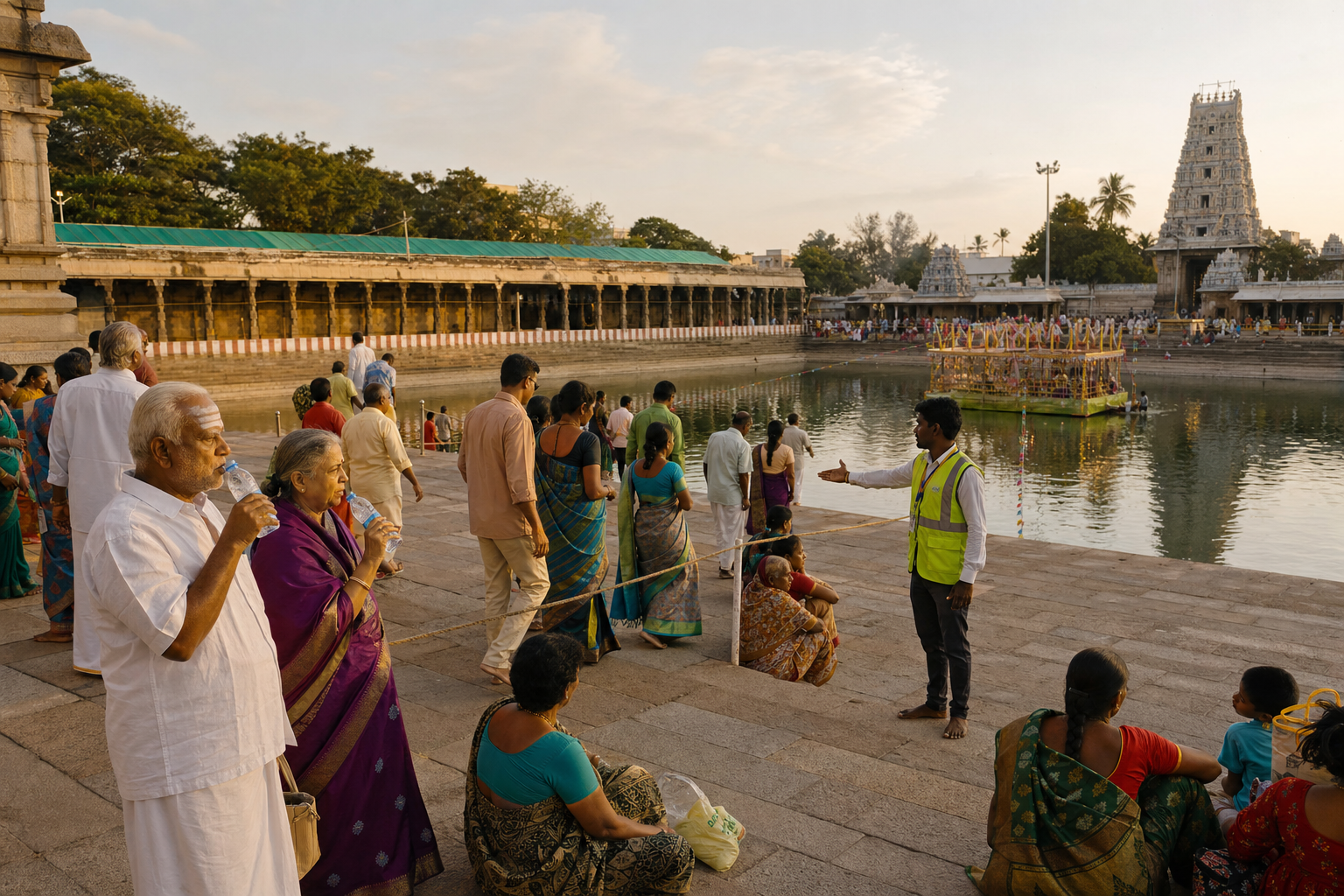
Late April and early May can be warm in Kadapa. The hour before the float therefore matters almost as much as the ceremony itself. Arriving early lets you handle heat, queues, and seating or standing arrangements before attention turns toward the utsava murtis.
- Complete your road, rail, or airport transfer with enough margin to reach the temple by about 5:00 PM.
- Look for the day’s temple notices before choosing a viewing area. Confirm which corridors are open and where families may stand safely.
- Drink water before the crowd becomes dense, and keep water available for the waiting period.
- If you are with an elder, a child, or anyone who may need to leave quickly, choose a place with a clear exit rather than pressing toward the closest possible view.
- Follow queue lines and volunteer directions. Do not cross a barrier or use the tank steps as a shortcut.
- Once settled, allow the processional movement, chanting, and arati to determine your attention rather than repeatedly changing position.
Traditional, modest clothing is appropriate for the temple setting. Keep what you carry simple enough that you can move without obstructing another devotee. An extra device or bulky photography setup is less useful here than free hands, water, and the ability to follow crowd instructions promptly.
Understand what you are watching on the pushkarini
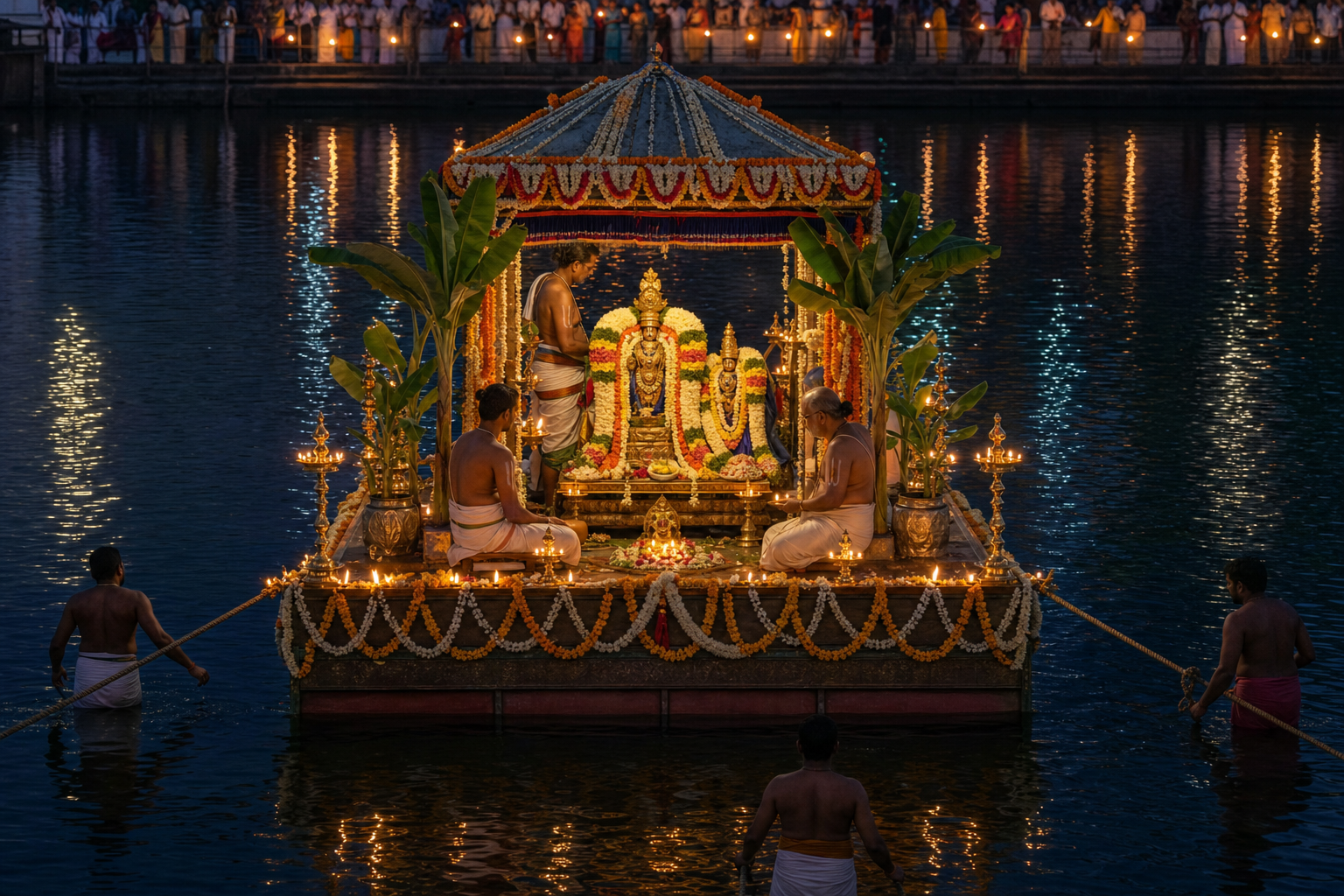
Teppotsavam takes its name from the teppa, the decorated float or raft. The utsava murtis of Sri Lakshmi Venkateswara Swamy and the Goddess are brought from the temple to the pushkarini, installed upon the float, and taken in ceremonial movement across the water. Veda chanting, stotra recitation, and arati frame the passage.
This is why the festival should not be reduced to an illuminated spectacle. Within the devotional grammar of the rite, water evokes purification, the raft evokes protected passage, and darshan is the meeting point between the deity’s gracious presence and the devotee’s attentive gaze. The movement is gentle, but the theological image is large: the Lord and Thayar come out among the gathered community and make the sacred tank itself a place of encounter.
Devuni Kadapa is an ancient Vaishnava shrine locally revered as Tirumala’s “Tholi Gadapa.” During Teppotsavam, that identity becomes communal rather than merely architectural. Families, temple servants, chanters, volunteers, and visiting pilgrims share responsibility for the same sacred space.
You can participate in that meaning through simple choices. Listen when the recitations begin. Avoid talking across another person’s line of sight. Do not force your way forward during arati. If photography is permitted, avoid flash and intrusive equipment, and accept any posted restriction without argument. A clear photograph is not worth disturbing another devotee’s darshan.
Plan the journey and the tank-side experience together
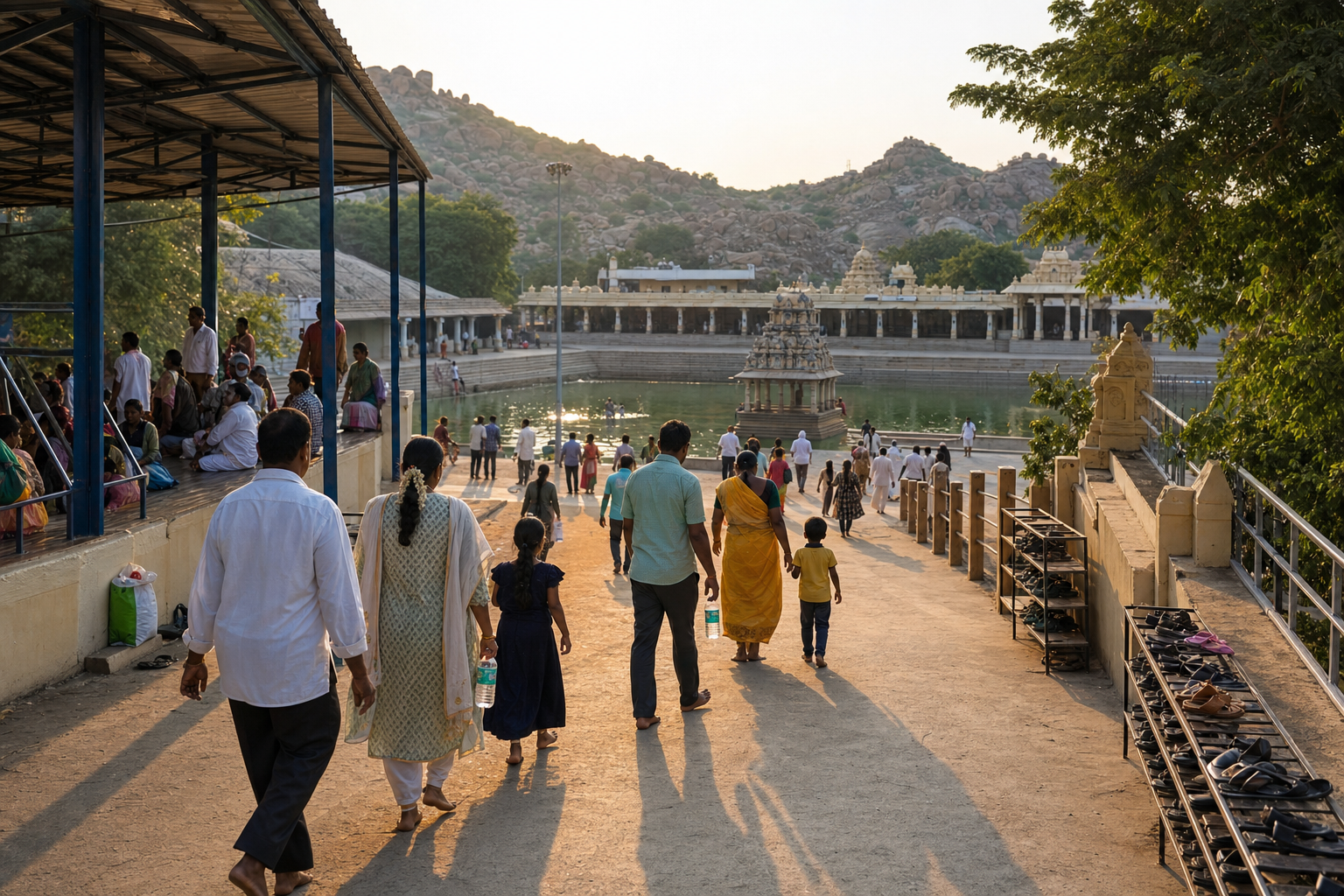
Kadapa railway station, identified by the station code KDP, connects the city with major regional centres. Auto-rickshaws and taxis can provide the onward transfer to the temple. Kadapa Airport, code CDP, is the local air option, while Tirupati and Bengaluru can serve as alternatives for a longer journey completed by road or rail.
Choose your route by working backward from the 5:00 PM temple-arrival target, not from the 6:00 PM float time. If the same-day connection leaves no margin for a delayed transfer, use an earlier service or plan to reach Kadapa in advance. No exact travel duration should be assumed without checking the connection you intend to use.
Families should agree on a meeting point before entering a crowded viewing area. Keep children close near the pushkarini steps, and do not let the search for a better view draw the group toward a restricted edge. If an elder needs easier movement, a less compressed position near an exit is usually the more dignified choice, even when it is farther from the float.
Your conduct also protects the sanctity of the tank. Minimise single-use plastic, retain every wrapper or bottle until it can be disposed of properly, and do not feed the fish during the ceremony. The pushkarini is part of the worshipping environment, not a convenient place for waste.
Before leaving home, settle three things: how you will reach Kadapa, how you will be at the temple by 5:00 PM, and how your group will respond if local access instructions change. Once the float enters the water, let those preparations recede. Stand patiently, receive darshan, and give the people around you the space to do the same.