-
Unlocking Chandesha Anugrahamurti: Divine Grace, Iconography, and Chola Temple Legacy

Chandesha Anugrahamurti encapsulates Shiva’s tender bestowal of grace upon the devotee Chandesha, weaving together personal bhakti and institutional dharma. Readers will learn the origin story from the Periya Puranam, the ethical meaning behind Shiva’s restorative intervention, and why Chandesha becomes the temple’s vigilant steward. The article decodes the iconography—Shiva’s head-blessing, Uma’s composed presence, and the…
-
Kasha (Pratoda) in Hindu Iconography: Unveiling the Sacred Whip of Discipline and Divine Order

This study explores Kasha/Pratoda—the sacred whip—in Hindu iconography as a secondary ayudha that signifies authority, discipline, and dharmic order. It clarifies how Pratoda differs from aṅkuśa, pāśa, and daṇḍa while sharing their ethical vocabulary of guidance and restraint. Drawing on shilpa-śāstra principles, it explains why the whip appears with charioteers (notably at Konark), guardians, and…
-
Colonial-Era Hanuman Idol in Pune Police Custody: Lawful Roadmap to Restore a Sacred Icon

A colonial-era Hanuman idol reportedly held in Pune police custody has revived a vital conversation about heritage law, conservation, and community devotion. This analysis explains the legal pathways for release under the Antiquities and Art Treasures Act, 1972 and the Criminal Procedure Code, with jurisprudence encouraging timely, responsible handovers. It outlines a conservation-first roadmap—condition documentation,…
-
Complaints Against Chelsea Rodrigues Over Revered Shri Lairai Devi Ritual Ignite Debate

Complaints have reportedly been filed in Goa naming “Chelsea Rodrigues” over alleged insults to the Shri Lairai Devi ritual, focusing attention on the balance between free expression and reverence for sacred traditions. The piece explains the cultural and historical significance of the Lairai Jatra in Shirgao, including the dhond observance around the homkunda. It outlines…
-
Unraveling Nrsimhadev’s Missing Jewels: Sacred Trust, Heritage Security, and Hope

A sudden, disorienting phone call while abroad—“heart attack”—captures the vulnerability communities feel when sacred jewels of Nrsimhadev are reported missing. This analysis reframes the mystery as a call to stewardship, integrating ritual integrity with modern heritage preservation and temple security. Readers gain a practical blueprint: clear governance and SOPs, meticulous inventories with high-resolution documentation, conservative…
-
Narasimha Iconography Decoded: Forms, Symbols, and Sacred Meanings in Hindu Temple Art

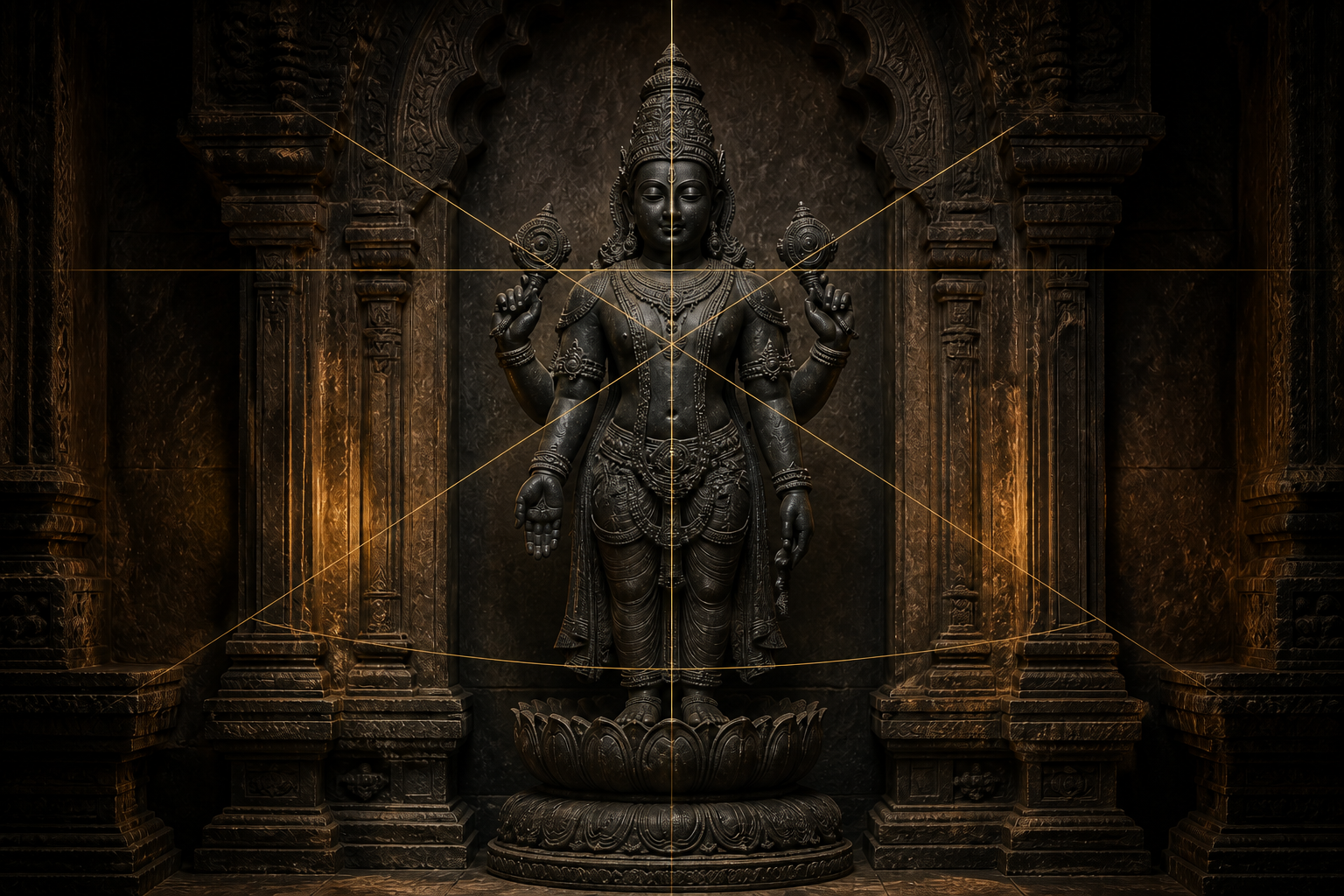
This long-form guide decodes the iconography of Narasimha—Hinduism’s half-lion, half-man avatar of Vishnu—across textual sources, temple sculpture, and living ritual. It details the major forms (Ugra/Kevala, Lakshmi-Narasimha, Yoga-Narasimha, Jvala/Krodha), their attributes and mudras, and how Shilpa Shastras and Agamas govern measurements and aesthetics. Readers learn to recognize narrative panels (pillar-theophany, twilight justice) and to interpret…
-
Timeless Vedic Currents in the East: Trade, Dharma, and the Making of Asia’s Civilizations

This article presents an academically grounded, long-form analysis of how Vedic culture and allied dharmic traditions shaped the Orient primarily through peaceful trade, scholarship, and religious teaching. Drawing on archaeology, epigraphy, linguistics, architecture, and travelogues, it explains how Indian Ocean trade networks and monastic circuits linked Bharatavarsha to Southeast and East Asia. It details the…
-
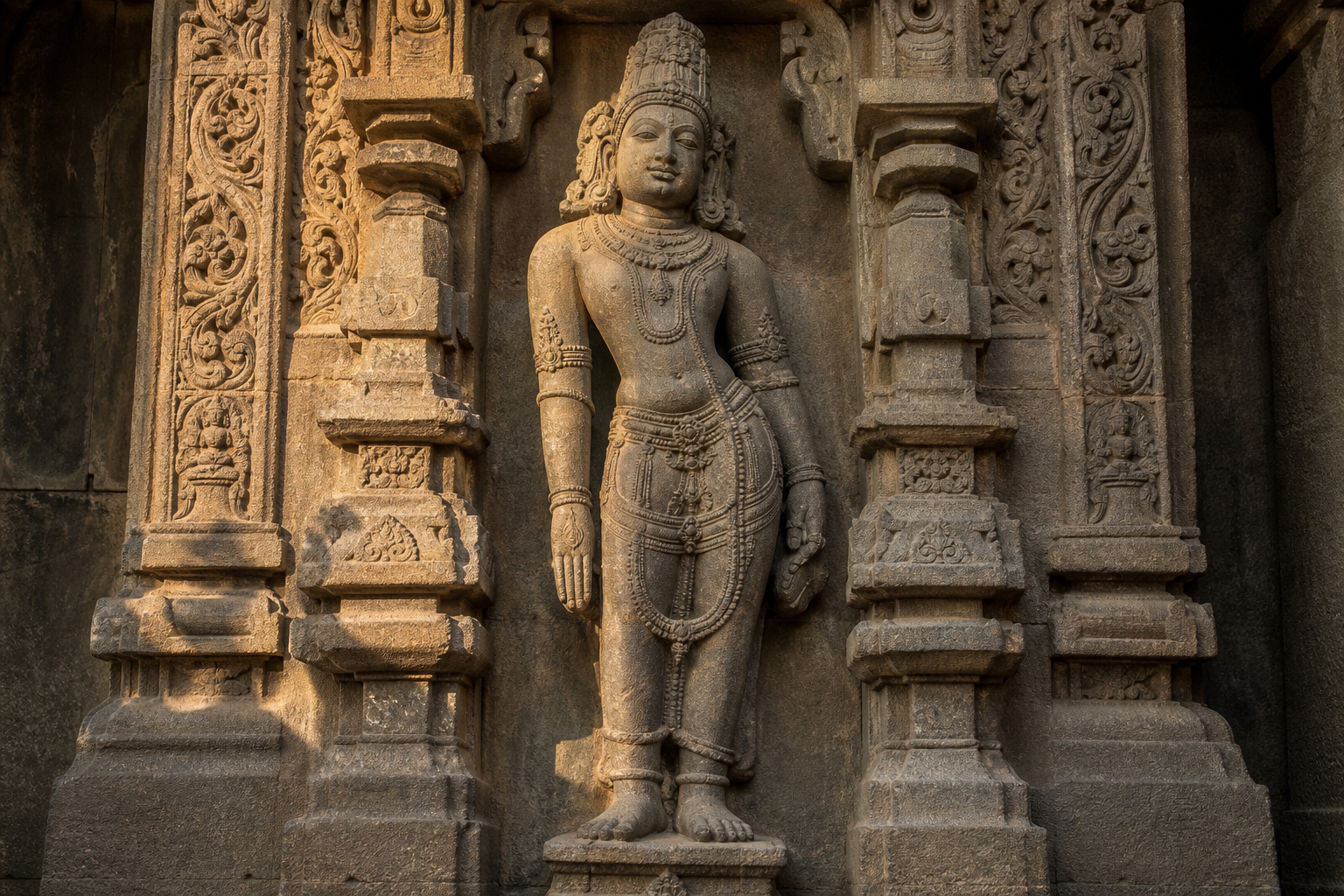
Bahuka Armlets in Hindu Iconography: Decoding a Powerful Symbol of Divine Martial Strength

Bahuka is the cylindrical upper arm cuff seen in Hindu temple sculpture, distinct from the circular bahuvalaya and the tied bahubandha. Its compact mass and unbroken profile convey divine strength, martial virtue, and disciplined grace across Shaiva, Shakta, and Vaishnava imagery. Recognizing bahuka in the field refines visual literacy, helping viewers read gestures, moods, and…
-
12th State Gatka Championship for Girls: Precision, Courage, and Dharmic Unity on Display

The 12th State Gatka Championship for Girls showcased a disciplined, safety-first competition rooted in the Sikh martial tradition, highlighting precision, timing, and ethical strength. Organized with standardized rules and protective equipment, it balanced point-sparring duels with judged demonstrations that rewarded control, coordination, and cultural literacy. Athletes benefited from periodized training, sports medicine awareness, and psychology-informed…
-
From Flower to Faith: Uncovering Puja’s Roots, Vedic Evolution, and Sacred Simplicity

This essay explores the timeless essence of puja by tracing its etymology, ritual history, and lived practice, from the Dravidian echo of ‘pu’ (flower) to Sanskrit notions of honor and reverence. It clarifies how Vedic, Purāṇic, and Agamic sources shaped today’s home and temple worship, including pañcopacāra and śoḍaśopacāra frameworks. Readers gain practical guidance for…
-
Channel 5 Captures Ahimsa Farming at New Gokul: Hand-Milking, Oxen Power, Spring Renewal

Channel 5’s Springtime on the Farm visited Bhaktivedanta Manor’s New Gokul Farm to capture hand-milking, oxen-led fieldwork, and the Holland Farm horticultural project in Hertfordshire. The feature presents a dharmic, ahimsa-based model of cow protection consistent with UK animal welfare standards and regenerative agriculture. Readers gain technical insight into hand-milking protocols, herd health, pasture-based nutrition,…
-
Jyotiba of Maharashtra’s Sacred Hills: Radiant Warrior-Protector, Fusion of Shiva and Surya

Jyotiba, the radiant warrior-protector of Maharashtra’s sacred hills, is revered across the Deccan as a powerful fusion of Shiva’s transformative force and Surya’s life-giving radiance. Set on Wadi-Ratnagiri near Kolhapur, the temple anchors a sacred geography that interlinks with the famed Mahalakshmi shrine, illustrating how local ecology and pan-Indic theology cohere. The Chaitra Purnima yatra,…
-
Decoding the Horse-Faced Sama Veda: Iconography, Sacred Sound, and Hayagriva

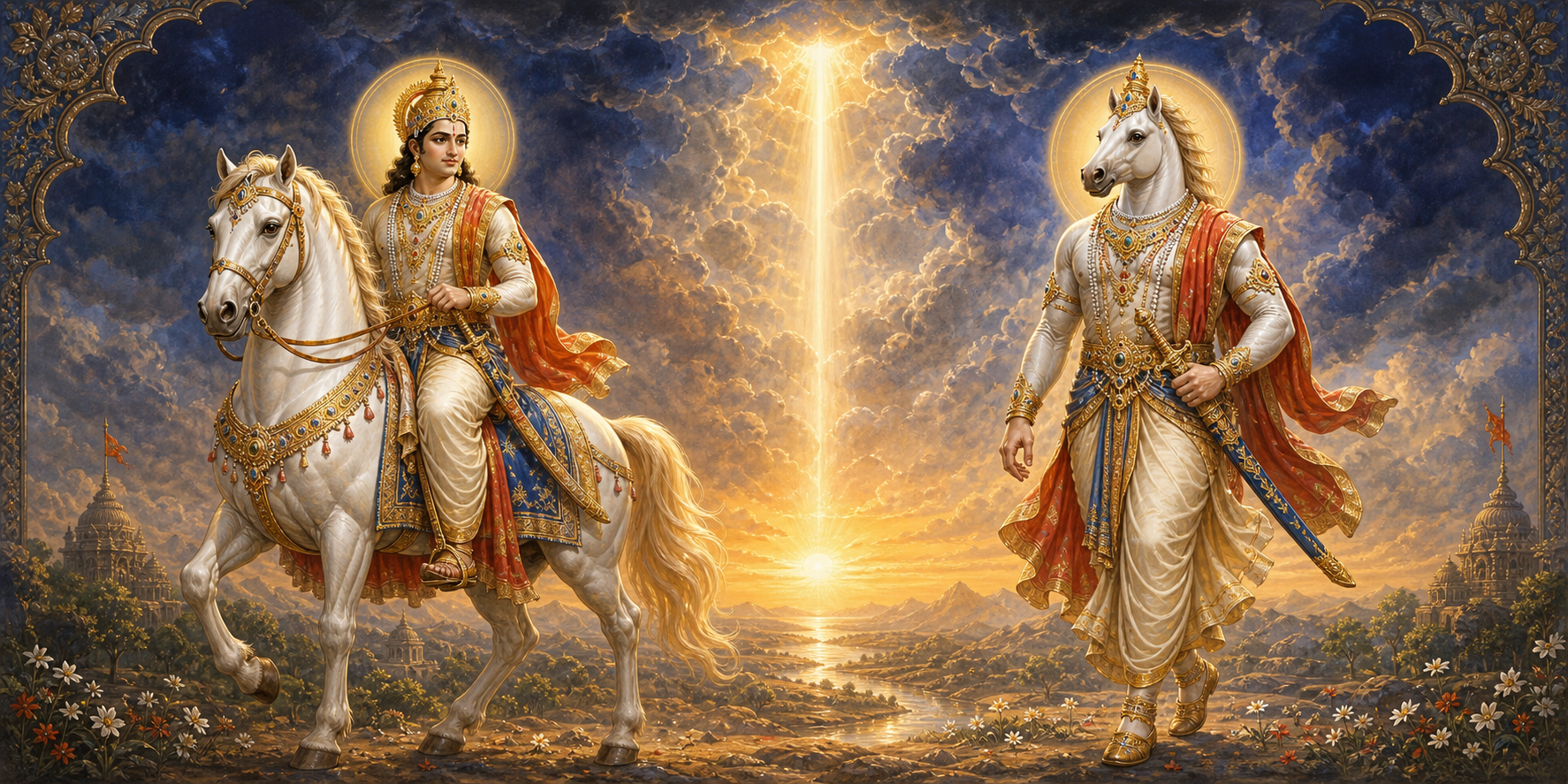
In Hindu iconography, the Vedas appear as living Veda Purushas; in select programs the Sama Veda is rendered horse-faced, signaling a fusion of sacred sound and Hayagriva theology. The article explains how this equine imagery coheres with the Sama Veda’s musicological core—udgītha, svara, and sāman structures—while linking it to Hayagriva, Viṣṇu’s horse-headed form who rescues…
-
When Demons Wore Divine Faces: Ravana–Maricha as Rama–Lakshmana in Regional Ramayanas

Several regional Ramayana traditions dramatize deception by allowing Ravana and Maricha to mimic or even appear as Rama and Lakshmana, sharpening the ethical and emotional stakes of Sita’s abduction. While Valmiki anchors the episode in voice-impersonation and the mendicant disguise, later vernaculars and performances escalate to phantoms and lookalikes. Bengali, Odia, Tamil, and North Indian…
-
Khandoba’s Idol Decoded: Valor, Protection, and Sacred Kingship in Maharashtra’s Jejuri

Khandoba—revered as Martanda Bhairava, Malhari, and Mallari—unites Shiva’s protective grace, martial valor, and divine kingship in a compelling idol form central to Maharashtra’s sacred geography. The anthropomorphic equestrian murti and the aniconic linga together encode a complete theology of guardianship, justice, and prosperity. Weapons such as the khanda and spear symbolize Kshatra Dharma and Dharma-Yuddha,…
-
Matak Hulāre Unveiled: The Swaying Rhythms of Punjabi Grace and Sacred Dharmic Unity

Matak Hulāre distills the Punjabi ideal of graceful sway and jubilant lift into a recognizable movement-music dialect spoken across Giddha, Bhangra, and festival gatherings. The piece unpacks its biomechanics, showing how pelvic sway, spinal curves, and shoulder release create the matak, while rhythmic accents and chest lift generate the hulāre. It maps the form’s rhythmic…
-
Shoola vs Trishul: Decoding Sacred Weapons, Iconography, and the Timeless Power of Dharma

Shoola (single-pointed spear) and Trishul (three-pronged trident) are often confused, yet they carry distinct forms and meanings in Hindu iconography. This article clarifies how a spear encodes one-pointed discernment while a trident integrates triadic powers—iccha, jnana, kriya; the gunas; and the three dimensions of time. Readers learn to identify each implement swiftly at temples and…
-
Kada Dham’s Kaleshwar Mahadev: The Sacred Power and Symbolism of a Broken Shivling

Kaleshwar Mahadev Temple at Kada Dham, Kaushambi (Uttar Pradesh) is renowned for the rare practice of venerating a broken Shivling, a tradition that blends local memory with śaiva ritual norms. The site’s sthala-purāṇa links the linga to Dharmaraja Yudhisthira during the Mahabharata’s Agyatavasa and to consecration with the Holy Ganga’s waters. While oral histories associate…
-
Banda Singh Bahadur Immortalized: Historic Statue Unveiled at Guru Nanak Darbar, Gravesend

The unveiling of Baba Banda Singh Bahadur’s statue at Guru Nanak Darbar Gurdwara, Gravesend, anchors Sikh history within the UK’s cultural landscape while advancing a unifying dharmic message. The memorial contextualizes Banda Singh Bahadur’s transformation under Guru Gobind Singh, his brief yet consequential governance reforms, and his enduring ethos of justice and seva. Visitors gain…