Category: Cultural Heritage

  • The War They Could Not Win, Part 3: How Dharmic Pluralism Defied Empire and Ideology

    The War They Could Not Win, Part 3: How Dharmic Pluralism Defied Empire and Ideology

    This installment analyzes why attempts to homogenize the subcontinent’s diverse religious and cultural life repeatedly failed. It shows how dharmic pluralism—Ishta in Hindu Dharma, Anekantavada in Jainism, upāya in Buddhism, and seva in Sikhism—functioned as a civilizational architecture of resilience. The discussion traces colonial knowledge projects, legal codification, and endowment management, and explains how communities…

  • The War They Could Not Win: How Dharmic Resilience Defied Empire and Erasure

    The War They Could Not Win: How Dharmic Resilience Defied Empire and Erasure

    This long-form analysis explains why attempts to subdue India’s civilizational core repeatedly failed. It argues that dharmic polycentricity—rooted in Hindu, Buddhist, Jain, and Sikh traditions—produced resilient networks of ethics, learning, and care beyond the reach of central control. Drawing on the Revolt of 1857, British Colonial Rule, and the intellectual countercurrents of Vivekananda and Aurobindo,…

  • Religious Significance of the Yamuna River: Mythology, Pilgrimage, and Dharmic Ecology

    Religious Significance of the Yamuna River: Mythology, Pilgrimage, and Dharmic Ecology

    This in-depth overview explains why the Yamuna River—reverentially known as Yamunaji and Kalindi—holds enduring religious significance in Hindu Dharma and stands as a unifying symbol across the dharmic traditions of Hinduism, Buddhism, Jainism, and Sikhism. Readers will discover the river’s Vedic and Puranic foundations, her identity as Yami (sister of Yama and daughter of Surya),…

  • Antariya Unveiled: The Sacred Lower Garment Shaping Hindu Sculpture and Symbolism

    Antariya Unveiled: The Sacred Lower Garment Shaping Hindu Sculpture and Symbolism

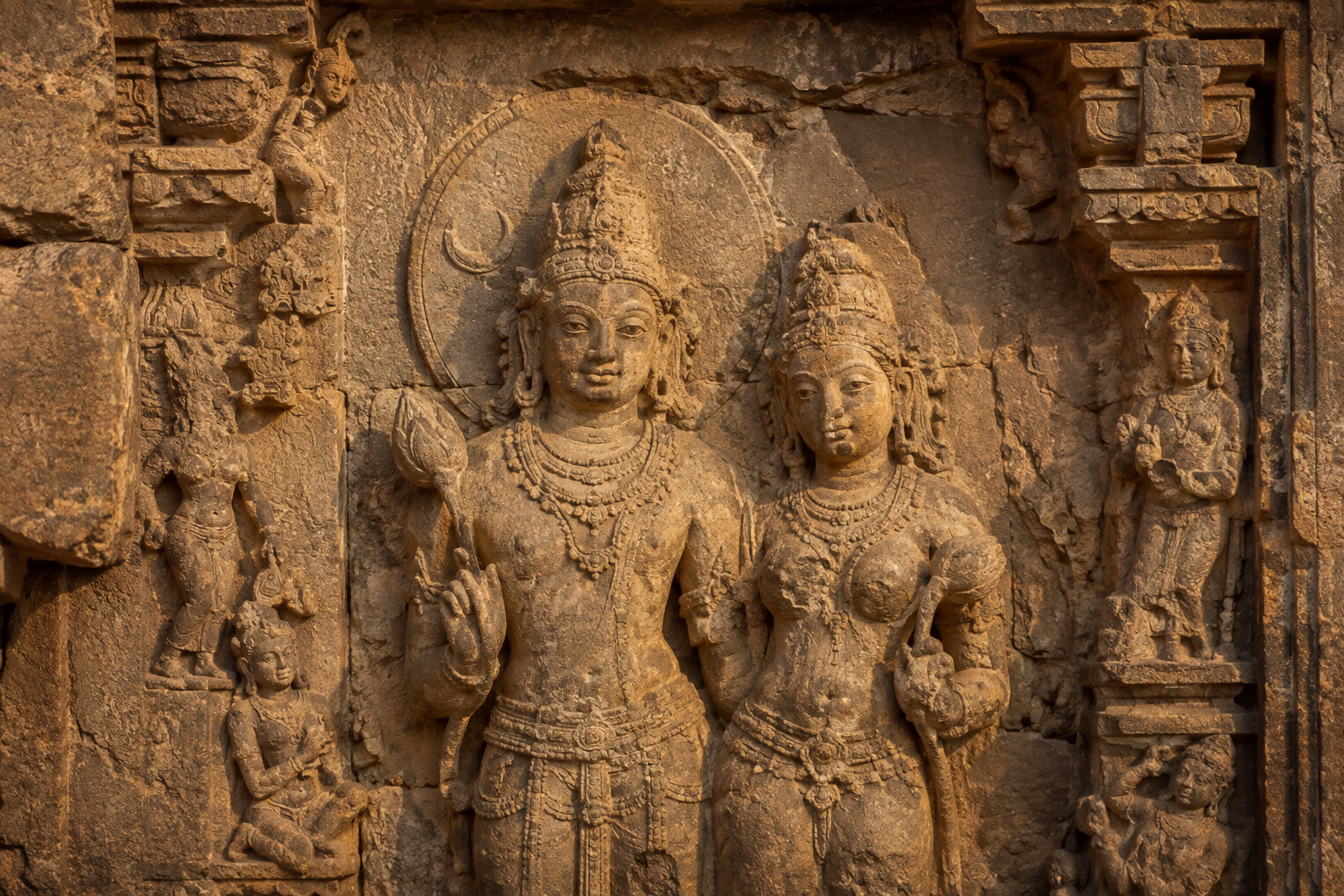
    Antariya—the unstitched lower garment secured by a mekhala—is the foundational drape of Hindu sculpture and iconography, predating later dhoti forms. This long-form guide explains how to identify antariya in stone and bronze through pleat geometry, knots, and belt types, and how these features assist in dating and attributing works from Bharhut and Sanchi to Gupta…

  • Seated Andal at Thiru Anbil: Chola Bronze Mastery, Iconography, and Living Devotion

    Seated Andal at Thiru Anbil: Chola Bronze Mastery, Iconography, and Living Devotion

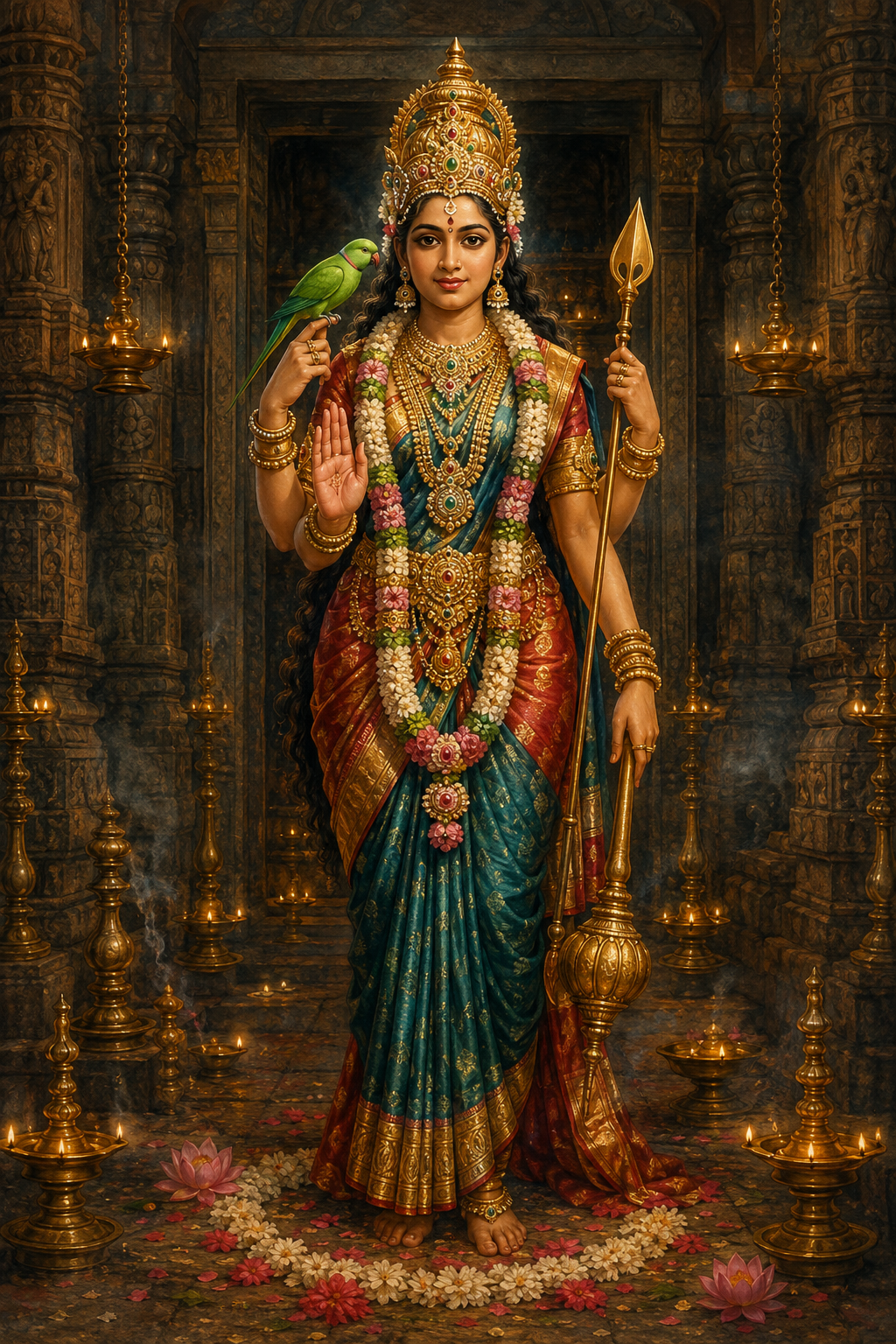
    The seated Andal at Thiru Anbil’s Sundararaja Perumal Temple is a rare Chola-era bronze that redefines Andal’s familiar standing iconography through a contemplative enthroned posture. This long-form study situates the image within Sri Vaishnava theology, Shilpa Shastra canons, and lost-wax panchaloha craftsmanship. Readers gain a framework to decode attributes such as the Andal Kondai, gesture,…

  • Pana Patra in Hindu Sculptures: A Powerful Symbol of Abundance, Compassion, and Divine Grace

    Pana Patra in Hindu Sculptures: A Powerful Symbol of Abundance, Compassion, and Divine Grace

    The pana patra—the ritual bowl seen across Hindu sculptures—serves as a compact key to decode abundance, renunciation, immortality, and grace in temple art. Grounded in Shilpa Shastra logic and Agamic practice, this guide clarifies how Annapūrṇā’s food bowl, Bhairava’s skull-cup, Kubera’s jewel vessel, and cups in Samudra Manthana scenes each signal distinct theological roles. It…

  • Awe-Inspiring Pushpaka Vimana: Self-Restoring Design, Vedic Engineering, and Ramayana Legacy

    Awe-Inspiring Pushpaka Vimana: Self-Restoring Design, Vedic Engineering, and Ramayana Legacy

    Pushpaka Vimana, the famed aerial craft of the Ramayana, is widely remembered for adaptive flight, moral stewardship, and a compelling motif of self-restoration. Read as an engineering imagination, its traits anticipate modular design, redundancy, autonomous control, and lifecycle repair. Read as sacred symbolism, its self-reassembling power affirms dharma’s resilience and responsible governance. Cross-dharmic echoes in…

  • Divine Fury, Compassionate Shelter: Nakhayudha—Sacred Claws of Narasimha in Hindu Iconography

    Divine Fury, Compassionate Shelter: Nakhayudha—Sacred Claws of Narasimha in Hindu Iconography

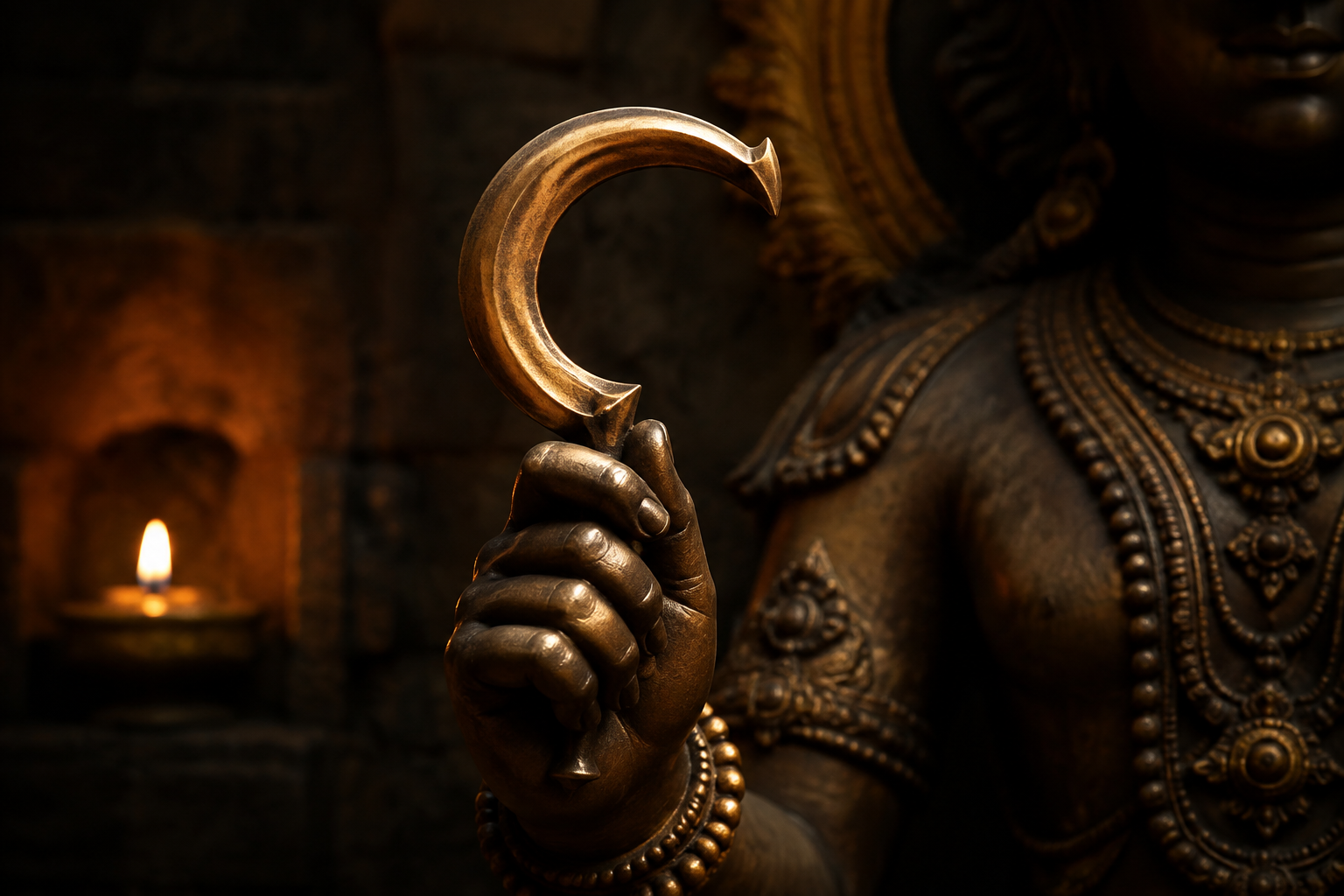
    Nakhayudha—the sacred claws of Narasimha—embodies a unique class of natural, non-forged weaponry in Hindu iconography, expressing spontaneous divine protection without reliance on manufactured arms. This long-form exploration clarifies the mythic logic behind Hiranyakashipu’s boon and shows how Narasimha’s claws resolve each clause through liminality. It decodes the visual grammar defined by Shilpa Shastra and Vaishnava…

  • Unveiling the Musala of Balarama: Agrarian Power, Sacred Iconography, and Divine Strength

    Unveiling the Musala of Balarama: Agrarian Power, Sacred Iconography, and Divine Strength

    The musala—Balarama’s sacred pestle—embodies agrarian power transformed into protective, ethical strength. This long-form analysis clarifies how its cylindrical form differs from the gadā, why Vaishnava texts hail Balarama as Hala-muṣala-dhara, and how the Mausala Parva frames the musala as a moral instrument entwined with dharma and time. Readers learn practical iconographic cues for identifying the…

  • Thanjai Mamani Koil: Unraveling Thanjavur’s Sacred Triple Divya Desam and Living Heritage

    Thanjai Mamani Koil: Unraveling Thanjavur’s Sacred Triple Divya Desam and Living Heritage

    Thanjai Mamani Koil in Thanjavur is a rare triadic Divya Desam where three adjacent Vishnu sanctums share a single sacred precinct. Celebrated in the Naalayira Divya Prabandham, the complex embodies a living synthesis of theology, architecture, and ritual practice in the Kaveri delta. The three deities—Neelamegha Perumal, Manikundra Perumal, and Veera Narasimha Perumal—offer complementary experiences…

  • Satara Hindu groups seek decisive legal action to protect legacy of Rashtraguru Samarth Ramdas

    Satara Hindu groups seek decisive legal action to protect legacy of Rashtraguru Samarth Ramdas

    Representatives of pro-Hindu groups in Satara have sought decisive, lawful action against derogatory and unverified claims about Rashtraguru Samarth Ramdas Swami. The report explains why such appeals matter for cultural heritage, outlines the legal framework balancing free speech and public order, and clarifies relevant IPC provisions and due process. It highlights the civic role of…

  • Reclaiming India’s Dharmic Sense of History: Evidence, Empathy, and Method

    Reclaiming India’s Dharmic Sense of History: Evidence, Empathy, and Method

    This essay offers a rigorous, empathetic roadmap to reclaim India’s Dharmic sense of history. It dismantles the colonial trope that Hindus lacked historical consciousness by surveying Itihasa, Puranas, caritras, inscriptions, and temple records across Ancient India and Medieval India. It explains why certain indigenous archives thinned during the medieval era and shows how to read…

  • Thirukozhi Nachiyar Koil, Uraiyur: Azhagiya Manavala Perumal’s Sacred Wedding to Kamalavalli

    Thirukozhi Nachiyar Koil, Uraiyur: Azhagiya Manavala Perumal’s Sacred Wedding to Kamalavalli

    Thirukozhi (Uraiyur) Nachiyar Koil in Tiruchirappalli honors the divine marriage of Azhagiya Manavala Perumal (Vishnu) and Kamalavalli Nachiyar (Lakshmi), making it a preeminent kalyana-sthalam among Tamil Nadu’s Divya Desams. The temple’s Dravida architecture, ritual precedence for Nachiyar, and festival calendar—especially Panguni Uthiram—express a living theology of compassion and auspicious union. Alvar hymns from the Nalayira…

  • Shantadevi of the Ramayana: The Overlooked Princess Who Shaped Sri Rama’s Destiny

    Shantadevi of the Ramayana: The Overlooked Princess Who Shaped Sri Rama’s Destiny

    Shantadevi (Śāntā) is a pivotal yet overlooked figure in the Ramayana, remembered in many traditions as King Daśaratha’s daughter and the bride of Ṛṣyaśṛṅga. Her marriage anchors the ritual sequence that culminates in the Putrakameshti Yajna and the births of Sri Rama and his brothers. This article clarifies textual variations between Valmiki’s Bala Kanda and…

  • Srirangam’s Divine Design: How Lord Ranganatha Chose Kaveri as His Eternal Abode

    Srirangam’s Divine Design: How Lord Ranganatha Chose Kaveri as His Eternal Abode

    Sri Ranganathaswamy Temple at Srirangam is celebrated as Bhooloka Vaikuntham, where architecture, theology, and ritual converge around Lord Ranganatha’s divine choice to reside by the Kaveri. Drawing on Skanda Purana’s Sriranga Mahatmyam, temple chronicles, and Alvar hymns, this comprehensive account explains how the murti traveled from Vaikuntha to Ayodhya and, through Vibhishana, found a permanent…

  • Khajuraho’s Matangeshwar Temple: Awe-Inspiring ‘Living’ Shivling and 1,000 Years of Worship

    Khajuraho’s Matangeshwar Temple: Awe-Inspiring ‘Living’ Shivling and 1,000 Years of Worship

    Matangeshwar Temple in Khajuraho, Madhya Pradesh, is a living Shiva shrine renowned for its colossal Shivling and an enduring belief that the icon grows over time. Set within the UNESCO-listed Khajuraho Group of Monuments, it balances Chandela-era Nagara architecture with uninterrupted ritual practice. The temple’s restrained superstructure intensifies focus on the sanctum and active worship,…

  • Beneath the Conqueror’s Shadow: Unflinching South Asian History and Dharmic Resilience

    Beneath the Conqueror’s Shadow: Unflinching South Asian History and Dharmic Resilience

    This long-form analysis interprets South Asian history through five “folds” of the Conqueror’s Shadow—material, institutional, ritual, intellectual, and ethical—showing how Hindu, Buddhist, Jain, and Sikh communities adapted with resilience rather than rupture. It synthesizes inscriptions, archaeology, and historiography to avoid simplistic narratives while honoring lived memory. Readers gain clear frameworks for understanding revenue systems, sacred…

  • Chudamani: Radiant Crest Jewel of Hindu Deities and the Apex of Sacred Iconography

    Chudamani: Radiant Crest Jewel of Hindu Deities and the Apex of Sacred Iconography

    This article explores the chudamani — the crest jewel at the summit of a deity’s crown — as the apex of Hindu iconography and meaning. Readers learn the term’s etymology and literary memory in the Ramayana, its precise placement on mukuta types, and its codification in Shilpa Shastra and Agamic texts. The discussion unpacks symbolism…

  • When a Republic Fell: Kamsa’s Coup, Mathura’s Sudharma, and the Price of Lost Dharma

    When a Republic Fell: Kamsa’s Coup, Mathura’s Sudharma, and the Price of Lost Dharma

    Mathura’s fall from republican equilibrium to Kamsa’s tyranny illustrates how coups dismantle not only rulers but also institutions such as the Sudharma council that once mediated power through counsel and custom. Drawing on the Bhagavata Purana, Vishnu Purana, Harivamsa, and the Arthasastra, the narrative analyzes the mechanics of usurpation, alliance with Magadha, and the militarization…

  • Shyamasundar Das and the First Western Rathayatra: A Daring, Transformative Legacy of Dharmic Unity

    Shyamasundar Das and the First Western Rathayatra: A Daring, Transformative Legacy of Dharmic Unity

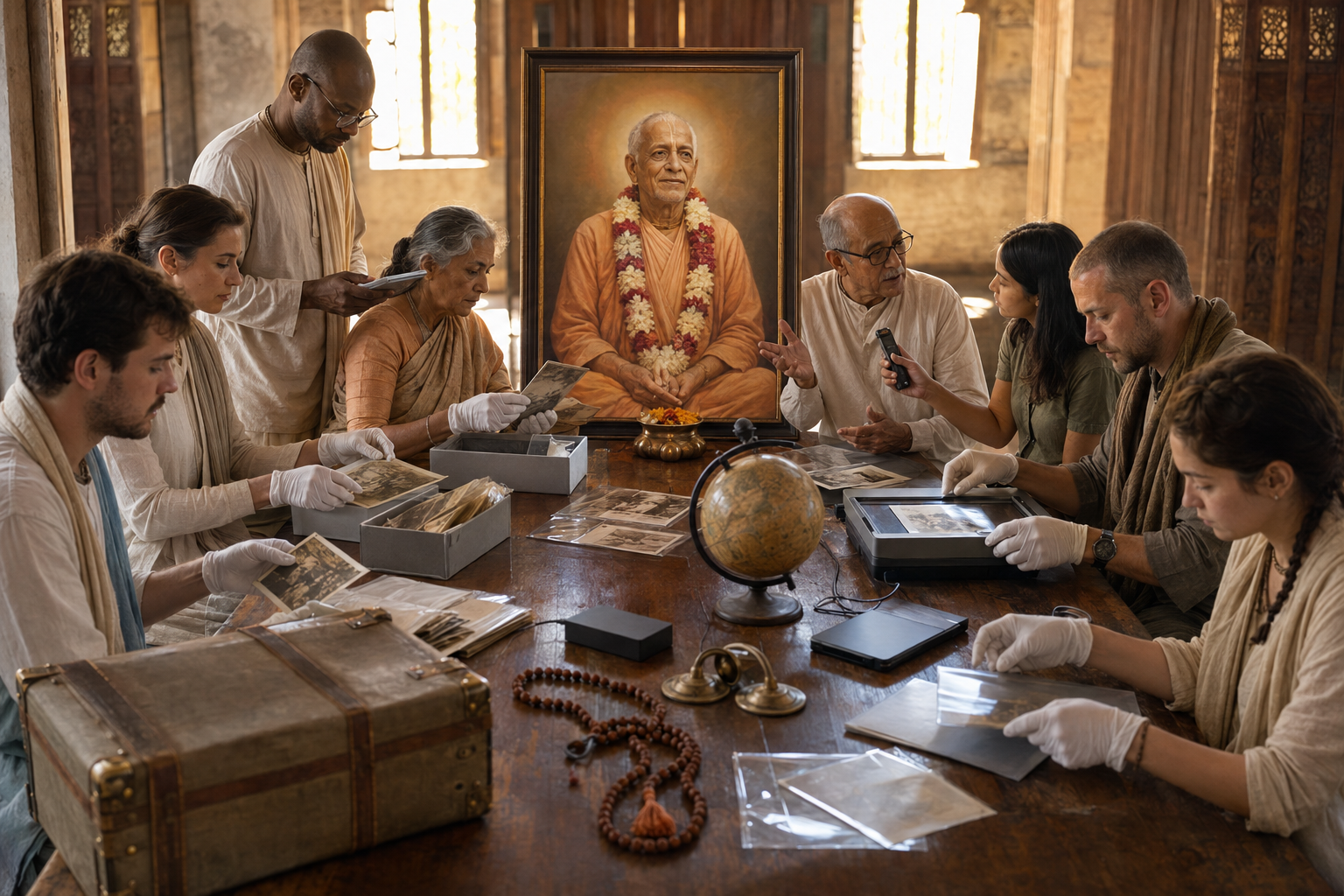
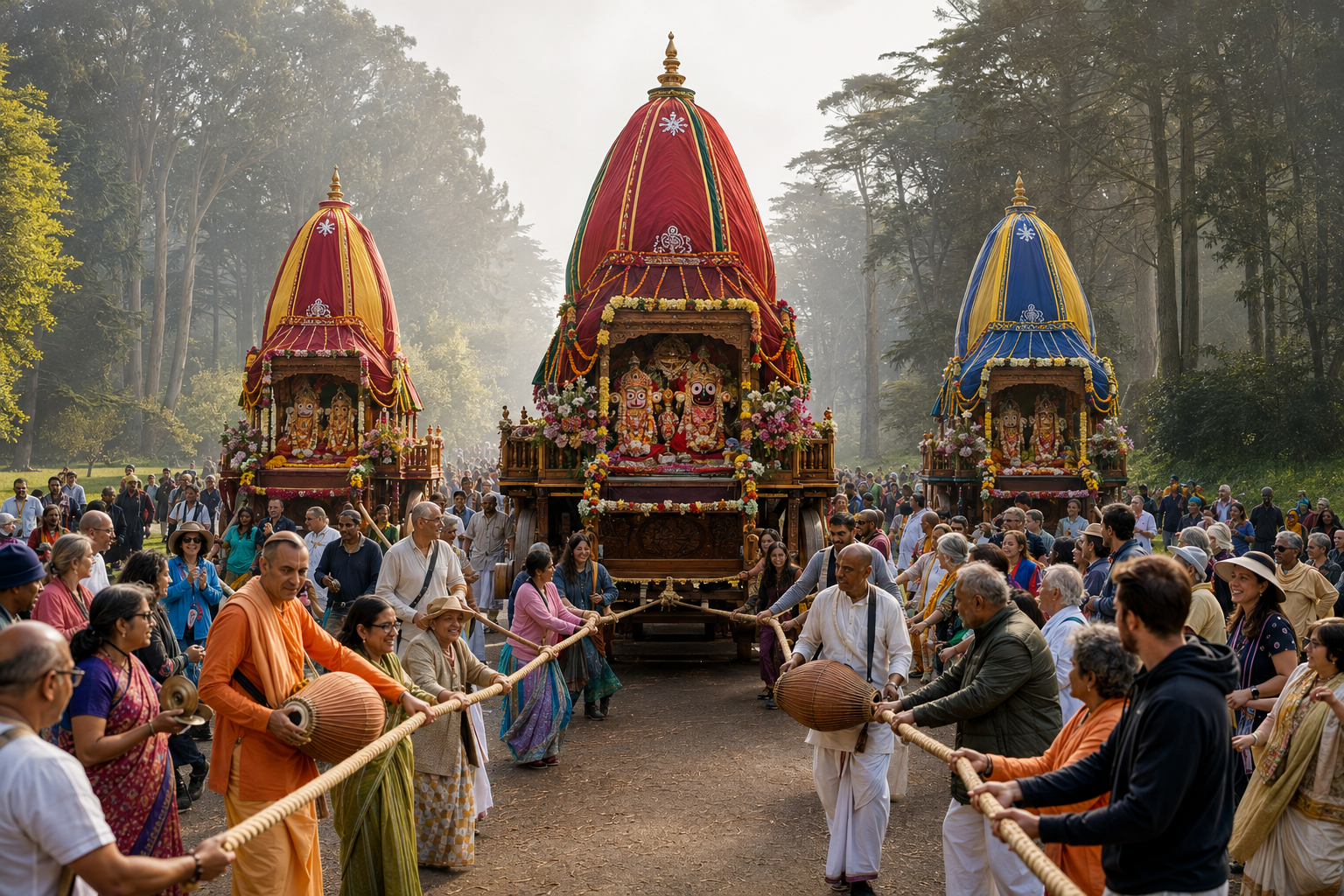
    This article examines how Shyamasundar Das (Sam Speerstra) helped carry Gaudiya Vaishnavism into the global public square by introducing Lord Jagannath, carving the first Western Deities, and coordinating the first Rathayatra outside India in 1967–1968. It situates these achievements within ISKCON’s early expansion in San Francisco and London and explains how the ethos of ‘Chase…