
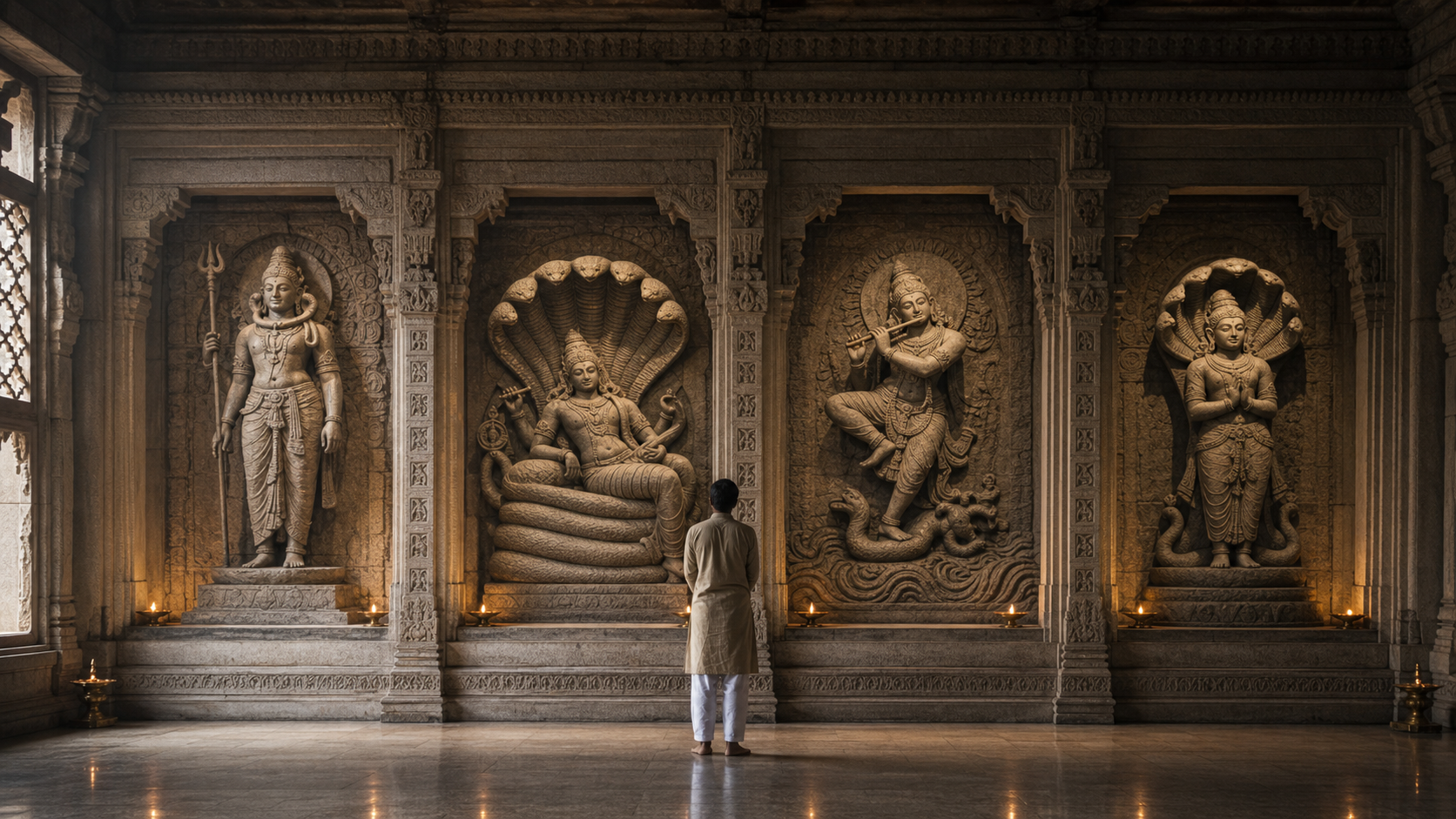
You are looking at a Hindu murti or temple sculpture when one detail stops you: a serpent rests in a divine hand, circles the body, rises overhead, or forms part of the seat. Does it signify danger, death, protection, power, or something else? If you interpret the serpent in isolation, you are likely to miss what the image is communicating.
The dependable approach is to read the relationship. Where is the serpent? What is it doing? How does the divine figure respond to it? Is it an unnamed symbol or an identified sacred being? Those questions turn an unsettling or unfamiliar detail into a theological statement you can read with care.
First decide whether the serpent is a weapon at all
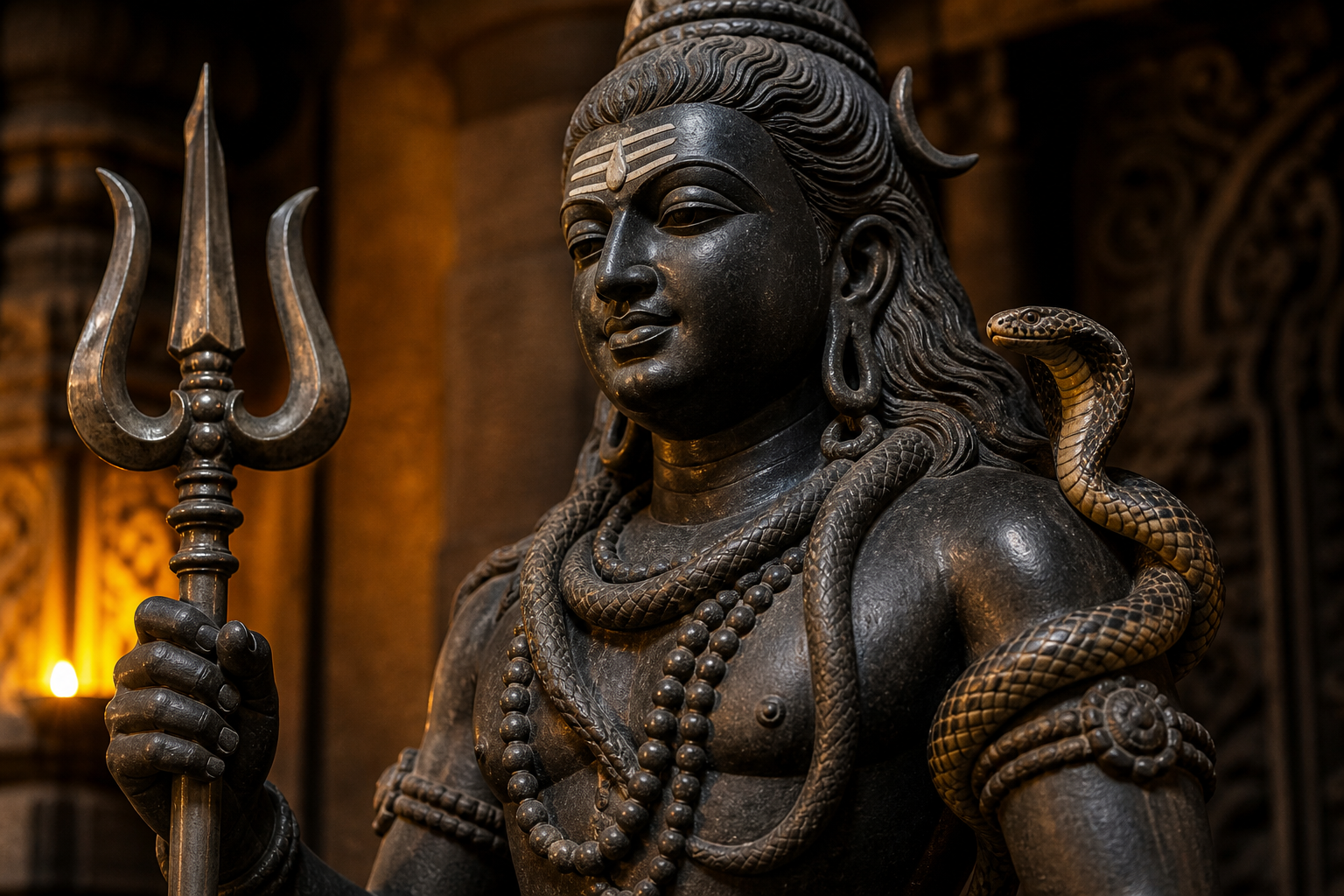
A held object in Hindu iconography is not automatically an instrument of combat. The serpent, or sarpa, is not classified primarily as an ayudha, a weapon. This distinction changes your first question. Instead of asking, “Whom is the deity preparing to attack?” ask, “What relationship between divine consciousness and serpent power is being shown?”
Look closely at the handling. A serpent resting in an open or relaxed hand communicates differently from one lifted in a forceful gesture. A serpent held without struggle can indicate that a potent or dangerous force has been brought under conscious rule. The image does not need to deny the serpent’s danger in order to show that the divine is unafraid of it.
This does not make every serpent gentle, nor does it exclude fierce meanings. It simply prevents a common error: treating every object in a divine hand as a weapon and every serpent as an enemy. In sacred art, mastery can be expressed through calm possession as clearly as through combat.
Placement gives the serpent its grammatical role
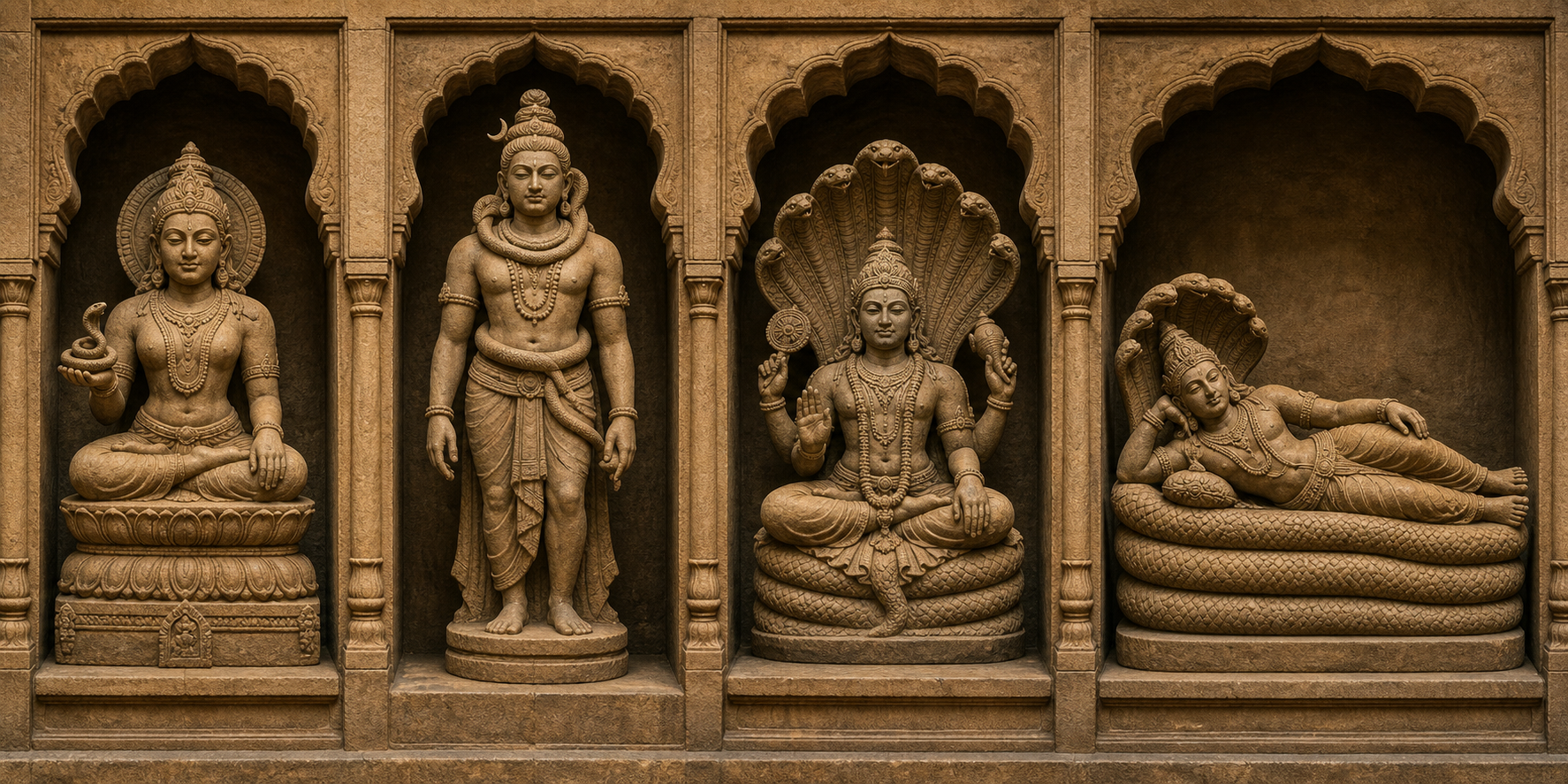
Iconography works more like a sentence than a dictionary. A dictionary asks what “serpent” means. A sacred image asks what this serpent, in this position, in relation to this divine form, means. Begin with placement before reaching for a story.
| What you see | Question to ask first | Provisional direction |
|---|---|---|
| Serpent held in a hand | Is the grip calm, protective, demonstrative, or forceful? | Conscious command, display of authority, or a power placed at the deity’s disposal |
| Serpent worn around the body | Does it appear as an ornament, cord, belt, or close companion? | Potency integrated into the divine form rather than left as an external threat |
| Serpent or hoods rising overhead | Does the form shelter, frame, or watch over the figure? | Protection, guardianship, dignity, or sacred enclosure |
| Serpent beneath or supporting the figure | Is it a foundation, seat, subdued presence, or active participant? | Supporting power, stability, subordination, or a force placed within cosmic order |
| Serpent standing separately nearby | Is it an attendant, guardian, narrative figure, or identifying emblem? | Context is essential; the surrounding scene and local identification should decide the reading |
These are starting directions, not fixed translations. A serpent overhead is not always reducible to “protection,” just as a serpent beneath a deity is not always a defeated enemy. Use the table to form a hypothesis, then test it against the rest of the image.
Named identity also outranks generic symbolism. If the serpent is identified as Adi Sesha, begin with that sacred identity and then examine the visual relationship. A named being within a theological tradition should not be flattened into an interchangeable snake motif.
Test several meanings instead of forcing one
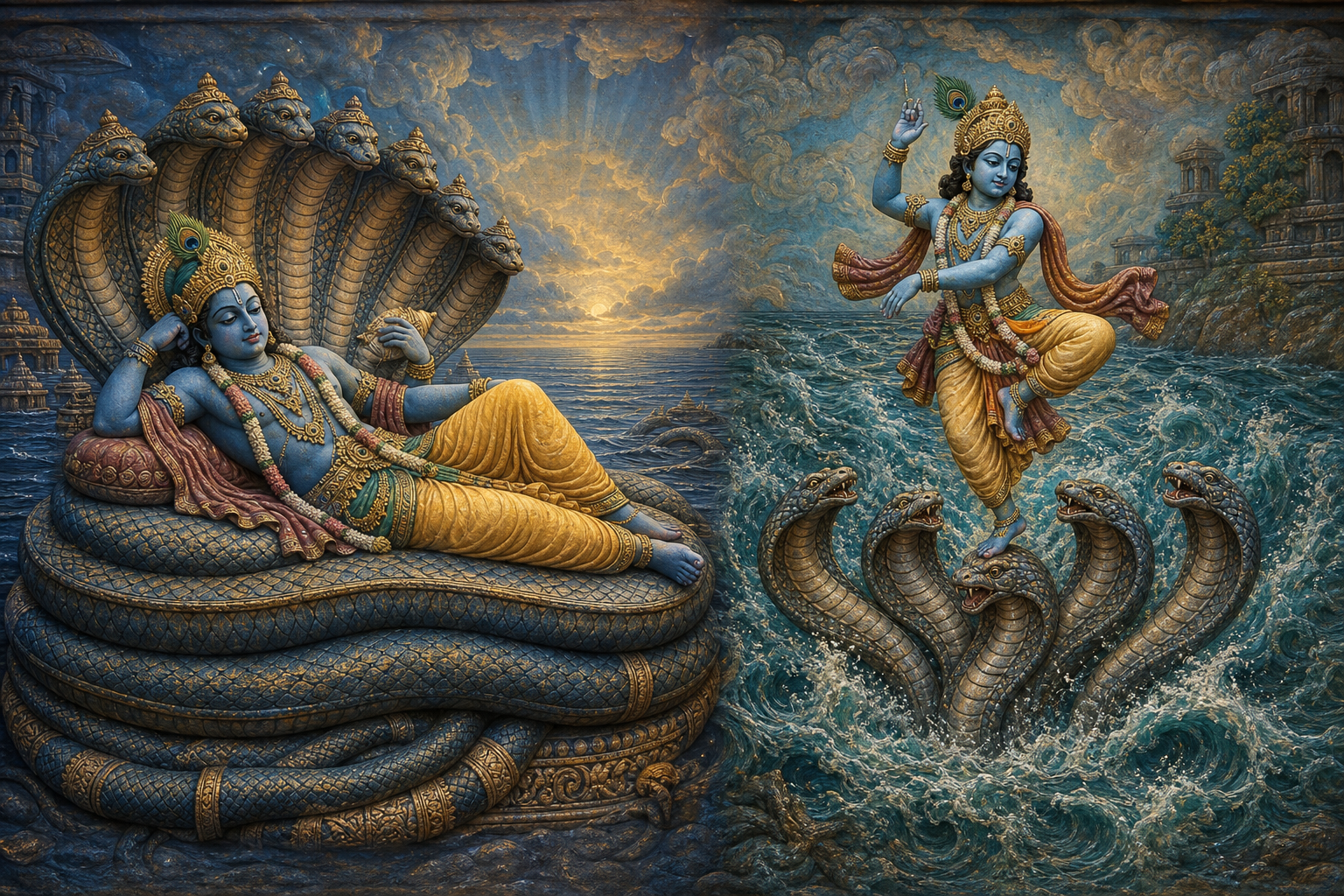
The serpent’s meaning is usually layered. Several symbolic fields may be present, but the composition will make some more plausible than others:
- Potency under conscious rule: A dangerous creature held or worn without anxiety can show force governed rather than force denied. Calmness matters here. The visual contrast between the serpent’s potential danger and the deity’s composure carries the meaning.
- Fear and mortality confronted: A serpent may bring vulnerability, danger, or death into the image. When the divine figure remains serene, the emphasis can fall on freedom from fear rather than on the elimination of everything fearful.
- Transformation and continuity: The serpent’s form can direct attention toward change, renewal, recurrence, or power that remains present through changing conditions. Accept this reading only when posture, setting, or tradition supports it; do not attach it mechanically to every snake.
- Protection and guardianship: A serpent that shelters, frames, watches, or marks a boundary may have a protective function. Its position around a sacred figure or space is more important than a generic association with danger.
- Hidden or concentrated power: A coiled, contained, or closely worn serpent may suggest potency held in reserve. An extended or active serpent may present that force as manifest. Treat this as a visual clue, not a complete explanation by itself.
One reading habit is especially worth resisting: translating the serpent immediately into a simple sign of evil. Hindu sacred art does not require every dangerous force to stand outside holiness. A force can retain its intensity while being governed, integrated, protective, or placed in service of dharma. That possibility is often the very point of showing the divine in intimate contact with what ordinary people fear.
Use this four-step method at a temple or museum
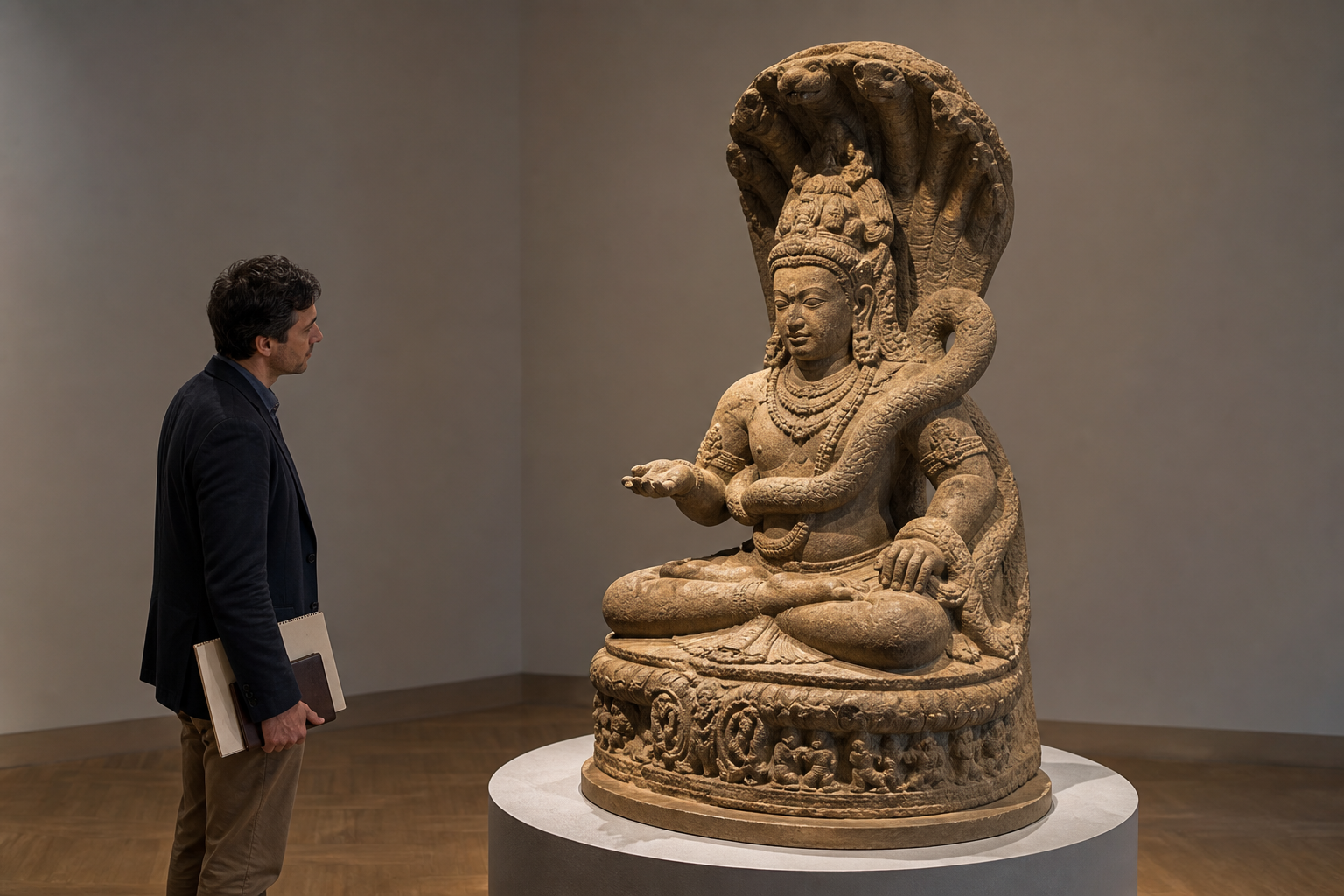
- Take in the complete composition. Note the deity’s posture, facial expression, hands, seat, attendants, and surrounding forms. If you are viewing a photograph, check whether it has cropped out the base, canopy, or other hand.
- Describe the serpent before interpreting it. Write down only what you can see: held, wrapped, worn, sheltering, supporting, subdued, or separate. Notice whether the relationship appears calm or forceful.
- Form at least two possible readings. A serpent in the hand might suggest mastery, protection, or the display of a distinctive power. Compare each possibility with the deity’s gesture and the mood of the image. Discard the reading that requires you to ignore visible evidence.
- Verify the local identification. Read the temple inscription or museum label, identify the divine form, and consult the tradition responsible for the image. Where an Agama, temple lineage, or established account supplies an identification, give that context more weight than a free-floating symbol dictionary.
You can then state your interpretation in one disciplined sentence: “Because the serpent is shown in this position while the divine figure responds in this manner, it most plausibly presents serpent power as governed, integrated, protective, or supporting.” Add “pending local identification” when you do not know the image’s ritual or narrative context.
This method also reveals when you do not yet have enough information. A cropped image with no provenance may permit a visual observation but not a confident theological conclusion. Holding the interpretation open is more accurate than attaching the first familiar myth to every serpent you encounter.
Key takeaways
- A serpent in a divine hand is not automatically a weapon or an enemy.
- Read placement, action, and relationship before assigning a symbolic meaning.
- Calm contact can present dangerous power as mastered or integrated without pretending that it is powerless.
- A named sacred being such as Adi Sesha must be read through that identity, not reduced to generic snake symbolism.
- The full image and its temple, Agamic, or narrative context carry more authority than an isolated motif.
The next time a serpent appears in a Hindu sacred image, wait before naming its meaning. Locate it, observe what it is doing, study the divine figure’s response, and check the local identification. If your interpretation cannot account for all four, keep it provisional. That restraint is not a failure to understand the image; it is respect for the precision of Hindu iconography.
References
