
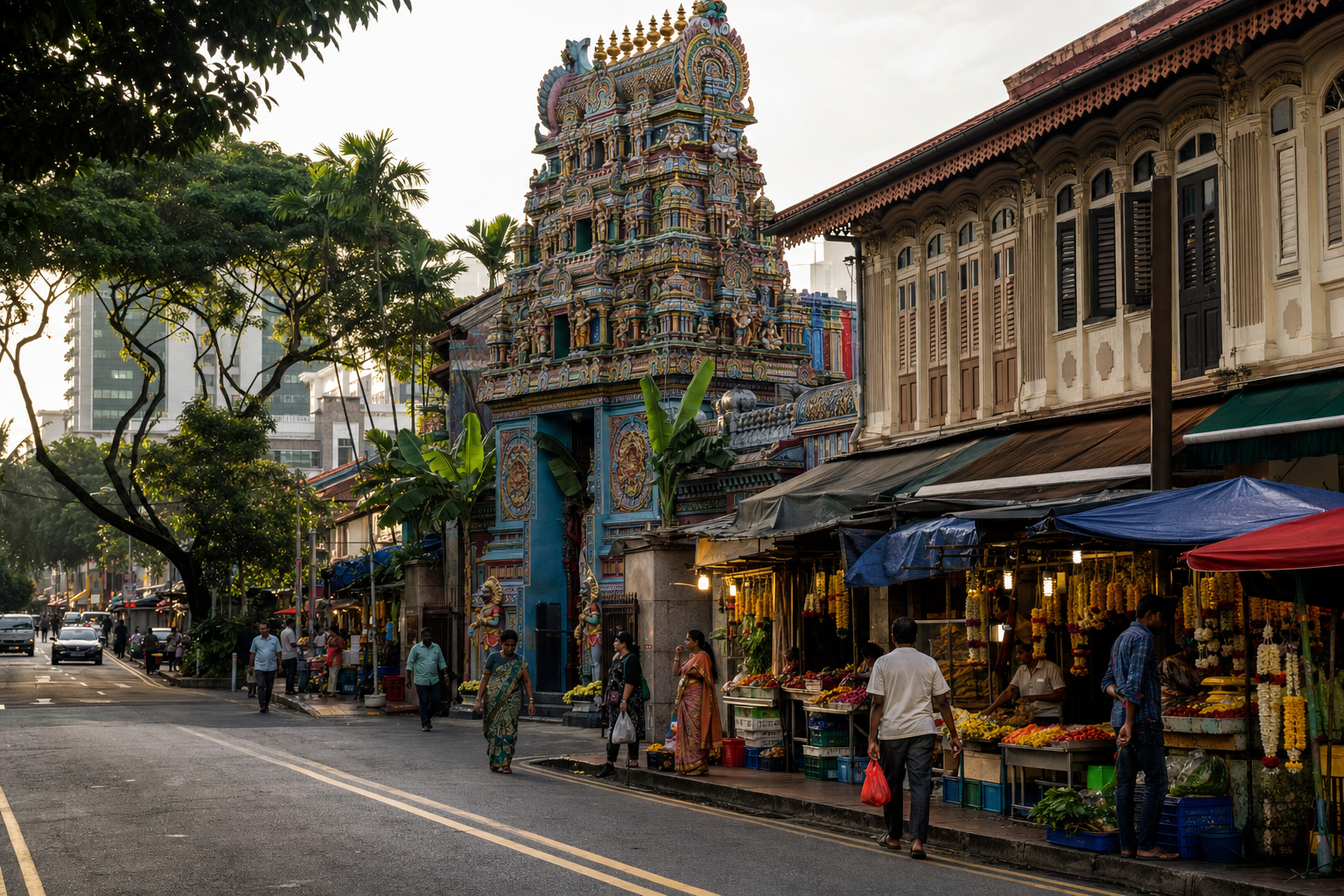
If you visit Little India only for a meal, a photograph and a quick look at the shops, you will see its colour but miss its historical argument. The district shows how Bharatiya migrants carried worship, language, skills and commercial networks into a growing port city, then built institutions durable enough to outlive the colonial order that shaped their arrival.
You do not need a specialist tour to recognise that history. You need the right sequence of questions. Start with Serangoon Road, read the temples as community institutions, notice where different traditions share urban space, and finish by examining how commerce keeps culture in daily use.
Begin with the port, not the colonial district
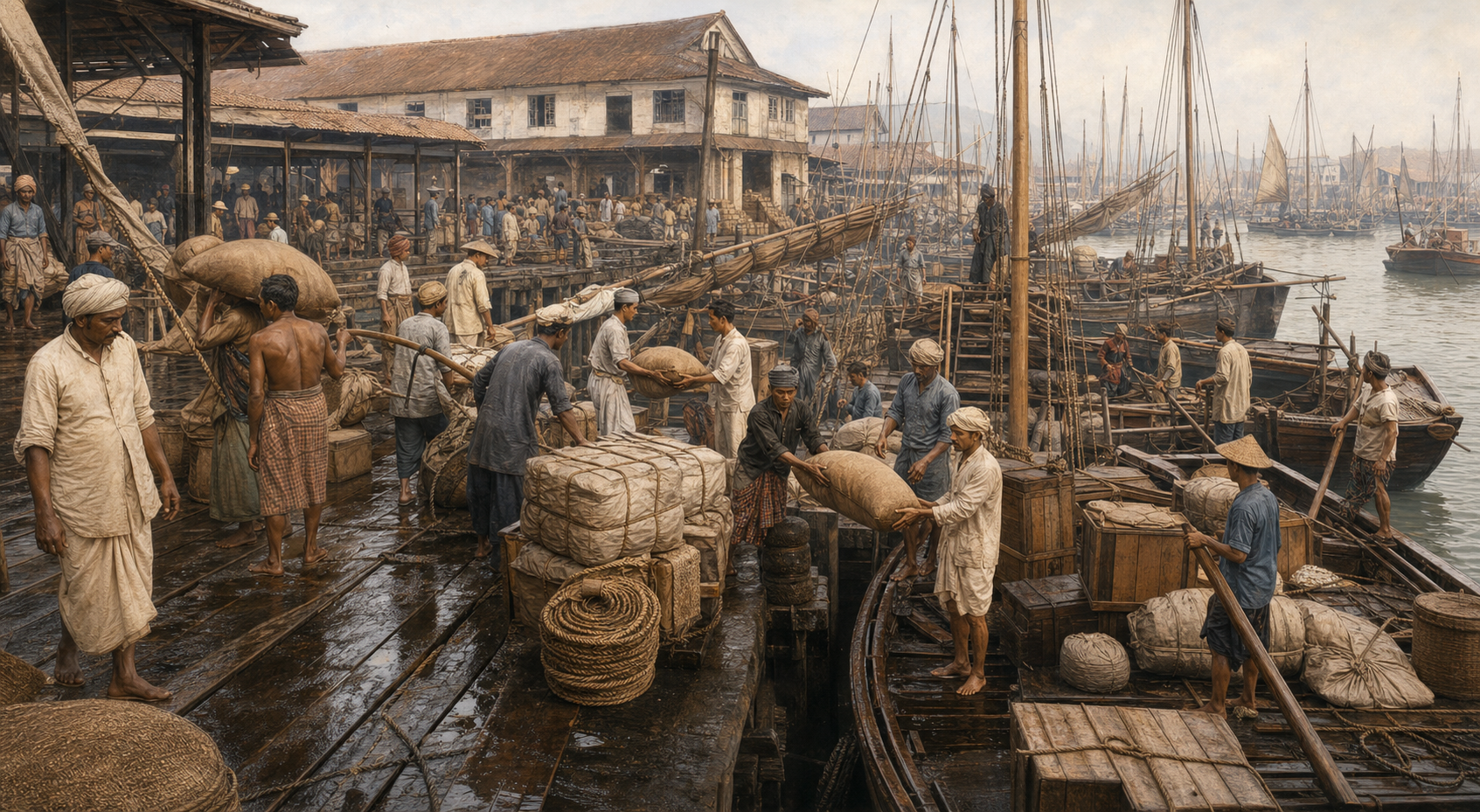
The first mistake is to imagine Bharatiya Singapore as a culture deposited fully formed inside Little India. Singapore belonged to maritime routes connecting the Bharatiya subcontinent, Southeast Asia and the wider Indian Ocean world before it became a major British trading port. Bharatiya merchants and travellers already moved through those networks.
The British settlement established in the early 19th century changed the scale and organisation of that presence. Workers arrived for varied occupations, while merchants and entrepreneurs established businesses in the growing settlement. The area around Serangoon Road gradually became associated with Bharatiya residence, trade and community life.
That distinction matters. Colonial rule did not create all contact between Bharat and Southeast Asia, but it did intensify migration and shape the neighbourhood in which many migrants worked and organised themselves. If you remember both phases, you avoid two misleading stories: that Bharatiya influence began with the British, or that colonial labour and migration had no formative effect on modern Singapore.
Use three questions as you move through the district:
- What movement of people or goods made this place possible?
- What institution did migrants build when family and familiar surroundings were far away?
- What is still being used rather than merely displayed?
These questions turn Serangoon Road from a backdrop into historical evidence. Shops, places of worship and food businesses are not independent attractions. Together they form a cultural landscape produced by labour, devotion, trade and the need for community.
Read the temples as migrant-built institutions
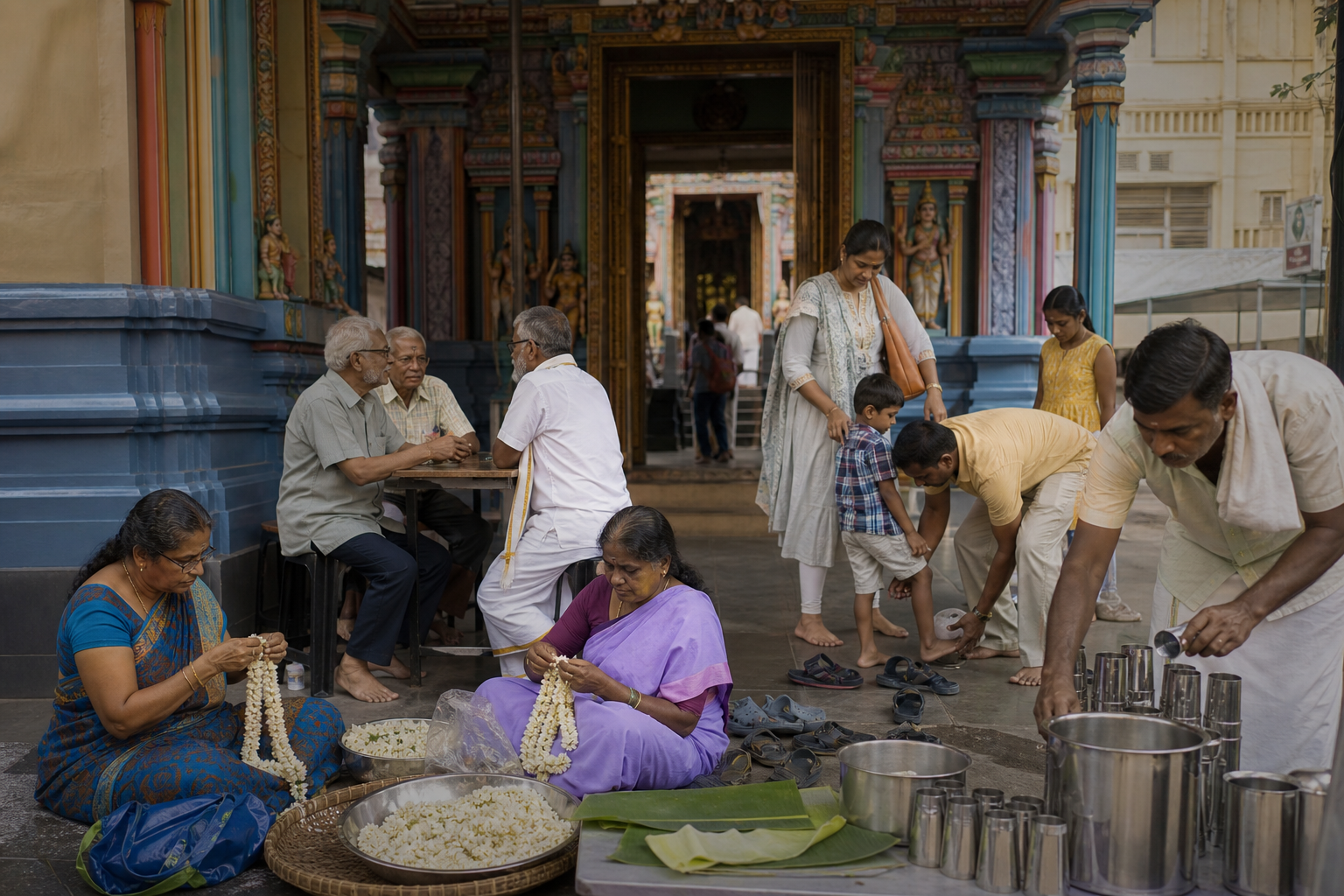
Little India’s temples are the clearest places to see continuity, but you will understand them poorly if you reduce every shrine to a generic symbol of Hindu identity. Pay attention to the deity, the sampradaya or devotional orientation, the regional traditions and the social history attached to each institution.
Sri Srinivasa Perumal Temple is dedicated to Sri Hari Vishnu and is closely connected with Singapore’s Vaishnavite Hindu community. It carries religious and architectural traditions associated with South Bharat and has stood for nearly two centuries. The useful lesson is not simply that an old Hindu temple survives in Singapore. It is that migrants created a lasting home for a particular devotional lineage rather than preserving only a vague memory of their origins.
Sri Veeramakaliamman Temple presents a different history. Dedicated to Kali and established in 1855, it is one of Singapore’s oldest and best-known Hindu temples. Its worship is principally associated with Tamil tradition, yet accounts of its construction also include contributions from Bengali workers. That detail should change how you read the district: Tamil prominence is central, but Bharatiya Singapore was never socially or linguistically uniform.
The temple’s importance also reached beyond ordinary worship. During the Japanese invasion and occupation in the Second World War, it reportedly sheltered people seeking refuge from bombing. The careful word is reportedly, because the surviving account is presented with that qualification. Even so, the episode preserves a vital community memory: a temple could become physical refuge during a public catastrophe, just as it provided cultural continuity in less dangerous times.
When you enter an active temple, behave as a visitor to a place of worship rather than a customer entering an attraction. Follow posted rules, avoid blocking worshippers, and ask before photographing people or rituals. Then make three observations:
- Identify the principal deity and the devotional tradition instead of labelling the site merely Hindu.
- Notice which parts of temple life are active now: worship, offerings, gathering and community participation matter more than age alone.
- Record one way the institution served migrants beyond ritual, whether by sustaining identity, connecting people or providing refuge in crisis.
This method respects both sacred purpose and historical complexity. It also prevents heritage from becoming a collection of attractive facades detached from the people who built and still use them.
Notice coexistence without flattening differences
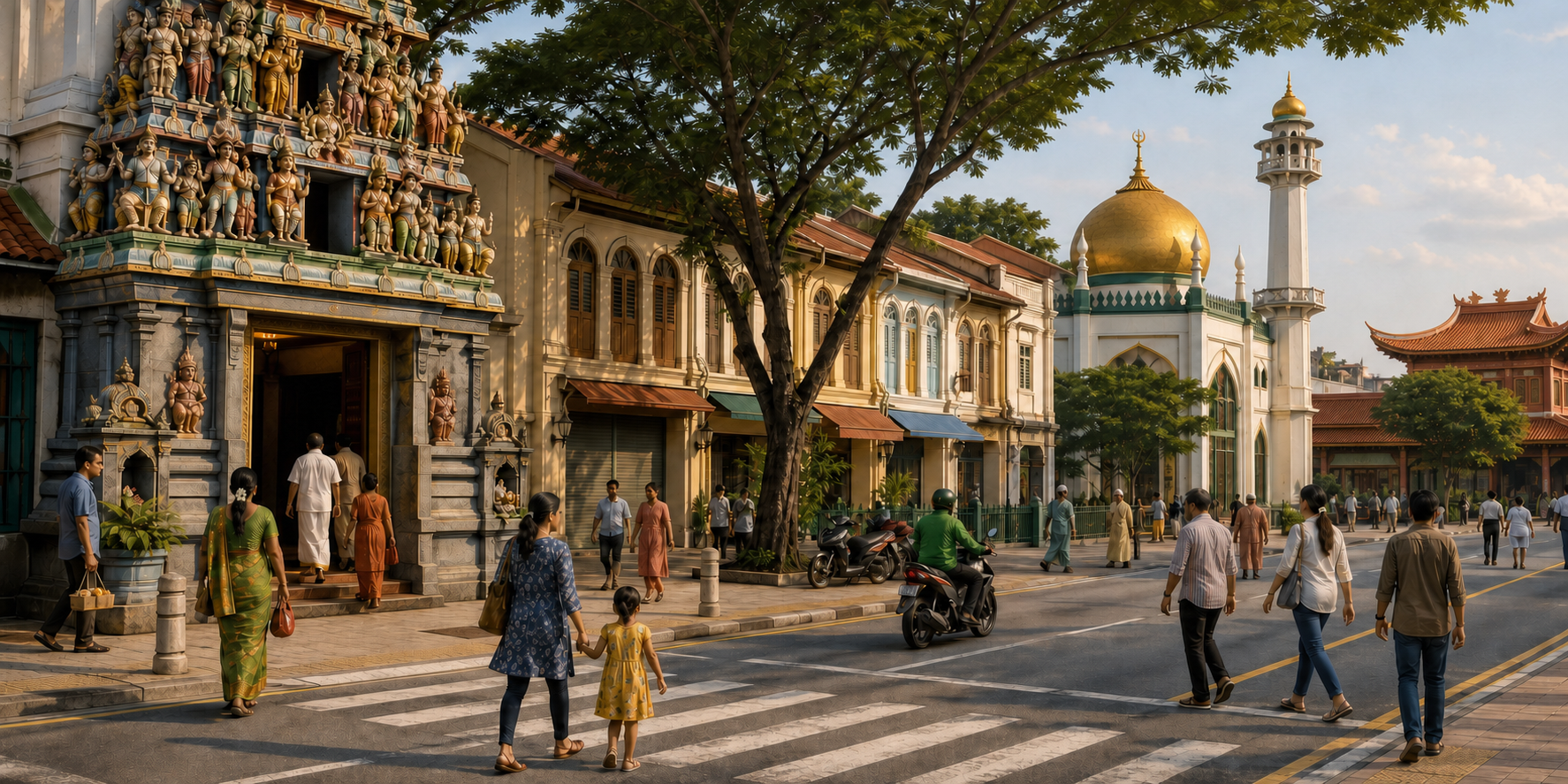
Singapore’s religious diversity becomes unusually visible near Albert Mall Walking Street. Sri Krishnan Temple stands close to Kwan Im Thong Hood Cho Temple, a Buddhist temple dedicated to Kuan Yin, the Goddess of Mercy. Their proximity places Hindu and Buddhist traditions within the same urban field.
Do not make that proximity prove more than it can. Neighbouring temples are evidence that distinct communities and traditions developed side by side; proximity alone does not erase doctrinal, ritual or historical differences. The most honest way to examine the pair is to create two mental columns: what they share as neighbours in a multicultural city, and what each preserves as a distinct sacred institution.
That same discipline helps at the House of Tan Teng Niah. The colourful historic building is associated with a Chinese businessman from the colonial period, even though it now stands within Little India. It should not be relabelled as a Bharatiya religious monument simply because of its present surroundings. Its value lies in showing that Indian, Chinese, Malay and other histories overlapped in Singapore’s neighbourhoods and commercial life.
Look for coexistence, therefore, in concrete urban relationships: neighbouring sacred sites, shared streets, overlapping commercial districts and buildings whose histories do not fit the dominant identity of their present location. This is more useful than repeating a vague celebration of diversity. It lets you see how cultural distinction and everyday proximity can exist at the same time.
Follow living commerce from Tekka to Mustafa
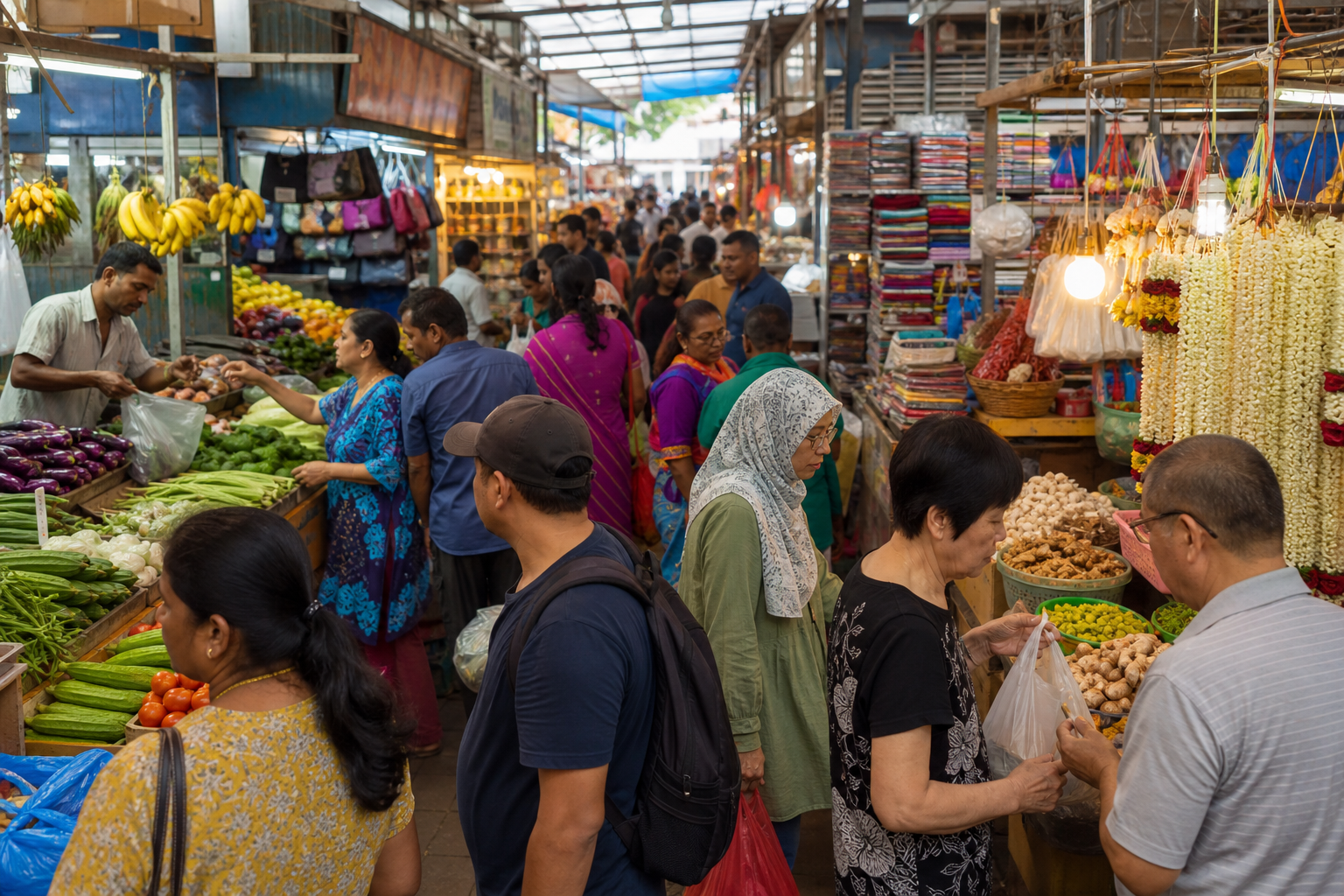
Temples show how a community organised worship. Commerce shows how culture entered ordinary routines. Businesses selling Bharatiya clothing, spices, jewellery, flowers, religious goods and food helped make Little India a functioning neighbourhood rather than a ceremonial enclave.
At Tekka Hawker Centre and in the surrounding area, do more than identify a familiar dish. Notice the system around the food: ingredients, vendors, customers and repeated habits that keep culinary knowledge in circulation. Food becomes heritage not because it is placed behind glass, but because people continue to prepare, buy, adapt and eat it.
The same principle applies to flowers, clothing and religious items. Their presence reveals the practical infrastructure required to maintain worship and cultural customs. A garland or devotional object in a shop is not merely merchandise; it may sit within a chain connecting commerce to a home observance, festival or temple practice. You do not need to romanticise the transaction to recognise its cultural role.
Mustafa Centre belongs to a later chapter of this commercial history. It became one of Little India’s best-known landmarks, demonstrating the continued importance and adaptability of Indian-owned business in Singapore. Its round-the-clock operating model represented a modern urban economy rather than a preserved colonial marketplace. Heritage here is not the refusal to change. It is the capacity to carry a community’s commercial presence into new economic forms.
Use this six-stage reading plan
This is a thematic sequence, not turn-by-turn navigation. Check current access arrangements before travelling, especially for active places of worship.
- Start on Serangoon Road. Treat it as the organising spine of a community landscape shaped by migration and trade.
- Study Sri Srinivasa Perumal Temple. Identify its dedication to Vishnu, its Vaishnavite character and its connection with South Bharatiya tradition.
- Study Sri Veeramakaliamman Temple separately. Note its 1855 establishment, dedication to Kali, Tamil religious life, reported Bengali contribution and wartime memory.
- Use Tekka and nearby businesses to examine everyday continuity. Choose one category, such as food, flowers, jewellery or religious goods, and observe how trade supports recurring cultural practice.
- Include the House of Tan Teng Niah. Use its Chinese association to correct any assumption that the district developed in ethnic isolation.
- Compare the neighbouring religious landscape around Sri Krishnan Temple and Kwan Im Thong Hood Cho Temple, then consider Mustafa Centre as evidence of commercial adaptation rather than a break from heritage.
For each stage, write down one fact about origin, one example of continuing use and one connection to another community or institution. By the end, you will have a compact historical map instead of a camera roll of disconnected landmarks.
Key takeaways
- Bharatiya connections with Singapore belong to the older Indian Ocean world as well as the later British colonial port.
- Serangoon Road became a centre of Bharatiya residence, business, worship and community organisation rather than merely an ethnic shopping street.
- Sri Srinivasa Perumal and Sri Veeramakaliamman temples preserve distinct devotional histories; treating them as interchangeable hides the district’s internal diversity.
- Religious institutions carried social memory and could serve practical community needs, including refuge during wartime.
- Nearby Hindu and Buddhist temples show coexistence, while the House of Tan Teng Niah demonstrates that Little India’s history also overlaps with Chinese and other Singaporean histories.
- Tekka, traditional businesses and Mustafa Centre show heritage operating through everyday commerce and adaptation, not only through preservation.
Before you leave Little India, choose one temple, one business and one building connected with another community. Note what each reveals about migration, continuity and coexistence. That small exercise will give you a more truthful understanding of Singapore’s Bharatiya inheritance than trying to see every landmark without learning how to read any of them.
References
