
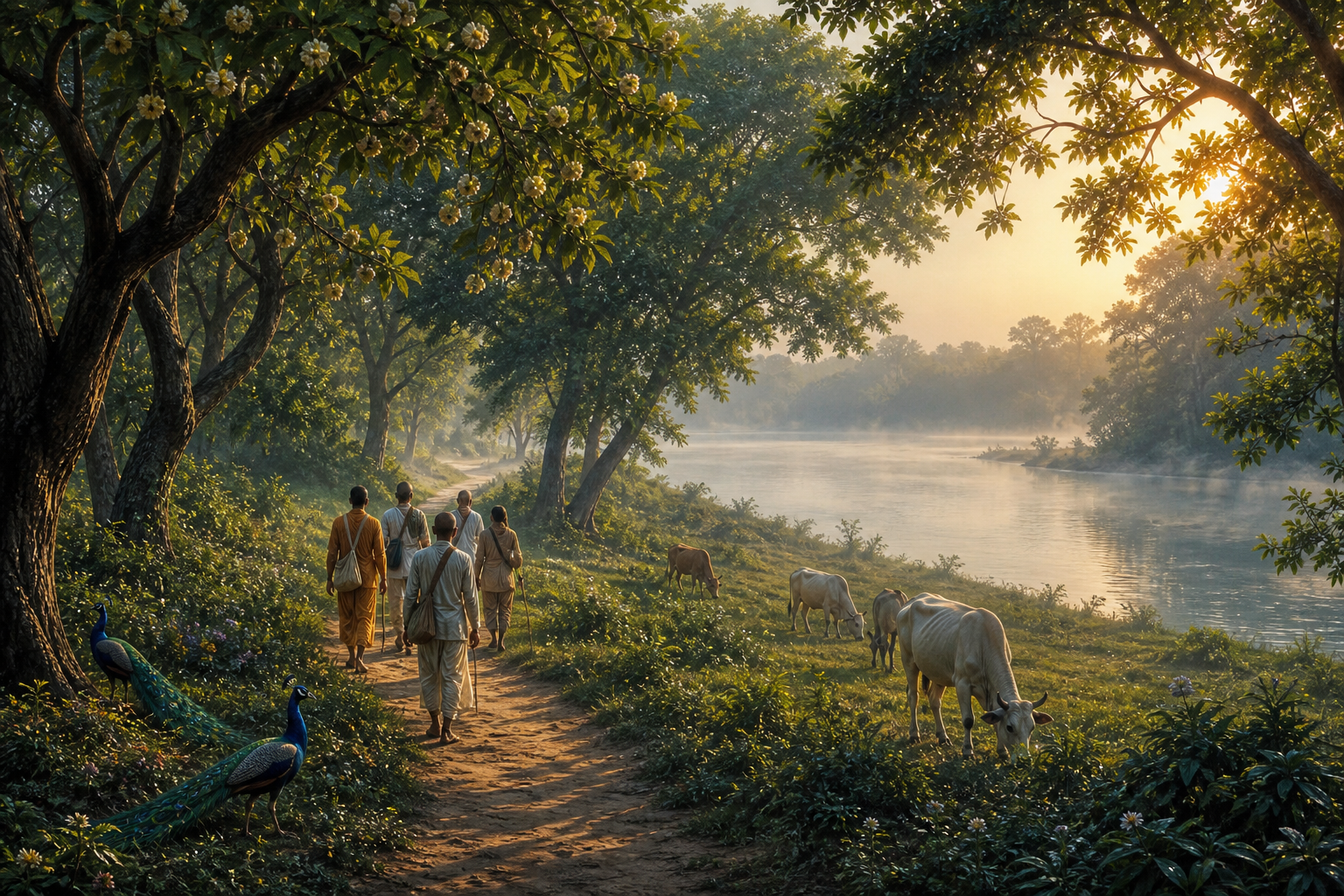
You may be planning a Vraja pilgrimage, trying to understand why devotees speak of forests when an ordinary map emphasizes towns and roads, or wondering how to visit without turning sacred places into photo stops. Begin with a better question than “What is there to see?” Ask, “How should I learn to see it?”
The sacred forests of Vraja belong to the devotional world of Radha-Krishna. To approach them with integrity, carry two maps: a route that tells you where to go, and a remembrance that tells you why the place matters. The first prevents confusion. The second prevents pilgrimage from becoming sightseeing.
The twelve forests form a sacred whole
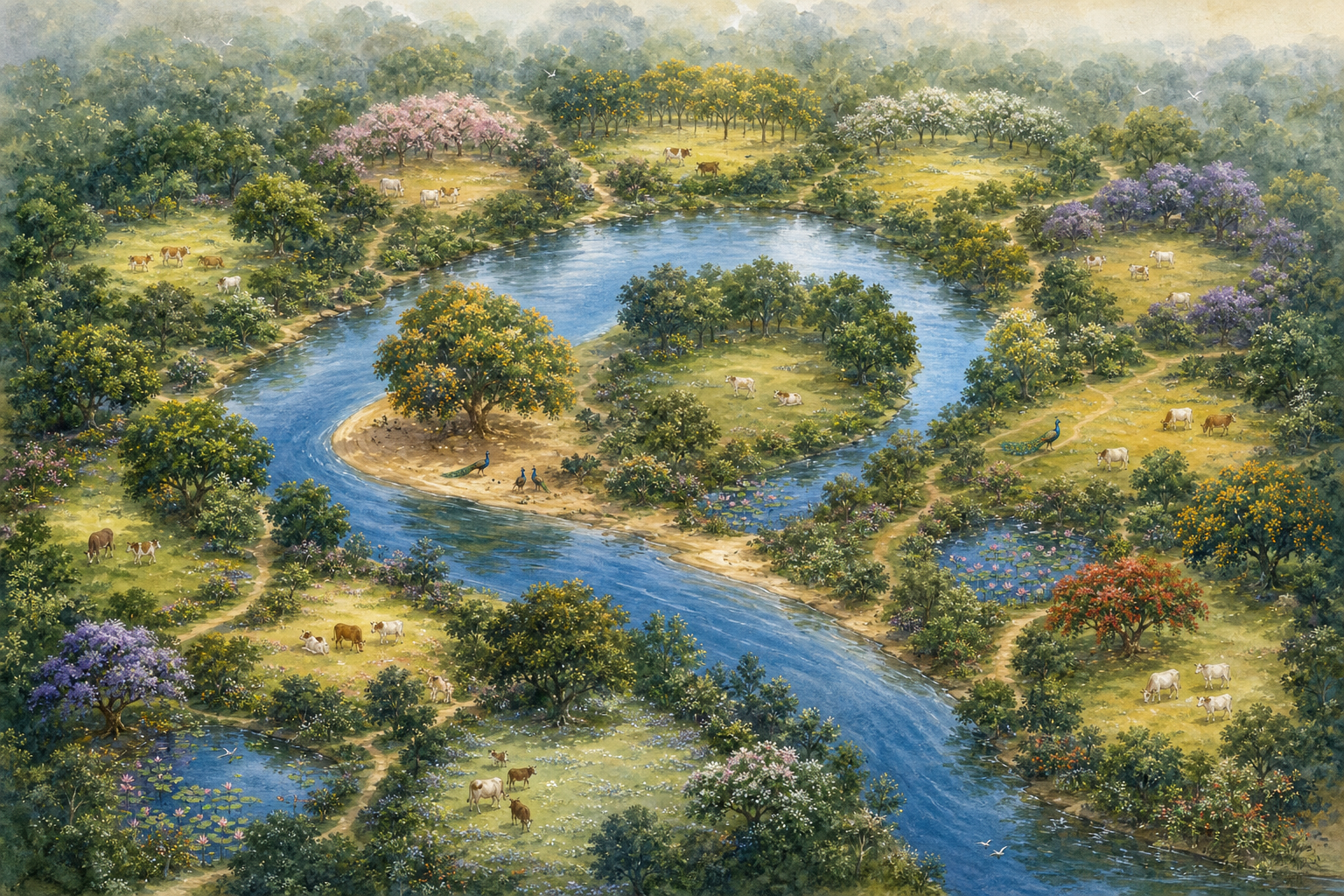
The traditional account of twelve forests associated with Vrindavana and the sacred landscape of Vraja gives the pilgrim a pattern. The number is not merely a target for an itinerary. It directs attention toward an interconnected devotional geography in which place, remembrance and practice belong together.
The Sanskrit word vana means a forest or wooded place, but a sacred vana cannot be understood through vegetation alone. A modern reader may hear “forest” and imagine uninterrupted wilderness. That expectation is too narrow. A sacred forest is also known through the lila remembered there, the worship connected with it and the generations of devotees who have approached it as a place of encounter.
- The physical place matters. Trees, paths, soil, water and animal life are not disposable scenery. They are the material setting in which pilgrimage occurs.
- Sacred memory matters. A location becomes intelligible when you know what the tradition remembers there. Without that memory, one grove can look much like another.
- Your manner of attention matters. Hearing, recitation, japa, silence and seva can turn a visit into practice rather than consumption.
- The living community matters. Residents, worshippers and caretakers are participants in the sacred landscape, not background figures in a visitor’s photograph.
Keep these layers together. If the physical setting differs from the wilderness you imagined, don’t use that difference to dismiss its sacred identity. If a place is revered, don’t use its holiness as an excuse to neglect its physical condition. And if you don’t immediately feel an intense devotional emotion, don’t manufacture one. Reverent attention is a practice before it becomes a feeling.
Prepare a route, a remembrance and a discipline

Good preparation need not become an academic project. For every forest or grove you intend to visit, make a short entry with four parts. This small discipline prevents names, stories and photographs from collapsing into one indistinct memory after the journey.
- Place: Record the local name and the spelling used by the people guiding you. Similar-sounding names are easy to confuse when you are moving quickly.
- Remembrance: Learn the lila, teaching or devotional association connected with that place. Confirm it through a teacher, an established pilgrimage text or a guide grounded in the tradition you follow.
- Practice: Decide how you will attend to the place. You might hear a short narration, recite a prayer, perform japa, sit quietly or offer an appropriate form of seva.
- Conduct: Check current access, footwear expectations, photography rules and the accepted form of any offering. Local instructions should govern your behavior at the site.
Add transport, weather protection, drinking water and other logistics after you have established this devotional frame. Practical preparation supports attention; it shouldn’t become the entire purpose of the day. Confirm current conditions close to your visit, because a remembered route is not a guarantee that access remains unchanged.
Don’t assume that mentioning twelve forests obliges you to rush through all twelve. A hurried circuit can produce a collection of names without understanding. If your schedule forces a choice, visit fewer places and give each one enough attention to become distinct in memory. Depth is not a failed version of completeness.
Let your conduct interpret the sacred place
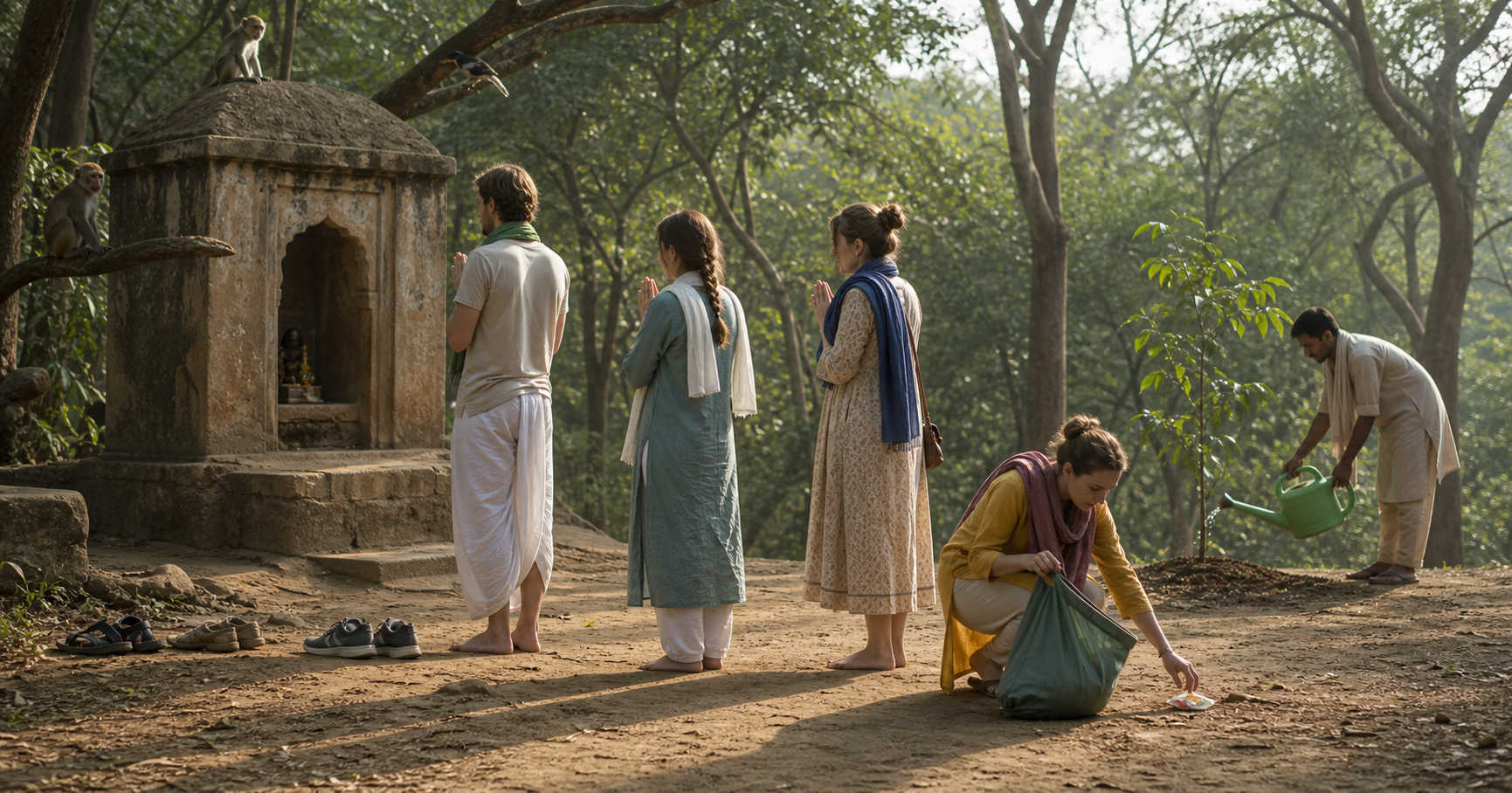
Pilgrimage etiquette is not a decorative layer placed on top of devotion. It reveals what you believe the place to be. If you call a forest sacred but treat its trees, worshippers or caretakers as obstacles to your itinerary, your conduct contradicts your words.
- Pause at the threshold. Read any signs, notice whether worship is underway and ask what visitors are expected to do before moving forward.
- Keep your voice and devices unobtrusive. A pilgrimage group should not make prayer difficult for everyone else. Silence your phone and don’t play amplified audio unless the place expressly permits it.
- Ask before photographing people or worship. A visible shrine is not blanket permission to record a private act of devotion. Accept a refusal without argument.
- Leave vegetation where it is. Don’t pluck leaves, break branches, carve bark, collect soil or tie objects to trees unless an established local practice specifically permits the act.
- Don’t improvise offerings. Food, lamps, cloth, flowers and other materials can create waste or interfere with worship when offered in the wrong place. Ask a caretaker what is appropriate.
- Follow local safety instructions. Don’t approach or feed animals, enter restricted areas or leave marked paths merely to secure a better photograph.
- Make room for ongoing worship. If a ritual or darshan is crowded, remain patient and avoid pushing past residents and other pilgrims. Sacred access is not private ownership.
A useful test is simple: will your action burden the place, the people caring for it or the pilgrims who arrive after you? If the answer may be yes, stop and ask. That brief pause is itself a form of restraint, and restraint is part of reverence.
Turn reverence into protection
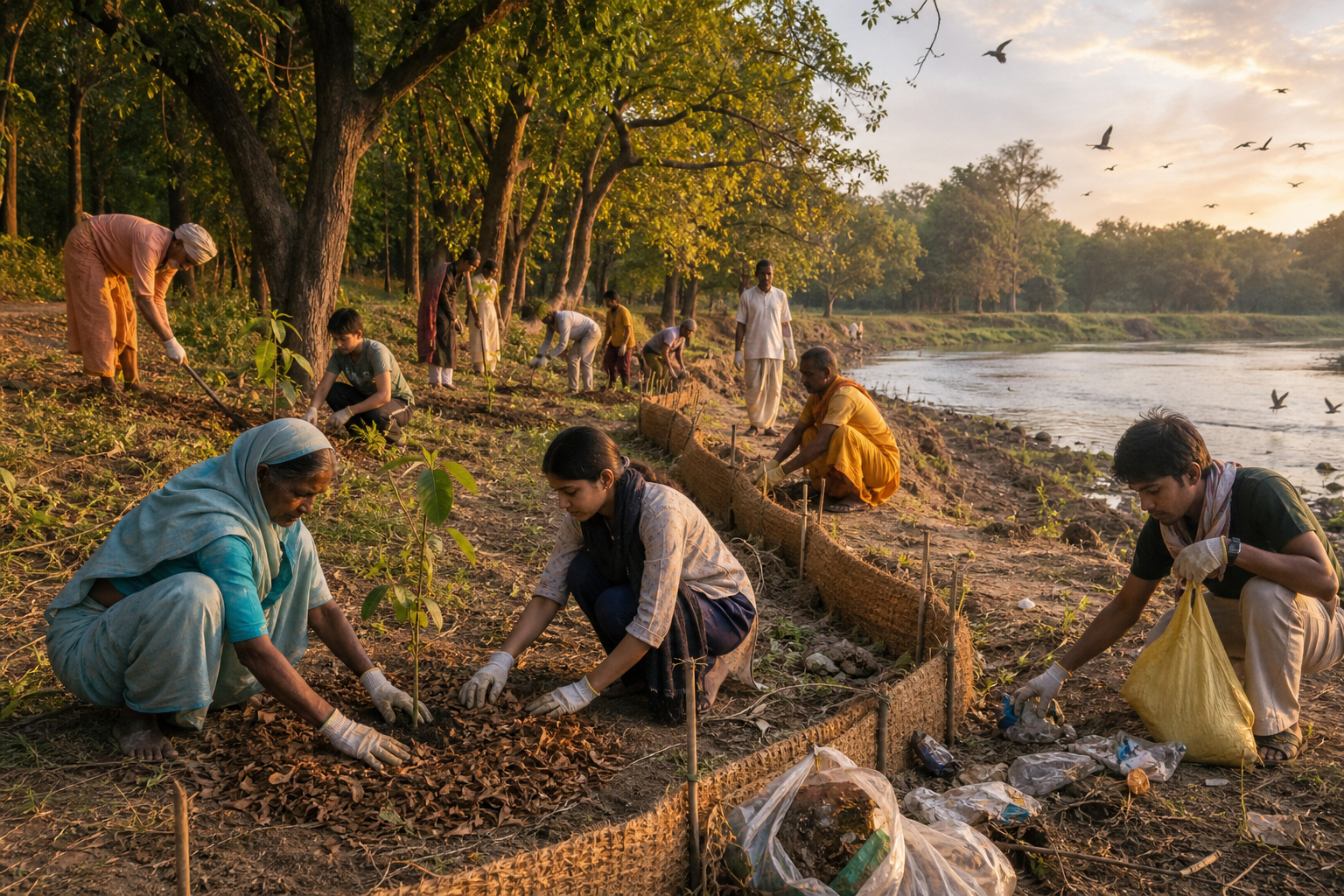
Sacredness is not measured only by how pristine a landscape appears. Yet reverence for a sacred forest should produce care for its actual trees, soil, water, wildlife and public spaces. Devotion that leaves plastic, noise or damaged vegetation behind has separated spiritual language from material responsibility.
- Before the visit: Reduce unnecessary packaging, carry a bag for your own waste and choose guides or pilgrimage organizers who explain local conduct instead of treating every stop as a photo opportunity.
- During the visit: Stay within permitted areas, keep every wrapper with you until you find proper disposal and avoid leaving even biodegradable offerings where they have not been invited.
- After the visit: If you want to support maintenance, restoration or cleanup, first verify who manages the work, what the place presently needs and how the contribution will be used.
- When sharing the visit: Explain the devotional meaning alongside the image. Don’t publicize entry into restricted or sensitive areas, and don’t encourage others to imitate conduct that local caretakers discourage.
Protection and devotion strengthen each other without becoming identical. Ecological care preserves the material conditions of pilgrimage. Sacred memory gives that care a motive deeper than appearance alone. The pilgrim’s responsibility is to refuse the false choice between them.
Key takeaways
- Approach Vraja’s twelve forests as an interconnected sacred geography, not a sightseeing inventory.
- Carry both a practical route and a trustworthy account of the remembrance associated with each place.
- Choose fewer, more attentive visits when the alternative is rushing through names for the sake of completion.
- Let photography, offerings, noise and interaction with residents be governed by consent and local instruction.
- Make reverence visible by protecting vegetation, carrying away waste and supporting credible local stewardship.
For your next encounter with Vraja, begin with one place. Learn its remembered significance, choose one devotional practice, confirm the local expectations and visit without haste. Leave the place materially no worse than you found it, and carry one discipline of attention home with you. That is a sound beginning to understanding a sacred forest from within the life of pilgrimage.
References
