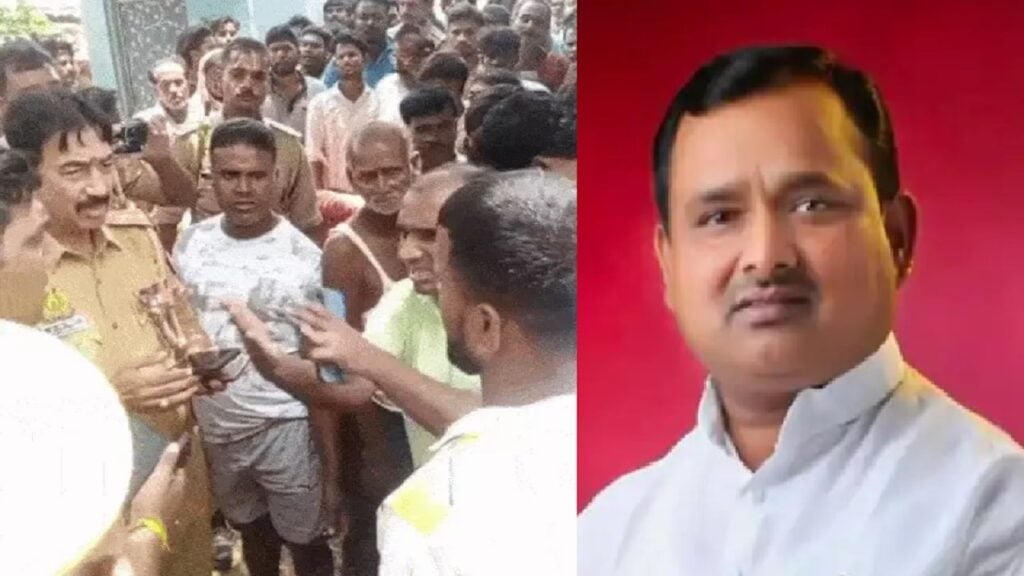
In connection with the alleged stabbing attack on ex-Muslim YouTuber Saleem Wastik, Uttar Pradesh Police reported two linked encounters involving principal suspects. According to official statements, Zeeshan was killed during one encounter, while Gulfam sustained critical injuries in another. The incidents have intensified a national conversation about free speech, public safety, and due process within India’s policing and justice systems.
At this stage, all facts remain subject to judicial scrutiny. Information in the public domain primarily reflects preliminary police briefings and media reportage; accusations are allegations until proven in court. A measured, law-first approach is therefore essential, both to safeguard the integrity of the investigation and to preserve public trust.
The gravity of the case is evident. Viewers who follow public commentary on belief, apostasy, and reform often describe a mix of anxiety and resolve when online disagreements spill into real-world violence. Across neighborhoods and campuses, many families report candid discussions about digital safety, the boundaries of dissent, and how communities can respond with compassion and restraint. The instinct to protect life and liberty is widely shared, and it finds strength when Dharmic traditions of Hinduism, Buddhism, Jainism, and Sikhism affirm a common ethical core: nonviolence, dignity, and pluralism.
Police encounters occupy a fraught space in Indian public life. In this matter, authorities claim the confrontations arose while attempting to apprehend suspects in the Saleem Wastik stabbing case. Precisely how, when, and why force was used will be determined by mandated inquiries. What is most consequential now is adherence to procedure, transparency, and the timely disclosure of verifiable findings.
Indian jurisprudence on encounter deaths has crystallized through Supreme Court and National Human Rights Commission guidance. The landmark decision in PUCL v State of Maharashtra (2014) set out a framework to ensure legality and accountability: prompt registration of an FIR, an independent investigation by a unit not involved in the operation, a magisterial inquiry, forensic rigor, and periodic disclosure to oversight bodies. The judgment reinforced a baseline principle: any use of lethal force by the state must be necessary, proportionate, and open to independent review.
Statutorily, CrPC 176(1A) mandates a magisterial inquiry into every death occurring in police action. CrPC provisions on arrest and use of force (including section 46) are read with constitutional due process under Articles 14 and 21. IPC sections 96–106 on the right of private defence may be examined when officers assert imminent threat. Critically, the Supreme Court in Om Prakash v State of Jharkhand (2012) clarified that extrajudicial killings, if found to be staged or unlawful, attract penal liability; only a fair investigation can determine the facts.
In parallel, the alleged stabbing of Saleem Wastik would typically implicate offences such as attempt to murder (IPC 307), criminal conspiracy (IPC 120B), and common intention (IPC 34), with additional counts if communal incitement or hate-motivated elements are evidenced (for example, IPC 153A or 295A, subject to strict proof). Use of a deadly weapon invites scrutiny under grievous hurt provisions (IPC 326) and, where applicable, the Arms Act, 1959. Each charge must be anchored in material evidence and expert corroboration.
Forensic integrity is pivotal. Standard protocols include scene-of-crime preservation, photographic and videographic documentation, chain-of-custody logs, and timely dispatch of exhibits to an accredited Forensic Science Laboratory. In encounter contexts, firearm and ballistic examinations, gunshot residue tests, trajectory mapping, and distance-of-fire assessments help reconstruct sequences. Autopsies with videography, injury-pattern analysis, and toxicology broaden the evidentiary base.
Contemporary investigations also rely on digital forensics: call detail records, tower dumps, device extractions under lawful orders, and secure imaging of phones and computers for location data, chats, and social media activity. CCTV retrieval along likely ingress–egress routes, body-worn camera footage where deployed, and prompt capture of emergency communications round out the evidentiary record. Under CrPC 161 and 164, witness and victim statements must be recorded promptly, with special care for voluntariness and protection.
The legal standard against which the encounters will be assessed remains necessity and proportionality, consistent with the Supreme Court’s framework and the UN Basic Principles on the Use of Force and Firearms by Law Enforcement Officials. Public confidence grows when these principles are not simply cited but visibly implemented, documented, and communicated with precision.
Beyond the courtroom, the case underscores the pressures faced by digital creators who engage with sensitive questions of belief, reform, and identity. Article 19(1)(a) protects speech, while Article 19(2) permits narrowly tailored restrictions against incitement, defamation, and public order threats. Calibrating these principles in the algorithmic age requires careful policing of genuine threats, strong institutional support for at-risk individuals, and community-led norms that reject intimidation.
Preventing violent extremism calls for layered strategies. Families, schools, clerics, and civil society groups can partner on early-warning and mentorship programs that address grievance, isolation, and online echo chambers. The violent chant Sar Tan Se Juda (STSJ), when invoked anywhere, is unequivocally condemned by people of conscience across all faiths; it must be countered with firm law enforcement and equally robust community disavowal.
In moments like these, India’s Dharmic traditions offer common ground: ahimsa as a virtue, samvad as a method, and karuna as an ethic. Hindu, Buddhist, Jain, and Sikh communities have repeatedly demonstrated that principled dialogue, neighborly care, and service at times of tension are the fastest routes to de-escalation. These shared values do not soften the pursuit of justice; they strengthen it by ensuring that accountability is not weaponized into collective blame.
Responsible media and social platforms can help by privileging verified updates, avoiding communal frames, and declining to circulate graphic material. Editors and creators increasingly adopt harm-minimization practices: delay publication until corroboration is complete, add legal-context explainers, and elevate voices that call for calm and due process. Audiences, too, play a role by withholding amplification from rumor and uncorroborated claims.
Risk management for public figures benefits from practical steps: varied routines and travel routes, discreet venue coordination, rapid reporting of threats to local police and to 112, and proactive engagement with station-house officers for preventive action under CrPC 149–151. Digital hygiene measures such as limiting geotagging, monitoring doxxing attempts, and using two-factor authentication reduce exposure to opportunistic targeting.
In the weeks ahead, the most important milestones will be procedural: the magisterial inquiry findings under CrPC 176(1A), any independent investigation’s forensic results, and the contents of the final report under CrPC 173. Victim and witness protection measures, including safe-house options and anonymity protocols where warranted, should be activated without delay. If charges are framed, courts will test motive, means, and opportunity against the full evidentiary record.
The path to justice is clearest when institutions move swiftly and transparently, citizens respond with restraint and solidarity, and public discourse resists polarization. The alleged attack on Saleem Wastik and the subsequent encounters involving Zeeshan and Gulfam must be resolved by evidence and law. India’s long civilizational commitment to pluralism and nonviolence demands nothing less than accountability with compassion, security with rights, and unity across all Dharmic traditions.
Inspired by this post on Struggle for Hindu Existence.