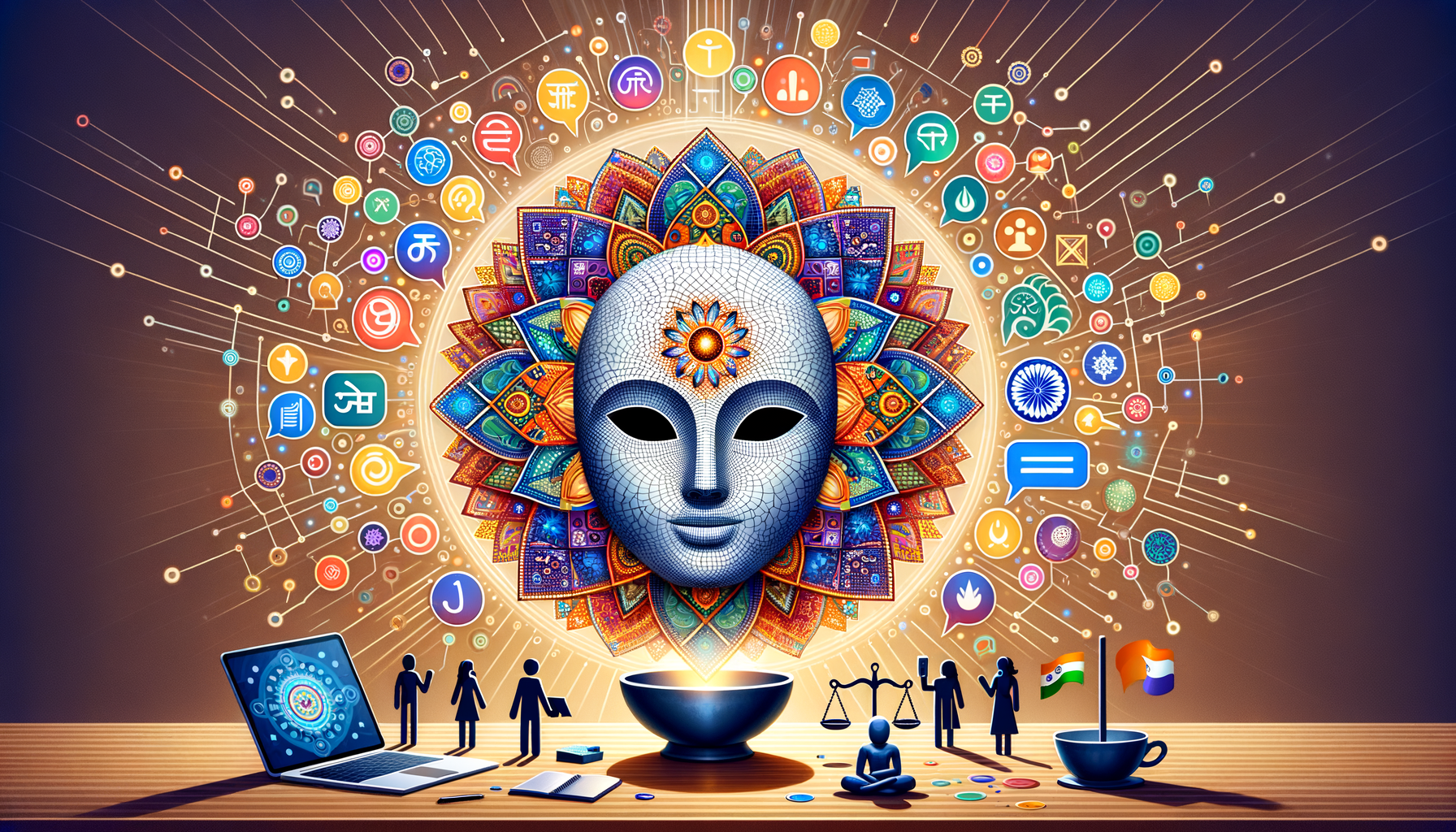
A recent public debate led by Dr. Vijender Chauhan raises a vital question for India’s digital future: do large AI systems such as ChatGPT inadvertently reproduce caste-linked biases embedded in historical archives, media, and knowledge production? The discussion is timely and necessary, especially for those committed to social justice and unity across dharmic traditionsHinduism, Buddhism, Jainism, and Sikhismwhere inclusion, compassion, and dignity for all are foundational values.
The core concern is straightforward yet profound: whose voices do AI systems amplify, and whose perspectives remain muted? In contexts where histories and mainstream narratives have often underrepresented the experiences of marginalized communitiessuch as a chaat walla or a first-generation learneralgorithms trained on those sources may disproportionately reflect the viewpoints of already-privileged groups. This is not about blaming any one community; it is about recognizing structural imbalances in data and addressing them with care and rigor.
Technically, the pathway for such bias is well documented. Models learn patterns from digitized archives, academic literature, and media reporting. When these inputs are shaped by historic power asymmetries, the resulting outputs can exhibit representational bias (how communities are portrayed) and allocative bias (who receives opportunities or resources). This phenomenon aligns with global concerns about “data colonialism,” where dominant knowledge systems overshadow diverse local realities.
The implications are practical and personal. Consider a student from a rural, caste-marginalized background seeking scholarships: if model outputs draw primarily on sources that overlook such pathways, the recommendations may skew toward already-networked groups. Or think of a small street entrepreneur searching for credit options: if the system reflects gaps in coverage about microfinance for informal workers, guidance may be incomplete. These everyday encounters reveal how algorithmic bias can quietly narrow horizons.
A dharmic framing offers an ethical compass. Principles such as ahimsa (non-harm), karuṇa (compassion), daya (empathy), and seva (service) call for technologies that uplift all communities without stigmatizing any group. Upholding sarva dharma sambhavarespect for all pathsmeans resisting divisive language and focusing on structural fairness. The goal is not to indict individuals or traditions but to ensure that digital systems reflect the plural, living realities of India.
Critiques of “hierarchy-coded” technology should therefore be read as a call for robust governance, transparency, and accountability rather than as accusations against any community. Without careful oversight, inequality can be “coded” into interfaces that shape decisions about education, employment, and everyday life. Evidence-based remediesauditable pipelines, dataset documentation, rigorous bias testing, and transparent model cardshelp build trust while improving system performance for everyone.
Proposals like creating a “DalitGPT” can be understood constructively as advocating inclusive, community-governed datasets and models that center historically marginalized voices. In practice, this means curating high-quality, multilingual corporaincluding oral histories, regional archives, and community mediasubjected to stringent quality checks and balanced by plural perspectives. Such an approach keeps the ethos non-sectarian and firmly aligned with the shared values of dharmic traditions.
A practical roadmap includes: building representative datasets in Indian languages; establishing community review councils with participation from Dalit, Bahujan, Adivasi, women, and religious minorities; publishing model documentation and data statements; creating caste-sensitive evaluation benchmarks; investing in AI literacy so users can question outputs; and aligning with Indian policy frameworks on responsible AI. Partnerships among academia, civil society, industry, and public institutions can sustain this effort at scale.
Ultimately, the debate Dr. Chauhan has sparked is an opportunity, not a division. By approaching AI bias with humility, evidence, and a dharmic commitment to the welfare of all, India can pioneer caste-aware, inclusive AI that benefits everyonestudents, workers, entrepreneurs, and communities across traditions. The path forward is not to polarize but to collaborate, ensuring that powerful tools like ChatGPT reflect the full, diverse chorus of Indian life.
Inspired by this post on Hindu Human Rights Blog.