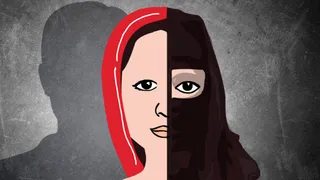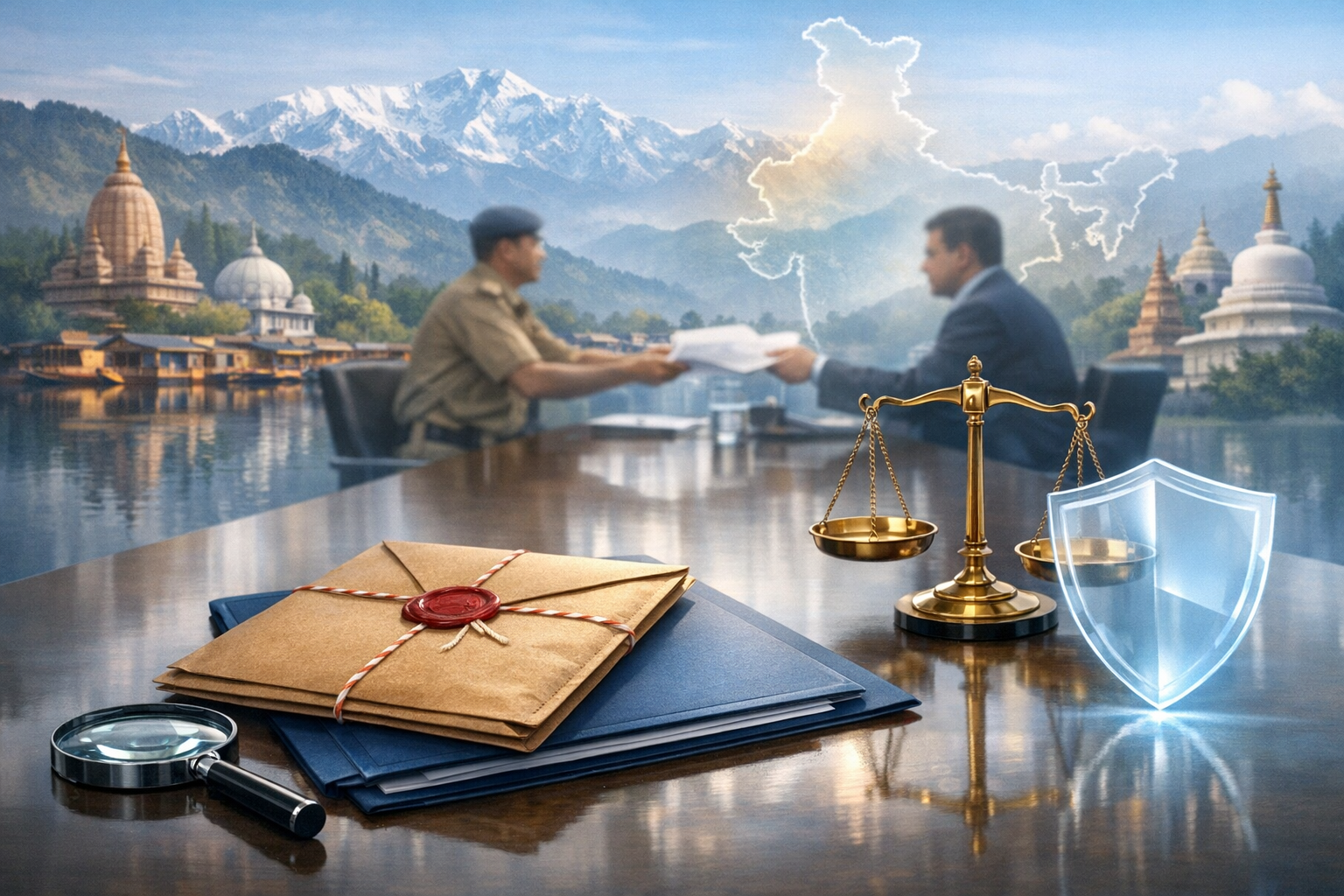
The National Human Rights Commission (NHRC) has sought an urgent factual report from the Jammu & Kashmir Police on allegations of “targeted” killings of Hindu civilians in the Union Territory. This step, while procedural, carries significant weight: it signals heightened human rights scrutiny, demands time-bound accountability from law enforcement, and underscores the State’s positive obligation to protect life and preserve communal harmony. In an environment where violent incidents can rapidly fray social trust, the NHRC’s move places institutional guardrails around a sensitive investigation, prioritizing due process, the rights of victims, and the safety of vulnerable communities.
The NHRC’s authority stems from the Protection of Human Rights Act, 1993 (PHRA). Under Section 12, the Commission may inquire, either suo motu or on petitions, into violations of human rights or negligence by public servants; call for reports from governments and authorities; recommend remedial measures; and monitor compliance. Although NHRC recommendations are not decrees, they carry persuasive force, are routinely acted upon by the executive, and are often accompanied by timelines, follow-up directions, and publication to ensure transparency. In cases alleging communal or identity-based violence, the Commission’s interventions typically emphasize swift fact-finding, survivor support, and systemic reforms to deter recurrence.
Clarifying the term “targeted killings” is essential to both investigation and public understanding. In criminological and human rights usage, the phrase denotes intentional violence directed at identifiable individuals or groups on the basis of protected characteristics or perceived affiliations, rather than random victimization. The alleged targeting of Hindus in J&K, if established by evidence, would amount to bias-motivated crimes that strike at the constitutional guarantees of equality and the right to life. Such incidents are not only penal offences; they are also corrosive to social cohesion, civic confidence, and the rule of law.
Context matters. Jammu & Kashmir has experienced periodic militant violence against civilians alongside sustained counterterrorism operations. The post-2019 administrative reorganization, enhanced security grid, and intensified intelligence-sharing have aimed to reduce such attacks. Even so, isolated but impactful incidents can trigger fear, prompting temporary school closures, altered commuting patterns, and changed marketplace rhythms. These human consequencesparents escorting children along unfamiliar routes, shopkeepers shuttering early on rumor-heavy days, neighbors maintaining phone trees at nightare the lived textures that underscore why human rights oversight and timely state action are so vital.
The applicable legal architecture in alleged targeted attacks is multi-layered. Core penal provisions include offences under the Indian Penal Code (e.g., Sections 302, 307, 120B) coupled, where appropriate, with the Unlawful Activities (Prevention) Act, 1967. Depending on the factual matrix, provisions addressing communal disharmony (e.g., Section 153A IPC) or destruction of religious property may be invoked. Procedurally, the Code of Criminal Procedure governs registration of First Information Reports (FIRs), investigation, arrests, and filing of charge sheets, while the Indian Evidence Act frames evidentiary standards. Parallelly, victims’ rights and state obligations are informed by constitutional jurisprudence and by India’s treaty commitments under the International Covenant on Civil and Political Rights (ICCPR), particularly Articles 6 (right to life) and 26 (non-discrimination).
An “urgent report” to the NHRC typically consolidates: a verified incident chronology; FIR numbers and invoked statutes; composition and mandate of any Special Investigation Team; steps taken within specified time windows (e.g., 24–72 hours); initial witness statements; scene-of-crime documentation; medi-legal and post-mortem findings; forensic submissions (for example, ballistics and residue); preservation of digital evidence; and immediate protective measures deployed in affected localities. The report also indicates whether state compensation and relief protocols have been activated and whether institutional safeguards (such as witness protection) are in force.
Forensic rigor is central to accountability. Standard operating procedures demand strict chain-of-custody for exhibits; geo-tagged scene photography; ballistic matching and weapon trajectory analysis; call detail record (CDR) mapping and geofencing; retrieval and authenticated hashing of CCTV and mobile video; and cyber-forensics of online communications where relevant. Where the pattern suggests organized violent activity, link analysis software and intelligence fusion (for example, Multi-Agency Centre inputs) help reconstruct networks, identify facilitators, and anticipate further risk. Such technical depth does not merely support convictions; it deters impunity by raising the predictable costs of violent crime.
Immediate protection and prevention measures are equally consequential. Police and paramilitary deployments can include quick reaction teams, area domination patrols, and static guards at identified vulnerable sites (schools, places of worship, commuter nodes). Strengthened route security, surprise checks, and night-time visibility patrols reduce ambient risk. Community-facing measures24×7 helplines, fast-track verification of distress calls, and local coordination cellsrebuild confidence. In rural belts, calibrated use of Village Defence Guard frameworks, clear command-and-control, and robust oversight mechanisms are indispensable to ensuring protection without overreach. All such steps should be communicated clearly to affected residents to minimize rumor cascades and restore routine life.
Witness protection is a legal imperative and a moral one. The Witness Protection Scheme, 2018, as recognized by the Supreme Court as the law of the land, provides a graded toolkitidentity shielding, relocation, and security covertailored to threat perception. Systematic application of this scheme, alongside fair but firm prosecution, materially improves case survivability through trial. Complementarily, relief and rehabilitation should be disbursed promptly under extant state and central policies for victims of terrorism and communal violence, including ex gratia support, medical care, trauma counseling, and educational continuity for dependents.
Data-driven risk mapping elevates prevention from reactive to anticipatory. District-wise vulnerability assessments, temporal heatmaps of incidents, and identification of symbolic dates or venues at risk allow smarter deployments. Early warning protocolscommunity watch networks, school safety liaisons, and real-time rumor controlreduce the probability of copycat or opportunistic crimes. Equally, calibrated public communication by authorities counters disinformation without disclosing operational details, balancing the public’s right to know with the integrity of ongoing investigations.
Institutional coordination remains the backbone of effective response. In serious or trans-state cases, coordination with specialized central agencies may be warranted under statutory triggers, while routine synergy among J&K Police, Central Armed Police Forces, intelligence units, and the prosecutorial apparatus is essential. Integration across digital systemsthe Crime and Criminal Tracking Network and Systems (CCTNS), Integrated Criminal Justice System (ICJS), and court e-filingshortens investigative latency and enhances evidentiary reliability.
The NHRC’s oversight also benchmarks the state’s compliance with human rights standards, including the use-of-force thresholds and non-discrimination duties. Its recommendations often couple case-specific directions with structural advice: refresher training on human rights for field officers, improvements to victim liaison protocols, and independent audits of response times. Transparent publication of compliance reports helps citizens, civil society, and the media assess whether promised reforms translate into practice.
Behind legal clauses and operational plans are lives and communities negotiating daily uncertainty. Residents describe the ambient anxiety that follows a high-profile attackthe hurried calls to check on loved ones, the instinct to avoid evening errands, the way silence settles over neighborhoods earlier than usual. Such experiences are not limited to one tradition; they are shared by Hindus, Buddhists, Jains, Sikhs, and others whose rhythms of prayer, study, livelihood, and care are intertwined. Upholding the dignity and safety of one is inseparable from safeguarding the dignity and safety of all.
In the coming weeks, the NHRC’s urgent-report route can lead to a set of time-bound recommendations: expediting forensic turnarounds, enhancing witness protection, formalizing community liaison protocols, and conducting vulnerability audits of transit corridors and places of worship. The Commission may also call for measurable targetssuch as defined timelines for charge sheets and periodic public briefings without prejudicing trialto ensure results are visible and verifiable. Each of these actions serves a single end: preventing further harm while securing justice for those already affected.
Ultimately, the measure of success lies in a reduction in incidents, credible arrests and prosecutions grounded in robust evidence, timely victim support, and restored public confidence across communities. It is critical that discourse avoids demonization and instead centers on the constitutional promise of equal citizenship and the shared civic project of peace. Unity among dharmic traditionsHinduism, Buddhism, Jainism, and Sikhismoffers a reservoir of social solidarity that can resist polarization, reject vigilantism, and support lawful, rights-respecting protection for all.
An urgent NHRC inquiry does not prejudge facts; it insists that facts be established with speed, professionalism, and fairness. By demanding a rigorous report from J&K Police and by reinforcing human rights norms, the Commission helps align counterterrorism with constitutionalism. That alignmentsafety with liberty, security with dignityis the surest path to justice that heals rather than divides, and to a social peace that belongs to every citizen, equally and without fear.
Inspired by this post on Struggle for Hindu Existence.