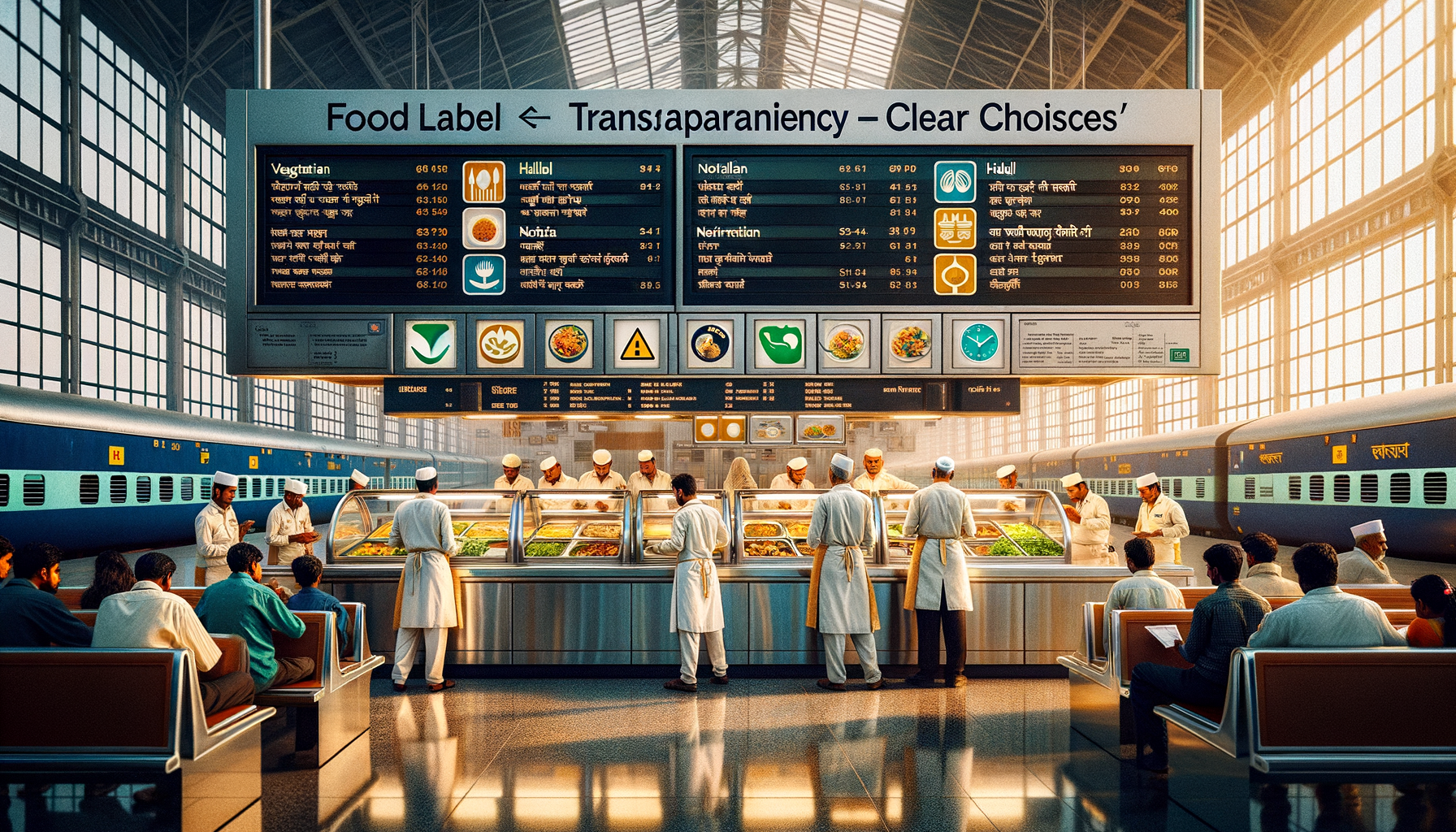
The National Human Rights Commission (NHRC) has issued a notice to Indian Railways concerning transparency in food labeling, with a specific focus on meat served in railway meals. The Commission has directed the Ministry of Culture to issue clear instructions to all food outlets and agencies to prominently display whether the meat being served is halal or jhatka. This step places consumer rights, informed consent, and public trust at the center of service delivery across railway catering and related public eateries.
In a society that thrives on pluralism, clarity about food preparation methods is more than an operational detail; it is a matter of dignity and choice. India’s diverse communitiesincluding those following Hindu, Buddhist, Jain, Sikh, and Muslim traditionsoften observe dietary preferences informed by faith, ethics, or personal values. By ensuring that halal and jhatka labels are clearly visible, Indian Railways and associated vendors can support religious sensitivity, protect consumer autonomy, and reduce avoidable misunderstandings during travel.
From an administrative perspective, transparent labeling aligns with principles of non-discrimination and equal access to information. Prominent signage at point of saleon menus, counters, and packagingwould enable passengers to make decisions confidently and quickly. In railway contexts where time is limited and purchases are often made in motion, visible, standardized labels enhance service quality and uphold accountability across Indian Railways’ catering ecosystem.
The directive also reflects a broader human-rights approach to public services: neutral, factual labeling that informs without privileging or stigmatizing any practice. Clear halal/jhatka indicators can help foster mutual respect and social harmony, particularly in shared spaces such as trains and platforms. Such transparency supports India’s constitutional ethos while nurturing unity among dharmic traditions and the wider national community.
For many passengers, including families traveling with elders or individuals observing specific vows or vratas, food choices are a meaningful part of daily practice. Consistent halal/jhatka labels help travelers plan meals without anxiety, avoid last-minute confusion, and feel reassured about what they consume. This simple clarity often translates into better travel experiences, greater trust in services, and respectful coexistence among fellow passengers.
Implementation can be strengthened through practical measures: standardized label templates in multiple Indian languages, vendor orientation on signage placement, and periodic compliance checks. Clear grievance channels would empower consumers to report lapses, enabling continuous improvement. While the operational details remain with the concerned ministries and agencies, these practices would complement the NHRC’s emphasis on transparency and consumer protection.
Ultimately, visible halal/jhatka labeling across railway meals and public food outlets can serve as a model for other public institutions. It advances informed choice, sustains religious and cultural sensitivity, and contributes to communal harmony. In doing so, it reflects a shared commitment to unity in diversityhonoring the varied ethical and spiritual paths that define India’s civilizational strength.
Inspired by this post on Hindu Jagruti Samiti.