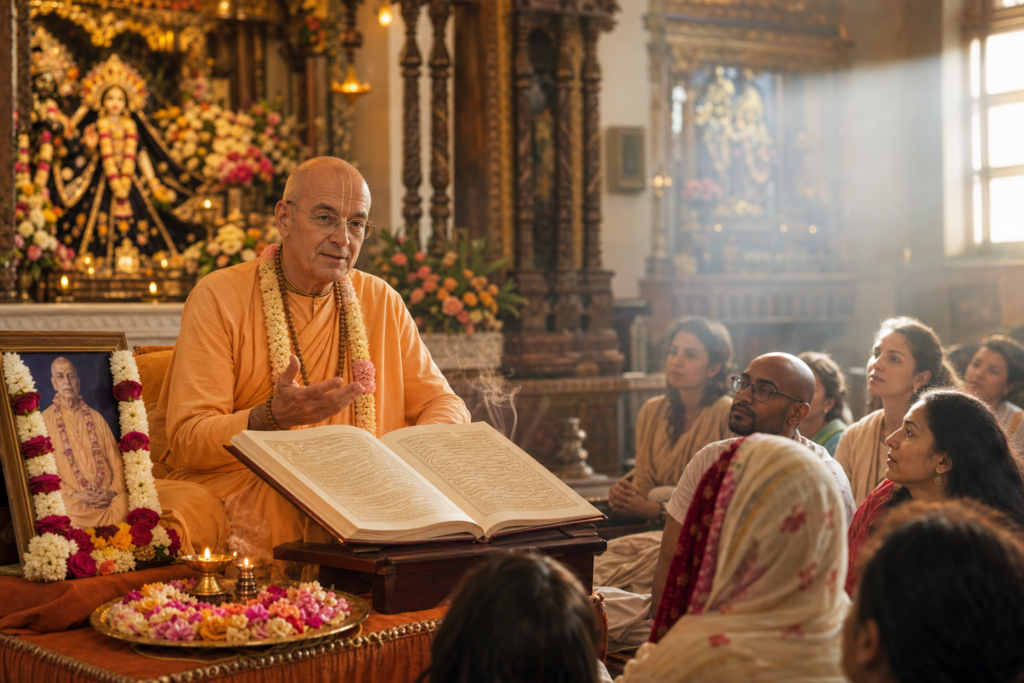
His Divine Grace A.C.B. Swami Prabhupada recounted a pivotal moment that reshaped his life and mission. He once explained: “In the beginning, when my Guru Maharaja ordered me, I thought it that ‘I shall first of all become very rich man; then I shall preach.’ (laughs)” Business prospered and associates were satisfied, yet “Krishna made so trick that He broke everything, and He obliged me to take sannyasa. So that is Hari.” This turning point, framed as divine intervention, redirected a thriving career toward complete renunciation and wholehearted service.
The account illuminates the discipline of sannyasa within the bhakti tradition of Gaudiya Vaishnavism and underscores the primacy of obedience to Guru Maharaja. It exemplifies a classic movement from worldly ambition to spiritual vocationan inner reorientation that is central to Hindu spirituality and the Guru–Shishya Tradition. The narrative’s candor, including the humorous self-awareness, reveals a deep humility: material success became a means for learning surrender rather than a destination.
Reflecting on the aftermath, he added, “So that I had to come to your country with only seven dollars.” This austere departure marked the beginning of a historic global mission associated with ISKCON (International Society For Krishna Consciousness). From constrained resources emerged expansive outreach, kirtana, and educationan enduring demonstration that renunciation, guided by Krishna’s will, can catalyze far-reaching service and compassionate leadership.
Across dharmic traditionsHinduism, Buddhism, Jainism, and Sikhismthis pattern resonates: relinquishing ego-driven plans in favor of higher duty is honored as a path to clarity, resilience, and universal compassion. The emphasis on disciplined renunciation, ethical living, and devotion aligns with shared values that promote unity, mutual respect, and spiritual growth within the broader dharmic family.
As a case study in spiritual leadership, the sannyasa initiation of Srila Prabhupada demonstrates how apparent loss can be transmuted into purposeful service through faith, surrender, and steadfast practice. It highlights the living force of the Guru–Shishya Tradition, the transformative potency of bhakti, and the capacity of a single decisive renunciation to nurture a global community rooted in devotion, wisdom, and unity.
Inspired by this post on Dandavats.