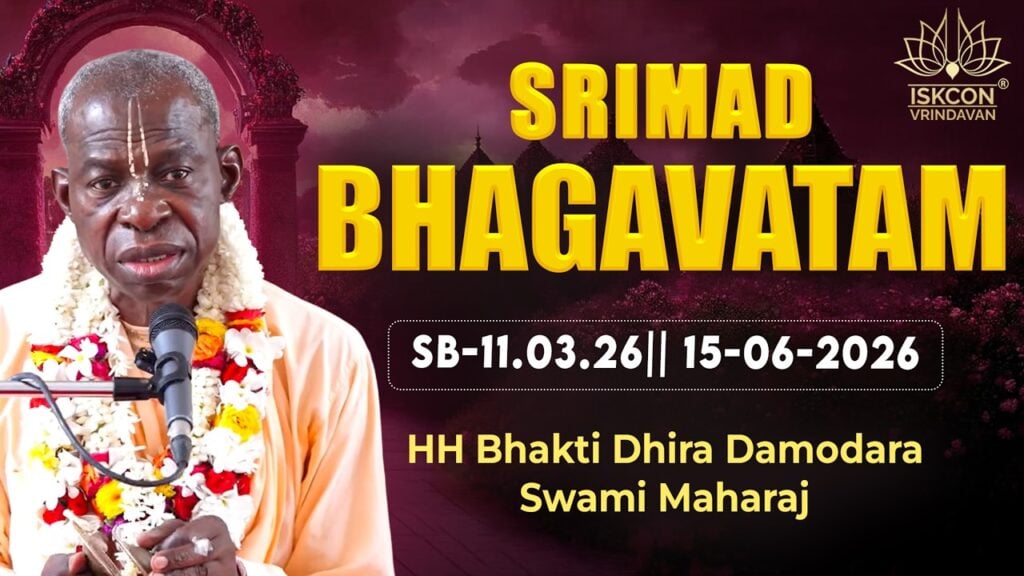
Reflecting the mood of Śrī Caitanya-caritāmṛta Ādi 4.170, a message shared at ISKCON Vrindavan (03.11.2025) highlights a core principle of bhakti: relinquishing sense gratification and harmonizing one’s life entirely with the will of the Supreme Lord, as exemplified by the gopīs. This aligns with the ultimate instruction of Kṛṣṇa in the Bhagavad-gītā, where wholehearted dedication to the Divine supersedes self-centered pursuits.
Viewed academically, this principle does not negate worldly responsibilities; it reframes them. Talents, relationships, and daily duties become fields for selfless service (seva) and conscious offering. Many practitioners observe that such intentional reorientationfrom consumption to contributioncultivates clarity, moral steadiness, and inward peace. In the devotional atmosphere of Vrindavan, the gopīs’ model of unwavering love becomes a living template for aligning action, speech, and thought with the sacred.
Ethically, this teaching calls for courage: choosing what benefits others over what merely pleases the senses, even when it entails personal sacrifice. Discipline in compassion, honesty, and restraint purifies the indriyas and orients the mind toward dharma. This maturation of intent is central to bhakti yet resonates across the dharmic family: Buddhism emphasizes non-attachment and karuṇā, Jainism upholds aparigraha and ahiṁsā, and Sikhism elevates seva and remembrance. The shared thread is clearselfless service as a pathway to spiritual depth and social harmony.
In this light, the gopīs’ devotion is not a historical curiosity but a universal paradigm for seekers today. Whether through japa, mindful work, or compassionate service, small daily choices become vehicles of transformation. By steadily placing Kṛṣṇa at the centeras the Bhagavad-gītā urgespractitioners report reduced anxiety, increased purpose, and a more inclusive regard for all beings.
Though rooted in the Gaudīya Vaiṣṇava understanding of Śrī Caitanya-caritāmṛta Ādi 4.170, the underlying principlewholehearted alignment with ultimate truthinvites unity among Hinduism, Buddhism, Jainism, and Sikhism. Each tradition offers complementary methods to cultivate humility, dedication, and love. Embracing this shared ethos strengthens communal bonds and honors the rich plurality of dharmic paths.
A practical takeaway emerges for contemporary life: identify one concrete action each day to dedicate to the Divine or the highest idealkind speech, attentive listening, service to family or community, or meditative remembrance. Such intentional steps refine character, deepen devotion, and gradually manifest the gopīs’ spirit of selfless love, fulfilling the Bhagavad-gītā’s call to live for the Supreme.
Inspired by this post on Dandavats.