
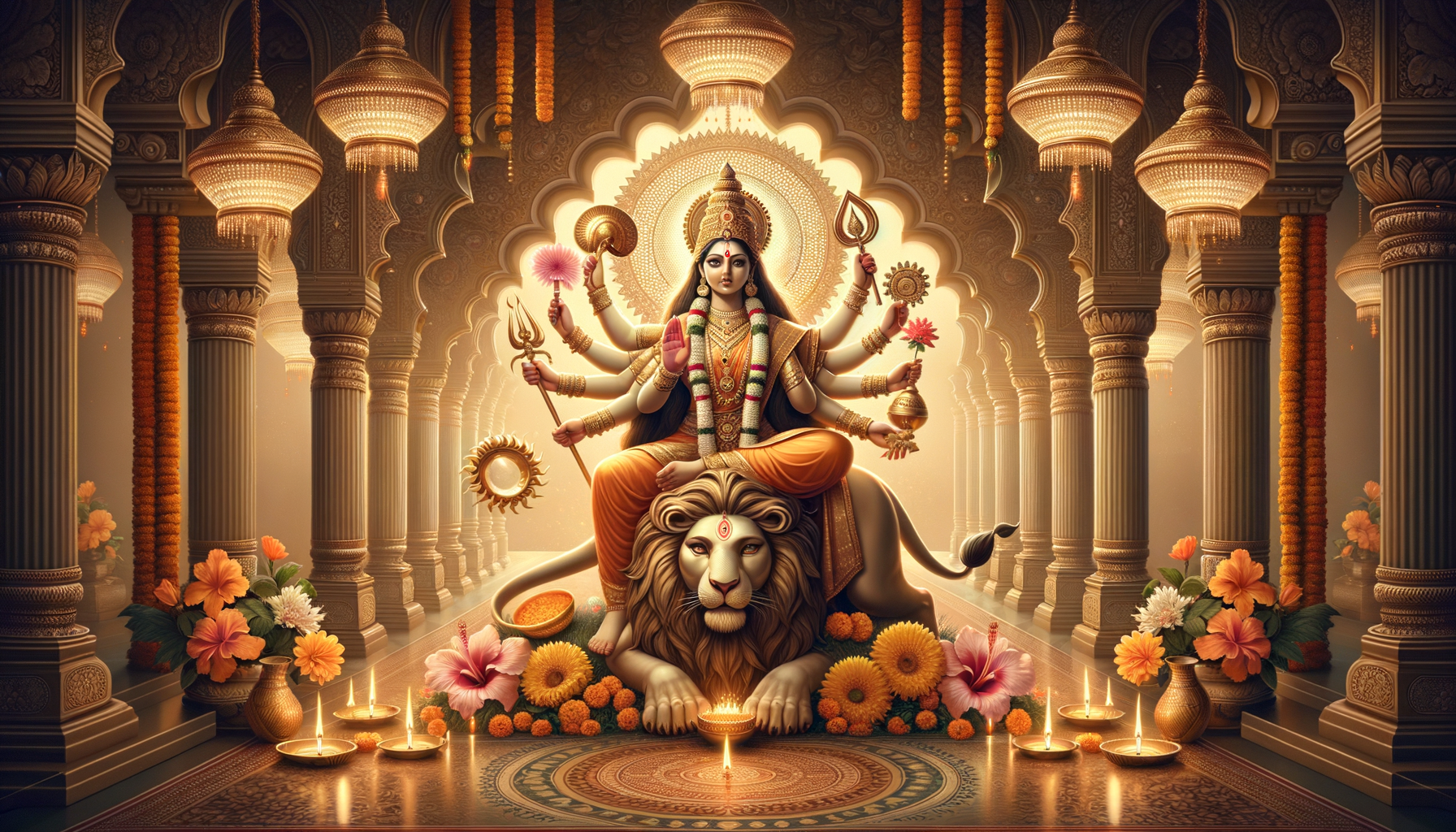
Jagadhatri Puja is observed on Karthik Shukla Navami, the ninth lunar day of Kartik month in Bengal. In 2025, Jagadhatri Puja falls on October 31. Dedicated to Goddess Jagaddhatri, this revered observance honors the protective aspect of Devi Shakti and celebrates the restoration of order after the defeat of demonic forces.
Goddess Jagaddhatri is venerated as a compassionate yet powerful manifestation of Goddess Durga. In the tradition, Maha Shakti is described as appearing in a ten-handed, fierce form (dashabhuji), symbolizing the capacity to uphold dharma and guard the cosmos. The festival affirms the enduring belief that divine strength safeguards the universe when confronted by adharma.
Across Bengal, Jagadhatri Puja carries deep cultural resonance. Communities gather around exquisitely crafted idols and local pandals, while families observe prayers and offer flowers, sweets, and heartfelt devotion. For many, the stillness of Kartik morning and the glow of lamps evoke a shared memory of protection, hope, and renewal that bridges generations.
Spiritually, Jagadhatri Puja highlights courage, inner resilience, and the nurturing grace of the Divine Mother. The Navami timing in Kartik emphasizes purification and clarity after the intense devotional cycle of the season, guiding devotees toward steadfastness in ethical living and service. The worship of Devi Shakti in this form invites reflection on both protection from external challenges and mastery over inner obstacles.
Observance practices vary by locality, yet they commonly include recitation of mantras, offerings during the puja, and collective worship that strengthens social bonds. As dates and local timings can differ by regional calendars and moon sightings, consulting a trusted panchang is recommended to align rituals precisely with Karthik Shukla Navami.
The inclusive spirit of Jagadhatri Puja resonates with the shared dharmic values of compassion, self-discipline, and community service cherished across Hinduism, Buddhism, Jainism, and Sikhism. This celebration in Bengal offers a moment to honor cultural heritage while affirming unity in diversity, encouraging mutual respect among dharmic traditions.
With October 31, 2025 marking Jagadhatri Puja in Bengal, devotees and cultural enthusiasts alike can engage with this Hindu festival as a living expression of Devi’s protective grace, ethical strength, and communal harmonyan annual reminder that the presence of the Divine uplifts society and inspires collective well-being.
Inspired by this post on Hindu Pad.










