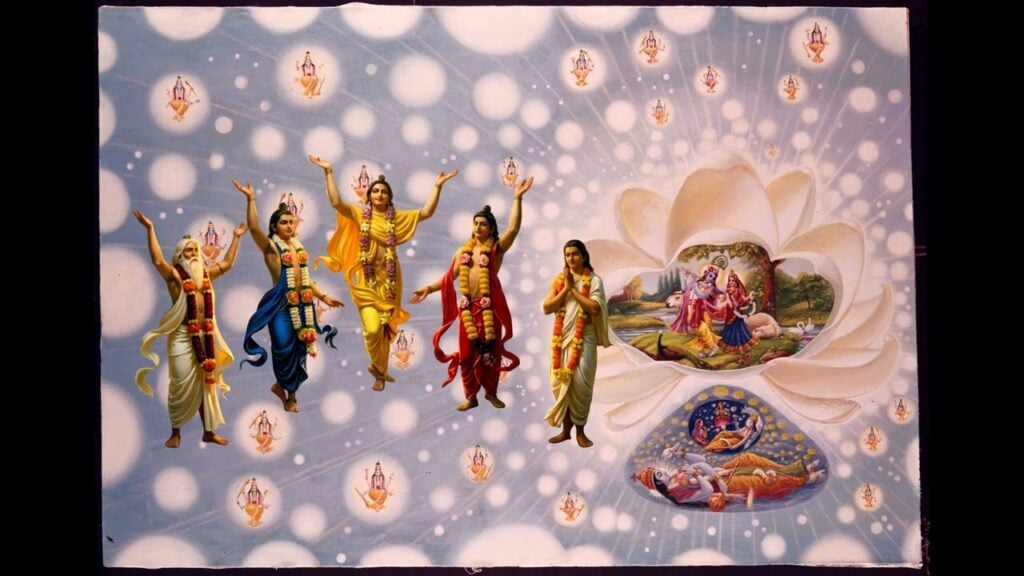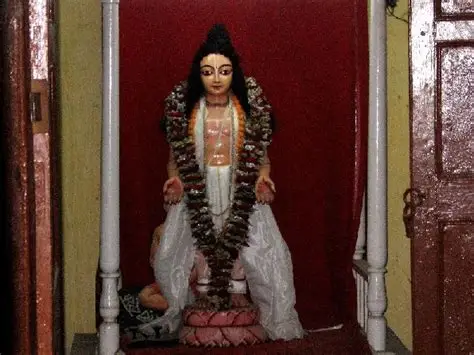
Sri Viracandra, also known as Virabhadra Prabhu or Virabhadra Goswami, is traditionally remembered as having appeared on the ninth day of the dark fortnight of Kartik, a sacred period deeply cherished in Hindu spirituality and the Bhakti Tradition. This timing carries devotional significance, aligning his appearance with a month renowned for intensified sadhana, vrata, and remembrance of divine grace.
Classical Gaudiya hagiography preserves a concise yet profound testimony to his stature. As recorded by Krsna dasa Kaviraja Gosvami in the C.c. Adi 11.8–12: “After Nityananda Prabhu, the greatest branch is Virabhadra Gosani, who also has innumerable branches and sub-branches. It” The cited passage establishes Virabhadra’s eminence in the lineage and signals the expansive reach of his influence within early Gaudiya circles. While the sentence as quoted here trails, the surrounding verses in the Adi-lila continue by enumerating disciples and followers who carried forward the living current of bhakti.
In historical context, this recognition positions Virabhadra as a vital transmitter of Nityananda Prabhu’s teachings, ensuring the continuity of Gaudiya practice, kirtana, and community-centered devotion. The imagery of “innumerable branches and sub-branches” evokes a dynamic spiritual ecosystemscholars often read this as a metaphor for the organic growth of lineage-based learning, service (seva), and communal study of sacred texts such as the Chaitanya Charitamrita.
For many practitioners, the remembrance of Kartik’s dark fortnightmarked by lamps, meditative japa, and congregational singingcreates an accessible pathway to inner reflection. The narrative of Virabhadra’s appearance during this time serves as an inspiration to deepen one’s commitment to compassion, humility, and shared celebration. Readers familiar with seasonal observances note that Kartik naturally encourages a slower, contemplative rhythm in daily life, making it an apt frame for understanding the gentle yet far-reaching influence described in the C.c. Adi 11.8–12.
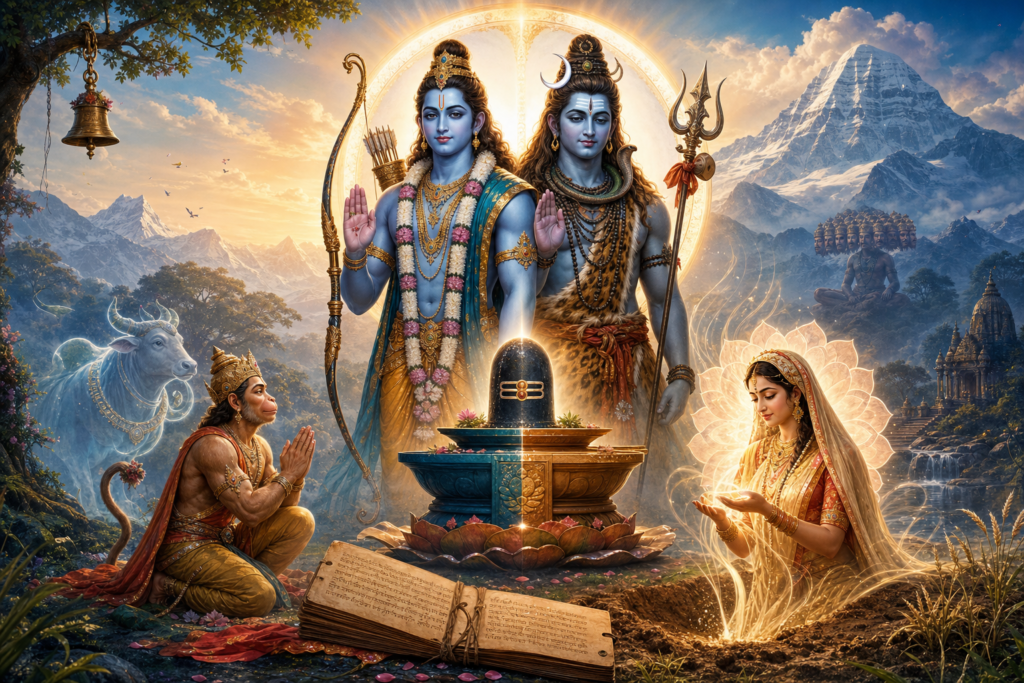
Beyond sectarian boundaries, the values exemplified heredevotion, ethical living, and service to communityresonate across the dharmic spectrum. In the spirit of unity in spiritual diversity, the remembrance of figures like Virabhadra fosters mutual respect among Hinduism, Buddhism, Jainism, and Sikhism, highlighting shared commitments to non-harm, truthfulness, and inner transformation. Such convergences underscore a broader civilizational ethos that welcomes multiple valid paths while honoring distinct traditions.
In sum, the brief yet authoritative acknowledgment in the Chaitanya Charitamrita affirms Virabhadra’s central role after Nityananda Prabhu and illuminates how his “branches” sustained the Bhakti Tradition’s vitality. For contemporary readers, this account offers both historical clarity and practical inspiration: to cultivate devotion during Kartik, to appreciate the Gaudiya Brahmanas’ contributions to Hindu spirituality, and to embrace unity in spiritual pluralism as a source of communal strength and personal growth.
Inspired by this post on Dandavats.