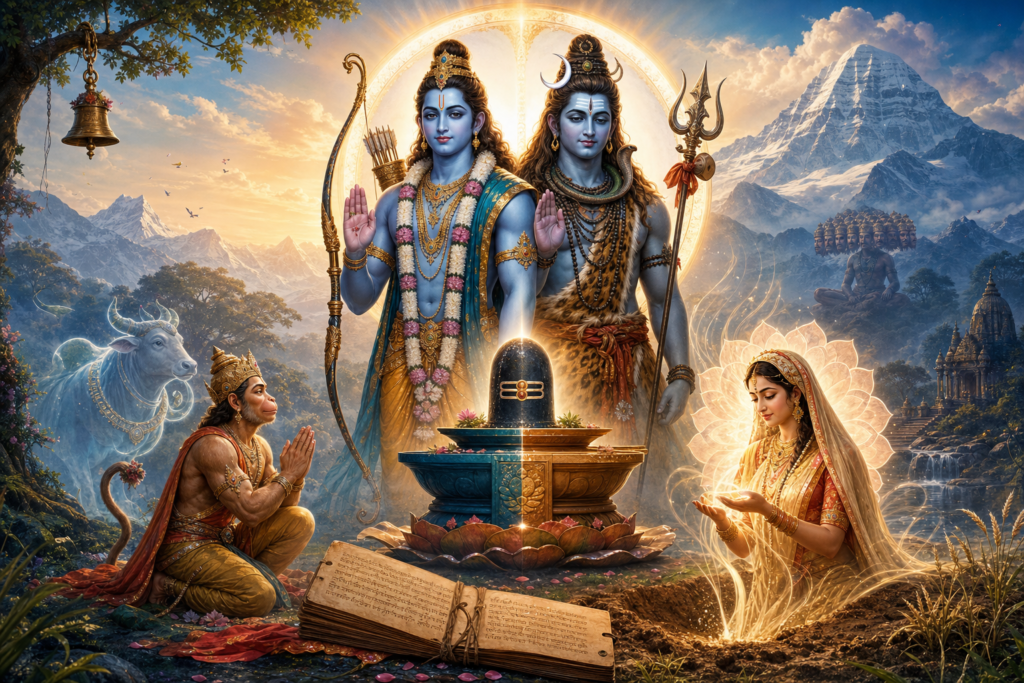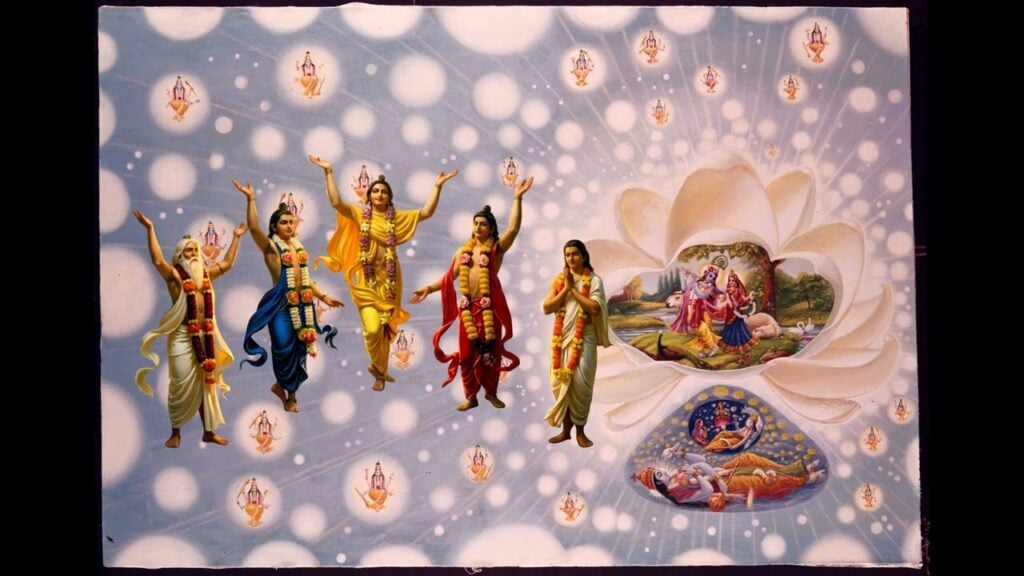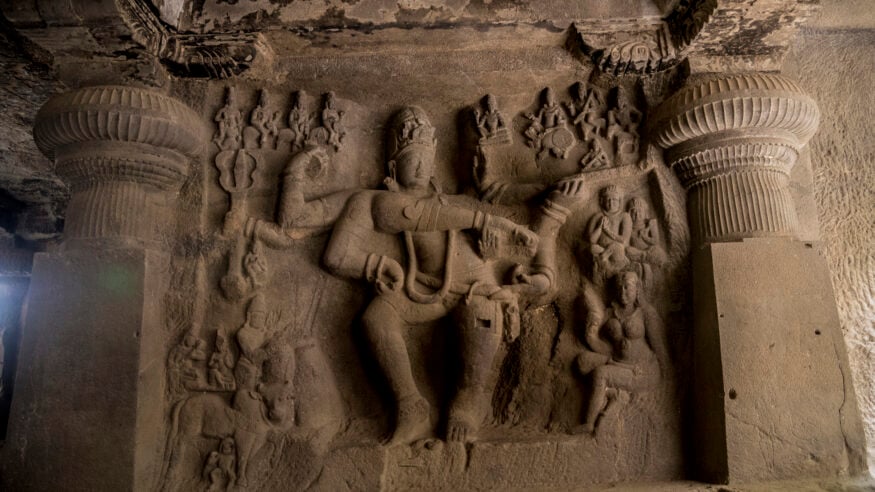
Across its twelve cantos, Srimad-Bhagavatamcelebrated as the “flawless ripened fruit of all Vedic scriptures”unfolds a tapestry of miracles and mysticism that ranges from the esoteric to the extraterrestrial. These narratives present both poetic wonder and philosophical depth while also offering detailed reflections on the extraordinary universe in which life unfolds.
Accounts include a cow, bull, elephant, monkey, and bird articulating profound philosophy; the four-headed creator seated upon a lotus; a magnificent aerial mansion; and a five-year-old who presses down half the earth with a toe, leaving demigods momentarily breathless. Genealogies expand to tens of thousands of offspring, beings appear with a thousand heads or arms, and an ocean of milk is churned by demigods and demons using a serpent as a living rope. The result is a compendium of imagery that fuses cosmology, ethics, and devotion in a style distinctive to ancient India.
Read as layered literature, these episodes function as allegory and contemplative prompt. Speaking animals signal the universality of wisdom; celestial palaces gesture toward inner refinement; and epic feats model the latent capacity within consciousness. The churning of the ocean, for instance, frames cooperation between opposing forces as a pathway to revelationan interpretation that resonates with Hindu philosophy and Vedic literature.
For many seekers, such images evoke awe and humility, catalyzing disciplined inquiry and devotion (bhakti). The child who moves worlds with a touch becomes a metaphor for transformative inner strength; the thousand-headed forms suggest the manifold expressions of awareness; and the ocean of milk invites reflection on patience, perseverance, and the emergence of virtue through sustained effort.
Within the broader dharmic familyHinduism, Buddhism, Jainism, and Sikhismthese narrative strategies cultivate unity through shared methods of symbolism, moral exempla, and contemplative practice. Comparative reflection across traditions highlights common commitments to compassion, self-discipline, truth-seeking, and liberation, demonstrating that diverse paths can harmonize around enduring principles.
Approached with both reverence and critical insight, Srimad-Bhagavatam bridges mythology and metaphysics. Its portrayals of cosmology, ethics, and devotion enrich contemporary dialogue on spiritual growth, offering readers practical wisdom while honoring the plurality of dharmic traditions. In this way, the text serves not only as scripture but also as a living invitation to unity-in-diversity, reflective inquiry, and shared cultural heritage.
Inspired by this post on Dandavats.