SevaTime – Chardikala Rhyme, shared by SikhNet, is a child-friendly verse designed for toddlers that gently introduces two foundational concepts in Sikhism: Seva (selfless service) and Chardikala (ever-rising spirit and resilient optimism). Presented through rhythm and repetition, the rhyme aligns with early childhood education principles by leveraging melody, movement, and predictable patterns to support memory, language development, and values formation.
Chardikala, often described as an unshakable, positive state of mind, encourages children to meet everyday situations with steadiness, gratitude, and hope. Seva nurtures empathy and responsibility by inviting children to notice small, practical ways of helpingsharing toys, tidying common spaces, or expressing kind words. Together, these ideas cultivate prosocial behavior while grounding young learners in a calm, purpose-driven outlook.
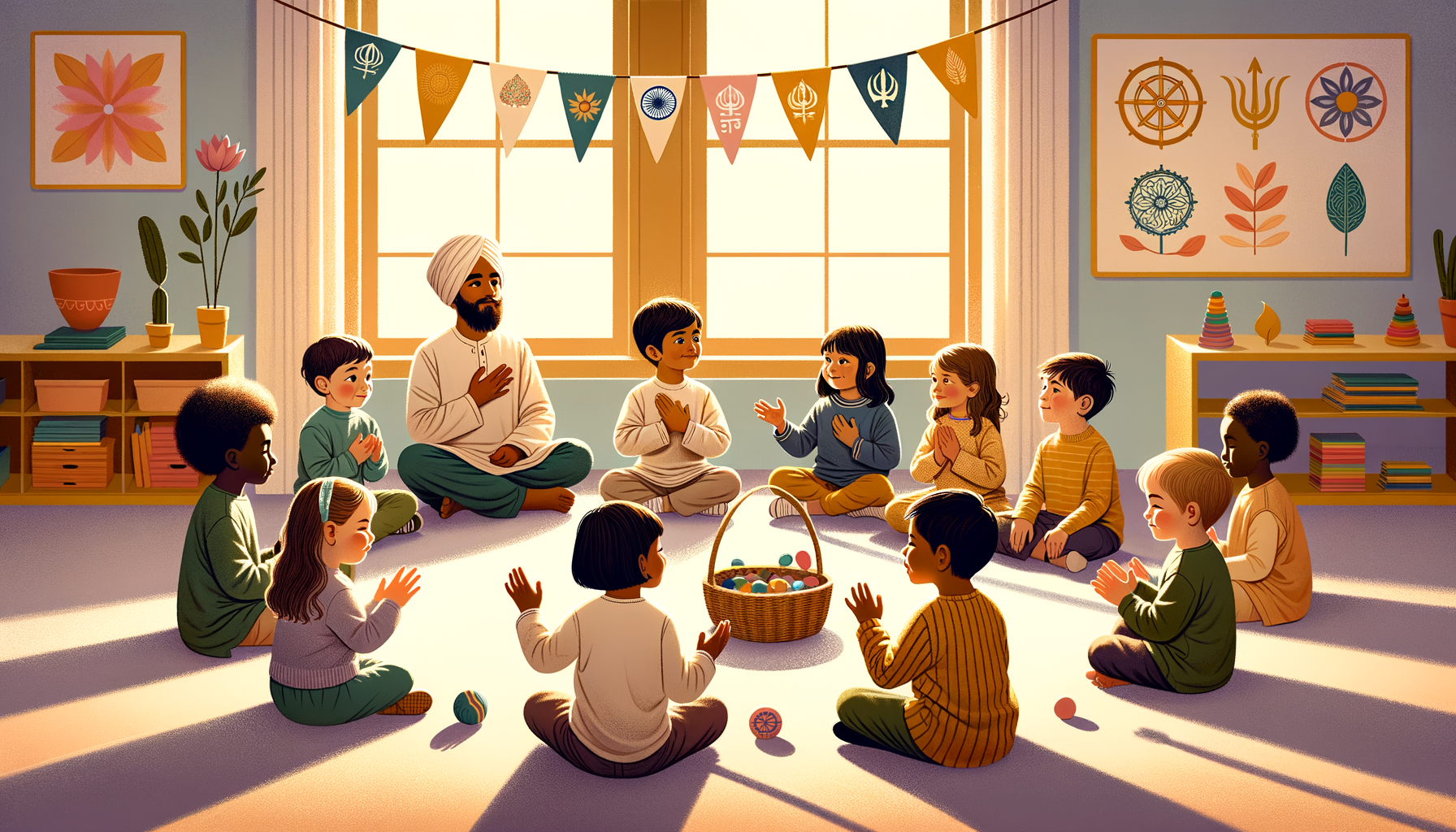
In practice, families and educators often observe that simple, call-and-response rhymes help toddlers internalize key words and their meanings. The SevaTime – Chardikala Rhyme can be paired with hand motionshands to the heart for Seva and uplifted palms for Chardikalato reinforce comprehension through embodied learning. When used during morning or bedtime routines, the rhyme provides a gentle cadence that supports emotional regulation and sets a cooperative tone for the day.
The rhyme’s core values resonate across dharmic traditionsHinduism, Buddhism, Jainism, and Sikhismwhere Seva aligns with practices such as dāna (giving) and karuṇā (compassion), and Chardikala harmonizes with mindful equanimity and inner strength. This shared ethical ground makes the rhyme suitable for multi-faith households and classrooms, fostering interfaith harmony and unity in diversity without diluting distinct identities. Emphasis remains on lived virtueskindness, service, balance, and joyrather than on doctrinal instruction.
Educators can integrate the rhyme into circle time or transitions to encourage cooperative behaviors, using brief reflections such as “What is one way to practice Seva today?” or “How can Chardikala guide feelings when plans change?” Such prompts encourage children to connect words to actions and emotions, creating early links between language, ethics, and self-awareness. Over time, these small practices nurture resilience, empathy, and a service-oriented mindset.
From an educational perspective, children’s rhymes function as mnemonic frameworks that improve phonological awareness, vocabulary, and the capacity for turn-taking in group settings. When the vocabulary centers on Seva and Chardikala, prosocial habits and emotional steadiness are reinforced alongside linguistic growth. This dual benefitcognitive and ethicalmakes the SevaTime – Chardikala Rhyme a practical resource for families and teachers seeking developmentally appropriate spiritual learning.
Because the rhyme communicates universal virtues through accessible language, it naturally avoids exclusivist messaging and supports respectful coexistence. It can be adapted to varied cultural contexts and paired with age-appropriate stories from dharmic traditions that highlight compassion, courage, and mindful action. In this way, the rhyme becomes an inclusive bridge: it honors Sikh heritage while inviting shared practice across the broader dharmic community.
Ultimately, SevaTime – Chardikala Rhyme offers a gentle, evidence-informed pathway to nurture joyful ethics in early childhood. By combining rhythmic learning with the spirit of Seva and the optimism of Chardikala, it helps young children internalize service, steadiness, and communal responsibilityqualities that strengthen family bonds, classroom culture, and interfaith understanding.
Inspired by this post on SikhNet – News.