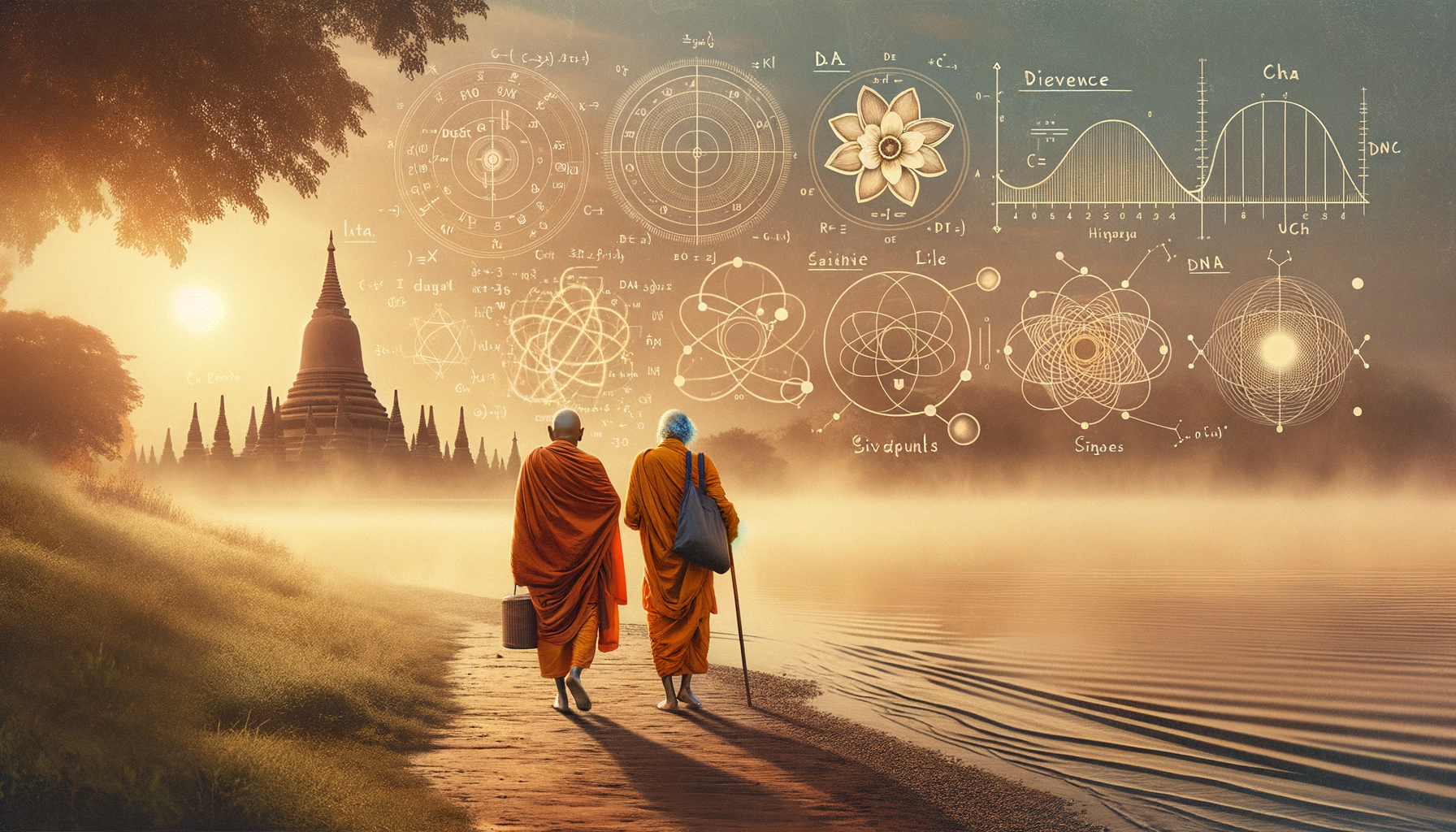
In memory of HH Bhakti Madhava Puri Maharaja (formerly Madhava Das), this tribute recalls a life anchored in Bhakti Tradition, rigorous inquiry, and service to Hindu Dharma. The image of him on a morning walk with Srila Prabhupada stands as a vivid reminder of the Guru-Shishya Traditionlearning by proximity, humility, and disciplined practice. His presence reflected steadiness, compassion, and clarity, qualities that continue to inspire across Hindu spiritual traditions.
Known for balanced scholarship and devotional depth, Sripad Bhakti Madhava Puri Maharaja contributed significantly to a living Spiritual Legacy that unites devotion with thoughtful engagement. His path was neither insular nor polemical; rather, it exemplified the synthesis of spiritual conviction and intellectual openness, a hallmark of India’s civilizational wisdom. Through quiet leadership and guidance, he nurtured seekers to harmonize sadhana with sound reasoning.
Conversations with Nobel laureate and scientist George Waldoften alongside HH Bhaktisvarupa Damodara Swamidemonstrated a model of science and philosophy working in mutual respect. These dialogues did not seek to dominate or dismiss; they sought understanding. In that spirit, HH Puri Maharaja embodied the courage to listen, the patience to explain, and the wisdom to connect empirical exploration with timeless principles.
Within the Bhaktivedanta Institute, his efforts supported symposia and initiatives engaging the “Life Comes From Life” theme, inviting scholars to examine consciousness, life, and meaning with rigor and humility. The approach affirmed core dharmic idealsjnana (knowledge), bhakti (devotion), and dharma (responsibility)while encouraging respectful dialogue across disciplines. Such work continues to be relevant to contemporary seekers exploring the unity of insight and experience.
Aligned with the wider goals of dharmic harmony, his example encouraged unity in spiritual diversity across Hinduism, Buddhism, Jainism, and Sikhism. Shared valuesahimsa, satya, karuna, and sevaformed a common ground where conversations could uplift rather than divide. This inclusive outlook resonates deeply with India’s civilizational ethos and offers a framework for meaningful inter-tradition engagement today.
Three enduring lessons emerge from his life. First, spiritual conviction can thrive alongside academic integrity; one strengthens the other when guided by humility. Second, the Guru-Shishya Tradition is not merely historical; it remains a living pedagogy for character formation and ethical clarity. Third, the confluence of science and spirituality is not a contradiction but a fertile field where deeper questions of life, consciousness, and purpose can be explored responsibly.
Those who encountered HH Bhakti Madhava Puri Maharaja remember a presence that reassured and elevated. The gratitude felt by the community reflects not only admiration for his scholarship but also appreciation for his quiet compassion. His memory continues to guide sincere seekers toward Unity in spiritual diversity, encouraging a life of disciplined devotion, thoughtful inquiry, and service to all.
Inspired by this post on Dandavats.