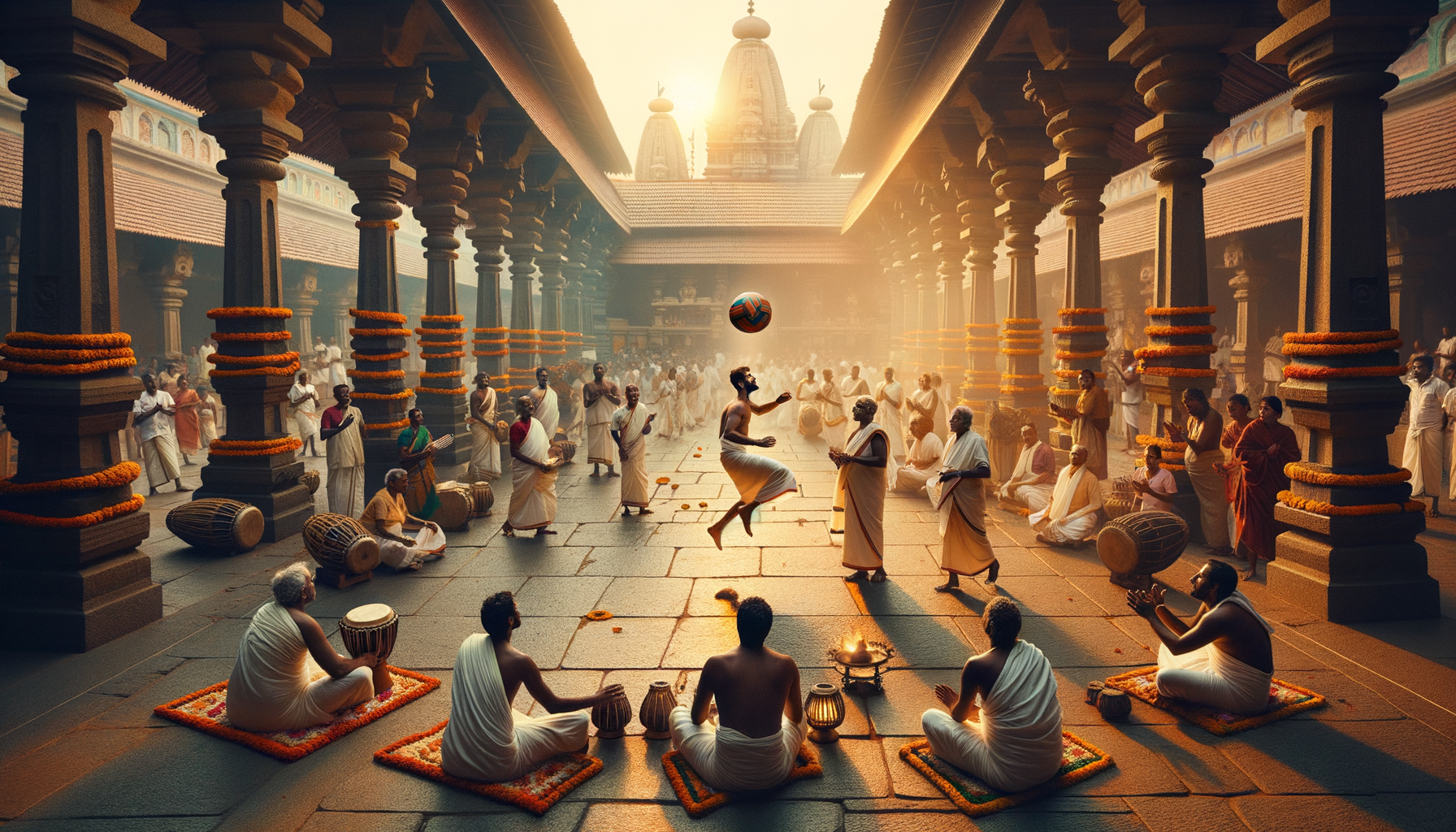
Polali Chendu, celebrated at the Polali Rajarajeshwari Temple in Dakshina Kannada, Karnataka, exemplifies a rare confluence of devotion, play, and community cohesion. This Hindu temple festival, often described as a form of sacred football, transforms a familiar game into a ritual offering, aligning physical vigor with spiritual intent and the cultural heritage of Karnataka.
The term chendu denotes a ball in Kannada, and within this context it signifies far more than a sport. Oral traditions and temple chronicles situate the practice within the temple’s centuries-old annual jatra, drawing devotees from across Karnataka and beyond. The festival’s longevity and popularity reflect the region’s broader pattern of temple-centered social life, where rituals and communal activities reinforce shared values across dharmic traditions.
The ritual sequence typically begins with puja and consecration of the chendu, followed by a processional transition into the temple grounds. As drums and conches resound, the first arc of the ball through the air marks a collective act of devotion rather than a competitive kickoff. Temple stewards maintain decorum, ensuring that the sanctity of Rajarajeshwari’s presence frames every movement on the field.
While the event resembles football in formfeaturing coordinated passes, boundaries, and an agreed objectiveits ethos is distinct. Participation emphasizes cooperation, restraint, and reverence. The aim is not victory over an opponent but the channeling of communal energy toward the Devi, with every successful move interpreted as an auspicious sign for the year ahead.
Symbolism remains central to understanding Polali Chendu. The rounded ball invokes wholeness and cosmic order, while its consecration signifies the infusion of Shakti into everyday action. In this reading, the ritualized game becomes a living metaphor: the field as life’s arena, the chendu as intention, and the collective effort as dharma in motionwhere strength is tempered by discipline and joy is guided by sacred purpose.
The festival also functions as a social integrator. Families, elders, and youth gather in shared anticipation; artisans, vendors, and performers contribute to a holistic celebration that may include local arts such as Yakshagana. Observers frequently note how neighbors from Hindu, Jain, Buddhist, and Sikh backgrounds join as well-wishers, underscoring an inclusive dharmic harmony that places community welfare above sectarian identity.
Visitor accounts often highlight a palpable moment when the consecrated ball first sails across the courtyardthe soundscape of drums, the collective gasp, and the surge of focused attention that follows. Many describe a sense of synchronized presence: a brief dissolution of individual boundaries into a shared current of devotion, typical of Karnataka temple festivals where ritual and emotion reinforce one another.
Responsible attendance enhances the experience and preserves the ritual’s dignity. Modest attire, attentiveness to priestly instructions, and sensitivity around photography are recommended. The annual jatra generally falls in the late winter to spring window, and Polali is accessible via Mangaluru transport hubs in the Bantwal region, enabling visitors to plan a respectful and well-timed pilgrimage.
As an element of intangible cultural heritage, Polali Chendu merits continued documentation and intergenerational transmission. Community-led stewardship, youth engagement, and careful crowd management help sustain both safety and sanctity. These practices ensure the ritual’s continuity without diluting its spiritual depth or communal significance.
Polali Chendu ultimately offers a model for unity-in-diversity: a ritual sport that is playful yet profound, local yet emblematic of broader dharmic values. By harmonizing athletic energy with temple worship, the Polali Rajarajeshwari Temple demonstrates how cultural traditions can evolve without losing their corea lesson as relevant to Karnataka’s living heritage as it is to the wider tapestry of Hindu festivals in India.
Inspired by this post on Hindu Blog.