
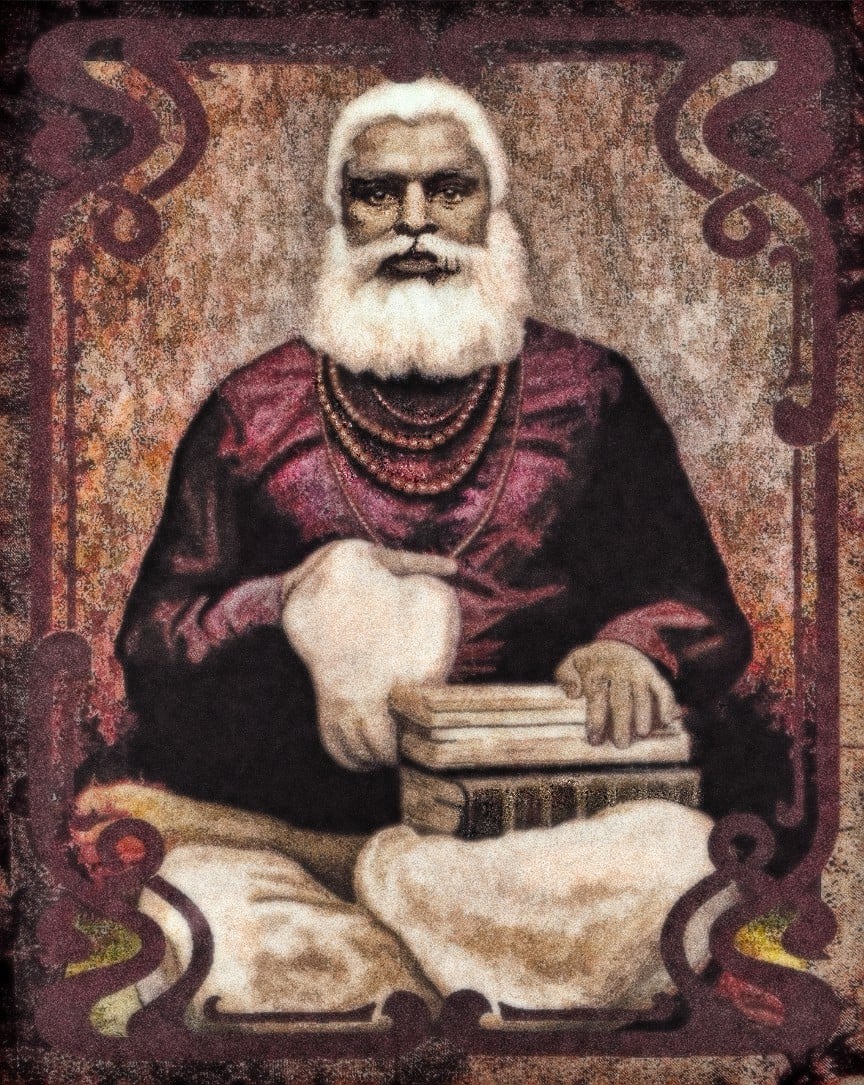
Sri Sri Sva-niyama-dasakam
“12 Verses of My Own Self-imposed Regulative Principles”
by Srila Saccidananda Bhaktivinoda Thakura
Traditionally presented as the last instructions of Srila Bhaktivinoda Thakura, this composition offers a concentrated theology of devotion, discipline, sacred community, and divine grace. Its twelve principal verses form a personal rule of life: they identify what deserves lasting attachment, what obstructs bhakti, how a practitioner should live, and where spiritual strength ultimately originates. A thirteenth verse functions as the phal-sruti, the customary declaration of the spiritual fruit associated with faithful recitation.
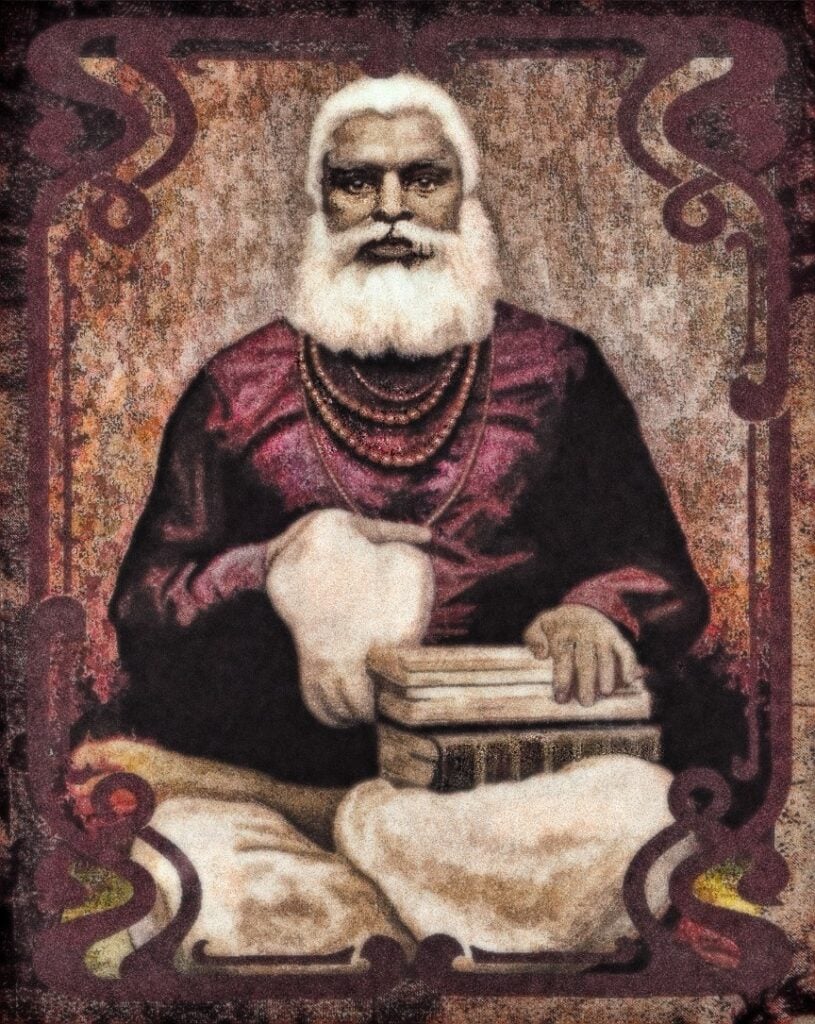
Srila Bhaktivinoda Thakura, born Kedarnath Datta in 1838, was among the most influential figures in the modern renewal of Gaudiya Vaishnavism. He combined public responsibility, literary scholarship, theological reflection, congregational devotion, and disciplined household life. His works helped present the teachings of Lord Caitanya as an intellectually coherent and practically demanding path centred on the holy name, loving service, scriptural study, sacred geography, and the grace of the Vaisnavas.
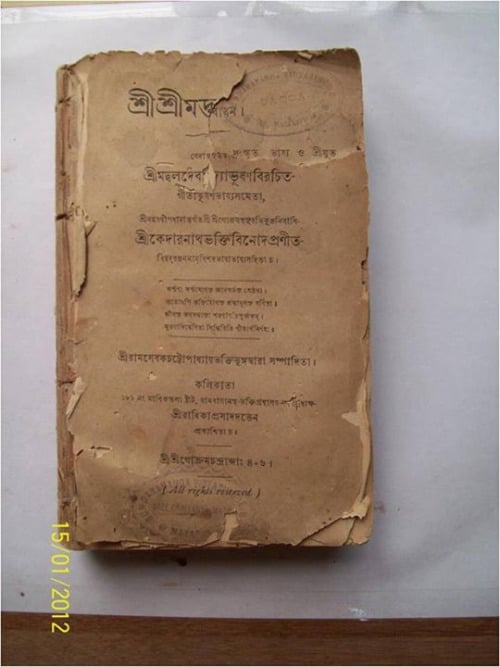
The supplied text does not identify a manuscript, printed edition, translator, or source webpage. Its description of the hymn as Bhaktivinoda Thakura’s final writing should therefore be understood as a traditional devotional attribution rather than a conclusively documented chronological claim. The title also appears in several forms: Sri Sri Sva-niyama-dasakam near the beginning, Sva-niyam Dvadasakam in the concluding explanation, and SVA-NIYAMA DVADASTAKAM at the end. Structurally, however, the text is clear: it contains twelve vows followed by one benedictory verse.
The Sanskrit transliteration below is preserved exactly as supplied, including its original spacing and apparent typographical irregularities. No silent textual emendations have been introduced. The accompanying discussion is consequently an interpretive study rather than a critical Sanskrit edition or a replacement for consultation with a qualified teacher and a verified publication.
A technical guide to the devotional vocabulary
Several terms govern the argument of the entire hymn. Bhakti is loving devotion directed toward the Supreme; bhajana is the deliberate cultivation of worship and remembrance; seva is active service; and sadhana is the disciplined practice through which consciousness is trained. Rasa refers not merely to emotion but to a structured, spiritually interpreted relationship with the Divine. Madhura-rasa designates the intimate devotional mood associated in Gaudiya theology with Sri Radha and Sri Krsna, and it cannot be reduced to ordinary romantic psychology.
The term rupanuga identifies devotees who follow the theological and devotional orientation associated with Srila Rupa Gosvami. Prasada means divine grace and, more specifically, food or other objects received after being offered in worship. Maya describes the power through which the embodied self experiences limitation, misidentification, and material bondage. Vaisnava-krpa, the mercy of the devotees, is presented as the indispensable assistance that enables a practitioner to persevere beyond the strength of individual willpower.
These categories reveal that the hymn is neither a collection of isolated prohibitions nor a general manual of morality. It is a specialised Gaudiya Vaishnava map of spiritual formation. Its commitments move through six interconnected dimensions: teacher and revelation, divine identity, disciplined discernment, sacred place, ethical character, and dependence upon grace. The emotional power of the work comes from the intensity with which all six are gathered into a single lifelong aspiration.
Verse 1: The objects of devotion birth after birth
gurau sri-gaurange tad-udita-subhakti-prakara ne
saci-sunor-lila-vikasita-s utirthe nija manau
harer namni presthe hari-tithisu rupanuga-jane
suka-prokte sastre prati-jani mamastam khalu ratih
The opening verse asks that loving attachment remain stable in every birth. Its objects include the spiritual master, Sri Gauranga, the devotional teachings revealed through Him, sacred places associated with His pastimes, the mantra received through initiation, the holy name of Sri Hari, the Lord’s beloved associates, sacred observances, the followers of Srila Rupa Gosvami, and scriptures such as the Srimad Bhagavatam. The verse thus establishes the complete environment within which Gaudiya bhakti is cultivated.
This environment may be understood as an ecology of devotion. A teacher provides orientation; scripture provides tested memory; mantra and the holy name provide contemplative sound; pilgrimage places provide sacred geography; festivals provide sacred time; and the devotional community provides embodied examples. None of these elements is treated as spiritually self-sufficient. Their significance arises from the way they cooperate in directing consciousness toward loving service.
The phrase concerning birth after birth is particularly important. The aspiration is not framed merely as an attempt to escape existence or acquire an impersonal state. The desired continuity is continuity of relationship. Service is valued not only as a method leading to a later reward but as the enduring fulfilment of the self. This principle anticipates the rest of the hymn, in which means and end repeatedly converge.
For contemporary practice, the verse raises a practical question: what actually structures a person’s attention? A devotional aspiration remains fragile when it is unsupported by time, place, study, community, and daily remembrance. The first vow therefore encourages the deliberate construction of a life in which spiritual intention is reinforced by recurring practices rather than left to occasional emotion.
Verse 2: Lord Caitanya as the eternal guide
sada vrndaranye madhura-rasa-dhanye rasa-mayah
param saktim radham parama-rasa-murtim ramayati
sa caivayam krsno nija-bhajana-mudram upadisan
saci-sunur gaude prati-jani mamastam prabhu-varah
The second verse presents a central claim of Gaudiya Vaishnava theology. Sri Krsna, the inexhaustible source of divine rasa, eternally delights Sri Radhika in Vrnda. The same divine reality appears in Gauda-desa as the son of mother Saci, Sri Caitanya, in order to teach the mode of His own worship. The prayer is that Saci-sunur remain the supreme guide in every birth.
Within this theology, Lord Caitanya is not approached only as a historical religious teacher. He discloses the inner devotional world of Sri Radha and Sri Krsna while also modelling the practices by which that world may be approached. Divine revelation and devotional method are therefore joined in one figure: He is both the object of worship and the teacher of worship.
The verse also places Sri Radhika at the centre of divine relationality. Divine completeness is portrayed not as isolation but as loving reciprocity. The language of continuous service conveys uninterrupted orientation rather than a mechanical calculation of hours. Its theological point is that love reaches perfection when every activity becomes responsive to the joy of the beloved.
This teaching gives devotional discipline an intimate foundation. Rules are not valuable because severity is intrinsically holy. They matter because they train attention for relationship. The practitioner is invited to see Lord Caitanya’s conduct as the interpretive bridge between doctrine and daily life, joining metaphysical conviction with humility, chanting, service, and compassion.
Verse 3: Rejecting practices that do not nourish service
na vairagyam grayham bhavati na hi yad bhakti-janitam
tatha jnanam bhanam citi yadi visesam na manute
sprha me nastange hari-bhajana-saukhyam na hi yatas
tato radha-krsna-pracura-parica rya bhavatu me
The third verse tests renunciation, knowledge, and yoga by a distinctly devotional criterion. Renunciation is not embraced when it fails to generate bhakti. Intellectual cultivation is not treated as spiritually sufficient when it erases the enduring distinction and relationship between the Lord and the devotee. The eightfold discipline of yoga is not sought as an independent goal because the verse’s desired fulfilment is abundant service to Sri Sri Radha-Krsna.
This is a statement of devotional priority, not a neutral survey of every Hindu philosophy. Gaudiya Vaishnavism recognises that bodily discipline, learning, meditation, and simplicity may assist spiritual life. The objection concerns their independence from loving service or their elevation into ends that displace relationship. An action becomes favourable when it deepens remembrance, humility, and seva; it becomes unfavourable when it nourishes pride, indifference, or self-absorption.
The verse therefore distinguishes functional renunciation from renunciation as display. Giving something up can remain centred on the ego if the renouncer becomes preoccupied with personal achievement. Conversely, a person may engage responsibly with work, family, learning, and material resources while remaining inwardly unattached and directing those capacities toward service. The real question is not simply what has been abandoned, but what the resulting freedom serves.
Within a wider Dharmic setting, this strong preference need not become hostility toward yoga, jnana, or other paths. Different traditions articulate different aims and methods. Intellectual honesty permits Gaudiya Vaishnavism to retain its relational theology while respecting practitioners whose disciplines are organised through other authoritative lineages. Conviction and courtesy are not mutually exclusive.
Verse 4: Sacred residence and the architecture of attention
kutire pi ksudre vraja-bhajana-yogye taru-tale
saci-sunos tirthe bhavatu nitaram me nivasatih
na canyatra ksetre vibudha-gana-sevye pulakito
vasami prasade vipula-dhana-rajyanvita iha
The fourth verse prefers a small cottage beneath a tree in the sacred land associated with the son of mother Saci over palaces, wealth, political power, or celebrated destinations. Navadvipa is valued because it supports remembrance of Lord Caitanya and, through His revelation, contemplative service to the eternal pastimes of Vraja. The humble dwelling is therefore not merely inexpensive accommodation; it is a carefully chosen environment for bhajana.
Gaudiya sacred geography often links Gauda and Vraja rather than treating them as unrelated devotional worlds. Navadvipa is the landscape of Lord Caitanya’s manifest pastimes and teachings, while Vraja is the landscape of Sri Radha-Krsna’s intimate lila. Residence in one can deepen contemplative access to the other. Later, the tenth verse names Sri Radha-kunda, further revealing this interior relationship between geographical place and remembered divine service.
The contrast with a palace exposes the spiritual cost of environments organised around status. Wealth is not condemned merely for existing, and poverty is not romanticised as automatically pure. The issue is attention: an impressive setting can multiply distraction, competition, and possessiveness, while a modest setting may create space for steadiness. Simplicity has value when it reduces noise and releases energy for service.
Not every practitioner can relocate to a pilgrimage centre or live in a bhajan-kutir. The transferable principle is the intentional shaping of space. A small area reserved for prayer, study, chanting, or quiet reflection can function as a daily sacred centre. The physical scale may be modest, but regular use can give it profound psychological and devotional significance.
Verse 5: Dharma beyond possessive identification
na varne saktir me na khalu mamata hyasrama-vidhau
na dharme nadharme mama ratir ihaste kvacid api
param tat-tad-dharme mama jada-sariram dhrtam idam
ato dharman sarvan subhajana-sahayann abhilase
The fifth verse refuses ultimate identification with varna, with the successive orders of asrama, or with social reputations for piety and impiety. The material body is maintained through whatever legitimate duties support pure bhajana. Devotional identity is thus treated as deeper than inherited designation, institutional role, occupational status, or public esteem.
This teaching does not necessarily abolish every social responsibility. It relativises social identity by placing it beneath the soul’s relationship with Sri Hari. Duties are accepted instrumentally when they protect the body, sustain dependants, promote ethical order, and create conditions favourable to devotion. They cease to be spiritually healthy when they become vehicles for domination, vanity, exclusion, or forgetfulness of the Divine.
The verse contains an important distinction between dharma as social designation and dharma as the living orientation of service. A role can be performed correctly at an external level while the mind remains proud or exploitative. Conversely, humble bodily maintenance may possess genuine spiritual dignity when it supports remembrance, responsibility, and care. Bhakti evaluates conduct by consciousness and purpose as well as by outward form.
For a contemporary reader, this principle challenges caste pride and spiritual elitism. No inherited label guarantees humility, compassion, or realisation. The devotional community is healthiest when dignity is extended to every living being and responsibility is measured by character and service. Such an interpretation also strengthens unity among Dharmic traditions without demanding that their distinct teachings be erased.
Verse 6: Humility, simplicity, tolerance, respect, and compassion
sudainyam saralyam sakala-sahanam manada-danam
dayam svikrtya sri-hari-carana-seva mama tapah
sadacaro sau me prabhu-pada-parair yah samuditah
prabhos caitanyasyaksaya-carita-pi yusa-krtisu
The sixth verse defines service to the feet of Sri Hari as tapas and identifies the character required to sustain it: deep humility, straightforwardness, endurance, respect for others, and compassion toward living beings. The verse also accepts forms of conduct taught by devotees devoted to Lord Caitanya and preserved in narratives of His character and pastimes.
These virtues are not ornamental additions to worship. They are operational disciplines. Humility allows correction; simplicity limits manipulation; tolerance prevents every difficulty from becoming a crisis; respect restrains the urge to demean others; and compassion turns spiritual aspiration outward in practical care. Without these qualities, sophisticated theology can coexist with harshness and devotional language can become a disguise for ego.
Tolerance in this context should not be confused with passive acceptance of abuse or injustice. It primarily concerns steadiness amid inconvenience, criticism, delay, and changing circumstances. Healthy tolerance can coexist with ethical boundaries, protection of vulnerable people, and truthful speech. Similarly, humility does not require the denial of human dignity; it requires freedom from the compulsion to establish superiority.
The verse offers one of the clearest foundations for constructive relations among Hindu, Buddhist, Jain, and Sikh communities. These traditions differ in theology, metaphysics, ritual, and authority, yet humility, compassion, disciplined conduct, and service provide meaningful grounds for cooperation. Unity becomes durable when it grows from ethical practice rather than from slogans that conceal unresolved contempt.
Verse 7: The exclusive attraction of Vraja and Sri Radhika
na vaikunthe rajye na ca visaya-karye mam ratir
na nirvane mokse mama matir ihaste ksanam api
vrajanandad anyadd hari-vilasitam pavanam api
kathancin mam radhanvaya-virahitam no sukhayati
The seventh verse rejects three possible goals: majestic residence in Vaikuntha, material sense gratification, and impersonal liberation. Even purifying pastimes of Sri Hari do not produce the desired happiness when they lack connection with Sri Radhika and the intimate bliss of Vraja. The verse expresses an exceptionally focused devotional taste rather than a general catalogue of acceptable religious achievements.
Gaudiya theology distinguishes forms of divine relationship through rasa. Vaikuntha signifies reverential devotion to Sri Sri Laksmi-Narayana, whereas Vraja signifies intimacy in which divine majesty is partially concealed by affection. The verse does not deny the sanctity of Vaikuntha. It declares that the speaker’s particular spiritual longing is satisfied only by the Radha-centred relational world of Vraja.
This distinction illustrates the difference between respect and vocation. A practitioner may recognise the holiness of many forms of worship while possessing a concentrated attraction to one form. Spiritual pluralism need not mean that every path feels identical to every person. It means that deep commitment can be maintained without converting preference into contempt for another sincere discipline.
The emotional centre of the verse is Sri Radhika. She represents the fullest intensity of self-giving love and the highest capacity to delight Sri Krsna. Consequently, devotion disconnected from Her does not answer the hymn’s deepest longing. The verse is best understood within that specialised Gaudiya theology, not detached from it and used as a universal judgement upon other communities.
Verse 8: Association, family responsibility, and spiritual boundaries
na me patni-kanya-tanaya-janani- bandhu-nicaya
harau bhakte bhaktau na khalu yadi tesam sumamata
abhaktanam-anna-grahanam api doso visayinam
katham tesam sangadd hari-bhajana-siddhir bhavati me
The eighth verse employs severe renunciatory language. It denies possessive identification with wife, daughters, sons, mother, and friends when they have no affection for Sri Hari, His devotees, or devotional service. It also warns against accepting food from materially absorbed nondevotees and asks how perfection in Hari-bhajana could arise through spiritually contrary association.
The technical issue is sanga, association that repeatedly shapes desire and identity. Ordinary contact is not identical to formative association. A person may interact respectfully with neighbours, relatives, colleagues, and members of other traditions while declining patterns of intimacy that continually undermine conscience or spiritual discipline. The vow concerns the direction of influence, not a licence for hostility.
Food carries particular significance because eating is both biological and relational. Prasada embodies gratitude, offering, shared sacred memory, and dependence upon divine grace. The warning about food therefore reflects a traditional concern that consciousness, intention, and association accompany what is consumed. Its constructive application lies in mindful eating and spiritually supportive hospitality, not in humiliating people or reproducing discriminatory ideas of human worth.
Taken without attention to genre, the language of disowning relatives could be used irresponsibly. It should not be treated as permission to abandon dependants, neglect parents or children, coerce family members, or deny ordinary compassion. Bhaktivinoda Thakura himself lived for much of his life as a householder, making it especially important to distinguish inward nonattachment from the rejection of ethical duty.
A mature application combines spiritual boundaries with patience and care. Family affection need not depend upon theological uniformity, and love does not require surrendering every conviction. The verse invites vigilance about influence while the broader ethic of humility, respect, and compassion prevents vigilance from hardening into sectarian disdain.
Verse 9: Avoiding pride disguised as advanced devotion
asat-tarkair-andhan jada-sukha-paran krsna-vimukhan
ku-nirvanasaktam satatam ati-dure pariharan
aradham govindam bhajati nitaram dambhikataya
tad-abhyase kintu ksanam api na yami vratam idam
The ninth verse describes practitioners who appear disciplined because they avoid sterile argument, bodily hedonism, aversion to Sri Krsna, and an impersonal conception of liberation. Yet their worship of Govinda excludes Sri Radhika. The verse interprets that exclusion as pride and vows to avoid intimate association with such devotional pretence.
This is an intra-devotional warning of considerable subtlety. External renunciation and doctrinal correctness do not automatically establish purity of heart. A person may avoid conspicuous faults and still remain governed by arrogance. In the theology of the verse, neglect of Sri Radhika means neglect of the supreme devotee and of the self-giving love through which Govinda is most fully served.
The warning contains a moral paradox: condemnation of another person’s pride can itself become a source of pride. Responsible reception therefore turns the verse inward. It asks whether spiritual identity is being used to acquire status, whether criticism is motivated by service or hostility, and whether loyalty to a tradition has produced the humility that the tradition itself requires.
The polemical references to logic, material pleasure, and liberation belong to the doctrinal vocabulary of a particular lineage. They should not be converted into stereotypes about whole Dharmic communities. Rigorous disagreement remains possible, but factual description, fair representation, and respect are essential. Avoiding spiritually harmful association does not require misrepresenting another path.
Verse 10: Simple living, prasada, sacred place, and remembrance of death
prasadanna-ksirasana-vasan a -patradibhir aham
padarthair nirvahya vyavahrtim asangah ku visaye
vasam isa-ksetre yugala-bhajananandita-mana s
tanum moksye kale yuga-pada-paranam pada-tale
The tenth verse describes a materially simple life sustained by prasada foodgrains and milk products, cloth offered to the Deity, and utensils dedicated to sacred service. Freed from attachment to sense gratification, the practitioner resides near Sri Radha-kunda, worships the Divine Couple with joy, and hopes to leave the body at the feet of devotees who serve Their lotus feet.
Prasada transforms consumption into reception. Food, clothing, and ordinary implements are no longer approached solely as private possessions; they are received within a cycle of offering, grace, and responsible use. This devotional economy discourages excess because value is measured by sacred purpose rather than novelty, display, or accumulation.
The reference to milk reflects the historical ritual and dietary world of the composition. Its enduring principle is not careless consumption but sanctified nourishment, gratitude, non-waste, and restraint. Contemporary practitioners must also consider lawful conduct, health, animal welfare, environmental responsibility, and their actual circumstances. Simplicity is spiritually meaningful when it supports care rather than indifference.
The verse’s contemplation of death is neither morbid nor escapist. Remembering mortality clarifies priority. Status, consumption, and possessions lose their claim to permanence, while relationships of service acquire greater urgency. The desired final setting—among devotees serving Sri Sri Radha-Krsna—expresses the hope that the consciousness cultivated throughout life will remain present at death.
Sri Radha-kunda represents both a physical pilgrimage place and the concentrated sacred world of Radha-centred devotion. Residence near it is therefore geographical, ritual, and contemplative. For those unable to live there, regular remembrance, responsible pilgrimage, study, and service can preserve the orientation without pretending that physical and contemplative residence are simply identical.
Verse 11: Reverence for Sri Radhika’s dedicated devotee
saci-sunor-ajna-grahana-ca turo yo vraja-vane
pararadhyam radham bhajati nitaram krsna-rasikam
aham tvetat-padamrtam anudinam naisthika-mana
vaheyam vai pitva sirasi ca muda sannati-yutah
The eleventh verse honours a pure devotee who is expert in receiving the instructions of Sri Saci-nandana, resides spiritually in Vraja, and worships Srimati Radharani with exclusive dedication. The speaker vows to receive the water that has washed such a devotee’s feet, carry it upon the head, drink it joyfully, and offer complete prostration every day.
Within Vaisnava ritual culture, foot-water expresses radical reverence. The feet symbolise the path walked by the saint, and the water associated with them is understood as carrying grace. Placing it on the head reverses ordinary status: intellectual pride and social rank are placed beneath realised service. The act is bodily theology, communicating surrender through posture and touch rather than through abstract argument alone.
The verse also defines the saint by orientation rather than charisma. The honoured devotee faithfully receives Lord Caitanya’s instruction, worships Sri Radhika, relishes service to Sri Krsna, and remains established in Vraja-bhajana. Reverence should therefore follow tested character, fidelity to teaching, and compassionate conduct. It should not become uncritical personality worship or a means of excusing exploitation.
The guru-shishya relationship reaches its healthiest form when honour produces responsibility in both directions. The disciple approaches with humility and readiness to learn; the teacher remains accountable to scripture, lineage, ethical conduct, and the welfare of those seeking guidance. The verse’s language is intense because transformation requires receptivity, yet genuine receptivity remains compatible with discernment.
Verse 12: Transcending maya through vows and Vaisnava mercy
harer dasyam dharmo mama tu cira-kalam prakrtito
maha-maya-yogad-abhinipati tah duhkha-jaladhu
ito yasyamy urddhvam sva-niyama-suratya prati-dinam
sahayo me matram vitatha-dalani vaisnava-krpa
The twelfth verse supplies the theological foundation for all the previous vows. Eternal service to Sri Hari is identified as the soul’s natural dharma, while association with maha-maya has produced immersion in an ocean of sorrow. Daily fidelity to the self-imposed principles provides the path upward, but the decisive assistance is the illusion-dispelling mercy of the Vaisnavas.
This structure avoids two opposite errors. Spiritual discipline is not abandoned in the expectation that grace will do everything, and achievement is not attributed exclusively to personal strength. Practice prepares, stabilises, and expresses the desire for transformation; grace supplies assistance that cannot be manufactured by ego. Effort and dependence operate together.
The term natural dharma indicates an ontological claim: service is not an artificial identity imposed upon the self but its deepest fulfilment. Maya obscures that identity by encouraging the self to treat temporary bodily and social designations as complete. The vows repeatedly interrupt this forgetfulness by restoring memory through sound, place, ethical conduct, community, and worship.
The insistence on daily practice is psychologically exact. Occasional inspiration rarely overcomes deeply repeated habits. A vow becomes formative through recurrence, review, failure, correction, and renewal. The practitioner does not wait for perfect motivation before acting; regular action gradually educates motivation. Yet the final appeal to Vaisnava-krpa keeps that discipline tender and relational.
Verse 13: The phal-sruti and the promised fruit of recitation
krtam kenapyetat sva-bhajana-vidhau svam niyamakam
parthed yo visraddhah priya-yugala-rupe ‘rpita manah
vraje radha-krsnau bhajati kila samprapya nilayam
sva-manjaryah pascad vividha-varivasyam sa kurute
The thirteenth verse is not an additional vow. It is the phal-sruti, a benedictory statement describing the result of faithful recitation. The hymn is presented modestly as a set of regulations composed for personal bhajana. A devotee who recites it with resolute faith and offers the mind to the beloved Divine Couple is promised residence in Vraja and varied eternal service to Sri Sri Radha-Krsna while following a manjari guide.
A phal-sruti does more than advertise a reward. It tells the community how a sacred text should be received. Recitation is expected to involve faith, concentrated intention, theological understanding, and an offered mind. The promised result corresponds to the content of the vows: repeated meditation is believed to shape the practitioner toward the devotional identity celebrated by the hymn.
In specialised Gaudiya usage, a manjari is an intimate attendant of Sri Radhika whose identity is wholly organised around service to the Divine Couple. The verse therefore belongs to the theology of raganuga bhajana and should not be reduced to a vague promise of spiritual happiness. Its language presumes a developed doctrinal framework, qualified guidance, and careful distinction between sacred contemplative identity and ordinary imagination.
The verse mentions several possible centres of devotional attention in its supplied explanation: Sri Sri Radha-Govinda, Their Deity form, Sri Gaura-Sundara, and Srila Rupa Gosvami. These are not unrelated alternatives. They express the Gaudiya conviction that the Divine Couple, Lord Caitanya’s revelation, the worshipful form, and the rupanuga lineage converge in a single current of service.
The inner architecture of the twelve vows
Read as a whole, the hymn follows a deliberate progression. The first two verses establish allegiance: the practitioner belongs to guru, Sri Gauranga, sacred revelation, and the Radha-Krsna reality disclosed through Lord Caitanya. The third verse supplies a criterion of discernment by accepting only those disciplines that nourish loving service. The fourth and fifth reorganise place and social identity around bhajana.
The sixth verse identifies the ethical character without which devotion becomes distorted. The seventh establishes the distinctive goal of Radha-centred Vraja-bhakti. The eighth and ninth protect that goal by regulating formative association and exposing devotional pride. The tenth integrates food, possessions, residence, worship, and mortality. The eleventh locates guidance in the exemplary devotee, and the twelfth places all effort under Vaisnava mercy.
The sequence shows that self-discipline is not primarily a private battle of willpower. It depends upon an entire network of relationships and practices. Sacred sound trains memory; sacred time regularises practice; sacred place protects attention; ethical qualities protect relationships; spiritual association protects aspiration; and grace protects the practitioner from imagining that discipline itself has made the ego supreme.
This framework also clarifies the meaning of renunciation. The vows do not celebrate emptiness for its own sake. Every rejection protects a deeper affirmation. Wealth is relativised for the sake of simplicity, distracting association for the sake of remembrance, prestige for the sake of humility, and independent spiritual achievement for the sake of loving dependence. Renunciation is meaningful because devotion gives it direction.
A responsible daily practice inspired by the hymn
1. Establish a clear devotional intention. A practitioner can begin the day by remembering guru, Lord Caitanya, Sri Radha-Krsna, and the purpose of service. The intention should be brief enough to recall during ordinary activity and concrete enough to guide choices. Its function is not to produce dramatic emotion every morning but to restore direction.
2. Anchor attention in sacred sound and scripture. A sustainable routine may include chanting, mantra, recitation, and a measured passage from the Srimad Bhagavatam or another text recognised by the practitioner’s lineage. Consistency usually forms consciousness more effectively than irregular excess. Study should support practice, while practice should make study ethically visible.
3. Use the five virtues as a daily diagnostic. Humility, simplicity, tolerance, respect, and compassion can be reviewed at the end of the day. The relevant questions are practical: Was correction received without defensiveness? Was speech straightforward? Was difficulty endured without needless retaliation? Was another person’s dignity protected? Did compassion become action?
4. Examine formative association. The eighth and ninth verses invite attention to relationships, media, habits, and environments that repeatedly shape desire. Healthy boundaries may be necessary, but they should be established without cruelty or self-righteousness. The aim is to protect conscience while retaining respect for people whose convictions differ.
5. Simplify consumption through gratitude. Food, clothing, technology, and domestic objects can be evaluated by need, sacred purpose, ethical impact, and freedom from waste. The devotional principle of prasada encourages reception rather than entitlement. Even modest acts of offering and gratitude can interrupt the assumption that consumption exists only for private gratification.
6. Join discipline to service. Chanting and study should increase reliability, kindness, hospitality, and willingness to assist others. When spiritual practice repeatedly makes a person harsher, more deceptive, or more fascinated with status, the sixth and ninth verses demand serious reassessment. Bhakti is tested by the quality of relationship it produces.
7. Remember mortality without despair. The tenth verse encourages periodic reflection on death as a way of clarifying present responsibility. Such remembrance can reduce trivial rivalry and intensify gratitude. Its healthy fruit is not withdrawal from life but more deliberate service during the time that remains.
8. Depend upon community and grace. Personal vows require trustworthy companions, teachers, and opportunities for correction. The final principle is not self-congratulation but Vaisnava-krpa. Progress is received through relationships of service, forgiveness, instruction, and shared remembrance.
Dharmic unity without theological erasure
The Sva-niyama-dasakam is an explicitly Gaudiya Vaishnava text. Its devotion to Lord Caitanya, its theology of Sri Radha-Krsna, its preference for Vraja-rasa, and its rupanuga conclusion should be represented accurately. Genuine unity among Dharmic traditions does not require these commitments to be diluted into a generic spirituality.
At the same time, the hymn contains ethical disciplines that can support respectful cooperation. Buddhist traditions cultivate disciplined recollection, compassion, and reliance upon wholesome community. Jain traditions give profound attention to vows, restraint, aparigraha, and non-harm. Sikh tradition places powerful emphasis upon naam, seva, humility, and sangat. Diverse Hindu traditions unite knowledge, worship, meditation, duty, and devotion in different proportions.
These resonances do not make the traditions interchangeable. Their accounts of selfhood, liberation, revelation, ritual authority, and ultimate reality remain meaningfully different. Academic fairness requires those differences to be stated rather than concealed. Dharmic unity becomes credible when disagreement is truthful, non-coercive, and disciplined by mutual dignity.
The sharp boundary language in several verses should consequently be read as the rhetoric of an intensive personal vow within a defined theological tradition. It need not be turned into civic hostility, family coercion, or contempt for other paths. The hymn’s own virtues—humility, tolerance, respect, compassion, and service—provide the interpretive safeguards against such misuse.
Why these final vows remain compelling
The enduring force of Srila Bhaktivinoda Thakura’s vows lies in their refusal to separate spiritual longing from the design of daily life. Theology reaches into place, food, clothing, relationships, study, festivals, habits, and the approach to death. Devotion is not confined to an emotional moment or a ritual compartment; it becomes the organising principle through which every other commitment is evaluated.
The vows also recognise a universal difficulty: people often know what they value but construct lives that continually distract them from it. Bhaktivinoda Thakura’s answer is neither vague inspiration nor harsh self-reliance. It is a disciplined ecology of remembrance supported by teacher, scripture, sacred sound, sacred place, ethical character, devotional community, and grace.
The most moving element appears in the final admission that vows alone are insufficient. The practitioner remains vulnerable to maya and depends upon the softhearted compassion of the Vaisnavas. This dependence prevents discipline from becoming spiritual vanity. The last word belongs not to control but to mercy.
Thus ends” SVA-NIYAMA DVADASTAKAM”
Srila Bhaktivinoda Thakura, his last writing.
Inspired by this post on Dandavats.






Leave a Reply
You must be logged in to post a comment.