
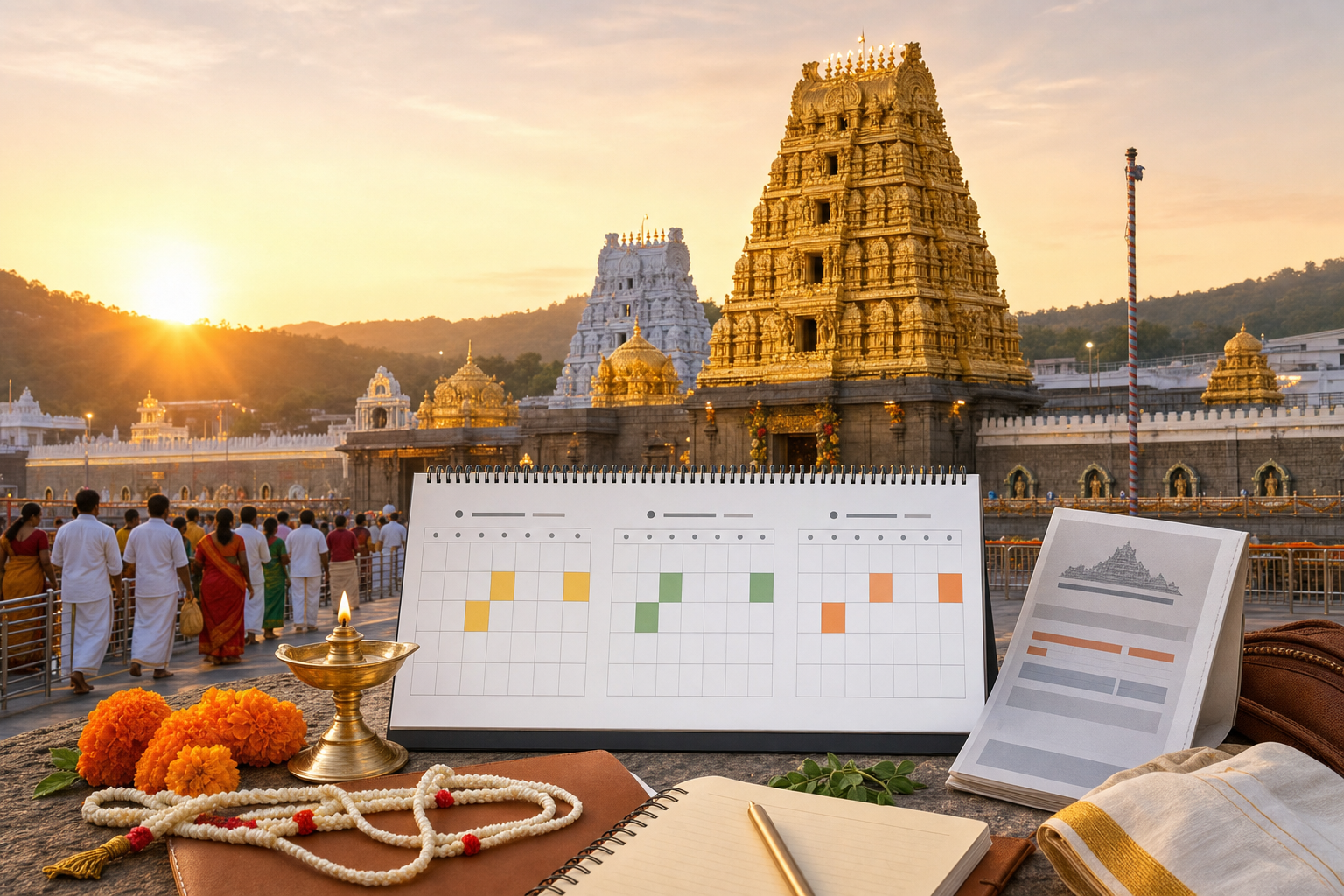
The Tirumala VIP Break Darshan cancellation schedule for July, August, and September 2026 is important for devotees planning a visit to Sri Venkateswara Swamy Temple at Tirumala. According to the published notice, VIP Break Darshans are to remain cancelled on selected festival and ritual dates up to September 30, 2026, because the Srivari Temple calendar gives priority to major temple observances, Asthanams, purification rituals, and high-footfall devotional events.
For pilgrims, this is more than a travel advisory. A Tirumala journey often involves months of planning, family coordination, accommodation booking, transport arrangements, and emotional preparation. When a darshan category is cancelled, the change affects not only access to a preferred slot but also the rhythm of the entire pilgrimage. Understanding these dates early helps devotees approach the journey with patience, clarity, and respect for the temple’s ritual order.
The listed July 2026 cancellations begin with July 14, 2026, for Koil Alwar Tirumanjanam. This is one of the most significant purification rituals performed inside the Tirumala temple. Traditionally, Koil Alwar Tirumanjanam is conducted before major festivals such as Ugadi, Anivara Asthanam, Srivari Brahmotsavams, and Vaikunta Ekadasi. During this observance, the sanctum and temple interiors are ritually cleansed, and the process reflects the deep relationship between physical order, sacred space, and devotional purity in the Vaikhanasa Agama tradition followed at Tirumala.
The second July cancellation is July 17, 2026, in connection with Anivara Asthanam. Anivara Asthanam is a major annual temple event associated with the formal ritual and administrative traditions of the Srivari Temple. In the older temple culture, such Asthanams represented the ceremonial review of temple responsibilities, offerings, and divine sovereignty. For devotees, the cancellation of VIP Break Darshan on this date signals that the temple’s ritual calendar takes precedence over special-access darshan categories.
The August 2026 period is expected to be shaped by the Srivari Pavitrotsavams, a deeply symbolic annual ritual of purification and atonement. Pavitrotsavam is traditionally understood as a rite meant to correct omissions or procedural imperfections that may have occurred in daily worship through the year. The festival is connected with the offering of pavitras, or sacred thread garlands, and with special homams, recitations, and ceremonial worship. Devotees planning VIP Break Darshan around the late-August festival window should verify availability carefully before making travel decisions.
September 2026 includes observances connected with Sri Krishna Janmashtami and related temple festivities. At Tirumala, Sri Krishna-related celebrations are not merely regional festival markers; they are integrated into the broader Vaishnava devotional atmosphere of the temple. The presence of Sri Krishna, Sri Rama, Sri Venkateswara, and other Vaishnava forms within the Tirumala ritual world reflects the theological unity of Vishnu worship. When VIP Break Darshan is cancelled for such events, it is usually because temple staff, priests, and queue management systems must support special rituals and increased pilgrim movement.
The practical meaning of these cancellations is straightforward: devotees should not assume that VIP recommendation letters, Srivani-linked plans, or other special access expectations will function normally on these dates. During major rituals and festival days, Tirumala Tirupati Devasthanam (TTD) commonly reorganizes darshan arrangements to prioritize temple worship, crowd safety, and equitable movement of pilgrims. Protocol dignitaries may be handled under separate rules, but ordinary recommendation-based access is generally restricted when cancellation notices are issued.
From a pilgrimage-planning perspective, the safest approach is to avoid building a Tirumala itinerary around VIP Break Darshan on July 14, July 17, and any notified August or September festival dates. Families should also check whether recommendation letters are accepted on the previous day, because TTD often stops accepting such letters one day before the cancelled darshan date. This detail is particularly important for pilgrims travelling from other states or from outside India, where rescheduling accommodation and transport can be expensive and stressful.
The cancellation of VIP Break Darshan should not be read as a disruption of devotion. In the Tirumala tradition, the Lord’s worship is the center of the schedule, and every darshan category exists around that sacred order. The temple is not simply a public monument or a high-volume pilgrimage facility; it is a living ritual institution where daily worship, annual festivals, recitation, offering, procession, and purification are all part of an integrated dharmic system.
This is also why devotees benefit from treating the official TTD calendar as a ritual calendar rather than merely a ticket calendar. A date such as Koil Alwar Tirumanjanam may look like an administrative closure from the outside, but within the temple’s sacred logic it is a major act of preparation. A date such as Anivara Asthanam may look like a one-day schedule change, but it represents continuity with a long institutional memory of temple governance and service to Lord Venkateswara.
For elderly pilgrims, children, and first-time visitors, these dates require special attention. Travel plans should include buffer time, flexible accommodation, and realistic expectations about crowd density. Pilgrims who cannot access VIP Break Darshan on a cancellation date may need to consider Special Entry Darshan, Slotted Sarva Darshan, or other available arrangements depending on the quota released by TTD. Availability changes quickly, and the official TTD booking portal remains the most reliable point of confirmation.
The broader lesson is that Tirumala pilgrimage planning works best when devotion and discipline go together. A pilgrim who studies the calendar, respects temple advisories, and prepares for alternate darshan options is less likely to face disappointment. The experience then becomes less about entitlement to a particular access category and more about participation in a sacred tradition that has served millions of devotees across generations.
The essential planning guidance is therefore clear: note the Tirumala VIP Break Darshan cancellation dates for July 2026, August 2026, and September 2026; avoid relying on VIP Break access during major Srivari Temple festivals; verify the latest instructions on TTD’s official channels before travel; and keep alternate darshan plans ready. Such preparation honors both the devotee’s effort and the temple’s ritual dignity.
Inspired by this post on Hindu Pad.







Leave a Reply
You must be logged in to post a comment.