
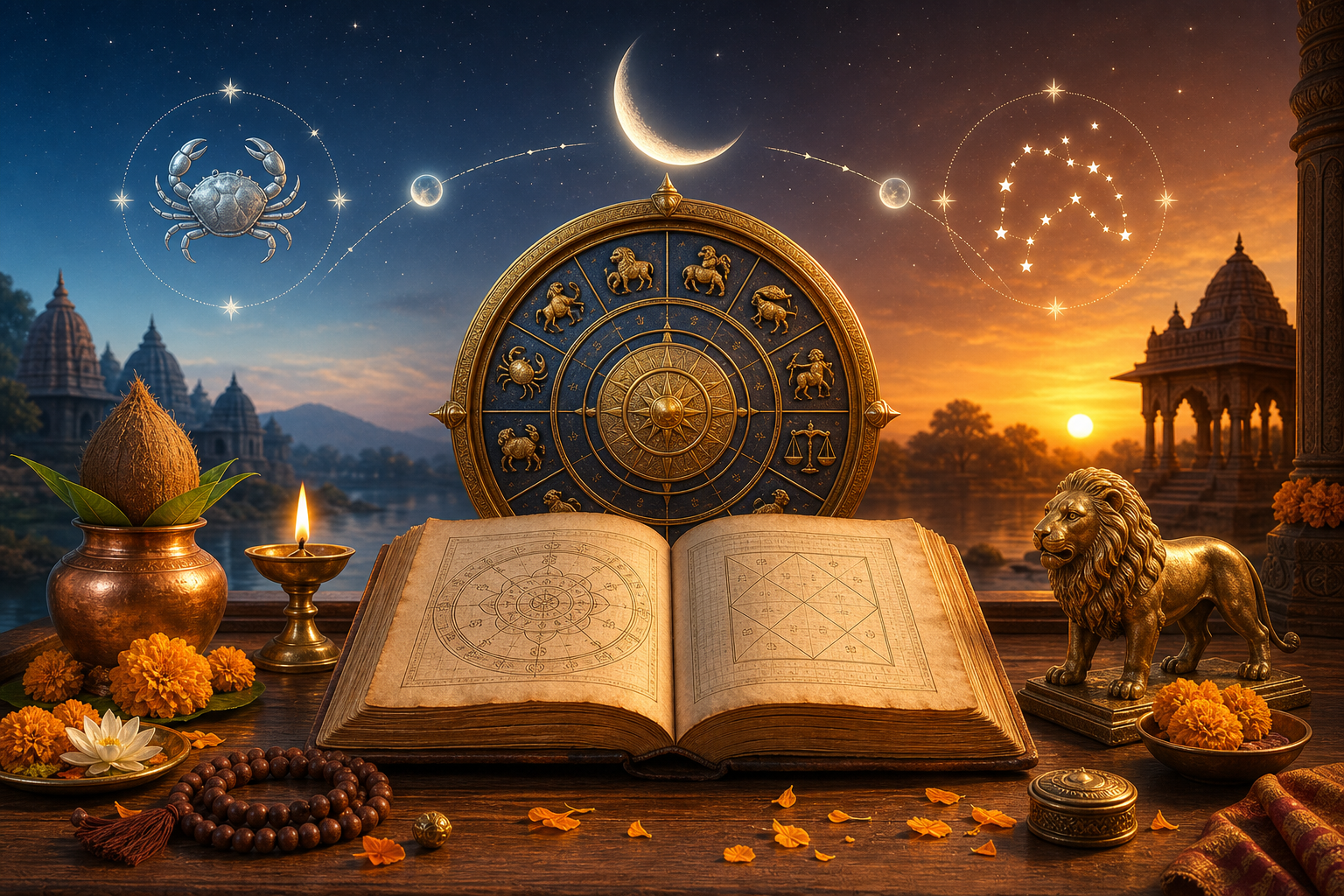
Thursday, July 16, 2026, is observed in the Hindu calendar as a Shukla Paksha Dwitiya day in most regional Panchang traditions. Shukla Paksha refers to the waxing or bright half of the lunar month, when the Moon gradually increases in visible light after Amavasya. Dwitiya is the second lunar tithi, and on this date it continues in the morning before giving way to Shukla Paksha Tritiya, the third tithi of the bright fortnight.
The supplied Panchang note records Shukla Paksha Dwitiya till 11:20 AM on July 16, after which Shukla Paksha Tritiya begins. Other city-specific Panchang calculations, especially for New Delhi and Ujjain, may show Dwitiya ending around 8:52 AM to 8:53 AM because tithi, nakshatra, yoga, karana, sunrise, and muhurta are calculated for a specific geographical location. This is why daily Hindu calendar details should always be read with attention to place, time zone, and local sunrise.
In the Panchang system, a tithi is not the same as a civil date. It is determined by the angular distance between the Sun and the Moon. Every 12 degrees of separation marks one tithi, which means a tithi can begin or end at any time of the day or night. This technical feature explains why a Hindu calendar date may shift during the morning, afternoon, or late night rather than changing neatly at midnight like the Gregorian calendar.
Shukla Paksha Dwitiya carries the symbolism of early growth. The lunar month has just emerged from the silence of Amavasya, and the waxing Moon represents renewal, reorganization, and gentle forward movement. For many Hindu households, such a day is approached with quiet discipline: prayers are performed, routine duties are organized, and new intentions are shaped without unnecessary haste. This gives the date a practical as well as spiritual meaning.
After Dwitiya ends, Shukla Paksha Tritiya begins. Tritiya is traditionally associated with development, refinement, and the strengthening of what has already been initiated. The transition from Dwitiya to Tritiya therefore reflects a subtle movement from beginning to consolidation. In lived practice, this can be understood as a reminder that dharma is not only maintained through large rituals, but also through small daily acts of steadiness, clarity, and self-control.
For July 16, 2026, widely used Panchang references for North India identify Ashlesha Nakshatra during most of the day, followed by Magha Nakshatra in the evening. Ashlesha is linked with depth, concentration, psychological intensity, and the power to examine hidden patterns. Magha, which follows it, is associated with lineage, dignity, ancestral memory, and inherited responsibility. Together, these nakshatra movements give the day a contemplative tone: first inward-looking, then more connected with heritage and social duty.
The Moon is generally shown in Karka Rashi during the day and then moving into Simha Rashi in the evening. Karka Rashi gives emotional sensitivity, family awareness, and concern for protection and belonging. Simha Rashi brings a more expressive, dignified, and leadership-oriented quality. The shift from Karka to Simha can be read as a symbolic passage from inner emotional grounding to outer confidence and responsibility.
From a daily practice perspective, the morning portion of the day is best understood through the presence of Shukla Dwitiya and Ashlesha Nakshatra. Activities requiring patience, introspection, mantra japa, study, accounting, family discussion, or careful review may fit this mood well. The evening, with the influence of Magha and Simha, is more suitable for remembering ancestors, honoring family traditions, participating in temple worship, and reflecting on one’s obligations to community and lineage.
A Panchang does not function merely as a list of auspicious and inauspicious hours. It is a cultural and astronomical method of reading time. Its five core limbs are tithi, vara, nakshatra, yoga, and karana. Tithi describes the lunar day, vara indicates the weekday, nakshatra marks the Moon’s stellar mansion, yoga combines solar and lunar longitudes, and karana divides the tithi into two functional halves. Together, these elements form a refined system of timekeeping used across Hindu traditions.
July 16, 2026, falls on Guruwara, or Thursday, a day traditionally associated with Guru, wisdom, teaching, counsel, and sacred learning. In many homes, Thursday observances include prayers to Vishnu, Dakshinamurthy, Sai Baba, Guru, or family deities according to sampradaya. The broader dharmic spirit of the day is not narrow sectarianism, but reverence for knowledge, humility before tradition, and gratitude toward those who preserve wisdom across generations.
The day is also associated in many Panchang listings with Karka Sankranti, when the Sun enters Karka Rashi according to the sidereal zodiac. This solar transition is significant because it is connected with the seasonal movement toward Dakshinayana in many traditional reckonings. Karka Sankranti therefore adds another layer of meaning to the date: the lunar calendar speaks of Shukla Dwitiya and Tritiya, while the solar calendar marks an important sankranti transition.
Some Panchang references also list Puri Ratha Yatra or Jagannath Rathyatra in connection with July 16, 2026, depending on the regional calendar and observance system being followed. The Jagannath tradition carries a powerful civilizational message because it brings devotion into the public sphere through darshan, movement, music, service, and collective participation. Its spirit is expansive and inclusive, drawing people into a shared experience of bhakti rather than limiting sacredness to private worship alone.
For good time or shubh muhurat planning, the exact city matters. New Delhi-based Panchang calculations show sunrise around 5:34 AM and sunset around 7:21 PM, while Ujjain-based calculations show sunrise around 5:54 AM and sunset around 7:11 PM. This difference changes the timing of muhurta, Rahu Kalam, Yamaganda, Gulika, and Choghadiya. A devotee planning puja, travel, signing, purchase, vrata, or sankalpa should therefore consult the Panchang for the relevant city rather than relying on a generic national time.
For New Delhi, commonly cited auspicious periods on July 16, 2026, include Brahma Muhurta around 4:12 AM to 4:53 AM, Abhijit Muhurta around 12:00 PM to 12:55 PM, Vijaya Muhurta around 2:45 PM to 3:40 PM, Godhuli Muhurta around 7:19 PM to 7:40 PM, and Amrit Kalam around 6:23 PM to 7:52 PM. These windows are traditionally valued for prayer, study, worship, and spiritually oriented undertakings, though they should be checked against local Panchang rules when used for major life events.
The same New Delhi calculation places Rahu Kalam around 2:10 PM to 3:54 PM, Yamaganda around 5:34 AM to 7:17 AM, Gulikai Kalam around 9:00 AM to 10:44 AM, Varjyam around 9:33 AM to 11:02 AM, and Dur Muhurtam around 10:09 AM to 11:04 AM and 3:40 PM to 4:35 PM. These periods are generally avoided for beginning important new tasks, especially when the matter is optional and can be scheduled for a calmer time.
For Ujjain, commonly cited timings differ slightly: Rahu is around 2:12 PM to 3:52 PM, Yamaganda around 5:54 AM to 7:34 AM, Gulika around 9:13 AM to 10:53 AM, Abhijit Muhurat around 12:06 PM to 12:59 PM, Amrit Kaal around 7:03 PM to 8:32 PM, and Brahma Muhurat around 4:18 AM to 5:06 AM. Such variation is not a contradiction; it is a defining feature of Panchang computation, which is location-sensitive by design.
The practical lesson of this date is that Hindu timekeeping is both mathematical and devotional. It uses precise astronomical relationships, yet its purpose is not mechanical prediction alone. It helps individuals slow down, observe rhythm, and align daily life with a larger order. In families that still check the Panchang before travel, puja, study, weddings, or business beginnings, this habit often becomes a quiet form of cultural continuity.
July 16, 2026, may therefore be understood as a day of early lunar growth, thoughtful timing, and reverence for tradition. Shukla Paksha Dwitiya gives the morning its gentle beginning, Tritiya carries the day forward, Ashlesha and Magha shape the nakshatra field, and Karka to Simha marks the Moon’s emotional and symbolic movement. Read carefully, the Panchang does not encourage fear of time; it teaches respect for time.
Inspired by this post on Hindu Blog.
