
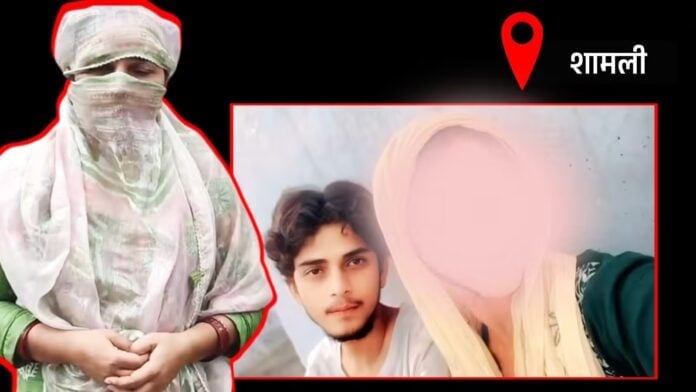
Shamli district in western Uttar Pradesh has become the center of a sensitive and closely watched debate over alleged forced religious conversion, interfaith relationships, inheritance, and the limits of personal autonomy under criminal law. Two separate complaints, reported within weeks of each other, have placed local families, police authorities, Hindu religious leadership, and community organizations under public scrutiny. The first concerns Ayush Malik, the son of a prominent pharmaceutical businessman in Shamli city; the second concerns a Rajput family from Bhaukhada village alleging threats over 35 bighas of ancestral land.
The cases are not identical, and each must be tested through evidence rather than public emotion. Yet their similar themes have intensified local anxieties: a sole male heir, an alleged interfaith relationship, claims of conversion, accusations of coercion or inducement, and a dispute over family property. In a region where kinship, land, and religious identity remain deeply interwoven, such allegations do not stay confined to police files. They quickly become matters of social trust, community security, and public order.
The Ayush Malik case began formally on June 6, 2026, when Devaraj Malik, a medical store owner and president of the Shamli Medicine Traders’ Association, lodged an FIR at Kotwali police station. He alleged that his son Ayush Malik had been drawn into a relationship with Chandni Qureshi, described in reports as a physiotherapist and gym trainer from Kaziwada, and was then pressured into converting to Islam and adopting the name Mohammad Ali. The complaint named Chandni Qureshi, members of her family, and three clerics, alleging a coordinated conspiracy involving conversion, forged documents, intimidation, and property-related motives.
According to the FIR reported by multiple media outlets, Devaraj Malik alleged that the accused had used psychological pressure, financial influence, and a purported Nikah in Delhi to isolate Ayush from his family. The complaint also claimed that the accused were attempting to gain control over the Malik family’s assets, including pharmacies and other property holdings. Police registered the case under provisions of the Bharatiya Nyaya Sanhita dealing with cheating, forgery, criminal conspiracy, and serious threats, along with the Uttar Pradesh Prohibition of Unlawful Conversion of Religion Act, 2021.
Shamli police arrested Chandni Qureshi and her father Islam Qureshi on June 7, 2026, and sent them to judicial custody. Superintendent of Police Narendra Pratap Singh announced that a Special Investigation Team (SIT) would examine the allegations. Police statements reported at the time suggested that investigators were probing whether the alleged conversion was connected to an attempt to usurp property. This property angle is legally significant because anti-conversion cases often turn not only on the fact of conversion, but on whether there was misrepresentation, coercion, undue influence, allurement, or fraudulent inducement.
The case then became more complex when Ayush Malik appeared before the media and asserted that he had embraced Islam voluntarily. He denied coercion, inducement, and brainwashing, and said he had hidden his conversion and marriage because his sisters’ marriages had not yet taken place. At that stage, he said he had no intention of returning to his previous faith and would fight for the release of his wife. This statement introduced the central legal tension in the case: the family alleged coercion and conspiracy, while the adult man at the center of the controversy initially asserted consent and religious choice.
By the end of June 2026, the narrative shifted again. Reports stated that Ayush Malik had returned to Hinduism in what was described as ghar wapsi, with a family-released video showing him performing puja at home. In that video, he reportedly said he had returned of his own free will after seeing the suffering of his mother and family. The development raised further questions about the status of his marriage to Chandni Qureshi and about how investigators should interpret earlier and later statements when an individual appears to change positions under intense family, social, and legal pressure.
The involvement of Swami Yashveer Maharaj, the Peethadhishwar of Yog Sadhana Ashram in Baghra, added a major public dimension. Before the FIR was registered, he released a video alleging that Ayush had been trapped, blackmailed, converted, and married according to Muslim rites. He issued an ultimatum to the administration and announced a Hindu Mahapanchayat in Shamli’s Qureshi locality. The announcement increased pressure on police to act quickly, and heavy deployment reportedly helped avert or postpone a wider confrontation.
The second case emerged from Bhaukhada village in the Jhijhana police station area. On July 1, 2026, a Rajput family approached Swami Yashveer Maharaj and alleged that a Muslim woman from Saharanpur had taken their only son away around one and a half years earlier, caused him to convert, and was now pressuring the family to transfer 35 bighas of ancestral land into her name. The family further alleged that threats were being made over the phone, including threats of death if the land was not transferred.
The family claimed that it had submitted a written complaint, or tehrira, at Jhijhana police station but that an FIR had not yet been registered. Swami Yashveer Maharaj then released another video demanding a fair investigation, registration of a case, and action against any cleric found to have facilitated an unlawful conversion. He also warned that, if action was delayed, he would lead a dharna-pradarshan outside the concerned family’s house in Nanauta along with members of Hindu society.
SP Narendra Pratap Singh stated that the matter was being taken seriously and directed the Jhijhana station officer to investigate. At the preliminary stage, the Bhaukhada case remained an allegation requiring verification: whether the adult son was missing or living voluntarily elsewhere, whether any conversion took place, whether threats were made, and whether the claimed land pressure could be substantiated through call records, witness statements, property papers, or other evidence. The comparison with the Ayush Malik case has intensified public concern, but legal responsibility still depends on case-specific proof.
The legal framework governing these cases is the Uttar Pradesh Prohibition of Unlawful Conversion of Religion Act, 2021. The law prohibits conversion by misrepresentation, force, undue influence, coercion, allurement, or fraudulent means. It also contains enhanced penalties in certain aggravated situations and places a significant evidentiary burden on the accused to show that a conversion was lawful and voluntary. Critics of such laws often focus on adult autonomy and interfaith relationships, while supporters argue that vulnerable individuals and families require protection from organized conversion networks, deceit, and property-motivated exploitation.
From a technical legal perspective, the distinction between conversion and unlawful conversion is crucial. Indian constitutional principles protect freedom of conscience and the right to profess, practice, and propagate religion, subject to public order, morality, health, and other legal limitations. A voluntary change of faith by an adult cannot be treated as a crime merely because relatives object to it. However, if investigators find forged documents, threats, financial exploitation, false identity, confinement, pressure, or targeted inducement for property gain, the matter moves from personal choice into criminal liability.
The property dimension makes these cases especially sensitive. In many Hindu families, ancestral land is more than an economic asset; it carries lineage, memory, social standing, and responsibility to future generations. When allegations arise that a relationship or conversion was used to target a sole heir, families experience the dispute not merely as a private romantic or religious matter, but as an existential threat to continuity. That emotional reality does not prove criminality, but it explains why such cases mobilize communities so quickly.
At the same time, a dharmic public response must remain anchored in justice, restraint, and truth. Hindu, Buddhist, Jain, and Sikh traditions all emphasize moral responsibility, self-discipline, compassion, and protection of the vulnerable. These principles require firm action where coercion, grooming, threats, or property fraud are proven. They also require caution against collective blame, rumor-driven escalation, or the denial of adult agency without evidence. A society that seeks Dharma must insist on both community protection and due process.
The Shamli cases therefore present a difficult but important test. Police must investigate without political hesitation, but also without allowing public pressure to replace evidence. Families must be heard with seriousness, especially when they allege threats, fraud, and coercion. Adults at the center of such disputes must be able to speak freely and safely, without intimidation from either side. Courts must then evaluate documentary records, witness testimony, electronic evidence, medical or psychological claims where relevant, and the statutory requirements of the anti-conversion law.
For Shamli’s Hindu community, the concern is not abstract. The reported pattern of alleged grooming, conversion, and land pressure has created fear among families who see sons and daughters navigating relationships in a social environment shaped by secrecy, social media, religious identity, and economic vulnerability. The task ahead is to convert that fear into lawful vigilance rather than uncontrolled anger. Community awareness, family communication, legal literacy, and prompt police response are more constructive than rumor, retaliation, or street-level confrontation.
As of early July 2026, the SIT probe in the Ayush Malik case continued, while the Bhaukhada allegation was under preliminary police inquiry. The coming weeks will determine whether these cases establish evidence of unlawful conversion and property conspiracy, or whether some claims become more complicated under scrutiny. What is already clear is that Shamli has exposed a wider social challenge: protecting religious freedom and adult choice while confronting coercion, deception, and predatory targeting wherever they are proven.
Inspired by this post on Hindu Post.






Leave a Reply
You must be logged in to post a comment.