

Kerala’s temple culture is entering a significant moment of reflection as some Hindu temples begin using robotic elephants in place of live captive elephants for rituals, processions and festival appearances. The development is not a simple rejection of tradition, nor is it merely a technological novelty. It represents a serious ethical conversation within Hindu society about dharma, ahimsa, public safety, environmental responsibility and the changing role of technology in sacred spaces.
The life-sized robotic elephants now appearing in selected temples are typically built from materials such as fibreglass, iron, rubber and, in some cases, silicone or fibre composites. They are designed to resemble ceremonial elephants, with electronically controlled movements that may include flapping ears, blinking eyes, moving trunks, swaying tails and spraying water. Some models are built as stable ceremonial platforms that can support priests or ritual objects during specific observances, while others function mainly as symbolic presences during festivals.
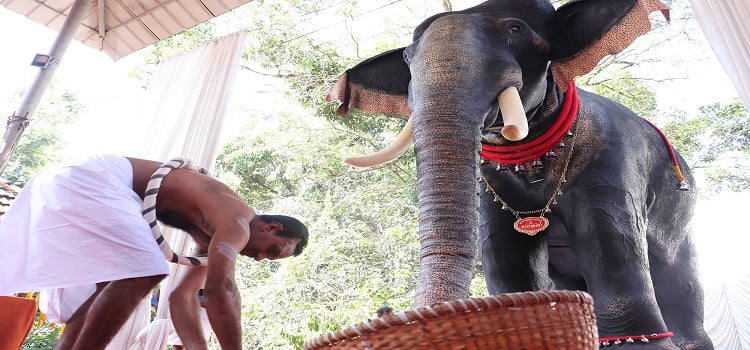
Technically, these machines are better understood as animatronic temple elephants rather than fully autonomous robots. They do not possess the intelligence, sensory range or lived agency of an elephant. Their purpose is narrower: to preserve the visual and ritual grammar associated with temple elephants while removing the suffering, captivity risks and crowd-management dangers that can accompany the use of live animals in large public gatherings.

This distinction matters because the debate is often framed too quickly as tradition versus modernity. In reality, the question is more subtle. Hindu traditions have historically shown a capacity to adapt form while preserving underlying meaning. When a practice is found to cause avoidable suffering, dharmic reasoning does not require blind repetition. It invites examination of purpose, consequence and compassion.

The elephant holds a deeply respected place in Hindu imagination and temple culture. It is associated with majesty, strength, auspiciousness and sacred symbolism, especially through the beloved form of Ganesha. In Kerala’s festival world, elephants have also become inseparable from the visual identity of poorams, processions and ceremonial gatherings. Their decorated foreheads, caparisons, bells, parasols and rhythmic presence create a powerful emotional memory for devotees.

Yet reverence for the elephant as a sacred being must be distinguished from the conditions imposed on captive elephants. The Asian elephant is an intelligent, social, emotionally complex animal that naturally requires large ranges, companionship, movement, water, shade and psychological stimulation. Captivity, isolation, hard surfaces, chains, loud processions, fireworks, heat stress and prolonged standing can create severe physical and mental distress. The ethical concern is therefore not anti-Hindu; it arises from taking Hindu reverence seriously.

Animal welfare groups, including PETA India and other organisations focused on Asian elephant protection, have supported the introduction of robotic temple elephants as a practical alternative. Their argument is that devotional continuity can be maintained without making living elephants bear the cost of human ceremony. Supporters also point to the safety dimension: stressed elephants in crowded environments can become unpredictable, and past incidents in Kerala have led to injuries, deaths and stricter public controls.

The case for robotic elephants is especially strong in smaller temples that cannot provide the space, veterinary care, expert handling and daily welfare standards required for a live elephant. For such institutions, an animatronic elephant can reduce financial pressure while still allowing the community to retain a familiar ceremonial aesthetic. The technology becomes a tool of responsible temple governance rather than a spectacle for its own sake.

Traditionalist concerns should not be dismissed lightly. For many devotees, a living elephant is not simply a decorative object. It is experienced as a sacred participant in ritual life, a bearer of memory, blessing and continuity. The emotional bond between temple communities and elephants is real, and in some cases generations have grown up associating specific elephants with specific festivals, deities and family vows.

However, dharmic ethics requires more than emotional attachment. It asks whether affection is matched by responsibility. If a community loves the elephant, that love must include freedom from avoidable pain, proper care, respect for natural needs and a willingness to reform practices when circumstances demand it. A tradition that honours Ganesha cannot be indifferent to the suffering of actual elephants.

The strongest argument for the robotic alternative is grounded in ahimsa, the principle of minimising harm. Ahimsa is not a passive slogan; it is a discipline of moral intelligence. It requires human beings to examine the hidden consequences of their customs, economies and public celebrations. Where a non-violent substitute can preserve ritual dignity without harming a sentient being, it deserves serious consideration.

This is also where Hindu civilisation’s long relationship with knowledge and technology becomes relevant. Ancient Indian mathematical traditions, including the development and transmission of numerals and the concept of zero, helped shape the global foundations of science, computation and modern engineering. It is therefore fitting, not contradictory, that a society rooted in dharma should use technology to reduce suffering and improve public welfare.

The technology itself is still evolving. Current robotic temple elephants are limited machines. Their movements are programmed or manually controlled, their realism depends on craftsmanship, and many do not walk independently. Their frames must be engineered for stability, their electrical systems must be protected from rain and humidity, and their surfaces must withstand repeated outdoor use, ornamentation, transport and public handling. Temples adopting them must also maintain batteries, motors, wiring, control systems and safety inspections.
Those limitations do not weaken the ethical value of the experiment. Rather, they show that this is an early stage of a broader cultural and engineering transition. As materials improve, future models may become lighter, more durable, more energy efficient and more expressive. Better design could allow safer ceremonial movement, smoother trunk articulation, improved balance, lower maintenance costs and more authentic regional ornamentation.
There is also an ecological dimension. Hindu temples are not only ritual spaces; they are moral institutions that shape social behaviour. When temples choose humane alternatives, they send a public message that devotion and environmental responsibility are not separate domains. This aligns with the wider dharmic vision of respecting Mother Earth, protecting living beings and recognising the interconnectedness of human life, animal life and sacred duty.
The issue also carries significance beyond Hinduism. Dharmic traditions, including Hinduism, Buddhism, Jainism and Sikhism, each contain strong resources for compassion, restraint, service and responsibility toward living beings. Jain emphasis on ahimsa, Buddhist concern for sentient suffering, Sikh seva and Hindu reverence for all life can all contribute to a shared ethical language. Robotic elephants can therefore become a point of unity among dharmic traditions rather than a narrow sectarian argument.
Opponents may argue that replacing live elephants with machines risks making ritual artificial. This concern deserves a thoughtful answer. Rituals already use symbolic substitutes in many contexts: lamps represent light, images focus devotion, kalashas hold sacred presence, and carefully crafted icons become centres of worship through consecration and intention. The sacredness of ritual does not depend on exploiting a living animal; it depends on meaning, discipline, devotion and alignment with dharma.
The most responsible path may not be a sudden universal ban imposed without consultation, but a phased and principled transition. Temples that already keep elephants should be held to high welfare standards, transparent veterinary care and humane retirement policies. Temples without the capacity to care for elephants should not acquire them for prestige. Communities planning festivals can adopt robotic elephants where appropriate, especially in crowded urban settings and events with high noise, heat or safety risk.
Such a transition would require cooperation among temple boards, devotees, mahouts, veterinarians, engineers, animal welfare experts, traditional scholars and local authorities. Mahouts, in particular, should not be ignored. Many possess deep practical knowledge of elephant behaviour, and any humane reform must consider their livelihoods, training and possible roles in conservation, sanctuary care, public education or the operation and maintenance of new ceremonial technologies.
The introduction of robotic temple elephants in Kerala is therefore not merely a story about machines entering temples. It is a test of whether sacred communities can respond to moral knowledge without losing cultural depth. It asks whether devotion can mature beyond spectacle and whether tradition can be strong enough to refine itself.
Seen through that lens, the robotic elephant is not a replacement for the living elephant’s soul, intelligence or majesty. It is a replacement for a human demand placed upon the elephant. The living elephant belongs to a fuller life than chains, crowds and ceremonial burden. The temple, meanwhile, can continue its rituals with a clearer conscience, showing that dharma is not frozen in the past but capable of compassionate renewal.
If adopted thoughtfully, robotic temple elephants could become a meaningful example for the wider world. They demonstrate that ancient traditions need not be hostile to innovation, and that technology need not be spiritually empty. When guided by ahimsa, seva and ecological responsibility, technology can serve dharma by helping human beings celebrate the sacred without injuring the beings they claim to revere.
Inspired by this post on Hindu Human Rights Blog.









Leave a Reply
You must be logged in to post a comment.